

What if the quickest way to ease the burden of an aging parent’s home isn’t the right choice for them? Selling elderly parents house as is can reduce the pressure to make repairs or clear every room, but convenience shouldn’t come before your parent’s wishes, consent, or financial interests.
If the property needs work or the family feels overwhelmed, it’s understandable to look for a simpler path. The right decision starts with clarifying who has authority to make the sale and including your parent as fully as possible. From there, you can compare an as-is sale with preparing the home for other sale options, weighing the likely effort, terms, and timing rather than assuming one route is best.
This guide explains what an as-is sale does and doesn’t mean, what to consider before choosing a buyer or sale approach, and why known defects may still need to be disclosed. You’ll also find an overview of documents and professional guidance that may help, including when legal or financial questions deserve careful attention. The goal is a thoughtful sale that respects your parent and gives your family a clearer way forward.
Key Takeaways
- Start by listening to your parent and confirming who has the authority to make decisions about the home.
- As-is describes the home’s condition and the seller’s repair plans; it doesn’t automatically remove disclosure responsibilities.
- When selling elderly parents house as is, compare a direct sale with listing the property as-is or after selective preparation.
- Weigh each option by expected proceeds, timing, preparation work, terms, and your parent’s comfort.
- Gather property records, document its condition, and seek professional guidance if consent, ownership, or family agreement is unclear.
Selling an Elderly Parent’s House As-Is Starts With Their Wishes
An as-is sale may ease the burden of repairs, deep cleaning, and preparing a home for buyers. But the first decision belongs to the property owner, not the family member handling the calls. Age alone doesn’t establish that someone can’t make decisions or give another person authority to sell. Before exploring selling elderly parents house as is, ask what your parent wants and what support they would welcome.
How to include a parent in the home-sale decision
Begin with a conversation, not a plan that assumes the home must be sold. Ask what matters most: staying involved in each step, reducing the workload, choosing the timing, or keeping particular belongings. Share information in manageable pieces and leave room for questions. Your parent may also want time to speak privately with a trusted professional or get independent advice before deciding.
Family help can make the process easier without taking over. For example, a son or daughter might organize property records, arrange conversations with potential buyers, or write down questions, while the parent remains part of decisions and gives any required approval. Don’t frame a move or sale as inevitable unless your parent has chosen that path.
Who can legally authorize the sale?
Check the property’s ownership records and any authority documents before signing or agreeing to terms. They help establish who may act in the transaction. A power of attorney doesn’t automatically settle every question: its scope and applicable capacity rules can vary. Ask a qualified legal professional to review the documents and explain what authority applies to this property and situation.
If your parent can’t communicate a decision, pause before arranging a sale. Confirm who, if anyone, has lawful authority to act, rather than assuming a relative can sign on the owner’s behalf. A careful check now can help prevent confusion or conflict later.
In plain language, an as-is sale offers the property in its present condition, with the seller generally not planning repairs as part of the sale. The phrase doesn’t answer every question about what must be disclosed or what the parties agree to do. For a general overview of the legal definition of ‘as is’, see Wikipedia, then have a qualified professional review the contract and applicable state requirements.
Once the owner’s wishes and authority are clear, a family can compare practical options. A direct buyer may consider a home in its current condition, but weigh any offer’s terms, timing, and responsibilities against other routes. The goal isn’t simply to make the sale easier for relatives. It’s to find an approach your parent understands and agrees with, while protecting their interests throughout the process.
What an As-Is Sale Changes, and What It Does Not
An as-is sale tells potential buyers that the seller is offering the home in its present condition and doesn’t plan to complete repairs as part of the sale. It can help set expectations, but it doesn’t guarantee that a buyer will accept every condition or that no preparation will be requested. The offer, purchase agreement, and applicable state rules all matter.
As-is describes the property’s condition, not who may sell it or what the seller must disclose. Selling elderly parents house as is doesn’t automatically remove disclosure responsibilities. Requirements vary by state, and sellers may still need to disclose known material defects. A real estate attorney can help clarify what applies and review the contract before anyone signs.
Does selling as-is mean no repairs or cleanout?
Not necessarily. The seller can compare offers and terms without agreeing to every possible improvement, but buyers may have different expectations. A direct buyer may consider the home in its current condition; that doesn’t mean every buyer will accept every issue or waive all requests.
Discuss practical details in writing, including what happens to belongings, whether anyone will address immediate safety concerns, how the buyer can access the property, and when possession transfers. For example, if your parent needs more time to sort family keepsakes, make that need part of the conversation before agreeing to a timeline. Clear terms help avoid relying on assumptions later.
What should the family gather before discussing a sale?
Collect available records so the owner and any authorized representative can discuss the home with a clearer picture. You don’t need to diagnose problems or resolve every unknown first. Start with documents and observations:
- Ownership records, mortgage information, and property-tax records.
- Any authority documents relevant to the person handling the sale.
- A simple list of known maintenance concerns, described without guessing at their cause.
- Insurance, utility, and homeowners’ association information, if available.
This preparation can make it easier to compare a direct purchase with other sale routes. If your family wants to understand one possible route, you could review LPS Real Estate Group’s direct-purchase option alongside other offers and terms. Confirm current availability and details for the property, and take time to review any proposed agreement with the appropriate professional.
Compare As-Is Sale Options Before Choosing a Buyer
There isn’t one sale route that works for every family. When selling elderly parents house as is, compare the likely net proceeds, time, work involved, transaction terms, and how comfortable your parent feels with each process. Offers and timelines depend on the property, the buyer’s review, and the agreement, so avoid treating any route as automatically faster or more certain.
| Sale route | What to weigh |
|---|---|
| Direct as-is sale | May reduce preparation or showing coordination, but compare the written offer, terms, timing, and responsibilities. |
| Listing after selective preparation | Some focused work may help present the home, but consider the effort, cost, and time needed before listing. |
| Listing in current condition | A family may avoid making selected improvements, but should understand the marketing plan, showing demands, costs, and possible buyer requests. |
When might a direct buyer be worth considering?
A direct purchase may be worth exploring if repairs, cleanout, or coordinating buyer visits would be difficult for your parent or family. LPS Real Estate Group buys homes directly, including through as-is property acquisitions. Any potential purchase depends on review of the property and current availability. Ask for the proposed terms in writing, then compare them with other options before deciding. A direct offer is one route to assess, not a guarantee of a particular result.
When could listing the home be a better fit?
Listing may suit a family that can manage preparation, showings, negotiations, and a timeline that can shift as buyers respond. Selective preparation might address a few practical concerns without taking on every renovation. A traditional listing may include agent services and sale-related costs, which the family should identify and consider when comparing possible net proceeds. For broader guidance on condition-related decisions, see selling a house as-is.
Use the same questions for every route: What responsibilities remain with the seller? What expenses or conditions could affect the proceeds? How much coordination will the process require, and does the proposed timing work for your parent? Reviewing comparable written terms makes trade-offs easier to see and helps keep the decision grounded in the owner’s priorities.
Prepare for the Sale Without Taking on Every Repair
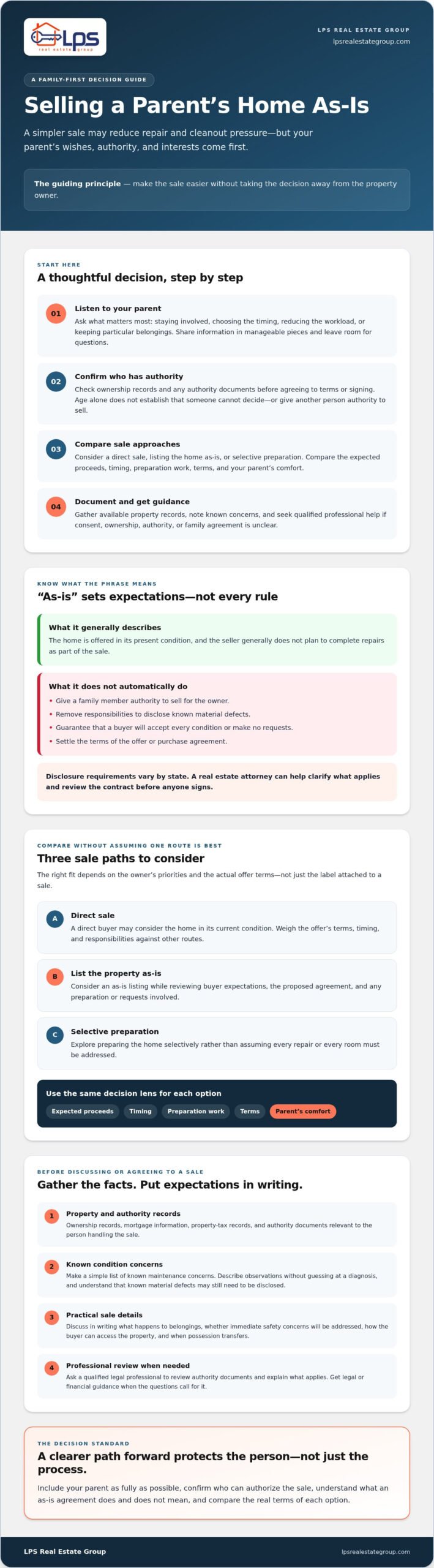
A clear plan can reduce stress without turning the house into a renovation project. Before selling elderly parents house as is, move through the decisions in order: confirm who can authorize the sale, record the home’s condition, gather available documents, compare sale options, and review any proposed agreement before signing.
Separate immediate safety concerns from cosmetic repairs and optional upgrades. Note visible maintenance issues without trying to diagnose their cause, and ask a qualified professional what needs attention. A buyer’s request, the parent’s comfort, and the terms of a particular offer can help the family decide what, if anything, to address.
How to handle belongings and personal documents
Let your parent guide choices about possessions whenever they can participate. Before arranging a cleanout, set aside financial records, medications, valuables, and identifying documents. Agree with your parent and family on what stays, what may be removed, who keeps keys, and how access to the home will be managed. Don’t discard belongings until the owner’s wishes, ownership, and any family agreement are clear.
How to review an offer with the parent
Read the written offer and agreement together, if your parent wishes and is able to participate. Look beyond the stated price and clarify:
- Any contingencies, fees, or other terms that could affect the transaction.
- Who handles belongings and when the parent must leave or transfer possession.
- The proposed timeline and what steps or responsibilities it depends on.
If a term is unclear, ask the buyer to explain it in plain language and provide the answer in writing. A real estate attorney or other qualified professional can review state-specific disclosure and signing questions. That review may be especially helpful if ownership or authority documents are complex.
If probate or inheritance is part of the situation, see this guide to selling an inherited property for considerations specific to that process. Otherwise, keep the focus on your parent’s authority, priorities, and the terms in front of them.
Once you have the records and questions organized, you can consider whether a direct as-is purchase deserves comparison with other options. Discuss a potential direct home purchase with LPS Real Estate Group, and confirm current availability and terms for the property. Take the time your family needs to review any offer before making a decision.
Choose a Sale Path That Protects the Parent’s Interests
A thoughtful decision follows a clear order: start with your parent’s wishes, confirm who has lawful authority, coordinate with family members, compare written offers and sale routes, then seek professional review before signing. This keeps the focus on the homeowner rather than on whichever option seems easiest to arrange.
If your parent’s wishes are unclear, ownership records don’t match the family’s understanding, authority documents raise questions, or relatives can’t agree, pause. Resolve what you can and seek qualified legal guidance before moving ahead. An adult child’s help with calls and paperwork doesn’t by itself give them authority to sell.
A direct as-is purchase may be one option to compare. LPS Real Estate Group buys residential properties directly, including as-is homes, subject to property review and current availability. The offer, transaction terms, and timing depend on the specific property and agreement. No route guarantees a particular amount or closing schedule, so judge each option by its written terms and how well it fits the parent’s priorities.
Questions to ask any prospective buyer
Before making a decision, ask the buyer to explain the process and provide important details in writing. Useful questions include:
- How do you evaluate the home’s condition, and what information or access do you need before making an offer?
- Which transaction expenses does each party pay, and could inspections, review findings, or other conditions change the proposed terms?
- What does the agreement say about possession and timing?
- Can the parent and authorized representative have time to review the documents and consult independent legal or financial professionals?
Clear answers make it easier to compare an offer with other sale options. If an explanation feels rushed or a term remains unclear, ask for clarification before proceeding.
A low-pressure next step for the family
Before requesting or comparing offers, gather basic property details and write down what matters most to your parent, such as minimizing preparation, choosing a comfortable timeline, or staying involved in decisions. That context can help your family assess whether a direct as-is sale fits, rather than treating it as the default answer to selling elderly parents house as is.
If exploring a direct purchase would be useful, you can discuss an as-is home sale with LPS Real Estate Group as one option. Share the property’s general condition and your parent’s preferred outcome, then compare any proposed terms with other routes and take time for independent review.
Take the Next Step at Your Family’s Pace
A thoughtful home sale begins with the owner’s wishes and the proper authority to act. From there, your family can compare sale paths by their terms, responsibilities, timing, and the work each requires. An as-is sale may reduce preparation, but it doesn’t remove the need to understand applicable disclosures and review the agreement carefully.
When selling elderly parents house as is, there’s no need to choose a buyer before your parent’s priorities and the property details are clear. LPS buys residential properties directly, including as-is properties, and offers cash purchases and creative finance solutions. Options and terms depend on the property and transaction, so compare any written proposal with alternatives and seek independent guidance where needed.
If a direct purchase is one option your family would like to explore, discuss an as-is home sale with LPS. You can share the home’s general condition and your parent’s preferred outcome, then take time to consider the details. A calm, informed decision can help your family move forward while keeping your parent’s interests at the center.
Frequently Asked Questions
Can I sell my elderly parent’s house without their permission?
Usually, a family relationship alone doesn’t give you authority to sell your parent’s property. The owner’s consent or legally established authority may be needed, depending on the ownership records and applicable law. Age by itself doesn’t mean your parent can’t make decisions. Before accepting an offer or signing documents, have a qualified attorney review the ownership and authority documents and explain who can act.
Can an elderly parent sell a house as-is?
Yes, a homeowner can explore an as-is sale if it reflects their wishes and they have authority to sell. The transaction still depends on ownership, the buyer’s proposed terms, and applicable disclosure requirements. An as-is label doesn’t automatically cancel legal or contractual responsibilities. Read the agreement carefully, and ask a qualified local professional to clarify any disclosure, signing, or contract questions before your parent agrees.
Do we have to repair or clean out the house before selling it as-is?
Not necessarily. Your family can compare buyers and sale routes before deciding whether to make repairs or remove belongings. The buyer’s requirements, written agreement, safety concerns, and possession arrangements still matter. Ask your parent to guide decisions about personal items whenever they can participate. Before cleanout or transfer, put agreements about belongings, access, keys, and possession timing in writing so expectations are clear.
What happens if family members disagree about selling a parent’s house?
Pause major sale decisions while you clarify who owns the property and who has legal authority to act. A respectful discussion centered on your parent’s wishes, documented facts, and practical needs may help reveal where family members agree. If the disagreement continues or authority is disputed, seek independent legal guidance or an appropriate neutral professional. Don’t assume one relative can decide or sign for everyone.
Does selling a house as-is mean we do not have to disclose problems?
No. Calling a property “as-is” doesn’t automatically remove disclosure responsibilities. What must be disclosed can depend on state law, the property, and the transaction, so a general article can’t determine your family’s exact obligations. Answer transaction questions accurately and completely. If you’re unsure how to handle a known issue or disclosure form, ask a qualified real estate attorney before providing information or signing the agreement.
Is a cash buyer a good option for an elderly parent’s house?
A direct cash buyer may be worth considering if reducing preparation work or coordinating showings is important, but it isn’t automatically the best financial or personal fit. Compare the written offer, conditions, transaction expenses, timing, and responsibilities with other available sale routes. LPS Real Estate Group buys residential properties directly, including as-is homes, and offers cash purchases and creative finance solutions. Terms depend on the property and transaction, so review them independently.
How do I sell an inherited home if my elderly parent has passed away?
First confirm who has authority to act for the estate, since inheritance and probate can affect who may market or sell the property. Requirements depend on the estate and jurisdiction. An executor or representative should verify their authority before signing a contract, and seek legal advice if probate or title questions remain. For more detail, read this guide to selling an inherited property.