

A high mortgage balance is a numbers problem, not an automatic reason you can’t sell. Selling a house with a high mortgage balance may leave you with money at closing, require you to bring funds, or call for a different approach. The key is comparing a realistic sale price with your current mortgage payoff and likely selling expenses, not relying on the loan balance shown on your monthly statement.
It’s understandable to worry that the sale won’t cover what you owe or that you’ll be stuck without workable choices. You can get a clearer picture before deciding what to do. This guide explains how to estimate your likely net proceeds, what changes when you have positive equity, little equity, or negative equity, and how a standard sale, direct sale, and short sale differ.
You’ll also learn where a direct buyer such as LPS Real Estate Group may fit if simplicity, property condition, or timing matters. Start with an up-to-date payoff statement and a realistic estimate of selling expenses. Comparing those figures can help you choose a practical next step without assuming the sale is impossible.
Key Takeaways
- Selling a house with a high mortgage balance starts with the current payoff amount, not just the loan balance shown on a monthly statement.
- Estimate what may remain after the payoff, liens, and seller-paid expenses, then compare that estimate with the final settlement statement.
- Compare a conventional market sale with a direct sale based on potential proceeds, preparation, and the level of certainty you need.
- If expected sale proceeds won’t satisfy the mortgage, a short sale may involve lender review. Understand the process before choosing that route.
- Gather your loan details and property obligations, then weigh your options against your priorities and timeline. A direct buyer may be one option to consider.
Can You Sell a House With a High Mortgage Balance? Start With the Basics
Yes. A large mortgage balance alone doesn’t determine whether a home sale can close. The key is whether the sale proceeds can cover the amount needed to pay off the loan and other obligations tied to the property. A mortgage loan gives the lender a security interest in the home, but you don’t have to pay off the loan before putting the property up for sale. In a typical sale, the payoff is handled as part of closing.
It helps to distinguish a high balance from negative equity. You can owe a large amount and still have equity if the likely sale price is higher than the payoff and selling expenses. A shortfall occurs when the expected proceeds aren’t enough to cover the mortgage and other obligations. The distinction matters: selling a house with a high mortgage balance may be manageable if the property’s value covers the costs, while a shortfall calls for a closer look at your options.
What does a high mortgage balance mean when selling?
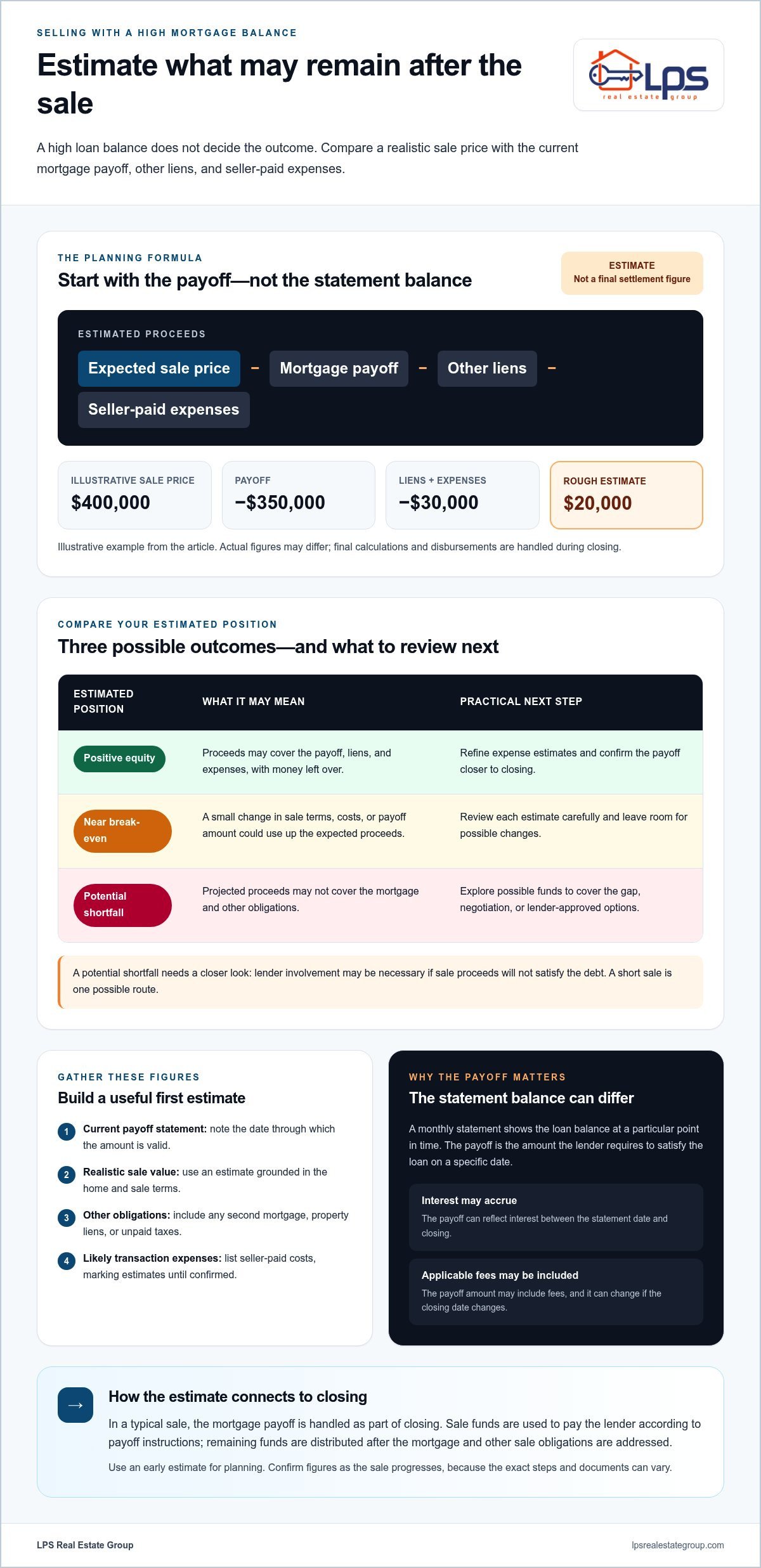
Your monthly statement shows the loan balance at a particular point in time. The mortgage payoff is the amount the lender requires to satisfy the loan on a specific date, and it may differ from the statement balance. Interest can accrue between the statement date and closing, and the payoff figure may include applicable fees. If the closing date changes, the amount needed to pay off the loan may change too.
When the sale closes, the closing professional typically uses the available sale funds to pay the lender according to the payoff instructions. Any remaining funds are distributed after the mortgage and other sale obligations are addressed. The exact steps and documents can vary, so use an early estimate for planning, not as the final amount you’ll receive.
Does owing more than expected mean you cannot sell?
Not necessarily. Compare the likely sale price with the current payoff, any other liens, and seller-paid transaction expenses. If the proceeds cover those amounts, the loan can generally be paid through closing, and you may receive what remains. If proceeds fall short, you’ll need to explore how the gap could be handled before the sale can proceed.
A standard sale doesn’t automatically require the lender to approve the price just because the mortgage balance is high. But if the proceeds won’t satisfy the debt, lender involvement may be necessary to address the shortfall. A short sale is one possible route. The outcome depends on the numbers and the details of the loan and property. Requesting a current payoff statement is a practical first step toward understanding where you stand.
How to Estimate Your Mortgage Payoff and Likely Sale Proceeds
For a useful first estimate, start with a realistic sale price, then subtract the debts and expenses that could be paid from the sale. Use this formula:
Estimated proceeds = expected sale price − mortgage payoff − other liens − seller-paid transaction expenses
For example, if an illustrative sale price is $400,000, the payoff is $350,000, and liens and seller-paid expenses total $30,000, the rough estimate is $20,000. Your actual figures may differ. The closing process includes final calculations and disbursements, so an estimate isn’t a promise of what you’ll receive. Net proceeds depend on both the payoff date and the sale terms.
Which figures should you gather before making a decision?
Ask your mortgage servicer for a current payoff statement and note the date through which the amount is valid. Gather a realistic estimate of the home’s sale value and details about any second mortgage, property liens, or unpaid taxes. List likely transaction expenses, such as costs assigned to you under the sale terms, but mark them as estimates until confirmed. This makes it easier to see which figures are firm and where uncertainty remains.
How do you interpret positive, limited, or negative equity?
Subtract the payoff, other obligations, and estimated expenses from the expected sale price. The result is a planning estimate, not the final settlement figure.
| Estimated position | What it may mean | Practical next step |
|---|---|---|
| Positive equity | Sale proceeds may cover the payoff, liens, and expenses, with money left over. | Refine expense estimates and confirm the payoff closer to closing. |
| Near break-even | A small change in sale terms, costs, or payoff amount could use up the expected proceeds. | Review each estimate carefully and leave room for possible changes. |
| Potential negative equity | Projected proceeds may not cover the mortgage and other obligations. | Explore possible funds to cover the gap, negotiation, or lender-approved options. |
For selling a house with a high mortgage balance, this comparison can show whether your main concern is protecting remaining equity or addressing a potential shortfall. If you’re weighing a direct sale, LPS Real Estate Group can discuss your payoff, property condition, priorities, and timeline. Compare any proposed terms with your own estimate. A direct offer doesn’t automatically cover a gap.
Which Sale Option Fits a House With a High Mortgage Balance?
The right route depends on more than the amount you owe. Compare what each option may leave you after the mortgage payoff and sale expenses, as well as the preparation involved and the flexibility or predictability you need. No route guarantees a particular price or closing date, and a direct sale won’t automatically cover a shortfall.
When might a standard market sale make sense?
A conventional market sale may be worth considering if a realistic sale price appears likely to cover the payoff, liens, and seller-paid costs, and you have time to prepare and negotiate. Broader exposure to potential buyers may support a stronger sale price, but the result depends on buyer interest and the agreed terms. Repairs, showings, negotiations, and possible timeline changes can also affect your plans and final proceeds.
When should you explore a direct sale or short sale?
A direct sale may suit an owner who values an as-is sale or a tailored closing process. LPS Real Estate Group buys homes directly through cash purchases and creative finance solutions. Compare proposed terms with your payoff and likely expenses. A direct offer isn’t necessarily the highest-value option, and it doesn’t automatically resolve negative equity.
A short sale is different. If expected sale proceeds won’t satisfy the mortgage, the lender generally needs to review the proposed sale and decide whether to accept less than the amount owed. Approval, timing, and how any remaining debt is treated depend on the loan and your circumstances. Don’t assume an accepted short sale automatically removes all responsibility for a deficiency. Get the terms in writing and consider independent legal advice before agreeing to them.
| Option | Potential fit | Trade-offs to weigh |
|---|---|---|
| Standard market sale | You have time to prepare and want to test buyer demand. | Price, expenses, negotiations, and timing can remain uncertain. |
| Direct sale | You value an as-is option or a tailored process. | Compare the offer and terms with your likely net proceeds. |
| Short sale | Proceeds may not cover the mortgage payoff. | Lender review is needed, and outcomes depend on the loan and circumstances. |
Creative finance may also be part of a tailored sale discussion, but the structure and risks depend on the specific terms. Understand who remains responsible for each obligation and what happens if payments or other conditions aren’t met. Seek independent legal advice before entering an arrangement you don’t fully understand. For selling a house with a high mortgage balance, compare the written terms and likely net outcome of each route instead of choosing on speed or headline price alone.
How to Sell a House With a High Mortgage Balance: A Practical Action Plan
A clear paper trail can make the decision less overwhelming. Before choosing a sale route, bring your loan information, property obligations, and written sale terms together. That way, you can compare the likely outcome instead of focusing only on an offer headline.
What should you do before accepting an offer?
- Request an updated payoff. Ask your mortgage servicer for the amount needed to pay off the loan, the date through which that figure is valid, and how to get an updated amount if the closing date changes.
- Identify other obligations. Gather details about second mortgages, recorded liens, unpaid property taxes, or other known amounts that could affect the sale proceeds. If you’re unsure whether an obligation applies, note it for follow-up rather than leaving it out of your estimate.
- Build a side-by-side worksheet. For each possible sale route, list the expected price or offer, payoff, other obligations, and estimated seller-paid expenses. Mark each figure as confirmed or estimated.
- Review the written terms. Look beyond the headline offer. Check contingencies, closing costs, proposed timing, and who is responsible for each obligation. Compare the terms with your estimated net proceeds before deciding.
- Confirm final figures before closing. Follow up on the payoff instructions and review the settlement statement, which shows the final amounts and how funds are distributed.
This process can reveal whether the expected proceeds appear sufficient, are close to break-even, or fall short of the obligations. It also gives you a better basis for comparing offers with different terms or timelines.
What if your estimated proceeds will not cover the payoff?
Contact your servicer to ask about its short-sale review process and required financial documents. A possible cash contribution or another negotiated resolution may be part of the discussion, but acceptance and any treatment of remaining debt depend on the loan, lender review, and your circumstances. Don’t assume a sale or negotiation automatically removes a shortfall.
If you’ve missed payments or are concerned about foreclosure, make that urgency clear when discussing your situation with the servicer. For selling a house with a high mortgage balance, it can also help to compare a direct-sale proposal with your payoff, property condition, and timing needs. LPS Real Estate Group can discuss a tailored direct-sale option based on those details. Discuss your home sale options.
How LPS Real Estate Group Can Help You Evaluate a High-Balance Sale
A direct sale is one route to consider if you want to sell as-is or prefer a tailored process. LPS Real Estate Group buys homes directly through cash purchases and creative finance solutions. A useful starting point is a clear look at your situation and the numbers that will shape your decision, not a general promise about what a home is worth.
What to expect from a direct-sale conversation
The discussion can begin with the property, your preferred timing, and what you hope to accomplish. Sharing your current payoff statement and details of any known liens helps put the sale in context. Property condition matters too, especially if you’d rather not take on repairs or renovations before selling.
Compare any proposed terms with your estimated payoff and transaction expenses, then weigh them against other sale options. A direct offer may provide a simpler path, but it isn’t automatically the highest-value option or enough to cover a shortfall. The offer terms, closing details, and any remaining obligations all matter. If a proposal involves a creative finance arrangement, take time to understand each term and seek independent legal advice as needed.
How to take the next step with confidence
Before discussing options, gather a few basics:
- Your current mortgage payoff statement, including its valid-through date
- Property details, including condition and any significant updates or issues
- Information about other known liens or obligations tied to the home
- A rough estimate of seller-paid expenses and your preferred timeline
These details can help frame a practical conversation without locking you into a decision. If you’re researching the broader steps involved in a cash purchase, LPS Real Estate Group’s guide to selling a house fast for cash can provide additional process context.
Selling a house with a high mortgage balance can feel uncertain, especially if you don’t yet know whether the proceeds will cover the payoff. LPS Real Estate Group can discuss your property, payoff, priorities, and possible next steps without assuming that a direct sale is right for every situation. Discuss a direct home sale with LPS Real Estate Group when you’re ready to explore the option.
Choose Your Next Step With Clear Numbers
Selling a house with a high mortgage balance isn’t automatically impossible. Your current payoff, likely sale price, other property obligations, and selling expenses help show whether you may leave closing with proceeds or need to address a shortfall. An updated payoff statement and a realistic comparison of sale options can turn uncertainty into a more informed decision.
A standard market sale, a direct sale, and a short sale each come with different trade-offs in preparation, terms, and lender involvement. LPS Real Estate Group buys homes directly through cash offers and creative finance solutions, including as-is properties and complex seller situations. Weigh any proposed terms against your payoff and estimated expenses. The goal is to understand the closing terms clearly, not to assume every offer will cover the balance.
If a direct-sale conversation would help you assess your choices, discuss your home sale options with LPS Real Estate Group. Bring your payoff information, property details, and priorities to explore a practical next step.
Frequently Asked Questions
Can I sell my house if I still owe a lot on the mortgage?
Often, yes. The key is whether the sale proceeds can cover the mortgage payoff and other obligations at closing. A high balance alone doesn’t prevent a sale, but a projected shortfall may limit your options or require lender involvement. Request a current payoff statement and compare it with a realistic estimate of your sale price, liens, and seller-paid expenses before committing to terms.
What happens to my mortgage when I sell my house?
In a standard sale with sufficient proceeds, the mortgage is generally paid from the sale funds handled at closing. Any remaining amount goes to you after other obligations and expenses are accounted for. The final figures depend on the payoff date, sale terms, and any additional liens. Review the settlement figures carefully and direct questions about the payoff or closing steps to your mortgage servicer or closing professional.
How do I find out my exact mortgage payoff amount?
Contact your mortgage servicer and request a payoff statement for the expected closing period. It should show the amount needed to satisfy the loan through a stated date, along with payment instructions. The payoff can differ from the balance on your monthly statement because the calculation may include additional amounts, such as accrued interest. If the closing date changes, ask the servicer how to obtain an updated figure.
What happens if my house sells for less than I owe?
The sale may leave a shortfall after the mortgage payoff and transaction expenses. Depending on your situation, you might bring funds to closing or ask the lender to review a short sale. A short sale isn’t automatic, and lender approval and any remaining debt depend on the loan, agreement, and applicable rules. Before agreeing to terms, consider getting qualified legal or financial advice so you understand the potential consequences.
Can I sell my house through a cash buyer if I have a high mortgage balance?
Yes, a direct sale may be an option, but compare the written offer with your payoff, liens, and estimated transaction expenses. If the proceeds won’t cover those amounts, the shortfall still needs to be addressed. LPS Real Estate Group buys homes directly through cash offers and creative finance solutions, including as-is properties. Review how the sale funds would be applied before deciding whether the terms fit your needs.
Is a short sale the same as selling a house with a high mortgage balance?
No. A high mortgage balance describes the amount of debt, but it doesn’t show whether the home’s value is higher or lower than the payoff. A short sale generally refers to a sale where proceeds are insufficient to satisfy the mortgage and the lender reviews the proposed transaction. The review process and treatment of any remaining debt can vary, so confirm the details for your loan and circumstances.
Should I stop making mortgage payments while I try to sell?
Don’t stop or change payments based only on a plan to sell. Missed payments can have serious consequences, and a pending sale may not resolve them in time. Contact your mortgage servicer promptly to discuss your account and available options. If you’re worried about foreclosure, seek qualified housing or legal guidance as well. Get clear information about your situation before making decisions that could affect your home or finances.