

The best tired landlord solutions start with understanding what you want from your rental property now. If vacancies, repairs, and tenant responsibilities take more time and energy than you can give, it may be time to reconsider whether holding on still fits your priorities. You can compare your options before deciding whether to sell.
This guide looks at practical paths, from keeping the property with a different approach to selling it. Use your timing, the property’s condition, and the work you’re willing to take on as decision criteria, so you can compare options without rushing.
If selling seems right, a direct sale is one route to consider. LPS Real Estate Group buys properties as-is and offers cash purchases and creative-finance approaches. Before weighing a sale, gather a clear picture of the property, its condition, and your goals. The sections ahead explain the choices and the details that can help you move forward with confidence.
Key Takeaways
- Identify whether maintenance, vacancies, tenant coordination, or paperwork is creating the most strain before choosing a path.
- Compare tired landlord solutions by the time and preparation each may require, along with how much control you want to retain.
- Gather ownership and mortgage details, known repair needs, occupancy status, and relevant documents to make your options easier to assess.
- If you explore a direct sale, expect to share property details, discuss your situation, review an offer, and consider the terms before deciding.
- An as-is sale may suit owners who want to explore selling without arranging repairs first. LPS Real Estate Group buys properties directly and offers cash and creative-finance approaches.
Tired of Being a Landlord? Identify What Is Making the Property Hard to Hold
Owning a rental can become demanding when property needs and tenant requests compete with work, family, or other priorities. Feeling worn down doesn’t automatically mean you should sell. First, identify what’s creating the pressure and whether it’s temporary or a sign that the responsibilities no longer fit the life you want.
Landlord fatigue can have several causes at once. One repair may be manageable, but recurring issues can turn ownership into a steady stream of decisions. A vacancy can create uncertainty while you work out what comes next. Tenant communication, recordkeeping, and tracking property tasks also take time, even if you aren’t doing hands-on work yourself.
Which parts of rental ownership are wearing you down?
Separate the work into two categories: doing a task and managing it. Fixing a problem yourself is hands-on labor. Finding someone to address it, arranging access, following up, and documenting the outcome is coordination. Both can be demanding. Delegating repairs may reduce hands-on work, but it doesn’t necessarily remove the coordination.
Vacancies can make planning less predictable, but their effect depends on your circumstances. Tenant-related challenges also vary by property and situation. Administrative responsibilities, including understanding applicable Landlord-tenant law, can add another layer. Focus on which recurring demands take the most energy instead of assuming every landlord faces the same problem.
Use this short self-assessment to identify the pressure points:
- Time: How much attention does the property need in a typical week or month?
- Condition: Are repairs occasional, or is a growing list of issues making the property harder to maintain?
- Cash flow: Does the rental’s income and expense pattern still support your plans? Consider the full picture, not rent alone.
- Responsibility: Are you willing to keep making decisions and responding to property needs?
Then look for a pattern. A burst pipe or difficult turnover may be a temporary strain. If the same responsibilities have felt unsustainable over time, rental ownership may no longer fit your priorities. Recognizing the difference can help you consider tired landlord solutions without making a rushed decision based on one hard week.
Clarify what you want your next chapter to look like
Ask yourself what matters most now: continuing to own the property, reducing your involvement, or making a clean exit. There’s no universally right answer. Your choice may depend on available time, property condition, financial plans, and how much uncertainty you’re comfortable carrying.
Before comparing options, list your non-negotiables. You might need to retain a certain level of decision-making control, have limited time to prepare the property, or want to understand possible next steps before committing. Separate firm needs from preferences. “I can’t manage repairs myself,” for example, is more specific than “I want this to be easier.”
The right next step depends less on whether you’re tired of being a landlord and more on what you want ownership to look like from here. Once you can name the burden and your priorities, you’ll be better positioned to compare practical paths forward.
Tired Landlord Solutions: Compare Keeping, Changing, or Selling the Rental
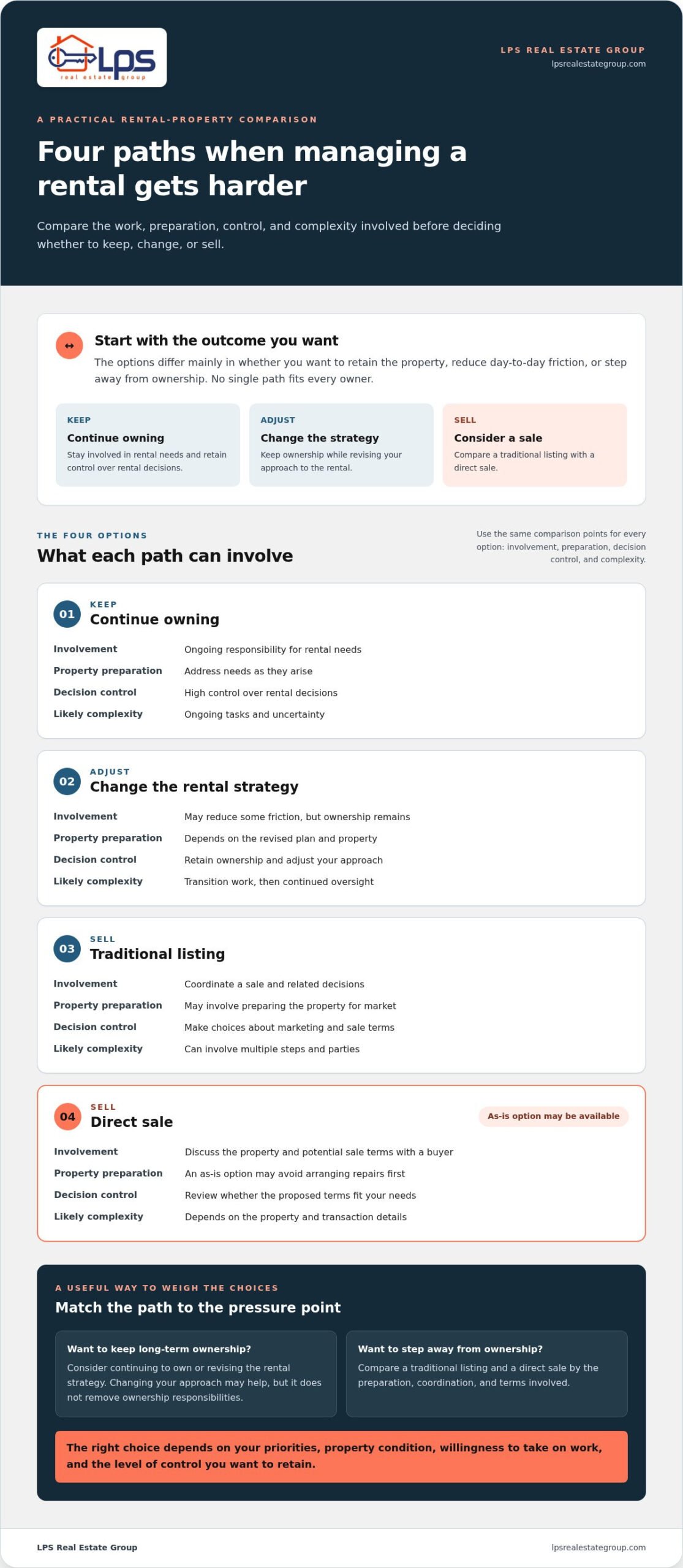
Once you understand what’s making ownership difficult, compare the paths by the work and control each may involve. There’s no single answer for every owner. The right tired landlord solutions depend on whether you want to retain the property, reduce day-to-day friction, or step away from ownership.
| Path | Involvement | Property preparation | Decision control | Likely complexity |
|---|---|---|---|---|
| Continue owning | Ongoing responsibility for rental needs | Address needs as they arise | High control over rental decisions | Ongoing tasks and uncertainty |
| Change the rental strategy | May reduce some friction, but ownership remains | Depends on the revised plan and property | Retain ownership and adjust your approach | Transition work, then continued oversight |
| Traditional listing | Coordinate a sale and related decisions | May involve preparing the property for market | Make choices about marketing and sale terms | Can involve multiple steps and parties |
| Direct sale | Discuss the property and potential sale terms with a buyer | An as-is option may avoid arranging repairs first | Review whether the proposed terms fit your needs | Depends on the property and transaction details |
When might keeping the property still make sense?
Keeping the rental may suit you if long-term ownership remains important and you’re prepared to stay involved. Before making a permanent decision, review your rental plan: which tasks create the most friction, what the property needs, and whether a different approach could make ownership more manageable. Changing how you handle responsibilities may help, but it won’t remove the responsibilities that come with owning the property.
For example, if repair coordination is the main strain, list the work that needs attention and decide which responsibilities you’re willing to keep handling. If the property itself or the overall commitment is the bigger concern, changing your approach may not solve the underlying mismatch.
When could selling provide a simpler path?
Selling may be worth considering if continued ownership no longer fits your priorities. After a sale is completed, you generally no longer carry future responsibilities as the owner, though remaining obligations depend on the transaction and your circumstances. A traditional listing and a direct acquisition are different routes: a listing markets the property to potential buyers, while a direct sale involves discussing a purchase with a buyer directly. Each has its own decisions and steps.
If repairs or the property’s current condition are weighing on your decision, an as-is sale may let you explore selling without arranging renovations first. You can also review selling a house as-is as you weigh that option. LPS Real Estate Group buys properties directly and offers cash and creative-finance approaches. If a direct path fits what you’re considering, explore a direct property sale as one option, not the only answer.
How to Choose a Tired-Landlord Solution That Fits Your Priorities
You don’t need an immediate answer to make a clear decision. Gather the facts, define what you want to change, and compare realistic paths against your priorities. These steps make tired landlord solutions easier to evaluate without treating any one option as the default.
- Define your goal. Decide whether you want to keep the property, reduce the effort involved, or sell. Be specific about what you hope will be different afterward.
- Review the property. Note its condition, current occupancy, ownership structure, and any known title or loan questions. Gather mortgage information and a list of repairs or other work you know about.
- Compare paths. Consider continued ownership, a changed rental approach, a market listing, and a direct sale. Compare what each could require of you, not just what you hope to gain.
- Choose a next step. Identify the most useful action you can take now, such as organizing records, clarifying a question, or exploring one sale path without committing to it.
What should you review before deciding?
Collect details that help describe the situation: ownership records, mortgage information, known repairs, occupancy status, and relevant property or rental documents. Note your preferred timing and how much coordination you can manage during a transition. These facts help frame your options, but they don’t determine whether a sale will happen or what its terms might be.
Some questions require advice specific to your circumstances. Tax consequences depend on your ownership and financial situation; mortgage terms, title matters, and legal questions can also vary. Keep a separate list of anything you need clarified instead of assuming a general guide can settle it. That list can focus conversations and help you avoid overlooking an important detail.
How can you compare offers and sale paths fairly?
Look beyond a headline figure. Compare the proposed terms, your responsibilities before and during the transaction, the timing being discussed, and any contingencies that could affect the process. A market listing and a direct offer can involve different trade-offs. A listing puts the property before potential buyers and involves marketing; a direct acquisition is a discussion with a buyer about purchasing the property. Judge neither route by one detail alone.
Write your priorities beside each option. If minimizing preparation matters most, consider what work each path may involve. If control over terms is central, note what decisions you would make along the way. For more context, a guide to how companies that buy houses for cash generally work can explain the direct-purchase approach before you compare it with a listing.
Compare each property exit by its proposed terms, your responsibilities, timing, and contingencies, then weigh those details against your priorities. You don’t have to make a final decision today. An informed next step is progress.
What to Expect When Exploring a Direct Sale for a Rental Property
A direct sale gives you a way to discuss selling with a buyer directly rather than starting with a public listing. You can share the situation, review a proposed offer, and decide whether the terms fit your needs before choosing how to proceed.
A typical discussion may include sharing basic property details, explaining your goals, reviewing an offer, and considering the proposed terms. The order and specifics can vary with the property and the terms under discussion. With an as-is acquisition, you can explore a sale without arranging repairs first, though the property’s condition remains relevant to the conversation and offer.
What information helps start a property conversation?
It can help to have a few basics ready, but they aren’t prerequisites. Start with the property address, who owns it, whether it’s occupied, and any condition issues you already know about. Then explain what you hope to accomplish and whether timing is important to you.
For example, you might describe a vacant rental that needs attention or an occupied property you’re considering selling. Share what you know in your own words. You can organize additional records as questions come up; you don’t need to complete repairs or assemble every document before beginning a discussion.
What should you understand before accepting a sale path?
Read the written terms carefully before deciding. Make sure you understand the proposed price and payment structure, your responsibilities, whether contingencies apply, and the proposed timing. Seek clarification on anything unclear before agreeing. Offer structure, next steps, and timing depend on the property and the terms both sides consider.
Some owners compare a straightforward cash offer with a creative-finance structure. These approaches can differ in how the transaction is arranged, so focus on the written terms rather than the label. A guide to creative real-estate exit strategies can help frame questions about different deal structures, but the details of a particular offer matter most.
Tax, mortgage, and legal questions are specific to your circumstances. Consider discussing them with an appropriate tax or legal professional before accepting a sale path, especially if you’re unsure how a proposed structure may affect you. A direct offer and a market listing can involve different responsibilities and trade-offs, so compare each against your preferred level of preparation, involvement, and timing.
Exploring this route can be one of several tired landlord solutions, not a decision you have to make on the spot. LPS Real Estate Group buys properties directly and offers cash and creative-finance approaches. To discuss your property and goals, explore a direct sale with LPS.
A Direct, Tailored Option for Landlords Ready to Move On
By now, you’ve considered what makes the rental difficult to hold and what you want to change. Keep that framework in view: identify the burden, define your preferred outcome, and compare the paths that could realistically get you there. Selling may be worth exploring if ongoing ownership no longer matches your priorities, but the decision is yours.
A direct sale is an option for owners who want to discuss selling without using a traditional MLS listing. LPS Real Estate Group buys residential properties directly from owners and offers cash purchases and creative-finance solutions. Its as-is acquisitions may suit landlords who don’t want to arrange renovations before a sale. The property and proposed terms still matter, so an as-is purchase doesn’t mean every transaction works the same way.
How LPS can help landlords consider an exit
A conversation can start with your property’s situation and the outcome you’re hoping for. Perhaps the rental needs work, is vacant, or comes with responsibilities you no longer want to manage. Sharing those details helps frame a discussion around your circumstances. Cash or creative-finance approaches may be considered as part of a tailored exit strategy, depending on the property and the terms under discussion.
This route differs from a market listing, which involves putting the property before potential buyers. A direct acquisition lets you discuss a sale with a buyer directly. Neither option is right for everyone. Consider how you want to handle preparation, decision-making, and the proposed terms, then compare them against what matters most for your next step.
Take the next step at your own pace
You don’t need every detail organized before you start thinking through an exit. Begin with a clear description of the property, what’s making ownership difficult, and what you’d like to happen next. If you’re still weighing a sale against keeping the rental, say so. Being clear about your priorities helps focus the discussion on what you want to understand.
Before agreeing to a sale, take time to understand the written terms, responsibilities, and any conditions attached. Seek clarification where needed, and consider appropriate professional guidance for legal or tax questions specific to your situation. Reviewing the terms is part of making an informed choice, not a reason to rush.
If a direct sale seems worth exploring, share your property situation and desired outcome with LPS. An initial conversation doesn’t commit you to a sale. Explore a direct property-sale option with LPS at your own pace.
Make Your Next Move With Clarity
You don’t have to solve every part of the rental decision at once. Start with one question: Would you want to keep ownership if the workload changed, or are you ready to explore leaving it behind? Your answer can focus your research and help you avoid feeling pushed toward a decision that doesn’t fit.
The right tired landlord solutions support your priorities, not someone else’s idea of what a landlord should do. Give yourself room to compare options and understand the terms before deciding. If exploring a direct sale feels useful, share your situation with LPS and consider whether its approach fits what you’re looking for.
Explore a direct property-sale option with LPS. Whatever you choose, move forward one informed decision at a time.
Frequently Asked Questions
What is a tired landlord?
A tired landlord is an informal term for a rental-property owner who feels worn down by the work or responsibility of ownership. It doesn’t describe a legal status, and it doesn’t automatically mean selling is the right choice. Someone may feel this way after a difficult tenant turnover or ongoing repairs, while another owner may decide the demands have become a lasting mismatch with their schedule or plans.
Should I sell my rental property or keep it?
Keep it if continued ownership still supports your goals and you’re comfortable with the responsibilities; consider selling if those demands no longer fit. Compare the property’s future needs, your willingness to stay involved, and the likely proceeds after mortgage payoff and transaction expenses. For example, a rental that needs substantial attention may call for a different decision than one that’s operating as you want. The right tired landlord solutions depend on your circumstances.
Can I sell a rental property if tenants are living there?
It may be possible to sell an occupied rental, but the lease and applicable local rules can affect the sale and what happens afterward. Don’t assume a sale automatically ends a tenancy or changes the lease. Review the rental agreement, confirm who would occupy the property after a sale, and understand any requirements that apply to communication, access, or notices in your situation before making plans.
Is selling a rental property as-is an option?
Yes, a buyer may consider purchasing a rental in its current condition, so you might not need to arrange renovations before selling. “As-is” describes the property’s condition and doesn’t necessarily remove disclosure obligations that apply to the seller. Make a clear record of known issues, such as an aging roof or a plumbing concern, and review any proposed terms to understand how the condition is addressed.
What happens to my mortgage if I sell my rental property?
A mortgage doesn’t disappear when you sell. The outstanding loan balance and any other secured obligations need to be addressed as part of the transaction. If the sale proceeds may not cover the amount owed, speak with your lender early about possible next steps rather than assuming the difference will be handled automatically. Request current loan information and review the sale terms so you can understand how the payoff is treated.
Do I have to pay taxes when I sell a rental property?
You may owe taxes, but the result depends on your financial and ownership circumstances. A taxable gain, depreciation claimed while the property was rented, and other factors can affect the amount. Not every sale results in tax being owed. Gather purchase records, records of improvements, and depreciation information, then ask a qualified tax professional how the sale may affect your return before relying on an estimate.
How long does it take to sell a rental property directly?
There isn’t one reliable timeline for every direct sale. The process can depend on the property, occupancy, title or mortgage details, and the terms both sides agree to. A direct purchase avoids the public marketing stage of a listing, but that alone doesn’t establish a closing date. Ask for the proposed steps and timing in writing, then consider whether they work with your plans before agreeing.