

A clear sale announcement can reassure tenants rather than unsettle them. If you’re wondering how to write a notice to tenants of intent to sell, aim for a calm, factual message that explains your plans without suggesting the tenant must move or that showings can happen without proper notice.
It’s understandable to feel unsure about lease terms, timing, and how much to share. A sale announcement is not necessarily a formal legal notice, and it doesn’t replace any notice required before entering the property. Rules vary by lease and location, so review the requirements that apply before sending your message. This guide explains what to include, how to discuss privacy and showings, and how to describe next steps without making promises you can’t keep. It also covers options for selling a tenant-occupied home, including considering a direct sale, while keeping communication clear and respectful.
Key Takeaways
- Use a simple drafting sequence to explain your plans without implying the sale is complete or the tenant must leave.
- Separate a courtesy update from any formal notice required by law.
- Review the lease and applicable rules before sending, since fixed-term and periodic tenancies can raise different questions.
- Choose a documented delivery method that fits the requirements, keep a copy, and be ready to respond to tenant questions.
- Compare selling with tenants in place, exploring a direct sale, and revisiting your timing based on your circumstances.
Understand the Purpose of a Notice of Intent to Sell
A notice of intent to sell is a straightforward update: the owner plans to put the property up for sale. It helps tenants understand what may happen next and gives them a chance to ask questions. It does not automatically end a lease or change its terms. A sale may affect practical arrangements, such as access for showings, so clear communication can reduce uncertainty.
Keep the limits of the message clear. A plan to sell should not be presented as changing a tenant’s rights or requiring them to move. The lease and applicable state or local rules affect what an owner may do, when formal notice is required, and what wording or delivery method applies. Treat a sale announcement as an update unless you have verified that it also meets a specific legal requirement.
Courtesy announcement versus formal tenant notice
A courtesy announcement shares the owner’s plan, reduces surprise, and opens a respectful line of communication. It is separate from a notice about entering the home, changing lease terms, ending a tenancy, or taking another legal action. Those communications may have different requirements. Don’t label a sale announcement “official notice” or say it is legally sufficient unless you’ve checked the rules that govern the property.
A sale announcement also isn’t the same as an eviction notice. For general background on eviction and tenant rights, see Eviction. The key point is simple: don’t suggest that the sale itself means the tenant must leave.
What to review before drafting
Before writing, read the current lease and identify any terms about a sale, property access, communication, or renewal. Then identify the jurisdiction that applies to the property and review its current landlord-tenant rules. If a clause or requirement is unclear, seek qualified legal review before promising a move-out date, showing schedule, or particular outcome for the tenant.
This review matters because a sale announcement and any action that follows may require different wording and timing. Telling a tenant that you intend to sell doesn’t by itself give you permission to enter whenever a prospective buyer wants to view the home. Handle access according to the lease and applicable rules. Avoid promising specific showing dates until you understand those requirements and have a workable plan.
Before sending the announcement, distinguish what you know from what’s still undecided. You may be able to say you’re exploring a sale while the listing date, buyer, or effect on the tenancy remains unknown. Use wording that reflects the actual status of your plans.
- State that you’re planning or considering a sale, rather than implying it’s already complete.
- Explain that the announcement does not, by itself, change the lease or require the tenant to move.
- Keep access, lease changes, and any termination communication separate unless you’ve verified the relevant requirements.
- Avoid firm dates or promises about the tenant’s future until you’ve reviewed the lease and applicable rules.
This distinction helps tenants receive an honest update without being left to assume the worst, and helps owners avoid giving a courtesy message more legal weight than it has. If your review raises questions about what the lease permits or which notice rules apply, pause before making commitments. A clear announcement can begin the conversation, but it should not substitute for checking the requirements that govern the next step.
How to write the notice: build a clear, respectful message
A useful notice gives tenants the facts you know, separates them from plans that are still developing, and makes it easy to ask questions. Build it in a few simple steps, then review the wording against the lease and applicable rules before sending.
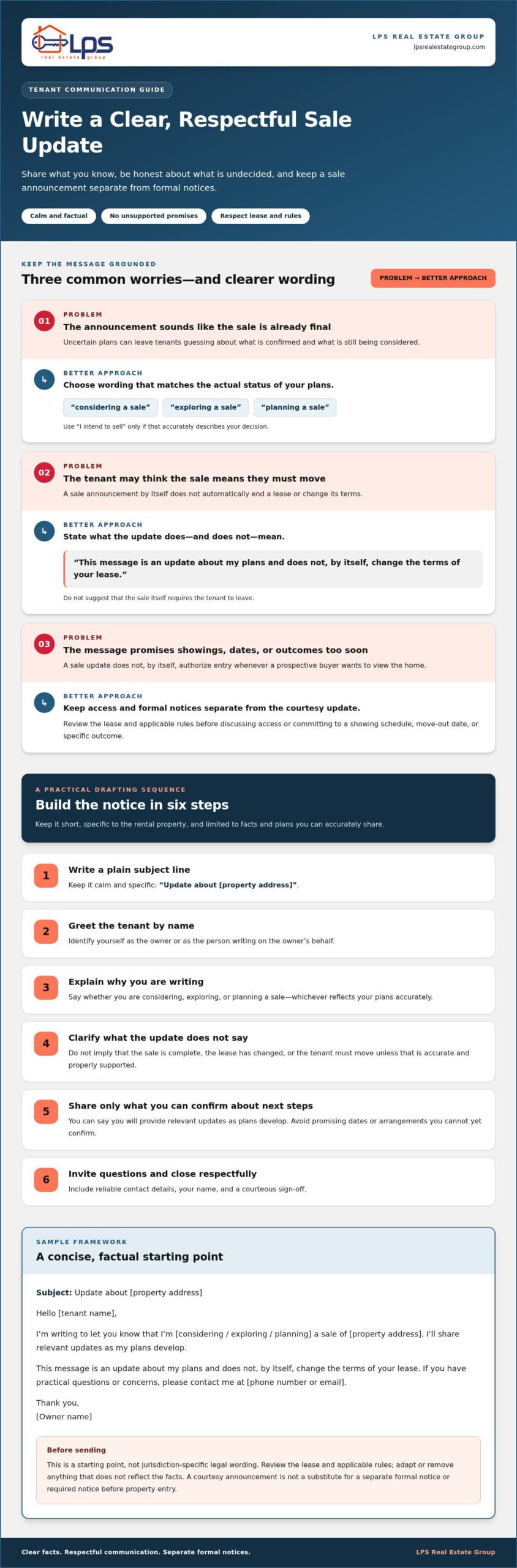
- Write a plain subject line. For example, “Update about [property address].” Keep it calm and specific.
- Greet the tenant by name and identify yourself as the owner or the person writing on the owner’s behalf.
- Explain why you’re writing. Say whether you’re considering a sale, exploring one, or intend to proceed. Choose the phrase that accurately reflects your plans.
- Clarify what the update does and doesn’t say. Don’t imply the sale is complete, the lease has changed, or the tenant must move unless that is accurate and properly supported.
- Share what you can about next steps. Say you’ll provide relevant updates as plans develop, without promising dates or arrangements you can’t yet confirm.
- Invite questions, add reliable contact details, and close respectfully. Include your name, preferred contact method, and a courteous sign-off.
Include the essential information tenants need
Identify the rental property clearly, especially if you own more than one. Keep the announcement short and factual. For example, “I’m writing to let you know that I’m exploring the possibility of selling the home” communicates your plans without presenting a sale as complete. Use “I intend to sell” only if that accurately describes your decision.
Sample framework
Subject: Update about [property address]
Hello [tenant name],
I’m writing to let you know that I’m [considering / exploring / planning] a sale of [property address]. I’ll share relevant updates as my plans develop. This message is an update about my plans and does not, by itself, change the terms of your lease. If you have practical questions or concerns, please contact me at [phone number or email].
Thank you,
[Owner name]
This is a starting point, not jurisdiction-specific legal wording. Adapt or remove any statement that doesn’t reflect the facts, and don’t use the sample to communicate a separate formal notice.
Choose wording that informs without alarming
A sale can raise understandable questions. Acknowledge that plainly, and invite tenants to share practical concerns without suggesting they control the sale or must agree to new terms. Avoid language like “you’ll need to move” or “you must allow showings” unless you’ve established a legal basis and are following the proper process for any required notice. Keep the tone measured: don’t promise that nothing will change if you can’t be certain.
Owners weighing a tenant-occupied sale can also consider direct property sale options. Whatever you decide, clear communication keeps the conversation grounded in what’s known and gives tenants a dependable way to reach you.
Check lease terms, tenant rights, and legal requirements before sending
A planned sale does not, by itself, establish that a tenant must leave. The effect of a sale depends on the lease, the property’s location, and the circumstances. A fixed-term tenancy and a periodic tenancy can raise different questions, so don’t assume that selling ends the agreement or that the same process applies to every renter.
Lease obligations and notice requirements depend on the agreement and the law that governs the property. Keep that distinction in mind before including a deadline, move-out request, or statement about what a future owner will do. An announcement about your plans should not promise an outcome you haven’t verified.
Confirm the lease and local rules without guessing
Read the current lease closely, including any terms about a sale, access for prospective buyers, renewal, assignment, or how written communications must be delivered. These provisions can help clarify what the agreement says, but they don’t replace applicable legal requirements. Check current state and local rules for any formal notice you plan to give.
Don’t borrow a notice period or form from another state and treat it as a national default. The property location, lease language, and reason for the notice may differ. If you’re unsure how to write a notice to tenants of intent to sell without implying a legal result, pause and seek qualified legal review before setting dates or describing tenant outcomes.
- Confirm the property’s jurisdiction and the rules currently in effect there.
- Compare the lease provisions with the purpose of the communication you’re preparing.
- Check delivery requirements before relying on a particular method or deadline.
- Get qualified review if the lease or local rules leave a material question unresolved.
Keep access and tenancy separate from the sale announcement
A sale-intent letter is not automatic permission to enter the home. Access for a buyer visit or other purpose may be governed by the lease and applicable law, including rules about notice. Treat showing arrangements as a separate practical and legal issue. Don’t write that tenants must accommodate visits just because you’ve announced your intention to sell.
Be equally careful about describing what happens to the tenancy after a sale. Don’t assure tenants that a buyer will keep, change, or end their lease unless that outcome has been established for this property. Where the lease’s duration or a proposed sale raises questions, avoid turning an assumption into a promise. You can say you’ll share accurate updates as plans develop while keeping the announcement separate from any formal action.
This review helps keep the message fair and grounded. If you’re preparing more than one communication, identify each one’s purpose before sending it: a sale update, an access notice, and a notice about tenancy are not interchangeable. Confirm the requirements for each rather than relying on a single letter to cover every step.
Plan delivery and follow-up so tenants know what happens next
Sending the message is only one part of communicating a planned sale. A simple process helps you keep the announcement accurate, preserve a record, and respond thoughtfully to questions. Keep this general update separate from any later communication about access, showings, an offer, or closing.
Select a delivery method and keep a record
First, review the lease and applicable rules for requirements about delivering formal notices. A courtesy announcement may be different, but don’t assume that email, text, or hand delivery will satisfy the requirements for a separate legal notice. Choose a documented method suited to the message, and verify the applicable rules before relying on it to meet a formal deadline or prove delivery.
Keep a copy of the final notice with the property’s tenancy documents. Save a record of when and how it was sent, along with any delivery confirmation you receive. This gives you a reference if you need to clarify what tenants were told or when they received the update. Keep subsequent communications organized separately so a sale announcement isn’t confused with a showing notice or another formal communication.
Prepare for questions without making premature promises
Tenants may want to know whether the sale is definite, how access will work, or whether their lease will be affected. Acknowledge the concern and respond with what you know. If plans are still developing, say so plainly rather than guessing about timing, buyer decisions, or the tenancy’s future.
As details change, share relevant updates clearly and promptly. If a later message concerns access or another formal matter, make its purpose clear and check the applicable requirements before sending it. A calm follow-up can support trust without blurring the line between an informal update and a notice with legal significance.
Pre-send checklist:
- Confirm the property address, tenant names, sender details, and description of the sale plan are accurate.
- Check that the tone is respectful and the message doesn’t imply the tenant must move or agree to showings.
- Review the notice for unsupported dates, promises, or statements about what a buyer will do.
- Make sure any attachment is relevant and contact details give tenants a reliable way to respond.
- Verify the appropriate delivery method, then save the final message and delivery record.
Once the announcement is sent, respond to practical questions without filling gaps with assumptions. If you’re also weighing a direct sale for a tenant-occupied property, discuss your property sale options with LPS Real Estate Group.
Consider your sale options after notifying tenants
Once tenants know you’re considering a sale, weigh the route that best fits the property and your plans. The announcement doesn’t commit you to a particular sale method. Compare the lease status, your preferred timing, the property’s condition, and how much coordination around access you’re prepared to manage. Whatever route you consider, you still need to respect tenant rights and follow applicable rules.
Compare sale paths using the owner’s circumstances
Marketing a property while it’s occupied may involve planning around the lease, appropriate access, and communication with tenants. A direct sale is another route to consider. If timing is flexible, you might also revisit when to sell after reviewing the tenancy and property condition. Each path has tradeoffs, and none guarantees a particular closing date, price, or outcome for the tenant.
- Market while occupied: Consider how the lease and lawful showing arrangements may shape the process, and whether you can coordinate access while respecting the tenant’s home and privacy.
- Explore a direct sale: Consider whether a direct acquisition fits your goals, including whether you’d prefer to discuss the property in its current condition.
- Revisit timing: If the lease, property condition, or your own plans make an immediate sale difficult, consider whether a different timeline better fits your circumstances.
For example, an owner with a tenant in a fixed-term lease may need to consider the lease period and applicable rules before deciding how to proceed. An owner focused on reducing coordination may want to compare the practical demands of marketing an occupied property with discussing a direct sale. These are decision points, not legal conclusions. The lease and applicable requirements still guide what you can do.
When a direct-sale conversation may help
A direct-sale discussion can help you compare an acquisition with other paths before making a decision. LPS Real Estate Group buys residential properties directly and considers as-is properties, so you can discuss the property and your circumstances without assuming a particular offer or result. The conversation can help clarify which factors matter to your next step.
As you compare options, keep the tenant informed about confirmed changes, and handle questions about access or tenancy separately from sale discussions. A clear plan fits the property while staying grounded in the lease and applicable rules. If you’re weighing possible routes, discuss your property and possible sale paths with LPS Real Estate Group.
Take the Next Step at Your Own Pace
Your notice can open a thoughtful conversation without forcing every sale decision at once. After sending it, consider what matters most for the property and your circumstances. The care you bring to the wording can carry into the decisions that follow: be open about what’s known, measured about what’s uncertain, and clear about the path you choose.
If you’re ready to explore what a sale could look like, consider the approach that fits your goals and the property’s needs. LPS Real Estate Group can discuss possible paths with you in a clear, straightforward way. Talk through your property sale plans with LPS Real Estate Group and take the next step.
Frequently Asked Questions
Do I have to notify tenants before selling a rental property?
Whether you must give a separate sale announcement depends on the rules that apply to the property and the lease. A courtesy update is distinct from required notices, such as notice before entry. Even if a sale announcement isn’t required, telling tenants about your plans can help prevent confusion. Check local requirements before deciding what to send, when to send it, and whether a specific delivery method is required.
Does selling a rental property automatically end the tenant’s lease?
No, a sale doesn’t automatically mean the tenant’s lease ends. In many jurisdictions, a fixed-term lease may continue after ownership changes, while periodic tenancies may involve different rules. The result depends on the agreement, local law, and circumstances of the sale. Don’t tell a tenant to plan a move just because you’ve accepted an offer. Confirm the lease’s status and any legal requirements before describing what happens next.
Can I email a notice of intent to sell to my tenants?
You may be able to email a courtesy update, but don’t assume email satisfies the rules for a formal notice. Check the lease and applicable requirements, including any terms about electronic communication or delivery. Keep a copy of the sent message and any delivery record. Make the subject line clear, and avoid attaching sensitive sale documents or sharing details that aren’t relevant to the tenant.
Should I include a date when the property will be sold?
Include a date only if it’s confirmed and useful to the tenant. A planned sale date can change, and a closing date may depend on steps that aren’t complete when you send the announcement. If you don’t know the timing, say that plans are still developing and that you’ll share meaningful updates. Avoid making an estimate sound final or implying that the tenant’s lease ends on that date.
Can tenants refuse showings after receiving a sale notice?
A sale announcement alone doesn’t settle whether a tenant can refuse a proposed showing. Access rules depend on the lease and applicable law, including any notice requirements and limits on entry. If a tenant objects, don’t treat the announcement as permission to enter or escalate the situation. Review the relevant terms, communicate about practical concerns, and follow the proper process for arranging access.
What should I do if a tenant is upset about the planned sale?
Listen first, acknowledge that a sale can create uncertainty, and ask what specific concern they have. They may be worried about privacy, disruption, or what could happen to their lease. Respond only with information you can verify, and avoid arguing or promising an outcome you can’t control. If the tenant raises a question about their rights or the lease, check the applicable terms and rules before replying.
Is a notice of intent to sell the same as a notice to enter?
No. A sale-intent message tells tenants about your plans, while a notice to enter concerns a proposed visit to the home. The entry notice may have separate requirements for timing, delivery, and purpose, depending on the lease and local rules. Telling a tenant you plan to sell doesn’t by itself announce a buyer’s visit. Send a separate, accurate communication for access when required.