

The fastest way to sell a parcel of land isn’t always the route with the most buyers. It’s often the one that matches your parcel to a ready buyer and has the key paperwork in order. If you’re looking for the fastest way to sell a parcel of land, uncertainty about access, zoning, title, or liens can make the process feel harder to predict.
It’s understandable to want a quick sale without accepting an offer you’ll regret. The right approach depends on your priorities, the land’s condition and records, and how much time you can allow for marketing and due diligence. A direct sale to an investor, a listing, an auction, or owner financing may each suit different circumstances, with trade-offs in speed, certainty, and price.
This guide explains how to prepare your parcel, compare realistic sale routes, and address common sources of delay. You’ll also learn which details buyers often need, so you can take informed steps toward a clear closing process.
Key Takeaways
- The fastest way to sell a parcel of land depends on buyer fit, how ready the parcel is, and what matters most to you, not a guaranteed timeline.
- Gather ownership, tax, survey, and parcel details early so buyers can assess the land and questions are less likely to slow discussions.
- Compare direct outreach, agent-led marketing, auctions, and neighboring-owner outreach by seller effort, buyer exposure, and the steps each route involves.
- Keep parcel information accurate and consistent as you move from confirming ownership to agreeing on terms and coordinating closing.
- LPS Real Estate Group focuses on direct residential-property acquisitions, cash offers, and tailored exit strategies for residential-property sale situations.
Fastest Way to Sell a Parcel of Land: Start With Your Goal and the Parcel
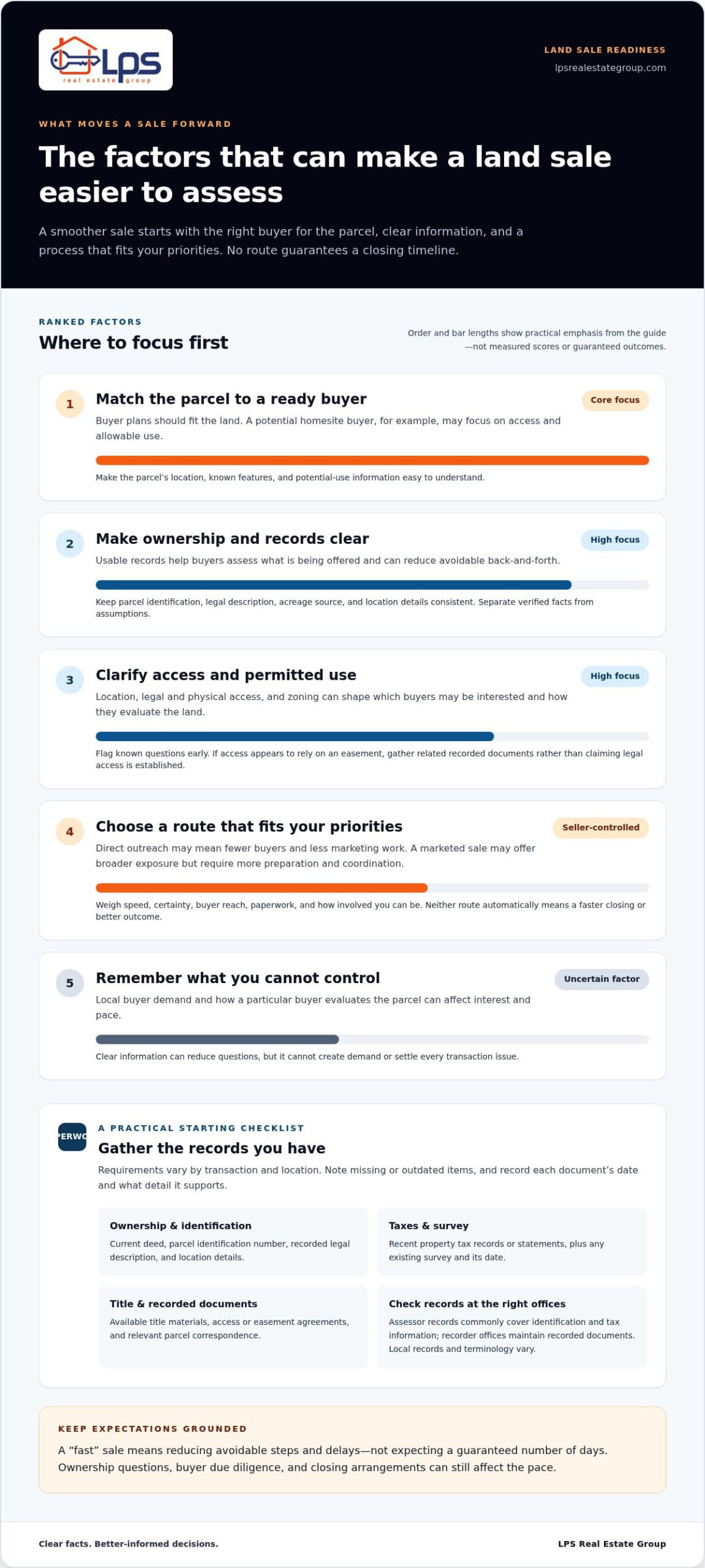
The fastest way to sell a parcel of land depends on finding a buyer whose plans fit the property, making its details easy to understand, and choosing a process that suits your priorities. A “fast” sale means reducing avoidable steps and delays, not expecting a guaranteed number of days. Ownership questions, buyer due diligence, and closing arrangements can still affect the pace.
Start by separating what you can prepare from what you can’t control. You can organize records, describe the parcel accurately, and decide how much work you want to manage. You can’t control the level of buyer demand, how a particular buyer evaluates the land, or how quickly transaction details are resolved. The broad category of real estate includes land, but each parcel has its own practical questions and potential uses.
What can make one parcel sell faster than another?
A buyer can assess a parcel more easily when ownership is clear, records are usable, and basic details are readily available. Location, legal and physical access, permitted uses, and local buyer demand also shape who may be interested. For example, a buyer considering a homesite may focus on access and allowable use, while another buyer may have different plans. Clear information can reduce back-and-forth, but it can’t create demand or settle every transaction question.
Focus first on facts you can verify and explain consistently. Check that the parcel identification number, legal description, acreage source, and location description match across the records you share. If a detail is uncertain, avoid presenting an assumption as fact. That simple discipline helps set realistic expectations and keeps conversations grounded.
Which sale priorities should guide your first decision?
A direct process may involve speaking with fewer potential buyers and less marketing work, while a marketed sale can provide broader exposure but may require more preparation and coordination. Neither route automatically means a faster closing or a better outcome. The right choice depends on how you weigh speed, certainty, buyer reach, paperwork, and your capacity to stay involved.
Before selecting a route, write down your answers to three questions:
- What’s your deadline? Consider whether it’s firm or whether you have room to compare options.
- Which trade-offs are acceptable? Decide how you balance a streamlined process against reaching more potential buyers.
- How involved do you want to be? Be realistic about the time you can give to inquiries, information requests, and transaction steps.
Your answers create a useful starting point, not a binding decision. If time is the priority and you want fewer marketing tasks, you may favor a direct approach. If wider buyer exposure matters more and you can manage additional steps, a marketed sale may better match your goals. In either case, parcel readiness and buyer fit remain central. Use your priorities to compare routes, then prepare the information that will help a buyer understand what’s being offered.
Prepare Parcel Records and Resolve Questions Before Marketing the Land
Organized records help a prospective buyer understand what’s being offered and identify questions early. Requirements vary by transaction and jurisdiction, so treat this as a practical starting checklist rather than a list of documents every sale must include. Gather what you have, note anything missing or outdated, and avoid presenting uncertain details as confirmed facts.
Which parcel documents should a seller gather first?
Start with records that identify the property and show what you know about it. Keep clear copies together, and note the date of any survey or other document that may no longer reflect current conditions. A simple inventory can help: list each record, its date, and the detail it supports. This makes it easier to answer questions without overstating what a document establishes.
- Current deed: Use it to review the recorded ownership information and legal description.
- Parcel identification details: Record the parcel number and the property’s location as shown in available records.
- Tax information: Gather recent property tax records or statements.
- Existing survey: Include any survey you have, even if you’re unsure whether it’s current.
- Available title documents and correspondence: Collect title materials, access or easement agreements, and relevant communications about the parcel.
County assessor and county recorder records generally serve different purposes. An assessor’s records commonly provide property identification and tax-related information, while a recorder’s office maintains recorded documents such as deeds and other instruments. The offices, available records, and terminology vary by location, so check the appropriate local sources rather than assuming one record answers every question.
How do access, zoning, and title questions affect readiness?
Road access, recorded easements, zoning, liens, and shared ownership can shape a buyer’s assessment of a parcel. Flag known issues early. For example, if access appears to rely on an easement, gather any related recorded document instead of describing the route as legally secured unless that’s been established. Keep verified facts separate from assumptions, and seek qualified legal guidance for interpretations of ownership rights or land-use rules.
A title search reviews public records to identify recorded ownership interests, liens, and other matters that may affect title to the property. A title company can be a useful transaction resource, but the steps and findings depend on the circumstances and applicable local practices. For broader real estate industry information, see this real estate resource, while confirming property-specific requirements with relevant local professionals.
To prepare for buyer questions, make a simple note of what each document establishes, what it doesn’t establish, and what still needs clarification. This can make the fastest way to sell a parcel of land more achievable by reducing avoidable confusion, though it can’t guarantee a particular buyer or closing date. If the sale involves a residential property as well as land, you can discuss your residential-property sale situation with LPS Real Estate Group, which focuses on direct residential-property acquisitions and tailored exit strategies.
Compare Land-Sale Routes by Speed, Certainty, and Seller Effort
No sale route is automatically the fastest or most certain. The right fit depends on who is likely to buy your parcel, how much preparation is needed, and how much work you want to take on. Use this comparison to consider the likely steps and trade-offs, rather than treating any route as a promise of a particular outcome.
| Sale route | Exposure and likely steps | Seller effort and timing factors |
|---|---|---|
| Direct buyer outreach | Targeted conversations with potential buyers, followed by offer discussions and due diligence. | May involve less public marketing, but timing depends on finding an interested buyer and agreeing on terms. |
| Agent-led marketing | Prepare marketing materials, reach a wider audience, manage inquiries, and consider offers. | Requires coordination and seller input. Buyer response, parcel appeal, and transaction review affect timing. |
| Auction | Set sale terms and present the parcel to an audience through a structured bidding process. | Preparation and auction conditions take coordination. Audience, bidder interest, and post-sale requirements can influence completion. |
| Neighboring-owner outreach | Approach adjoining owners who may see added value in owning or controlling nearby land. | Outreach can be focused, but interest, negotiations, and transaction steps determine how quickly a sale progresses. |
A cash offer may simplify financing contingencies because the buyer isn’t relying on a loan to fund the purchase. It doesn’t guarantee an immediate closing. The buyer may still need time for due diligence, title work, and other transaction requirements, and the parties must agree on terms.
If you’re weighing a direct approach for a broader property-sale situation that includes a home, explore a direct-sale conversation with LPS. LPS Real Estate Group focuses on direct residential-property acquisitions, cash offers, and tailored exit strategies.
When might a direct buyer or neighboring owner be worth considering?
A direct conversation may reduce public marketing steps if a suitable buyer is already interested and both sides can agree on terms. A neighboring owner may be worth approaching if the parcel connects to their land or could support an adjoining use. In either case, interest is only a starting point. Due diligence, title review, and transaction requirements still shape whether and when the sale can be completed.
When can an agent-marketed sale or auction make sense?
Agent-led marketing can help present a parcel to a broader group of potential buyers, though it calls for preparation and coordination. An auction offers a structured way to invite bids, with terms and audience shaped by the specific sale. Either route may suit a seller seeking wider exposure, but neither always produces a faster sale or stronger proceeds. Consider the work and uncertainty you’re willing to accept.
To narrow your options, ask whether your priority is fewer marketing steps, broad buyer exposure, or a defined bidding process. Then consider how much time you can devote to communication and decisions. The fastest way to sell a parcel of land is the route that aligns with those priorities and moves forward without avoidable gaps, while leaving room for buyer interest and transaction needs to vary.
Follow a Practical Checklist to Move a Land Sale Forward
A clear sequence can help you keep the sale organized from the first buyer conversation through closing. It won’t remove every delay, but consistent information and timely responses can prevent avoidable confusion. The fastest way to sell a parcel of land is more attainable when buyers can understand what’s documented, what’s still uncertain, and what needs to happen next.
What should a seller include in a land-sale information packet?
Put together a concise packet that gives buyers a reliable starting point. A complete, consistent document set can help buyers assess a parcel and identify questions sooner. Label each item clearly, use the same parcel details in every version, and distinguish records you have from information that still requires confirmation. Avoid describing a parcel as buildable, accessible, or suitable for a particular use unless you have support for that statement.
- Parcel identification details, a location description, and acreage as shown in available records.
- Known access information, including any available records or agreements related to roads or easements.
- Available survey, tax, zoning, title, and utility information.
- A short note identifying which details are documented and which may need further due diligence.
How can sellers reduce delays during due diligence and closing?
Stay organized after sharing the packet. Keep a record of buyer questions, documents sent, and items still outstanding. Respond promptly where you can, and disclose known issues early rather than waiting for them to surface later. For legal interpretations or jurisdiction-specific requirements, rely on qualified professionals rather than assumptions.
- Confirm ownership. Review the available deed and ownership records. If other people share ownership, clarify who needs to participate in sale discussions.
- Assemble parcel information. Collect identification details and available records. Note gaps or outdated documents so you can describe them accurately.
- Prepare consistent outreach materials. Use the same parcel description, acreage source, and access information in conversations and written materials. Correct discrepancies instead of repeating them.
- Share known questions early. Flag issues such as uncertain access, possible liens, easements, or use restrictions. State what you know, and avoid treating an unverified assumption as fact.
- Review and agree on terms. Read proposed terms carefully, clarify open questions, and make sure everyone understands what has been agreed before moving forward.
- Coordinate the closing steps. Work with the closing professional on title review, signatures, and applicable recording requirements. Procedures can vary by jurisdiction, so confirm the relevant steps with qualified professionals.
Keep communication straightforward. If a buyer asks for a document you don’t have, say so and explain what related information is available; don’t imply that a missing item exists. This helps both sides focus on the next useful step without creating unnecessary back-and-forth.
If your sale involves a residential property as well as land, review your property-sale options with LPS Real Estate Group. The company focuses on direct residential-property acquisitions, cash offers, as-is purchases, and tailored exit strategies.
Choose a Clear Next Step for Your Parcel and Sale Situation
Your next step should reflect three things: how urgent the sale is, how ready the parcel information is, and how much time and involvement you can manage. If your deadline is tight, a direct conversation may seem appealing, but it still depends on buyer interest, agreed terms, and transaction steps. If broader exposure matters more, a marketed sale may better fit your priorities. The fastest way to sell a parcel of land is the route that fits the circumstances without asking you to overlook important terms.
How can owners assess an offer without focusing on price alone?
Look at the full proposal, not just the headline amount. Compare expected net proceeds, required transaction steps, contingencies, timing expectations, and each party’s responsibilities. A higher offer may involve conditions or tasks that affect your plans, while a simpler offer may involve trade-offs of its own. Cash, direct, and as-is routes can suit some situations, but none is automatically the best choice for every seller.
Ask for important terms in writing and take time to understand what you’re agreeing to. If a contract raises legal questions, consult a qualified legal professional. For tax questions, a tax professional can help explain how the sale may affect your circumstances. Careful review can help you compare options clearly, even when you’re working toward a quick decision.
What if the parcel is inherited or part of a complex property situation?
Inherited land or shared ownership can add questions about who has authority to make decisions and sign documents. Estate status and ownership records may affect the steps and timing, so don’t assume that one family member can act for everyone. Clarify who needs to participate and seek qualified guidance on legal or estate questions. If the property is inherited, the inherited property sale guide offers additional context for heirs and executors.
If the situation also involves a home, LPS Real Estate Group provides direct residential-property acquisitions, cash offers, as-is purchases, and tailored exit strategies. For broader residential-property sale considerations, creative real estate exit strategies can help frame possible options.
Before deciding, write down your deadline, the trade-offs you can accept, and the parts of the process you want help managing. Then compare offers and routes against those priorities, with any open legal or tax questions addressed by qualified professionals. For a discussion about a residential-property sale, talk with LPS about your property-sale situation.
Take the Next Step With a Clear Plan
The fastest way to sell a parcel of land is the one that fits your deadline and circumstances without leaving important questions unanswered. You don’t need to solve every detail at once. Start by identifying the decision you need to make next, whether that’s organizing a missing record, clarifying who can authorize a sale, or choosing which route to explore.
If your situation also involves residential property, LPS Real Estate Group focuses on direct residential-property acquisitions, cash offers, as-is purchases, and tailored exit strategies. A thoughtful conversation about your broader property-sale circumstances can help you consider a clear path forward without pressure to decide before you’re ready.
Discuss your residential-property sale situation with LPS and take the next step with greater clarity. Whatever route you choose for your parcel, accurate information and a process that respects your priorities can help you move forward with confidence.
Frequently Asked Questions
Can I sell a parcel of land without a survey?
Yes, a sale may be possible without a recent survey, but whether one is needed depends on the parcel, buyer, title review, and agreed terms. The fastest way to sell a parcel of land isn’t necessarily to order a new survey before gauging buyer interest. First, locate any existing survey and compare its details with current property records. If boundary lines or access remain uncertain, a qualified land surveyor or closing professional can explain what documentation may be needed for the transaction.
Do I have to pay taxes when I sell vacant land?
A land sale can have tax consequences, but the amount and treatment depend on details such as how long and how the land was owned, its adjusted basis, sale proceeds, and your circumstances. Don’t assume a cash sale is tax-free or that an online example applies to you. Keep records of purchase and sale documents and relevant expenses, then consult a qualified tax professional before relying on an estimate or making tax decisions.
Can I sell land if I co-own it with someone else?
Often, a co-owned parcel can be sold only through an arrangement that accounts for each owner’s legal interest and any required signatures. The deed and applicable state law help determine who has authority to transfer ownership. For example, a co-owner who can’t participate may require additional guidance before a sale proceeds. Gather ownership documents early, and seek qualified legal or closing guidance if an owner disagrees, is unavailable, or has passed away.
Can I sell land that has no road access?
Possibly. Lack of direct road access doesn’t by itself settle whether a parcel can be sold, but it may affect its use, buyer interest, and review. Look for recorded easements and relevant property records rather than assuming a route exists or can be created. If a map shows a path but you can’t find documentation establishing access, describe that distinction clearly. A qualified title or real-estate professional can help interpret parcel-specific records.
Can I sell a parcel of land with a lien on it?
A lien doesn’t necessarily prevent a sale, but it may need to be addressed as part of the transaction. The lien’s type, recorded amount, ownership, and closing arrangements can all matter. Obtain current documentation instead of relying on an old statement or informal payoff estimate. A qualified title or closing professional can explain how the lien affects the transfer and any proceeds, based on the records and transaction details.
Can a 1031 exchange make selling land faster?
No, a 1031 exchange is a tax-deferral strategy for qualifying investment or business property, not a shortcut that automatically speeds up a sale. Eligibility, deadlines, and transaction structure can be complex, and personal-use property may be treated differently. If you’re considering an exchange, speak with a qualified tax adviser and exchange professional early enough to understand how it may affect your plans. This general information isn’t tax or legal advice.