
What if selling a house didn’t have to start with emptying every closet, cabinet, and garage? Selling a house without cleaning it out can be possible, especially when belongings feel overwhelming or family members disagree about what to keep. The key is to separate the home’s condition from its contents: an “as-is” sale doesn’t automatically mean a buyer has agreed to take everything inside.
This guide explains what to set aside, how to handle belongings that may remain, and how cleaning differs from preparing a home for sale. Knowing the difference can help you focus on essentials without taking on a full cleanout.
If clearing the property isn’t manageable, a direct as-is purchase may be another path. LPS Real Estate Group buys homes without requiring cleaning or repairs, with no commissions or hidden costs. The process starts with sharing property details, then reviewing a cash or creative offer and choosing a closing date. Here’s how to weigh your options and find a manageable way forward.
Key Takeaways
- A cleanout and an as-is sale are separate decisions. Put in writing what belongings will remain to help prevent misunderstandings.
- Before selling, set aside essentials such as personal documents, medications, valuables, photographs, and items with sentimental meaning.
- Selling a house without cleaning it out can involve different levels of effort and control. You might clear belongings first, arrange for some to remain, or consider a direct as-is purchase.
- Start with one small review of belongings, then choose a sale path that fits your capacity instead of trying to clear every room at once.
- LPS buys homes without requiring cleaning or repairs, with no commissions or hidden costs. Sellers choose the closing date.
Selling a House Without Cleaning It Out: What Does That Actually Mean?
Selling a house without cleaning it out means arranging a sale without first removing every piece of furniture, box, or household item. It doesn’t necessarily mean selling a dirty home, and it doesn’t automatically mean the buyer will accept every belonging left inside. The property’s condition and its contents are separate matters. Make sure the sale terms clearly state what stays and what goes.
The home’s sale condition describes the property itself; its contents are a separate decision to address in the sale agreement. This distinction can help if you’re dealing with an inherited home, preparing to relocate, facing repairs you can’t afford, or feeling overwhelmed by years of accumulated belongings. You don’t need to have a particular reason for a full cleanout to feel like too much.
Does a house have to be empty before it can be sold?
Not always. Whether a home must be empty depends on the buyer and the terms of the sale. Some traditional sale contracts may require the seller to leave the property empty or broom-clean, while a buyer may agree in writing to take the home with some contents remaining. Don’t assume every buyer or sale follows the same terms. Clarify what will happen to items left behind before agreeing to a sale.
LPS Real Estate Group buys residential properties as-is without requiring cleaning or repairs. There are no fees, commissions, or hidden costs. If clearing the house isn’t realistic, a direct purchase can be an option to consider without taking on a full cleanout first.
Cleaning, decluttering, and repairs are different choices
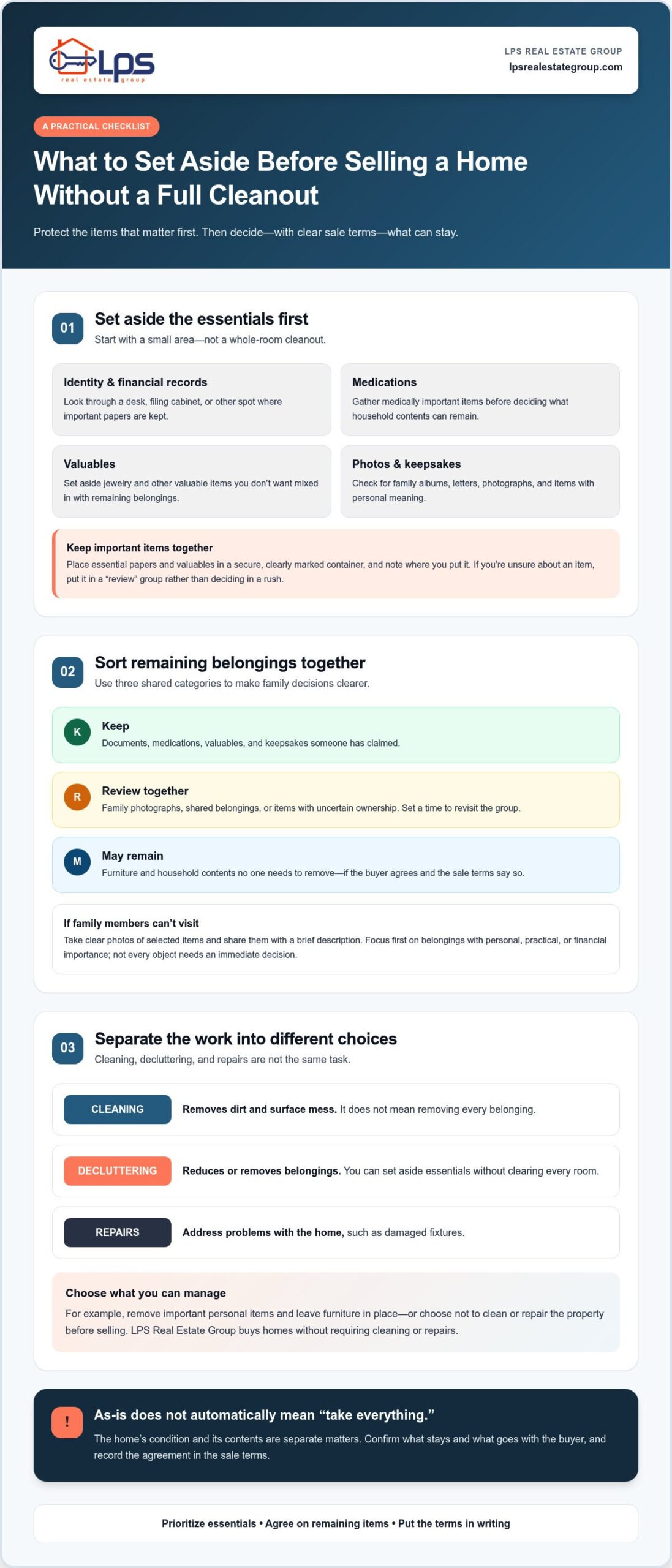
These tasks are often treated as one large job, but they serve different purposes. Cleaning removes dirt and surface mess. Decluttering means reducing or removing belongings. Repairs address problems with the home, such as damaged fixtures. You can consider each task separately rather than assuming all three are required.
For example, you might remove important personal items but leave furniture in place. Or you might choose not to clean or repair the property before selling. LPS doesn’t require cleaning or repairs before purchase.
There may also be ways to handle belongings without sorting every item yourself. An estate sale, for instance, is one approach people may use to sell household contents when downsizing or settling an estate. It isn’t the only option, and it may not suit every timeline or family situation. A useful first step is to identify what matters most to remove, then choose sale terms that fit what you can manage.
What Should You Set Aside Before Selling a House Without Cleaning It Out?
You don’t have to decide the fate of every object in the house before moving forward. Start with belongings that are private, valuable, medically important, or difficult to replace. This gives you a clear priority without turning the task into a room-by-room cleanout.
Set aside identity and financial records, medications, photographs, valuables, and keepsakes before deciding what can remain. If you’re selling an inherited home or coordinating a move, this short list can help you focus on important items while leaving less urgent decisions for later.
Which personal belongings should you review first?
Begin with a small, manageable area, such as a desk, bedside table, or filing cabinet. Look for identity records, financial papers, photographs, medications, jewelry, and other valuables. Then gather items with clear personal meaning, such as letters, family albums, or keepsakes someone has asked to save. You’re identifying priorities, not committing to empty the whole room.
If you’re unsure about an item, put it in a “review” group rather than making a rushed decision. Keep essential papers and valuables together in a secure, clearly marked container, and note where you put them. This can help prevent important items from getting mixed in with belongings that may remain.
When selling a house without cleaning it out, focus on what you can reasonably identify and remove. LPS buys homes without requiring a complete room-by-room cleanout, cleaning, or repairs. You can set aside personal essentials and address the remaining contents as part of the sale arrangement.
How can family members make decisions about remaining items?
Disagreements often come from different assumptions about what should be saved, sold, or left in the home. Make a shared list with three categories: “keep,” “review together,” and “may remain.” Give family members a chance to identify keepsakes before the sale moves ahead. For relatives who can’t visit, take clear photos of selected items and share them with a brief description.
Set a time to revisit the “review together” group. If everyone can’t agree, avoid treating every object as urgent. Focus first on items with personal, practical, or financial importance, then talk through the rest. If the home was inherited, a guide to selling an inherited property may also help as you consider next steps.
- Keep: Documents, medications, valuables, and keepsakes someone has claimed.
- Review together: Family photographs, shared belongings, or items with uncertain ownership.
- May remain: Furniture and household contents no one needs to remove, if the buyer agrees and the sale terms reflect it.
Be specific about what will stay in the home and record the agreement in the sale terms. LPS buys homes as-is without requiring cleaning or repairs, with no commissions or hidden costs. For more information, see selling a home directly to LPS.
Compare Your Options for Selling a House Without a Full Cleanout
There isn’t one right approach for every household. Your choice depends on how much sorting and removal you can manage, whether you want belongings to remain, and how much control you want over the process. This comparison can help you weigh the practical differences before deciding how to move forward.
| Sale approach | Effort before sale | What happens to belongings | Seller control |
|---|---|---|---|
| Clean out before selling | Highest. You arrange or complete sorting and removal, plus any separate cleaning or repairs you choose. | You decide what to keep, give away, or remove; the property is left more empty. | You make the decisions about contents, but take on the work of clearing them. |
| Sell with belongings remaining | Varies. You still need to identify personal items and agree on what stays. | Some contents remain only if the buyer agrees to those terms. | Depends on the written agreement about which items stay and who handles them. |
| Direct as-is purchase | Lower. LPS doesn’t require cleaning or repairs before purchase. | You can set aside what matters and discuss the remaining contents as part of the sale arrangement. | LPS presents a no-obligation cash or creative offer, and you decide whether to proceed. |
What changes if you clean out the house before selling?
A cleanout gives you more opportunity to sort possessions and decide where they go. It may also leave the home empty for the next step. But clearing a house takes planning and physical effort, especially when it contains years of belongings or items spread across several rooms. Cleaning out doesn’t guarantee a better offer or a faster sale, so weigh the work against what you need and can manage.
When might a direct as-is sale fit better?
A direct as-is purchase may suit you if you want to avoid a full cleanout and repairs. LPS buys residential properties in any condition without requiring cleaning or repairs, and presents a no-obligation cash or creative offer. There are $0 fees, commissions, or hidden costs. You can review the offer and decide whether its terms fit your circumstances.
When selling a house without cleaning it out, remember that “as-is” describes the home’s condition; it doesn’t automatically settle what happens to the contents. If you’re considering a sale with belongings remaining, write down what will stay and include that understanding in the agreement. This makes the arrangement clearer for everyone.
To compare the choices, ask yourself: How much work can I take on? Which belongings must leave? Do I want to manage removal, or would I prefer to discuss leaving items in place? A complete guide to selling a house as-is can explain that sale approach further. Your answers can point toward an option that balances effort and control.
A Practical Plan for Selling Without Clearing Every Room
You don’t have to sort the whole house before making a sale plan. Start with a short review of belongings you can identify, then choose an approach based on the time, energy, and help available to you. The goal is to make the decisions that matter, not to create a new obligation to empty every room.
Use a short decision list instead of tackling the whole house
Choose one manageable area, such as a desk or a single shelf. Set a stopping point before you begin, such as gathering important papers into one folder or reviewing one container. When you reach it, pause and decide whether you have the capacity to continue another day. Small boundaries can keep the task from turning into an overwhelming cleanout.
Use three simple categories to guide the review:
- Remove: Personal documents, medications, valuables, and items you already know you want to keep.
- Discuss: Belongings family members may want to claim or review together.
- May remain: Items no one plans to take, subject to a clear agreement about the sale.
You control what you set aside and how much sorting you take on. You don’t need to resolve every uncertain item before considering your sale options. If a family member is helping, agree on a time to review the “discuss” group rather than letting the list grow without a plan.
Make the belongings plan clear during the sale
Once you know what you’ll keep, share that plan as you discuss the sale. Be direct about which belongings you intend to remove and which you hope to leave. A buyer may have different expectations, so don’t rely on assumptions or a casual conversation. The sale arrangement should clearly state how remaining contents will be handled.
This is especially helpful if some rooms are still full or relatives are making decisions from a distance. A concise written list can make the discussion easier: identify items to remove, items that need a family decision, and items proposed to remain. If the buyer agrees that belongings can stay, make sure that understanding is reflected in the sale terms. Clear terms can reduce last-minute confusion without requiring you to clear the property first.
Next, match the sale approach to your capacity. If you can manage a full cleanout and want to decide where everything goes, that may suit you. If you’d rather avoid cleaning and repairs, consider selling a house as-is through LPS. LPS buys properties as-is without requiring cleaning or repairs, and there are no fees, commissions, or hidden costs. You share the property details, receive a no-obligation cash or creative offer, and choose a closing date. Closing can happen as little as 7 days or on your schedule.
For selling a house without cleaning it out, your next step can be modest: make a short list, communicate it clearly, and choose a sale path that fits what you can realistically handle.
How LPS Buys a House Without Requiring a Cleanout
If clearing a property feels like a barrier to moving forward, a direct as-is purchase may be worth considering. LPS Real Estate Group buys residential properties in any condition, and you don’t have to clean or repair the home before purchase. That can make the process more manageable when the house is full of belongings, needs work, or both.
As-is describes the property’s condition, but the belongings still need a clear conversation. Decide what you want to keep, then discuss what may remain as part of the sale arrangement. You don’t need to sort every room before sharing the property details. LPS presents a no-obligation offer, so you can review the terms and decide whether to proceed.
LPS’s three steps from property details to closing date
The process is straightforward and leaves key decisions with you. First, share details about the property. Next, LPS presents a no-obligation cash or creative offer. If you choose to move forward, you select a closing date. There are no fees, commissions, or hidden costs, and LPS covers typical closing costs.
- Provide property details. Share information about the home so LPS can consider the property.
- Review the offer. LPS presents a no-obligation cash or creative offer for you to consider.
- Choose a closing date. If you accept, you select a date that works for your plans.
This gives you room to consider the offer rather than committing simply because you started the conversation. Weigh the terms against the work a cleanout would involve, your family’s needs, and the timing that suits your circumstances.
Keep control of your belongings and timing
Cleaning and repairs aren’t required for an LPS purchase. You can set aside the personal items you need and discuss the remaining contents instead of treating a complete cleanout as a condition of starting the sale. Be clear about what you plan to remove and what you hope to leave, and make sure the sale arrangement reflects what has been agreed.
Closing can happen as little as 7 days or on your schedule. Choose the timing that works for you; a quicker option doesn’t mean you have to take it. If you need time to coordinate family decisions or plan your next move, you can select a closing date that fits.
Selling a house without cleaning it out doesn’t mean giving up control. You can identify the belongings that matter, understand the offer, and decide whether the arrangement suits you. A no-obligation offer lets you review an option that doesn’t require cleaning or repairs before deciding whether to proceed.
Choose a Next Step That Fits Your Capacity
You don’t have to settle every family question or clear every room before deciding how to move forward. Start with what you know: which belongings must come with you, what remains undecided, and how much time and energy you can put toward the property. Selling a house without cleaning it out can be practical when a full cleanout feels out of reach. A manageable next step is enough.
As you consider your options, focus on one decision you can make now, such as setting aside essential belongings or identifying what you’d like to leave. If items may remain, make sure the sale arrangement clearly states what’s agreed. You can move forward without solving every detail at once.
If a direct sale could fit, LPS buys homes as-is with no cleaning or repairs required. There are $0 fees, commissions, or hidden costs, and You can review a no-obligation offer at your own pace: Share your property details and explore a no-obligation offer.
Choose the path that respects your circumstances, then take it one decision at a time.
Frequently Asked Questions
Can I sell a house without cleaning it out first?
Yes, you can sell without completing a full cleanout, provided the sale terms account for belongings left behind. Selling a house without cleaning it out may suit you if removal is impractical. LPS buys homes as-is, with no cleaning or repairs required and $0 fees, commissions, or hidden costs. Set aside the records and keepsakes you need, then make sure the sale arrangement states what will remain.
Do I have to remove every piece of furniture before selling?
No. Removing every piece of furniture isn’t automatically required for every sale. With an LPS as-is purchase, you don’t need to clear the home before receiving an offer. LPS requires no cleaning or repairs, and there are $0 fees, commissions, or hidden costs. Identify furniture or personal items you plan to take, then discuss what may stay so the sale terms are clear.
Can I sell an inherited house if it still has the previous owner’s belongings?
Yes, belongings left in an inherited home don’t by themselves prevent you from considering a sale. Give family members a chance to claim meaningful items, and gather documents or photographs they want to preserve. If ownership or authority to sell is unresolved, clarify that before proceeding. LPS buys inherited properties as-is without cleaning or repairs, with $0 fees, commissions, or hidden costs.
What should I remove from a house before selling it?
Start with items that are personal, important, or hard to replace: identity and financial records, photographs, medications, valuables, and family keepsakes. Check places where important items may be stored, such as desk drawers, file folders, or a bedside table. You don’t need to empty every room to make a useful start. Keep a simple list of what you’ll take, what needs discussion, and what may remain under the sale terms.
Does selling a house as-is mean I have to leave everything behind?
No. “As-is” describes the home’s condition, not an automatic requirement to leave all personal belongings. Decide what you need to take, then communicate your plans and agree on how remaining items will be handled. Don’t assume furniture or other contents are included simply because the property is being sold as-is. Clear, written terms help everyone understand what stays and what you’ll remove before closing.
Can I choose the closing date when selling my house to LPS?
Yes. After LPS presents a no-obligation cash or creative offer, you select the closing date. LPS buys as-is without cleaning or repairs, and there are $0 fees, commissions, or hidden costs. Choosing a date that fits your plans can give you time to coordinate a move or other responsibilities without making a cleanout a prerequisite.
How does the condition of the house affect a cash offer?
LPS says its offer amount varies based on the market, the property’s condition, and the closing speed you want. The property can be considered as-is, so cleaning or repairs aren’t required before you receive an offer. LPS has no repair requirements, and charges $0 fees, commissions, or hidden costs. The offer is no-obligation, giving you the choice to review its terms and decide whether they fit your situation.
Ready to consider a sale without a full cleanout? Share your property details with LPS Real Estate Group and review a no-obligation offer.