

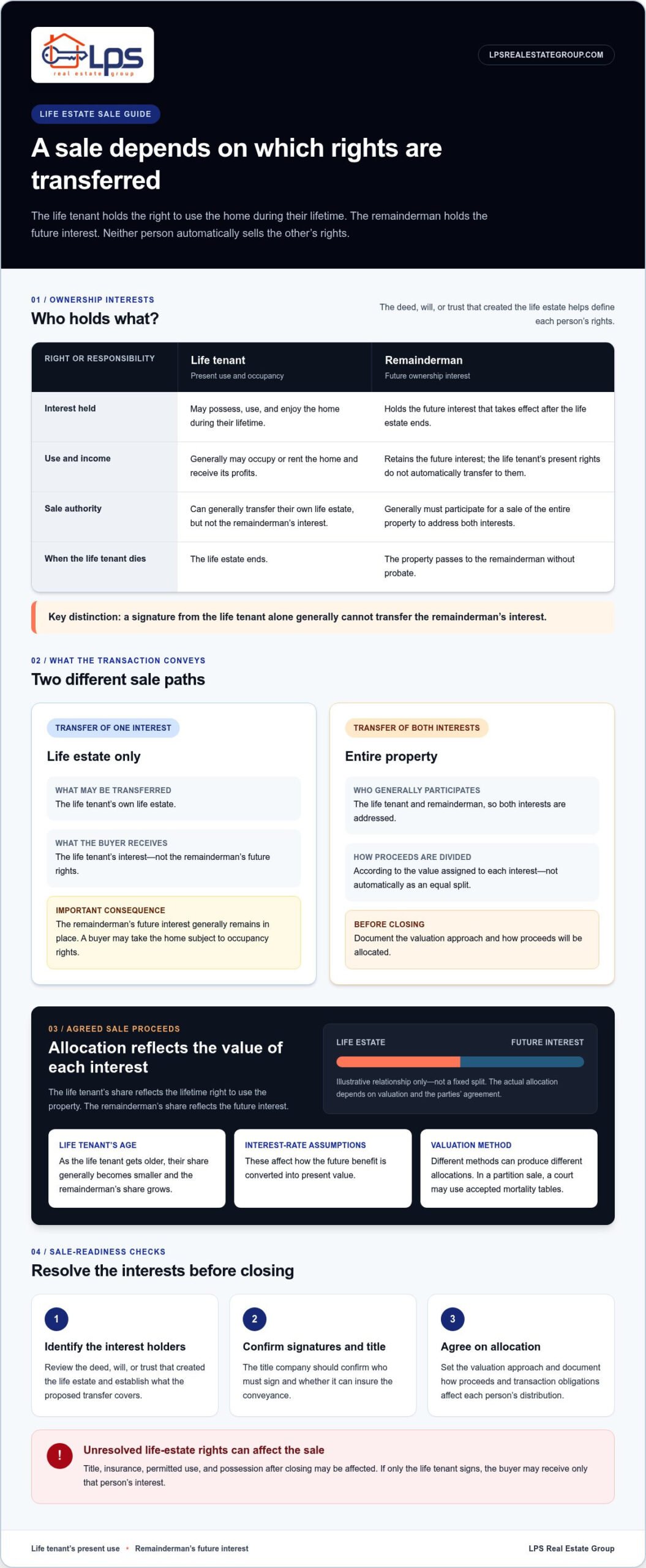
What happens when a life tenant wants to sell depends on which property interest they own. A life tenant can generally transfer their life estate, but selling the entire property usually requires the remainderman to join the sale. If both agree, they can sell the home and divide the proceeds between them.
The distinction can feel confusing, especially when the life tenant has lived in or cared for the home for years. The life tenant has the right to use and occupy the property during their lifetime, while the remainderman holds the future interest. Neither person automatically has the power to sell the other’s rights.
This article explains who holds which rights in a life estate, what a life tenant may sell, when the remainderman’s agreement is needed, and how the parties may divide the proceeds. It also covers why the deed or trust documents matter and what can complicate a sale, helping you understand the options before deciding what to do next.
Key Takeaways
- Know the difference between the life tenant’s right to use the home and the remainderman’s future ownership before discussing a sale.
- Understand why selling the full property usually involves both interest holders, while transferring only the life estate is a different option.
- Learn what can happen to ownership when the life tenant dies and how the parties’ interests affect sale proceeds.
- Explore whether an as-is purchase could suit a property sale that involves a life estate.
Can a life tenant sell the home without the remainderman?
A life tenant can usually transfer their life estate, but cannot sell the entire home free of the remainderman’s rights. To understand what happens when a life tenant wants to sell, first identify which interest the proposed sale covers.
Ownership Interests and Roles
A life estate separates present use from future ownership: the life tenant may possess the home during their lifetime, while the remainderman holds the future interest. Neither person automatically controls the other’s rights. For example, the life tenant’s signature alone generally cannot transfer the remainderman’s interest.
The life tenant holds the right to possess the property now; the remainderman holds the ownership interest that takes effect after the life estate ends. A sale plan must account for both interests, even if only one person currently lives in the home.
State Rules for Selling a Life Estate
State law and the documents that created the life estate can affect how an interest may be transferred. A life estate may be created through a deed, will, or trust, and that document helps define each person’s rights. The applicable rules matter because a transaction may cover only the life tenant’s interest or the entire property.
Before planning a sale, identify every interest holder and review the document that created the life estate. This helps establish who needs to take part and what the proposed transfer can convey.
Remainder Interests After a Sale
If a life tenant transfers only their life estate, the remainderman’s future interest generally remains in place. The buyer receives the life tenant’s interest, not the remainderman’s rights. The life estate does not simply disappear when a buyer acquires an interest.
When the life tenant dies, the property passes to the remainderman without probate. Selling the entire property is different: the remainderman generally must participate so both interests are addressed.
Potential Title Issues and Risks
An unresolved life estate can affect title, insurance, permitted use, and possession after closing. If the life estate is not properly addressed, a buyer may take the home subject to the life tenant’s occupancy rights.
Before closing, the title company should confirm who must sign and whether it can insure the conveyance. For example, if only the life tenant signs, the buyer may receive only that person’s interest. Understanding what happens when a life tenant wants to sell helps distinguish a transfer of one interest from a sale of the whole property.
Division of sale proceeds
When a life tenant and remainderman agree to sell the entire property, the proceeds are generally divided according to the value of each interest. The life tenant’s share reflects the life estate, while the remainderman receives the value of the future interest. The exact allocation depends on how the interests are valued and what the parties agree to before closing.
Valuing the Life Tenant’s Share
Actuarial tables can estimate the life tenant’s share by valuing the right to use the property during their lifetime. Age matters: as the life tenant gets older, their share generally becomes smaller, while the remainderman’s share grows. Interest-rate assumptions also affect how the future benefit is converted into present value, so valuation methods can produce different allocations.
In a partition sale, a court may use accepted mortality tables to value a participating life tenant’s share and pay it from the proceeds. This provides a structured valuation method when the parties cannot agree on an allocation themselves.
Allocating Proceeds From a Sale
For an agreed sale, the life tenant and remainderman can document how the proceeds will be allocated. The division should reflect the value assigned to each estate interest, rather than assume an equal split. For example, the life tenant’s share may differ because their right to use the property lasts only for their lifetime, while the remainderman’s interest takes effect later.
A written agreement can also clarify how transaction obligations affect each person’s distribution. This gives the parties a shared record of the allocation and can help prevent disputes over who receives each portion after closing.
For a family home, identify every interest holder and discuss the proposed terms together. Agree on the valuation approach and how proceeds will be distributed before closing, so each person understands the arrangement. If the property is inherited or needs to be sold as-is, an as-is property acquisition may be an option to consider.
Who Owns the Property in a Life Estate?
A life estate separates the right to use a home now from the future ownership interest. The deed, will, or trust that created it helps define both interests and their limits.
Use, Control, and Rental Rights
The life tenant generally may occupy, use, and enjoy the home during their lifetime, and may rent it or receive its profits. Moving elsewhere does not automatically end the life estate. For example, a life tenant who rents the home may receive the rental income while the remainderman retains the future interest.
Present use also comes with responsibilities. The life tenant is generally responsible for property taxes, maintenance, and upkeep. If the roof needs repair or a tax bill goes unpaid, these issues can affect the property and the interests held by others. A remainderman or reversioner who pays property taxes may be able to recover that payment.
Consent to Sell or Mortgage
A life tenant generally cannot sell or mortgage the entire property without the remainderman’s agreement. The tenant may transfer only their life estate, but that does not convey the future interest. For example, a buyer of the life tenant’s interest receives rights tied to that estate, not automatic ownership of the whole home.
For a whole-property sale, review the deed, will, or trust and identify every interest holder. The life tenant and remainderman generally sign to convey their interests. If a trustee holds the remainder, the trust documents determine the trustee’s authority to sell. An attorney can assess how the documents apply to the family’s circumstances.
Taxes and closing costs depend on the transaction, applicable rules, and the documents governing the sale. The closing statement can account for relevant tax adjustments, liens, and agreed transaction costs. Each person’s tax treatment may also depend on their share and circumstances, so include these factors in sale planning.
What a life tenant may sell
A life tenant may generally transfer their life estate, but not the remainderman’s future interest. That distinction determines what a buyer receives and whether the entire property can be conveyed.
Selling the Entire Property or an Interest
A life tenant can sell their own interest, giving the buyer rights tied to the life estate. The buyer does not automatically receive the remainderman’s interest. To sell the entire property with both interests included, the remainderman generally must join the transaction.
North Carolina illustrates the distinction: a life tenant generally cannot sell the whole property without the remaindermen joining, but can typically transfer only the life estate. If the life tenant sells that limited interest, the life estate continues, and the buyer’s rights remain tied to its duration.
Steps to Sell a Life Estate Interest
Start by reviewing the deed, will, or trust that created the life estate. Identify the life tenant, each remainderman, and whether a trustee holds an interest. These details help establish whether the proposed transfer covers only the life estate or the whole property.
Next, describe the interest accurately to a potential buyer and have the title company confirm who must sign and whether the conveyance can be insured. In Tennessee, a life tenant should identify all interest holders and consult an attorney before setting a listing plan. State rules and the document that created the life estate can affect the transfer.
Before signing, make sure the proposed sale documents describe the interest being conveyed, not simply the home as a whole. A buyer who acquires only the life estate does not thereby acquire the remainder interest. If the property needs an as-is sale, discuss your property sale options and clarify which interests can be included.
LPS Real Estate Group: Cash Home Buying
LPS Real Estate Group buys homes directly through cash offers and creative finance solutions, including as-is property acquisitions. If the life tenant and remainderman agree to sell the entire home, a direct sale can be an option, including when the property needs work. The terms of a direct sale may vary, so confirm any repair, cleaning, commission, fee, or other cost before proceeding. The interests and signatures needed to convey the property still matter, so identify who holds each interest before proceeding.
For inherited homes or more complicated property circumstances, probate and inherited property buyouts and creative finance solutions may also be relevant. These options do not replace the need to resolve ownership rights; the sale must account for the interests recorded in the deed, will, or trust.
If you’re considering a sale, contact LPS Real Estate Group to discuss the property and your circumstances.
Choose a Next Step That Fits Your Situation
Understanding what happens when a life tenant wants to sell is only part of the decision. The next step is to bring the people involved together around a clear plan that respects each person’s interests and practical needs. Consider the timing, the home’s condition, and whether keeping or selling the property best fits your circumstances.
LPS Real Estate Group offers Cash Home Buying, Foreclosure Prevention Purchase, and As-Is Property Acquisition. These options may be relevant when the interest holders are considering a direct sale, facing foreclosure concerns, or dealing with a home that needs work. The ownership interests still need to be addressed as part of any sale.
If you’re ready to discuss a possible property sale, contact LPS Real Estate Group. A thoughtful next step can help you move forward with greater clarity.
Frequently Asked Questions
What Is a Life Estate in Tennessee Real Estate?
A life estate gives one person the right to use and occupy property during their lifetime, while another person holds the future interest. In Tennessee, it may be created through a deed, will, or trust. The document identifies the interests and can shape what happens if the property is sold. When the life tenant dies, the property passes to the remainderman without probate.
What can a life tenant do, and what usually requires agreement?
A life tenant may generally live in the home, use it, rent it, and receive rental income during their lifetime. They’re also responsible for property upkeep and taxes. Selling or mortgaging the entire property usually requires the remainderman’s agreement because the life tenant cannot transfer someone else’s interest. For example, renting the home is different from signing a deed that purports to convey full ownership.
How much does the life tenant get if the property is sold?
The life tenant’s share is generally based on the value of the life estate, often calculated using actuarial tables. Age affects the valuation: as the tenant gets older, their share generally decreases while the remainderman’s share increases. The parties’ agreement and applicable valuation method matter. In a partition sale in North Carolina, the court uses accepted mortality tables when the life tenant joins the proceeding.
Should I put my home in a life estate?
A life estate can let you retain lifetime use while giving another person a future interest, but it also limits your ability to sell or mortgage the whole property alone. Consider how the arrangement could affect future plans, property responsibilities, and the intended recipient. The deed or other creating document matters, so discuss your goals and circumstances with an attorney before transferring ownership interests.
What happens if the family needs to sell?
The family can sell the whole property if the relevant interest holders agree to convey their interests. Start by reviewing the deed, will, or trust and identifying each holder, including any trustee. Then agree on the sale terms and how to allocate the proceeds. If someone holds only the remainder interest, their participation is still relevant to selling the entire home.
Can a life tenant sell a life estate without the remainderman’s consent?
A life tenant can generally transfer their own life estate without transferring the remainderman’s future interest. The buyer acquires the life tenant’s limited interest, not full ownership of the home. Selling the entire property with clear title is different and generally requires the remainderman to join. Before a transfer, identify exactly which interest the transaction conveys and who must sign the documents.