

Selling an inherited house during a divorce in Florida doesn’t automatically mean the home or its proceeds must be split. An inheritance generally remains separate property unless it’s commingled with marital assets, and Florida Statute § 61.075 governs how marital and non-marital property is divided. How the spouses used, titled, and paid for the home can affect the outcome.
It’s understandable to assume that a house inherited by one spouse belongs only to that person. But shared use, mortgage payments, taxes, or improvements funded with marital money may create a claim to part of the home’s value or sale proceeds. An inherited home doesn’t always have to be sold: one spouse may keep it, or the spouses may sell and divide the proceeds according to how the property is treated.
This article explains how Florida’s equitable distribution rules apply, why shared use and financial contributions matter, and what may happen if the spouses sell or disagree about the house. It also compares a buyout with a sale to help you understand the options before deciding.
Key Takeaways
- Understand how Florida’s equitable distribution approach can affect inherited real estate and why the way the home was handled during marriage matters.
- Identify which records can help show the source of the property and any marital contributions that may affect its value or proceeds.
- Compare a negotiated buyout with a sale, including how mortgage responsibility and each spouse’s share of equity can shape the decision.
- Learn why timing and the terms of any marital agreement can influence what happens to the house and its proceeds.
Quick Info: What happens to inherited assets in a Florida divorce?
Florida generally treats an inheritance as non-marital property, but later use, spending, or changes to the title can affect how the house and its proceeds are treated. The practical question is whether the property remained separate or became connected to marital assets.
Florida Treatment of Inherited Property
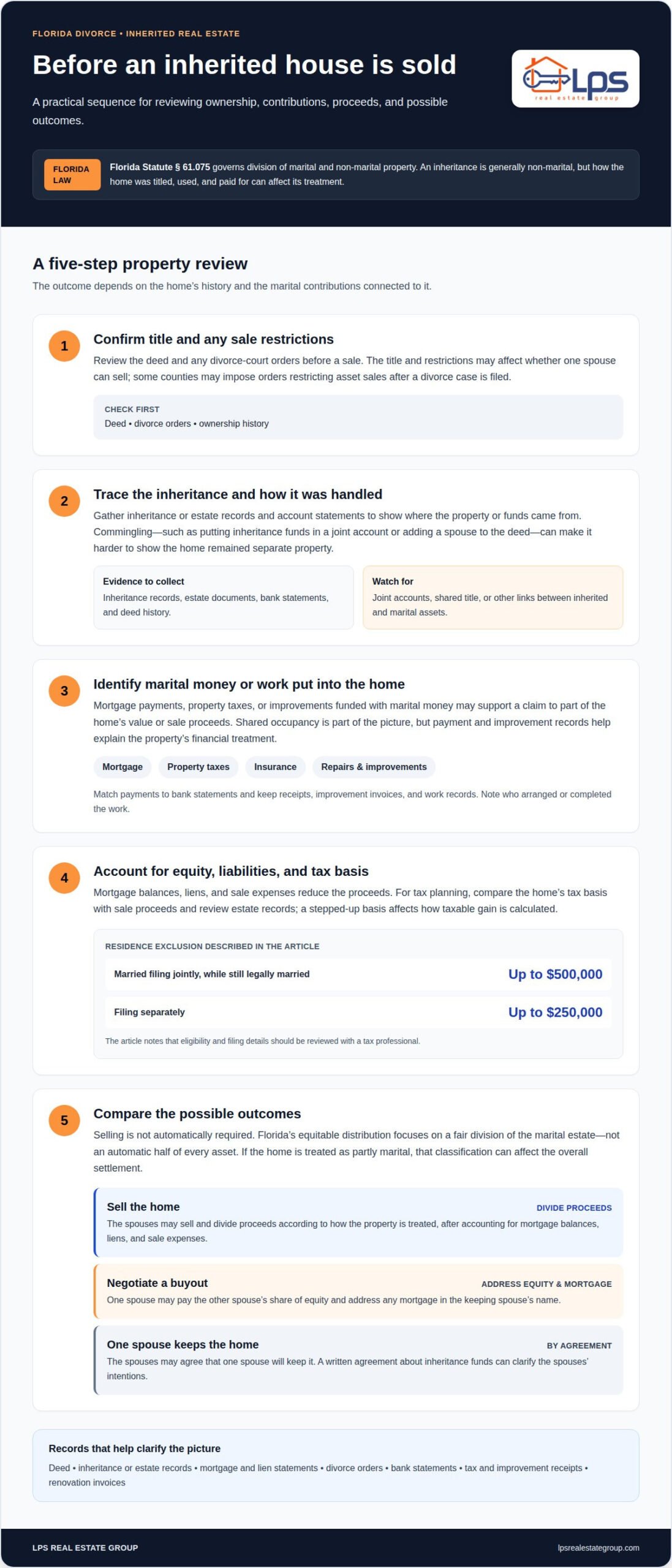
Florida Statute § 61.075 governs the division of marital and non-marital property in divorce. An inherited house may remain separate, but its classification matters when spouses decide whether to sell, keep, or divide value connected to it. Selling isn’t automatically required. State property laws vary, and some counties may impose orders restricting asset sales after a divorce case is filed.
Before a sale, review any court orders and the deed. Don’t assume one spouse can sell without considering the title and any restrictions in the divorce case.
Commingling and Marital Contributions
Commingling means mixing inherited property or money with marital assets, such as depositing inheritance funds in a joint account or adding a spouse to the deed. These actions can make it harder to show that the house remained separate property.
Marital funds used for mortgage payments, property taxes, or improvements may also support a claim to part of the property or sale proceeds. Keep inheritance records, account statements, receipts, and improvement invoices together so you can trace where the funds came from and how they were used.
Options for the Inherited Home
Spouses may sell the home and divide the proceeds, negotiate a buyout, or agree that one spouse will keep it. A buyout may involve paying the other spouse’s share of the equity and addressing any mortgage in the keeping spouse’s name.
For tax planning, the Internal Revenue Service says a married couple filing jointly may be able to claim a primary residence exclusion of up to $500,000 when selling while still legally married. A person filing separately may be able to claim an exclusion of up to $250,000. A stepped-up basis affects how taxable gain is calculated; compare the home’s tax basis with sale proceeds and review estate records.
A Spouse’s Claim to the House
A spouse may claim an interest if marital funds or contributions affected the inherited home. Adding a spouse to the deed can also support treating the property as marital, even if inheritance funds paid for it.
Before selling, gather the deed, inheritance or estate records, mortgage and lien statements, divorce orders, and records of taxes or improvements paid. Mortgage balances, liens, and sale expenses reduce the proceeds. A tax professional can assess the tax basis and filing details, while divorce documents and property records can help clarify how the proceeds may be handled.
Florida equitable distribution and inherited assets
Florida uses equitable distribution to divide marital assets fairly, not automatically equally. Florida Statute § 61.075 governs how courts distinguish marital property from non-marital property and distribute the marital portion. For anyone selling an inherited house during a divorce, that distinction helps frame whether the home itself, or a portion of its value, may be considered in the division.
Separate the question of ownership from how property may be divided when reviewing the home’s history. An inheritance left to one spouse is generally non-marital, but the court may examine how the property was handled during the marriage. Records showing the source of the inheritance, ownership history, and later spending can help explain how the asset was treated and support a clearer accounting of the marital estate.
Equitable distribution doesn’t mean each spouse automatically receives half of every asset. The court focuses on the marital estate and a fair division of its assets and liabilities. If an inherited home is treated as partly marital, that classification can affect the overall settlement and whether a spouse keeps the property, receives an equalizing payment, or agrees to a sale.
Contributions can matter even if the inheritance itself remained in one spouse’s name. For example, marital funds used to improve an inherited property may support a claim related to the resulting value. A spouse’s work or money may also contribute to an increase in the value of a non-marital asset. Keep invoices, bank statements, and work records to show what changed and how it was funded.
Consider the broader financial picture alongside the house. An inheritance may affect an alimony decision if it influences one spouse’s ability to pay or the other spouse’s need. A written agreement about inheritance funds can clarify the spouses’ intentions. These financial considerations may also affect decisions about selling an inherited house during a divorce.
For a sale or negotiated resolution involving inherited real estate, a probate and inherited property buyout may be one option to consider.
Inherited real estate used by both spouses
When both spouses use an inherited home, look at how they handled it during the marriage. Shared occupancy can be part of the picture, but records of title, payments, and improvements offer more insight into the property’s financial treatment. A spouse who inherited the house should distinguish ordinary household use from marital money spent on the property.
For example, list who paid the mortgage, property taxes, insurance, and repair bills. Match each payment to bank statements or other records showing whether the funds came from the inheritance or marital income. Keep renovation invoices and note who arranged or did the work. These details can help explain whether marital contributions affected the house or its value.
Florida courts may treat an inherited asset as partly marital when marital funds improve it. One example describes an inherited beach house with a possible three-quarters share for the inheriting spouse and one-quarter for the other spouse after marital use and improvements. This is an illustration, not a fixed formula for every home. The actual contributions, property history, and evidence matter to the division.
Spouses can consider selling the property and dividing the proceeds, or negotiating for one person to keep it. A buyout generally means accounting for the other spouse’s share of the equity. If there’s a mortgage, the spouse keeping the home may need to refinance it in their name alone. As long as both spouses remain on a mortgage, both remain legally responsible during the divorce process.
If spouses disagree about value, separate appraisals can help frame negotiations. A third appraiser may be appointed if those appraisals differ significantly. Before signing sale documents, review the deed, mortgage records, contribution history, and any divorce orders. These documents can clarify who holds title, what claims exist, and whether a sale can proceed in the circumstances.
Can a spouse claim part of an inherited house during divorce?
Yes, a spouse may claim an interest in an inherited house when the title, agreements, or marital contributions support that claim. In Florida, the source of the inheritance is only part of the picture. A deed naming both spouses, shared funds used for the property, and a written marital agreement can affect how ownership or value is treated.
Check the deed first. If the inheriting spouse later added their spouse to the title, that shared ownership can support treating the property as marital. Also review any prenuptial or postnuptial agreement. Its terms about inheritance generally guide how the spouses’ property is treated in a divorce.
Payment records can help distinguish the inheritance from later contributions. Gather statements showing the inheritance deposit, mortgage payments, tax payments, and improvement expenses. If a spouse paid for a roof or renovation with marital funds, that contribution may support a claim involving the property’s value or proceeds. The absence of a written agreement about those funds doesn’t automatically eliminate a contribution claim.
Before selling an inherited house during a divorce, clarify whether the sale can proceed before the divorce is final. A pending case or court order may affect the timing, and the spouses should document how they intend to handle the proceeds. If they disagree, a court may order a sale and determine how the proceeds are divided. A sale isn’t the only option: one spouse may keep the home through an agreed buyout.
Keep the evidence organized: the deed, inheritance records, account statements, improvement receipts, mortgage information, and any marital agreement. Share a complete account of the house and related funds with the divorce attorney; hiding assets can create further problems. These records help clarify whether the dispute concerns ownership, a contribution, or proceeds from selling an inherited house during a divorce.
If selling is the agreed path, explore an inherited-property buyout as one possible option for resolving the property.
LPS Real Estate Group: Cash Home Buying
LPS Real Estate Group buys homes directly through cash offers and as-is property acquisitions. If the divorce process has clarified who can authorize a sale, a direct sale may suit a household that wants to sell an inherited property without preparing it for a traditional listing. There are no repairs, commissions, or hidden costs.
For inherited homes, LPS Real Estate Group also offers probate and inherited property buyouts. Creative finance solutions may be another option when a straightforward cash sale doesn’t fit the situation. The right approach depends on the property and the sellers’ circumstances, so first resolve ownership questions and follow applicable court orders.
If you’re ready to discuss a possible sale, contact LPS Real Estate Group to talk through the inherited property and your next steps.
Choose a Clear Path for the Property
Deciding whether to sell an inherited house during a divorce is easier when the next step is clear. Before moving forward, align the sale plan with the ownership records, any divorce orders, and the spouses’ agreement about the proceeds. This gives everyone a shared basis for deciding whether a direct sale fits.
If selling is the agreed direction, LPS Real Estate Group buys homes for cash and acquires properties as-is. The company also offers foreclosure prevention purchases when foreclosure concerns overlap with the property decision. With no repairs, commissions, or hidden costs, a direct sale can suit owners who don’t want to prepare the home for a traditional listing.
Choose a next step that respects both the legal process and the family’s circumstances. Contact LPS Real Estate Group to discuss a possible sale and explore a practical way forward. A thoughtful plan can help you move ahead with greater clarity.
Frequently Asked Questions
Can You Sell Your House While a Divorce Is in Progress?
Sometimes, but a pending divorce can restrict a sale. Some counties issue standing orders after filing that prohibit selling assets without a court order. For example, a spouse who has accepted an offer should review the case orders before signing closing documents. If the spouses disagree about the home, a court may order a sale and decide how the proceeds are divided.
Who Decides What Happens to the House, and When?
The spouses can decide through an agreement; if they can’t agree, the court can determine the outcome during the divorce. The options may include one spouse keeping the home with an equalizing payment, a sale, or recognition of a non-marital contribution. Before setting a sale date, clarify ownership, identify any court restrictions, and decide how the proceeds will be handled.
Is an Inherited House Separate or Marital Property in a U.S. Divorce?
There isn’t one nationwide rule: state law and any marital agreement affect how an inheritance is treated. In Florida, an inheritance is generally non-marital, while a prenuptial or postnuptial agreement can address how inherited property is handled. Community-property states generally treat assets acquired during marriage as jointly owned, regardless of whose name is on the title.
How Do Commingling and Improvements Affect Ownership of an Inherited Home?
Commingling can make it harder to establish that a house or funds remained separate. For example, putting inheritance money in a joint account can blur the source of later payments. Keep statements that trace deposits and withdrawals, along with receipts showing which funds paid for improvements. If either spouse’s work or marital funds contributed to an increase in value, that growth may be treated as marital.
Can You Sell an Inherited House Before a Divorce Is Final?
A sale before the divorce ends may be possible, but ownership and any court orders matter. For instance, a spouse planning to accept an offer should first establish whether the other spouse has a title interest or whether a court order restricts asset sales. Also document where the proceeds will go and how they will be held, so the transaction remains transparent during the case.
Does Selling an Inherited House Require a Spouse’s Consent or Court Approval?
That depends on the title, state law, and any orders in the divorce case. If both spouses are named on the deed, don’t assume the inheriting spouse can act alone. Some counties restrict asset sales after filing unless the court approves. In community-property states, both spouses typically need to consent to a home sale. Review the deed and applicable orders before proceeding.