

A difficult tenant history doesn’t automatically make a rental property unsellable. You can sell a property with a tenant living in it. Learning how to sell a rental property with a bad tenant history starts with clearly presenting the tenancy and documenting the home’s condition.
It’s understandable to worry that missed rent, disputes, or property damage could put buyers off. Clear records can help explain what happened and distinguish past problems from the property’s current condition. This guide covers how to assess tenant-history concerns, gather landlord references and rental records, and document the tenancy and home. You’ll also see how an as-is sale may fit when preparing the property or managing a conventional sale feels difficult. The aim is a more informed, straightforward path to deciding what to share and what kind of sale may suit your situation.
Key Takeaways
- Organize tenancy records and landlord references to give buyers a clearer picture of the rental history.
- Separate documented concerns, such as missed rent or lease disputes, from assumptions about what they mean for a sale.
- Put negative events in context and show how the property and tenancy stand today.
- Consider an as-is sale when tenant-related complications make preparing the property for a traditional sale difficult.
Gathering landlord references and rental documents
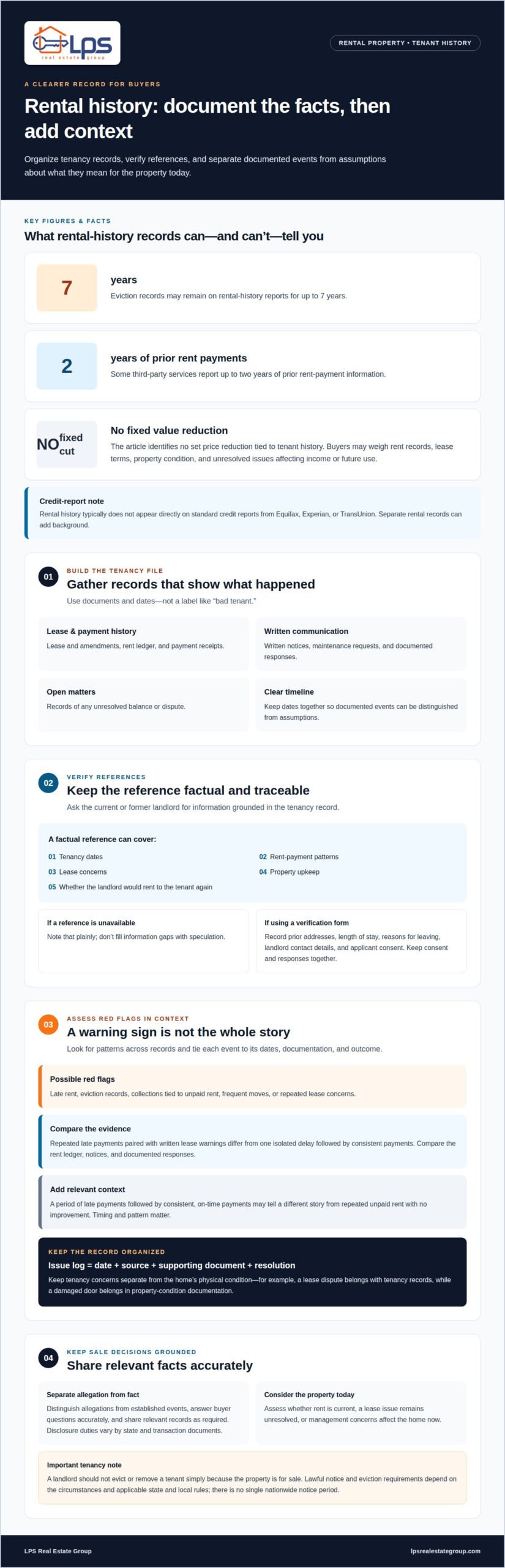
Start with records that show what happened during the tenancy, rather than relying on a label like “bad tenant.” Gather the lease and amendments, rent ledger, payment receipts, written notices, maintenance requests, and records of any unresolved balance or dispute. A clear timeline helps buyers distinguish documented events from assumptions.
Communicate proactively with the current or former landlord. Ask for a factual reference covering the tenancy dates, rent-payment patterns, lease concerns, property upkeep, and whether they would rent to the tenant again. Keep the request neutral and save the response with the property records. If the landlord cannot provide a reference, note that plainly rather than filling gaps with speculation.
When verifying rental references, landlords may contact previous landlords about tenancy duration, timely rent, care of the property, and whether they would rent to the applicant again. A rental history verification form can record previous addresses, length of stay, reasons for leaving, and landlord contact details. It can also document the applicant’s consent before those contacts. Keep consent and responses together so the screening process is traceable.
Rental history may include payment timeliness, lease adherence, and prior evictions. Eviction records may remain on rental history reports for up to 7 years, while some third-party services report up to two years of prior rent payments. Rental history typically does not appear directly on standard credit reports from Equifax, Experian, or TransUnion, so separate records can add background. Apply consistent screening criteria, verify information, document each action, and protect applicant privacy.
A landlord should not evict or remove a tenant simply because the property is for sale. Whether removal is lawful depends on the circumstances and applicable state and local rules. Follow the required process rather than trying to force a move.
Notice and eviction rules vary by state and situation. The lease, reason for action, and local requirements shape the process, so there is no single nationwide notice period that answers every case.
There is no fixed reduction in value tied to a tenant’s history. A buyer may weigh rent records, lease terms, property condition, and how unresolved tenancy issues affect income and future use.
A tenant’s history can affect sale price indirectly if it changes a buyer’s view of rental income, risk, or needed repairs. Organized documents help buyers assess those factors rather than rely on incomplete accounts.
Common rental-history red flags
Late rent, eviction records, and collections tied to unpaid rent can appear as negative marks on a renter’s credit report. Frequent moves or evictions may also raise concerns about payment, property care, or following lease terms. These records are warning signs to assess, not a complete account of a renter’s responsibility or reliability.
Look for patterns across records rather than treating one event as proof of ongoing trouble. For example, repeated late payments paired with written lease warnings differ from one isolated delay followed by consistent payments. Compare the rent ledger, notices, and documented responses. Dates and records help distinguish verified events from assumptions or disputed claims.
Communication can add useful context. A landlord’s notes might show whether the renter responded to maintenance concerns, arranged repayment, or addressed a lease issue. For example, consider a noise complaint alongside any written follow-up and its outcome. Fair, consistent screening relies on documented conduct, not impressions or unsupported labels.
Do I have to disclose tenant complaints, lease violations, or eviction history to buyers? Disclosure duties vary by state and transaction documents. Answer buyer questions accurately, distinguish allegations from established events, and share relevant records as required. Don’t present an unresolved complaint as a proven violation.
Keep an issue log with the date, source, supporting document, and resolution. Separate tenant-related concerns from the home’s physical condition, since they affect a buyer’s assessment differently. For instance, keep a lease dispute with tenancy records and a damaged door with property-condition documentation. This organized background supports a clearer review.
If tenant issues remain unresolved and complicate preparing the home for sale, a direct property sale may be worth considering alongside other options.
Considering context behind negative rental history
A negative rental record needs context, not an automatic conclusion. An eviction is not always a dealbreaker, particularly when the renter’s current finances are strong and the eviction happened long ago. For a prospective buyer, the key question is whether the event reflects a continuing pattern or a past disruption that has since changed.
Consider the circumstances around missed payments or a lease problem. An economic downturn or personal emergency can affect someone’s rental history without showing how they manage housing now. For example, a period of late payments followed by consistent, on-time payments may tell a different story from repeated unpaid rent with no improvement. The timing and pattern matter.
Use screening reports as part of a comprehensive evaluation, not as the sole decision-making factor. A report can flag a concern, while current payment records and other relevant information add perspective. Separate verified facts from explanations, then compare both with the tenancy timeline. Positive recent conduct can help show whether an earlier issue still reflects the renter’s circumstances.
Apply the same reasoning when assessing a property’s tenancy records for sale. Ask what a prospective buyer needs to understand: whether rent payments are current, whether a lease issue remains unresolved, and whether management concerns affect the home today. A former tenant’s eviction at another address, for example, does not by itself establish this property’s condition. Keep events tied to their addresses and time periods, and describe their relevance accurately.
Context also prevents a single label from overshadowing the full record. A buyer may weigh current income, recent payments, lease compliance, and the status of any outstanding concern together. If the available facts point in different directions, present each clearly rather than implying certainty. A balanced account helps the next owner understand both the risk and the evidence of change.
Documenting tenancy and property condition
Create one record that separates the tenancy timeline from the home’s physical condition. Include the current lease, amendments, rent ledger, maintenance requests, and written notices. For each issue, note its date, source, status, and outcome. A dated photo of a damaged cabinet paired with a repair request helps explain what happened without treating every complaint as proof of tenant damage.
Document the property room by room with dated photographs and brief descriptions. Record visible wear, damage, completed repairs, and outstanding maintenance. Keep invoices or work orders with the matching images. For example, label a photo “kitchen sink, leak reported” and attach the related maintenance record. This makes it easier to distinguish a previous condition from a problem that arose during the current tenancy.
What are the risks and costs of selling a rental property as-is versus fixing tenant-related problems first? An as-is sale can avoid repair work and coordination, but buyers may account for visible issues and unresolved tenancy concerns in their assessment. Repairs may improve presentation, but they also require money, time, access, and coordination with the tenant.
To attract investors to a rental property with a difficult tenant, prepare a concise property file. Include the lease, current rent and payment history, maintenance records, property photographs, and a factual summary of unresolved concerns. Investors can then assess income, condition, and tenancy separately instead of relying on a general description.
Keep tenant screening documents separate from property-condition records. A credit report may show some financial information, but it doesn’t replace a rent ledger or explain maintenance requests. Record evictions or lease concerns accurately, and include supporting documents rather than conclusions. This helps clarify which facts relate to the renter and which affect the building.
If repairs or tenancy complications make preparation difficult, request an as-is property sale and discuss the property’s documented condition.
LPS Real Estate Group
LPS Real Estate Group helps property owners consider a direct sale when tenant history, unresolved tenancy issues, or repair needs make a conventional sale difficult. The company buys homes as-is, so no repairs or cleaning are required, and there are no commissions, fees, or hidden costs. Its cash home buying and as-is acquisition options offer a way to sell without preparing the property for a traditional listing. Creative finance solutions may also be relevant when a direct cash purchase isn’t the right fit.
This approach may suit owners who want to discuss the property’s current condition and tenancy circumstances together. Share the records you’ve gathered, including the lease status, payment history, and known property concerns, so the situation can be considered clearly. If foreclosure pressure is part of the picture, a foreclosure prevention purchase may also be relevant.
If you’re weighing a sale, contact LPS Real Estate Group to discuss your property and circumstances.
Choose a Sale Path That Fits Your Priorities
Your next move is to decide what a workable sale looks like for you. Consider whether your priority is avoiding further repair work, keeping the current tenancy in place, or resolving an ongoing property burden. Those priorities can guide the sale path worth discussing, without letting a difficult history define the entire decision.
Knowing how to sell a rental property with a bad tenant history means making a decision based on the full picture, not letting one dispute set the terms. Keep the next conversation focused on your goals, the property’s present condition, and any timing pressure. That gives you a practical basis for weighing available options and choosing what feels manageable.
If you’re ready to consider a direct sale, talk with LPS Real Estate Group about your property. Start with the priorities that matter most and take the next step at a pace that feels right. A difficult tenancy can complicate a sale, but it doesn’t have to stop you from moving forward.
Frequently Asked Questions
Can I sell a property with a tenant living in it?
Yes, a tenant can remain in the property during a sale. The lease and applicable state rules shape what the buyer receives and how the tenancy continues after ownership changes. For example, a buyer may evaluate the existing lease, rent amount, and remaining term before deciding whether the occupied property suits their plans. The sale itself doesn’t automatically end a tenancy.
What about transferring the tenant’s security deposit?
Include the deposit amount and its handling in the sale paperwork. The closing documents can identify the funds being transferred or credited, along with any agreed accounting for deductions already made. Keep the original receipt, deposit ledger, and written notices about deductions together. Deposit rules differ by jurisdiction, so the closing arrangement should reflect the requirements that apply to the property.
What does selling a tenant-occupied property mean?
It means ownership transfers while a renter still occupies the home under a lease or rental arrangement. The buyer evaluates both the real estate and the existing tenancy, rather than receiving an immediately vacant property. For instance, an investor may consider whether rent income and the lease term align with their plans. The sale documents should clearly state the occupancy and lease status.
Should I sell a rental property occupied or vacant when the tenant has a bad history?
Choose based on the tenancy’s current status, the home’s condition, and the likely buyer’s plans. An occupied sale may suit a buyer prepared to take over an existing lease, while a vacant property may appeal to someone seeking immediate access. For owners considering how to sell a rental property with a bad tenant history, the tenant’s status and buyer’s intended use both matter. Review the lease and applicable rules before setting expectations about vacancy.
How can I sell a rental property with an active lease or pending eviction?
You can pursue a sale while a lease is active or an eviction case is pending, but neither automatically disappears when ownership changes. If you’re considering how to sell a rental property with a bad tenant history in this situation, present the lease and case status accurately. Avoid promising vacant possession unless it is established. Keep court notices and filed documents available so the transaction reflects the case’s actual status.
What documents should I prepare to market a rental property with tenant issues?
Prepare the signed lease and amendments, current rent ledger, deposit records, written tenant notices, and any court filings connected to an eviction. Add insurance information, property tax records, utility details, and warranties or service contracts that transfer with the home. A separate summary can identify unresolved disputes and agreed arrangements, helping interested buyers understand what remains active without confusing allegations with established facts.