

A non-paying tenant doesn’t automatically make a property impossible to sell. Selling a property with non-paying tenants may mean transferring the home with the occupants in place, while an existing lease generally continues after the sale. Payment history and access to the property can affect how buyers assess the situation.
It’s understandable to worry that you must regain possession, arrange repairs, or wait through an eviction process before selling. In some cases, selling with the occupants in place may offer another option and avoid pursuing eviction before the sale. The right approach depends on the tenancy and the property.
This article explains what happens to a lease when ownership changes, how tenant access and property condition can affect a sale, and what to consider when occupants aren’t paying or may be squatters. It also covers how an as-is sale through LPS Real Estate Group may help when preparing the property for showings or resolving the situation first feels difficult.
Key Takeaways
- Review the lease and tenancy details to understand what transfers with the property and how they may shape a sale.
- Plan around tenant access and the home’s condition, since both can affect showings and buyer interest.
- Consider whether selling with occupants in place could help you avoid pursuing eviction before the sale.
- An as-is purchase may suit owners who want to sell without first preparing the property for traditional showings.
What does selling a tenant-occupied property mean?
You can sell a New York property while tenants occupy it, and the buyer may acquire it with the tenancy in place. Account for the lease, rent status, access, and any open eviction proceeding during the sale process.
Benefits of Selling With Tenants
An occupied property may appeal to buyers seeking rental income without first finding tenants. A current lease and clear payment records help buyers understand the income and obligations they would take on. Selling before the home is vacant may also help an owner dealing with missed rent or an estate that needs to settle the property. Weigh these advantages against the arrears and the home’s condition.
Strategies for a Tenant-Occupied Sale
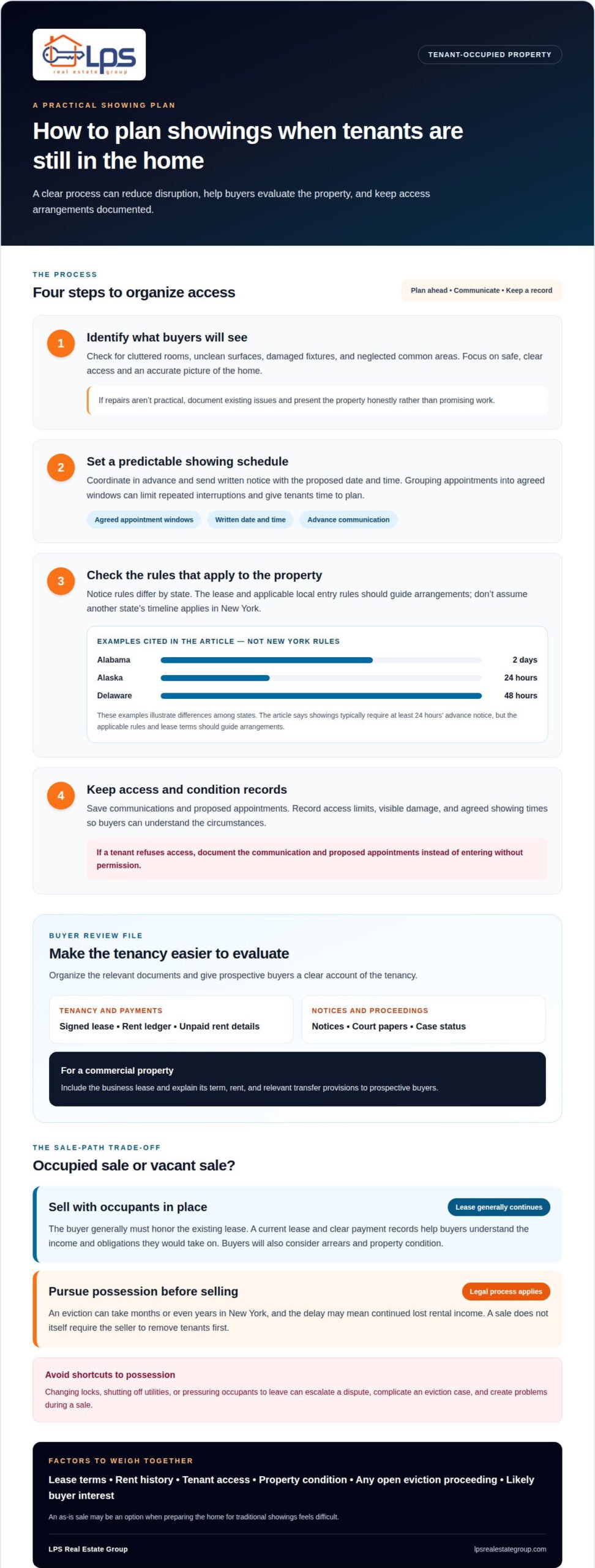
Organize the signed lease, rent ledger, notices, and any court papers. Then decide whether to market the property as occupied or pursue a vacant sale. For a commercial property, include the business lease and explain its term, rent, and relevant transfer provisions to prospective buyers. If a tenant refuses access, document communications and plan showings in line with the applicable entry rules.
Lease Transfer to the Buyer
Yes, you can sell a property with tenants in place. In general, the existing lease remains valid, and the new owner must honor its terms. For example, a tenant with eight months left on a fixed-term lease has the right to remain for those eight months, regardless of who owns the property. Review the lease for any sale provisions and give buyers complete information about its terms.
Seller Disclosures About Tenancy
Give prospective buyers the lease and a clear account of rent arrears and eviction proceedings. Explain what rent is unpaid, whether a case has been filed, and the current status of any proceeding. Florida is a separate example, not a New York rule: according to the Florida Legislature, a landlord may terminate the rental agreement if unpaid rent remains in default for 3 days after written demand, excluding Saturdays, Sundays, and legal holidays. Clear records help buyers understand the tenancy they would assume.
Showing and property-condition challenges
Showings require coordination, especially when a tenant is behind on rent or reluctant to cooperate. A clear plan can limit disruption and help buyers assess the property fairly.
Preparing the Rental Property
Before booking showings, identify visible issues that could distract buyers: cluttered rooms, unclean surfaces, damaged fixtures, or neglected common areas. A messy or dirty occupied property may give prospective investors grounds to make a lower offer. Focus on safe, clear access and an accurate picture of the home’s condition. If repairs aren’t practical, document existing issues and present the property honestly rather than promising work.
Showing Notice Requirements
Notice rules differ among states, so don’t assume one state’s timeline applies in New York. For example, Alabama requires 2 days’ notice before showings, while Alaska requires 24 hours and Delaware requires 48 hours. These examples illustrate why the applicable lease and local entry rules matter. For a New York rental, coordinate notice using the tenancy terms and rules that apply to that property.
Showing Schedules and Tenant Notice
Set a predictable schedule and send written notice with the proposed date and time. Grouping appointments into agreed windows can limit repeated interruptions, while advance communication gives tenants a chance to plan. Showings typically require at least 24 hours’ advance notice, but the applicable rules and lease terms should guide arrangements. If a tenant refuses access, keep communications and proposed appointments documented instead of entering without permission.
Property condition and access affect how confidently buyers can evaluate a home. Keep a record of any access limits, visible damage, and agreed showing times. A month-to-month tenant may leave with 30 days’ notice, which can also change the occupancy picture during marketing. If repeated showings or preparation are difficult, an as-is property sale may offer a way to sell without first preparing the home for traditional showings.
Avoiding eviction-related legal fees and court costs
For New York sellers, the choice often comes down to pursuing possession or selling with tenants still in place. Before deciding, compare the likely time and expenses, unpaid rent, and how each option could affect the sale.
Eviction Costs and Timeline
An eviction can take months or even years in New York, and the delay may mean continued lost rental income. Selling with occupants in place avoids waiting for an eviction to finish, but buyers will consider the arrears and tenancy.
Evicting Tenants Before a Sale
A landlord can pursue eviction for unpaid rent before selling, but the case must proceed through the proper legal process. A sale does not itself require the seller to remove tenants first. Compare a vacant sale with an occupied sale by considering the lease, payment record, expected court timeline, and buyer interest. If a lease is nearing expiration, non-renewal may be an option in many cases, subject to the applicable rules.
Risks of Pressuring Tenants to Leave
Don’t change locks, shut off utilities, or pressure occupants to leave as a shortcut to possession. These actions can escalate a dispute, complicate an eviction case, and create problems during a sale. Document communications about unpaid rent and move-out discussions. If you consider a voluntary move-out agreement, put its terms in writing and clearly state when any payment will be made.
Before deciding, list expected court expenses, rent arrears, the property’s condition, and the likely buyer pool for an occupied home. A buyer using financing may assess an active tenancy differently from an investor seeking rental income. Compare the cost of pursuing eviction with the practical trade-offs of selling with occupants and disclosing the lease information.
Selling a New York property with non-paying tenants or squatters
Non-paying tenants don’t automatically prevent a New York sale, but their occupancy can affect buyer interest and negotiations. Tenant-occupied properties typically sell for 10-20% less than comparable vacant homes, and buyers’ financing options depend on their circumstances and the property’s condition.
Be precise about who lives in the property. A tenant with a lease is in a different situation from someone occupying the home without an agreement. Buyers need a clear account of the occupancy, rent arrears, lease terms, and any eviction proceedings to decide whether the property fits their plans.
To prepare for a sale, organize the lease, rent ledger, notices, and court documents. Disclose the tenant situation in marketing materials and provide prospective buyers with complete lease information. This helps buyers assess the obligations and expected income early in the process. If you want the home vacant, compare the time and expense of pursuing possession with marketing it while occupied.
If you discuss cash for keys, use a signed agreement that records the move-out terms. Make any payment only after the tenant has fully vacated and left the property in satisfactory condition. A verbal promise alone doesn’t complete a move-out arrangement.
At closing, transfer the security deposit and any collected last month’s rent to the buyer. Provide the information needed to identify the new owner and explain the ownership change to occupants. Clear records help both parties account for funds connected to the tenancy.
If unresolved occupancy or property condition makes a traditional sale difficult, consider an as-is property sale. It can be a practical route for sellers who don’t want to make vacancy or repairs a condition of moving forward.
LPS Real Estate Group
LPS Real Estate Group helps owners consider practical sale options when unpaid rent, tenant access, or property condition complicates a decision. Selling a property with non-paying tenants can involve competing concerns. A direct conversation can help clarify what matters most in your situation.
LPS Real Estate Group buys homes for cash or through creative offers, including as-is purchases. If you’re considering selling a property with non-paying tenants, share the occupancy details, lease, and property condition to discuss your options. There are no repairs to make, agent commissions, fees, or hidden costs when selling to LPS.
If you’re ready to discuss your circumstances, contact LPS Real Estate Group.
Choose the next step that fits your property
Before deciding how to proceed, identify your priority: spending less time managing the property, avoiding further disruption, or addressing a financial concern tied to the home. That priority can guide your conversation and help you explain the occupancy, lease, and sale constraints clearly. Selling a property with non-paying tenants involves competing concerns, so a direct discussion can help you decide which path fits.
LPS Real Estate Group offers a Foreclosure Prevention Purchase for homeowners facing foreclosure concerns, alongside its property acquisition options. Share the details that shape your decision, including who occupies the property and what outcome you hope to reach. You can contact LPS Real Estate Group to discuss your circumstances and consider a practical next step. Take the process one decision at a time, with your priorities at the center.
Frequently Asked Questions
Should You Sell a Property with Tenants Living in It?
Selling with tenants in place can make sense if the buyer is prepared to take on an occupied property. Consider whether the buyer’s plans depend on immediate access or vacancy, and whether the lease and rent records clearly explain the tenancy. An investor may value an existing rental arrangement, while a buyer seeking a vacant home may not.
Can tenants refuse showings?
Tenants may object to proposed showings, but the answer depends on the lease and the entry rules that apply to the property. Don’t enter without authorization if a tenant refuses access. Offer reasonable appointment windows, keep communications in writing, and record denied requests. If access remains disputed, resolve the issue through the applicable tenancy process before arranging further visits.
Do tenants get the first choice to buy?
Not automatically just because they rent the property. A right of first refusal may apply if it appears in the lease or another agreement, so review the signed documents before accepting an offer. If such a right applies, follow its stated process and timing. It may affect when you market the home or proceed with a buyer.
Is It Legal to Sell a Rented Property?
Yes. You can sell a property while tenants live there, and the existing lease generally remains in effect after ownership changes. The sale itself doesn’t end the tenant’s agreement. For example, a buyer who acquires a home during a fixed lease takes ownership subject to its remaining term and should understand those obligations before closing.
What Happens After the Sale?
After closing, the buyer becomes the new owner and assumes the landlord’s role for the ongoing tenancy. Notify tenants of the new owner’s name and contact information so they know where to direct rent payments and tenancy communications. Make the notice clear and practical, identifying the ownership change and the right contact for future property matters.
What about transferring the tenant’s security deposit?
The seller should account for the tenant’s security deposit and transfer it to the buyer at closing. Match the amount transferred to the tenancy records, including any documented deposit balance, so both parties have a clear record. Account for any last month’s rent collected separately. This gives the buyer a clear starting point for managing tenant funds.