

You can sell a multi-family property with tenants in place. Selling a multi-family property with existing leases usually means the leases transfer to the buyer, who becomes the new landlord, and tenant deposits usually transfer as well. A sale alone does not mean tenants must leave. The key is to understand how the leases, property records, and sale terms fit together.
It is understandable to want a clear plan before arranging showings or speaking with buyers. This guide explains how to handle leases and tenant communication, compare an occupied sale with a vacant one, and prepare records buyers may need, including lease copies and income and expense information. Organized paperwork helps buyers understand the property’s rental income and obligations, while clear planning can make the ownership transition easier.
Key Takeaways
- Review lease length, rent terms, and occupancy when considering how the property may appeal to buyers.
- Organize rent rolls, lease copies, deposit records, and operating statements to give buyers a clearer picture of the property.
- Weigh investor interest in rental income against the appeal of vacant or partly vacant units to potential owner-occupants.
- Gather property, financial, and tenant records early so due diligence and the ownership handoff can proceed more smoothly.
What does selling a tenant-occupied property mean?
Selling a multi-family property with existing leases is generally possible. Leases usually transfer to the buyer, who becomes the landlord, and tenant deposits usually transfer too. Tenants should not be forced out solely because the property is sold. State and local rules determine notice, access, and other tenant protections.
-
Assess Lease and Occupancy Effects
Review each unit’s occupancy and lease terms before setting expectations about buyer demand. Stable tenancies and lease length can affect the property’s appeal: investors may value predictable rental income, while vacancies or month-to-month arrangements can offer flexibility. Buyers may also assess operating income, expenses, and local capitalization rates when considering value.
-
Review Leases and Tenant Rights
Gather signed leases and compare their rent, duration, renewal terms, and other agreements with the rent roll. Record each tenant’s deposit and any known unpaid rent or agreed credits. During due diligence, buyers commonly review leases and may analyze tenant estoppel certificates, which record a tenant’s understanding of key lease terms. Address lease assignment or assumption in the sale documents, and account for deposits at closing.
-
Address Tenant Purchase Rights
Before marketing the property, review each lease and applicable local requirements for a purchase opportunity or right of first refusal. These rights are not universal, so do not assume a tenant can buy or that no notice is required. If a right applies, follow its stated process and timing before accepting another offer. Keep written records of notices and responses for the buyer.
-
Check Applicable Tenant Laws
Identify state and local rules covering tenant notices, showings, access, and ownership changes. Requirements vary by location, so follow the rules that apply to the property rather than relying on practices from another state. Give tenants appropriate notice before showings or inspections, and explain how rent payments will work after closing. Respectful coordination helps keep the sale organized while protecting tenant rights.
Dealing With Tenants?
Organize tenant and financial records so buyers can understand the property’s rental income and obligations. Tie each document to a specific unit or reporting period.
-
Assemble Property and Lease Records
Build a rent roll listing each unit, tenant, rent amount, payment status, and lease end date. Match every entry to the signed lease and note renewal terms or rent changes. Keep deposit amounts and tenant balances in separate, clearly labeled fields. Record property expenses and tax information separately so buyers can distinguish rental operations from other financial details. Consistency matters: an outdated rent roll can conflict with lease documents.
-
Provide Operating Records
Prepare operating statements covering the last 12-24 months and a trailing 12-month income and expense statement. Use twelve months of actual expenses when assembling the financial information buyers underwrite. Keep profit and loss statements covering at least 2 years with the supporting records, such as bills and receipts. A buyer evaluating income alongside a mortgage can then see how rents compare with operating costs. Label each reporting period and avoid mixing projected income with actual results.
-
Disclose Rent and Lease Details
Give buyers a written schedule of security deposits, rent arrears, and lease terms, then reconcile it with the rent roll and signed documents. List amounts held for each tenant separately from unpaid rent, and do not present arrears as collected income. Include lease start and end dates, current rent, and any written changes. At closing, account for the deposit transfer and give tenants clear information about new rent-payment arrangements. This record helps prevent confusion during the ownership handoff.
Keep the document set organized even if the property is also a family home or an inherited real estate asset. For an inherited rental needing no renovation preparation, an as-is property acquisition is a direct-sale option.
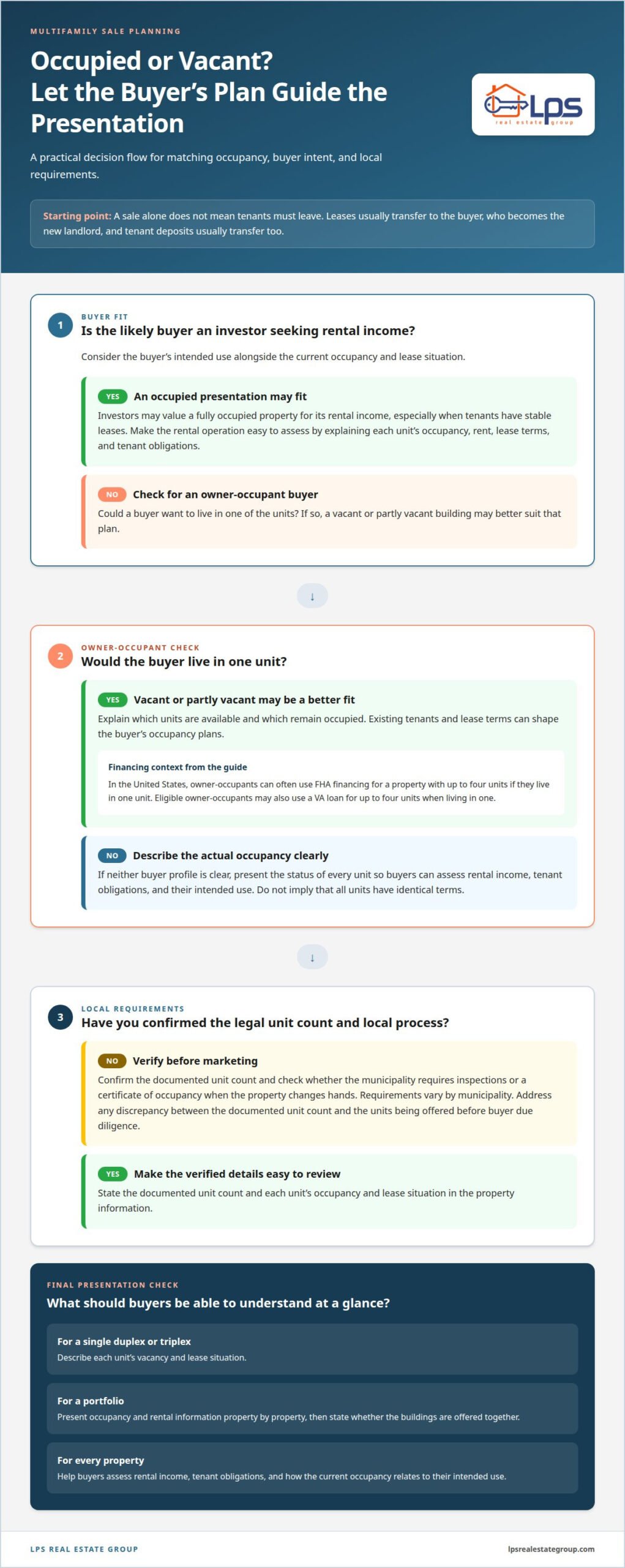
Is it better to sell a multifamily property vacant or occupied?
Compare the likely buyer’s plans with current occupancy before deciding how to present the property. Fully occupied buildings may suit investors seeking rental income, while vacant units may appeal to buyers planning to live there.
- Match occupancy to your likely buyer. Investors may value a fully occupied property for its rental income, especially when tenants have stable leases. A vacant or partly vacant building may better suit an owner-occupant who wants to use one unit. Explain the status of every unit so buyers can assess rental income, tenant obligations, and their intended use.
- Confirm the legal unit count and certificate of occupancy before marketing. Municipalities may require inspections or certificates when a multi-family property changes hands, including properties with 2-4 units or more. Requirements differ by municipality, so identify the applicable local process early. Compare the documented unit count with the units being offered, and address any discrepancy before buyers begin due diligence.
- Consider whether the sale includes one building or a portfolio. For a portfolio, present occupancy and rental information property by property, then state whether the buildings are offered together. For a single duplex or triplex, describe each unit’s vacancy and lease situation. Clear details help buyers assess the rental operation instead of assuming every unit has identical terms.
- Assess whether an owner-occupant could be a realistic buyer. In the United States, owner-occupants can often use FHA financing for a property with up to four units if they live in one unit. Eligible owner-occupants may also use a VA loan for up to four units when living in one. Existing tenants and lease terms can shape the buyer’s occupancy plans.
- Choose an occupancy plan that fits the likely buyer pool and property. Keeping tenants may support an investor’s rental plan; creating vacancies may suit buyers who want a home. Do not assume every tenant must leave before a sale. For an inherited property or family home, weigh rental income and management responsibilities against the owners’ preferred timing.
Documents needed to sell a multi-family property
Prepare records that show the property’s legal status, rental income, expenses, and condition. This helps buyers review the apartment building’s details during due diligence.
- Gather the property and ownership records first. Include available title documents, the legal unit count, and any certificate of occupancy. Buyers may review title and zoning during due diligence, so keep related documents together. Add inspection reports and municipal certificates when available. If an inspection or certificate is required for the transfer, preparing early can help avoid a last-minute document gap.
- Organize the rental file by unit. Include each signed lease, amendments, rent roll, deposit records, and tenant payment details. The rent roll should match the lease terms, including rent amounts and lease dates. Add tenant estoppel certificates if available, since buyers may analyze them during due diligence. Keep warranties, service contracts, and keys in a separate closing file for transfer.
- Prepare clear financial records buyers can follow. Include operating statements covering the last 12-24 months, a trailing 12-month income and expense statement, and profit and loss statements covering at least 2 years. Use twelve months of actual expenses for buyer underwriting, with supporting invoices where available. Separate rental income from operating costs, and keep tax information alongside the matching year’s records.
- Make sure the listing and contract support the documents. A Broker Opinion of Value can recommend a pricing range, while comparable sales provide context alongside income, expenses, and local capitalization rate trends. Put agreed lease transfers, deposit handling, and property items into the contract. Before closing, prepare final tenant notifications when required, then organize warranties, service contracts, and keys for handoff.
If an inherited building needs a direct sale without renovation preparation, explore an as-is property sale.
LPS Real Estate Group
LPS Real Estate Group purchases multi-family properties directly, including properties with tenant leases, condition concerns, or complicated ownership situations. Its direct-purchase approach may suit owners who want an alternative to preparing a traditional listing.
LPS Real Estate Group offers cash home buying, as-is property acquisition, and creative finance solutions. If foreclosure concerns affect the property, a foreclosure prevention purchase may also be relevant. The company buys properties as-is, with no repairs or cleaning required, and charges no commissions or hidden costs. A direct sale may help when coordinating showings, addressing repairs, or managing a difficult timeline feels challenging. Lease obligations and tenant protections still need to be considered as part of the sale.
If you’re weighing a direct sale for your occupied multi-family property, contact LPS Real Estate Group to discuss your situation.
Choose the Sale Path That Fits Your Situation
Your next decision is how you want the sale to fit your plans for the property. Consider the timing you need, how involved you want to be, and whether a direct purchase suits your goals. This can help you move from gathering information to choosing a practical next step.
Selling a multi-family property with existing leases involves more than transferring ownership; it also means planning for a smooth change for tenants and the incoming owner. You do not need to resolve every detail before starting a conversation. Discussing the property, its occupancy, and your priorities can help identify an approach that makes sense for your circumstances.
Contact LPS Real Estate Group to discuss your multi-family property and possible next steps. A thoughtful plan can make the way forward feel more manageable.
Frequently Asked Questions
Can I sell a property with a tenant living in it?
Yes, a tenant can remain while the property is marketed and sold. Plan showings with respectful communication, follow applicable entry rules, and explain the occupancy clearly to prospective buyers. For example, tell buyers whether the tenant has a fixed-term lease or a month-to-month arrangement. A sale does not, by itself, mean the tenant must move out.
Do tenants get the first choice to buy?
Not automatically. A tenant’s opportunity to purchase depends on rights in the lease or requirements that apply to the property. Look for a right of first refusal or another purchase provision, including its notice steps and deadlines. If no such right applies, the tenant does not receive an automatic first choice simply because they rent a unit.
How do you know when to sell?
Consider your reason for selling, the property’s rental performance, and how much time you can spend managing the sale. For example, an owner facing a change in family circumstances may prioritize a simpler transition, while an owner focused on rental income may consider lease stability and operating results. Compare those priorities with the work involved in preparing and marketing the property.
What about transferring the tenant’s security deposit?
Security deposits usually transfer to the buyer as part of the sale. Keep a unit-by-unit record of each amount held and include its handling in the closing arrangements. For example, if one tenant has a deposit on file and another has a different amount, document each separately. Clear records help the incoming owner account for deposits and respond to tenant questions.
Can you sell a multifamily property with tenants and active leases?
Yes. The sale can proceed with active leases, and the buyer generally takes ownership subject to those agreements. A buyer should understand the rent, remaining lease term, and any renewal provisions before agreeing to purchase. For example, a lease that continues beyond the closing date remains important to the new owner’s plans and the tenant’s continued occupancy.
What notice must a landlord give tenants before selling or showing a multifamily property?
There isn’t one notice period that applies throughout the United States. State and local rules govern entry for showings, and lease terms may also address access. Where a state law doesn’t specify a period, landlords should aim to give at least 24 hours’ notice. Give tenants clear notice, coordinate reasonable showing times, and communicate directly about access.