
You can sell a mobile home without selling the land, but you still need to address the lot rent and lease. When selling a mobile home in a park with lot rent, you generally remain responsible for rent until closing and the transfer of possession, or until you give the park an exit date if the home will be moved.
It’s understandable to worry that unpaid lot rent or a lease could prevent a sale. In many cases, you can still sell if you’re behind on rent, with the overdue amount often paid from the sale proceeds at closing. A cash sale can simplify payment, but it does not automatically bypass park requirements for an in-place transfer.
This guide explains what may happen to your lot lease, whether rent continues while the home is for sale, and how an in-place cash sale differs from moving the home. It also covers how overdue rent may be handled at closing, so you can weigh the key decisions before choosing your next step.
Key Takeaways
- Understand when your responsibility for lot rent may end as the sale moves toward closing or the home is moved.
- See how rent history and park rules can shape an in-place sale and the buyer’s decision.
- Learn why a cash buyer may still need park approval and screening for a home that stays on its lot.
- Find out how unpaid lot rent can be addressed in the closing process.
What happens to my lot lease when I sell?
Selling the home does not automatically end your lot lease. Plan for rent and lease responsibilities to continue until the sale or move-out is complete.
-
Review Lease and Rent Obligations
Read your lease for terms on sales, transfers, notice, and moving out. Note any required notice to the park and when your responsibility for the lot may end. Sellers generally continue paying lot rent until closing and possession transfer. If the home is moved, rent generally continues until you notify the park of your exit date. Listing the home alone does not end your payment obligation.
-
Check Financing on Leased Land
Consider how the land arrangement may affect a buyer’s financing before setting expectations. Manufactured homes in land-lease communities are commonly financed with chattel loans, which are personal-property loans secured by the home rather than the land. Fannie Mae generally treats homes on leased land as ineligible for financing unless they are in an approved condo or planned unit development project. This can limit financing options for some buyers.
- Discuss the lease alongside the home’s title and sale terms. A mobile home in a park usually has its own title and is commonly treated as personal property. The buyer purchases the home, while the right to occupy the lot depends on the park’s lease process. Keep the home sale and lot arrangement clear as separate parts of the transaction.
- For a park sale in Colorado, note that existing lease agreements remain in effect after the park changes ownership. The Colorado General Assembly states that the cited Colorado statute took effect June 30, 2020. A park sale is different from your individual home sale, so don’t assume the lease ends or transfers automatically. Clarify the relevant dates, rent responsibility, and move-out plans in the sale arrangements.
Do I have to pay lot rent while the home is listed for sale?
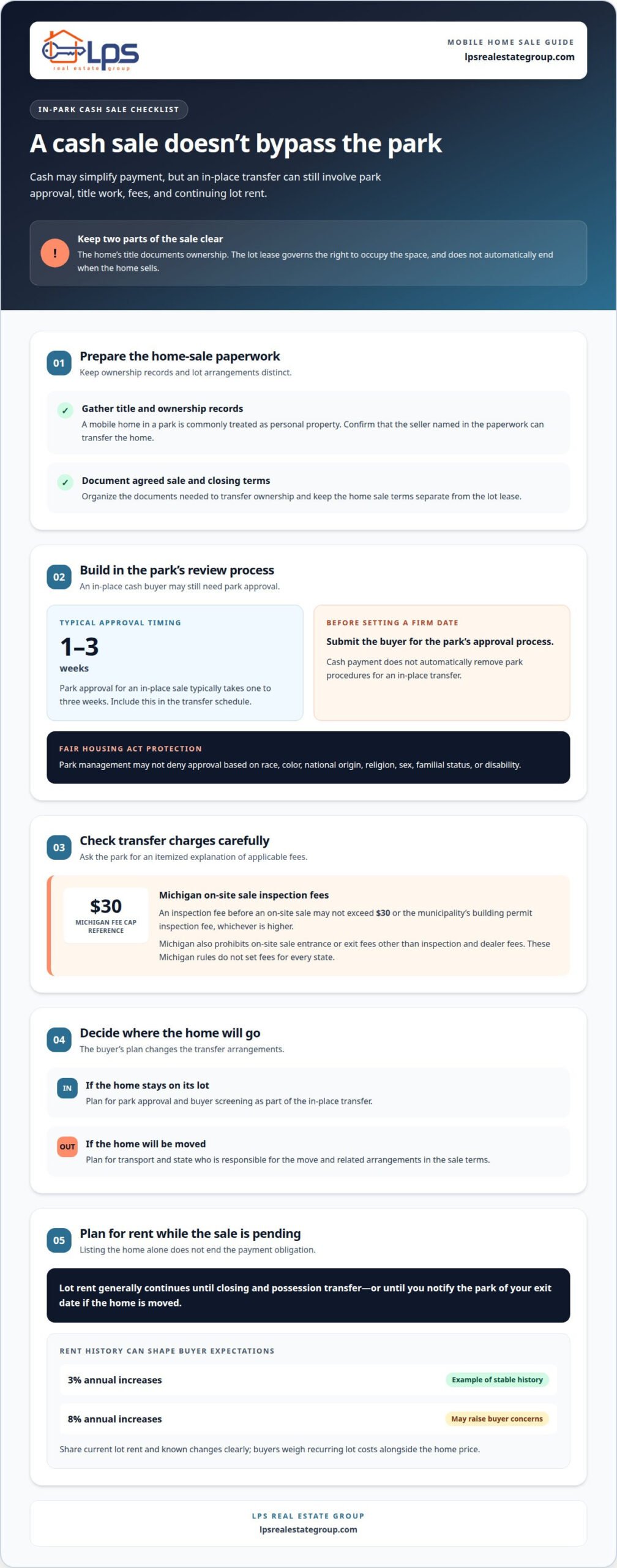
- Continue paying lot rent while the home is listed. Advertising the home does not end the lease. Rent generally continues until closing and possession transfer, or until you give the park an exit date if the home will be moved. Add the expected final payment date to your sale timeline to plan for rent while showings and buyer decisions are underway.
- Review your rent history before presenting the lot to buyers. A 3% annual increase is an example of a stable rent history, while 8% annual increases may raise buyer concerns. Share the current lot rent and known changes clearly. Buyers consider ongoing lot costs alongside the home price, so a clear history helps them assess the full commitment.
- Read the park’s rules for showings, buyer applications, and home condition. Those rules remain relevant during a sale and can affect how an in-place transfer proceeds. Keep the home accessible for agreed showings and communicate the sale process clearly. Do not promise a buyer that park procedures can be skipped because the purchase is private.
- Account for state-specific rules. In Michigan, a home’s age or size cannot be the sole basis for refusing an on-site sale. Michigan park standards for home condition and appearance must apply equally to residents. These protections cover specific grounds and standards; they do not eliminate every transfer requirement. Include the park’s review process in your timeline.
- Your own rent and history may differ, but the buyer still needs to understand the recurring land cost. If keeping the home listed while paying rent no longer fits your plans, explore cash home buying options as another route to consider.
Can I sell the home for cash to a buyer without park involvement?
A cash sale can simplify payment, but it does not remove park procedures for an in-place transfer. Plan for buyer screening, title work, and any applicable sale fees.
-
Gather Documents and Complete Title Work
Gather the home’s title and ownership records, then organize the documents needed to transfer ownership. A mobile home in a park is commonly treated as personal property, so its title is central to documenting the sale. Confirm that the seller named in the paperwork can transfer the home, and include the agreed sale terms and closing details. Keep the lot lease separate from the home’s title.
-
Check Park Approval and Buyer Screening
Submit the buyer for the park’s approval process before setting a firm transfer date. Park approval for an in-place sale typically takes one to three weeks, so account for that in the sale schedule. The Fair Housing Act bars park management from denying approval based on race, color, national origin, religion, sex, familial status, or disability. Park procedures may still apply when the buyer pays cash.
-
Identify Applicable Sale Fees
Ask for an itemized explanation of charges tied to an in-park transfer. In Michigan, an inspection fee before an on-site sale may not exceed $30 or the municipality’s building permit inspection fee, whichever is higher. Michigan also prohibits on-site sale charges other than inspection and dealer fees as entrance or exit fees. These Michigan rules don’t establish the fees for every state.
-
Decide Whether the Buyer Will Remove the Home
Agree on whether the buyer will keep the home on its lot or move it. An in-place sale involves park approval, while moving the home requires transport planning. Put responsibility for the move and related arrangements in the sale terms.
Back lot rent and closing
- Request an up-to-date lot-rent ledger from the park before finalizing closing details. Separate overdue rent from charges that continue to accrue while the sale is pending. Record the balance date and payments already made so the amount used in the transaction reflects the account accurately. A clear closing plan matters when selling a mobile home in a park with lot rent.
- Tell the closing parties about any overdue rent early. You can generally still sell the home if you are behind on lot rent, and the overdue amount is often paid from the sale proceeds at closing. This may let you address the balance through the transaction rather than paying it before finding a buyer. Include the expected payment in the closing discussion.
- Ask for an updated payoff amount close to closing. Rent may continue to accrue as the transaction moves through approval and paperwork, making an earlier balance incomplete. Include the current amount due and its planned payment from the proceeds in the closing figures. Keep a record of the final payment and any remaining account balance.
- Align the closing date with the date the buyer takes possession. If possession transfers later than expected, you may remain responsible for rent during the gap. For example, a delayed handover can change the final amount due even if the sale price and original rent estimate remain the same. Record the agreed dates in the transaction paperwork.
- Address any gap between the sale proceeds and the amount owed before finalizing the transaction. When selling a mobile home in a park with lot rent, do not rely on an informal estimate to confirm that the account is settled. The closing figures should reflect the current balance, and the park’s final payment record helps document how the overdue rent was handled.
If back rent or a complicated sale is weighing on your next steps, explore a cash sale with LPS Real Estate Group.
LPS Real Estate Group: Cash Home Buying
LPS Real Estate Group buys homes directly for cash or through creative offers, including as-is properties. If a park lease, overdue rent, or the home’s condition complicates your plans, share the details to discuss a direct sale. There are no repairs required, no commissions, and no hidden costs. For homeowners facing foreclosure concerns, LPS also offers foreclosure prevention purchases and creative finance solutions.
The right approach depends on what you own and the circumstances of the sale. A mobile home titled separately from its lot may involve different steps from a property that includes land, so clarify the home, title, and lot arrangement. LPS Real Estate Group can discuss your situation and the available direct-sale options without promising a particular outcome.
If you’d like to talk through a possible sale, contact LPS Real Estate Group.
Choose a Clear Next Step for Your Sale
If you’re selling a mobile home in a park with lot rent, choose a sale approach that fits the home and your circumstances. A direct purchase may suit you if a traditional listing process does not feel workable. Consider how the home’s condition or financial pressure affects your decision. LPS Real Estate Group buys homes as-is, with no repairs required, no commissions, and no hidden costs. Share the property details to receive a no-obligation cash or creative offer, then choose a closing date that works for you.
LPS Real Estate Group offers Cash Home Buying, Foreclosure Prevention Purchase, and As-Is Property Acquisition. These options may be relevant if you want to discuss a direct sale, are facing foreclosure concerns, or prefer to sell the property as-is. Take the time you need to decide whether one fits your situation. Contact LPS Real Estate Group to talk through your possible next step and move forward with greater clarity.
Frequently Asked Questions
Can You Sell a Mobile Home Without the Land?
Yes. You can sell the home separately from the land, so the buyer purchases the structure rather than the lot. If the home stays in a park, the buyer’s ability to occupy the space depends on the park’s approval and lease process. If the buyer plans to move it, account for removal and transport arrangements in the sale.
How long does park approval take?
Park approval for an in-place mobile-home sale typically takes one to three weeks. Build that time into the transaction schedule, since the buyer may need approval before taking over occupancy. Avoid setting a handover date that assumes approval will be immediate. The park’s application steps and the buyer’s ability to complete them can affect when the transfer proceeds.
Who Buys Mobile Homes Without Land?
Potential buyers include people seeking a home in a land-lease community and buyers prepared to move the home elsewhere. The right buyer depends partly on whether the home can remain on its current lot and whether the buyer can meet the park’s requirements. A buyer purchasing only the home must account for the separate lot arrangement or plan to move it.
Can you sell a mobile home in a park without selling the land?
Yes. The home and land can be separate parts of the transaction, so selling the home does not require selling the park’s lot. If the buyer wants the home to stay in place, the park’s approval and lot-occupancy process still matter. Make clear in the sale terms that you are transferring the home, not ownership of the land beneath it.
What does a park owner need to approve when a buyer takes over a mobile home?
For an in-place sale, the park’s process generally concerns the prospective buyer’s approval to occupy the lot and follow community requirements. Buying the home does not automatically give the buyer the right to remain in the park. Keep the home transfer and the buyer’s lot arrangement distinct, and allow time for the community’s application process.
Can a mobile home park reject a prospective buyer, and what screening rules apply?
A park may screen a prospective buyer through its approval process, but the Fair Housing Act prohibits denying approval based on race, color, national origin, religion, sex, familial status, or disability. Those protected characteristics cannot be used as grounds for rejection. The buyer’s application and the park’s occupancy requirements remain important parts of an in-place sale.