
A home sale can move forward without paying off the seller’s existing mortgage first. In a wraparound mortgage, the buyer pays the seller, who keeps making payments to the original lender. To understand what a wrap-around mortgage is, it helps to look at both loans: the buyer’s new obligation wraps around the mortgage already in place. That arrangement has a key risk, since a due-on-sale clause may allow the lender to demand full repayment when ownership changes.
It’s reasonable to want a clear picture of where each payment goes before considering this kind of financing. A wrap-around mortgage is seller financing built around the seller’s existing mortgage. This article explains how the buyer’s payments, the seller’s loan, and the wraparound balance fit together, and why due-on-sale rules and payment responsibilities matter when assessing the risks.
Key Takeaways
- Understand how seller financing can cover both the buyer’s purchase balance and the seller’s mortgage that remains in place.
- Trace how buyer payments reach the seller and why the seller’s ongoing responsibility for the original loan matters.
- Recognize how a due-on-sale clause could affect a property transfer and why it deserves attention before an agreement.
- Weigh whether the flexibility of a wraparound arrangement fits the situation, or whether a direct cash sale or another property solution may be a better fit.
What Is a Wrap-Around Loan?
A wraparound loan is seller financing built around an existing mortgage. Its structure connects the buyer’s payments to the seller’s continuing debt.
Wraparound Mortgage Definition
A wraparound mortgage, also called a wrap loan or all-inclusive mortgage, lets a seller finance a property while keeping the original mortgage in place. The buyer’s new obligation covers that underlying debt and any remaining purchase balance. This distinction matters because the buyer pays the seller, not necessarily the original lender. A buyer asking what a wrap-around mortgage is should understand that the existing mortgage remains part of the transaction.
Loan Structure and Operation
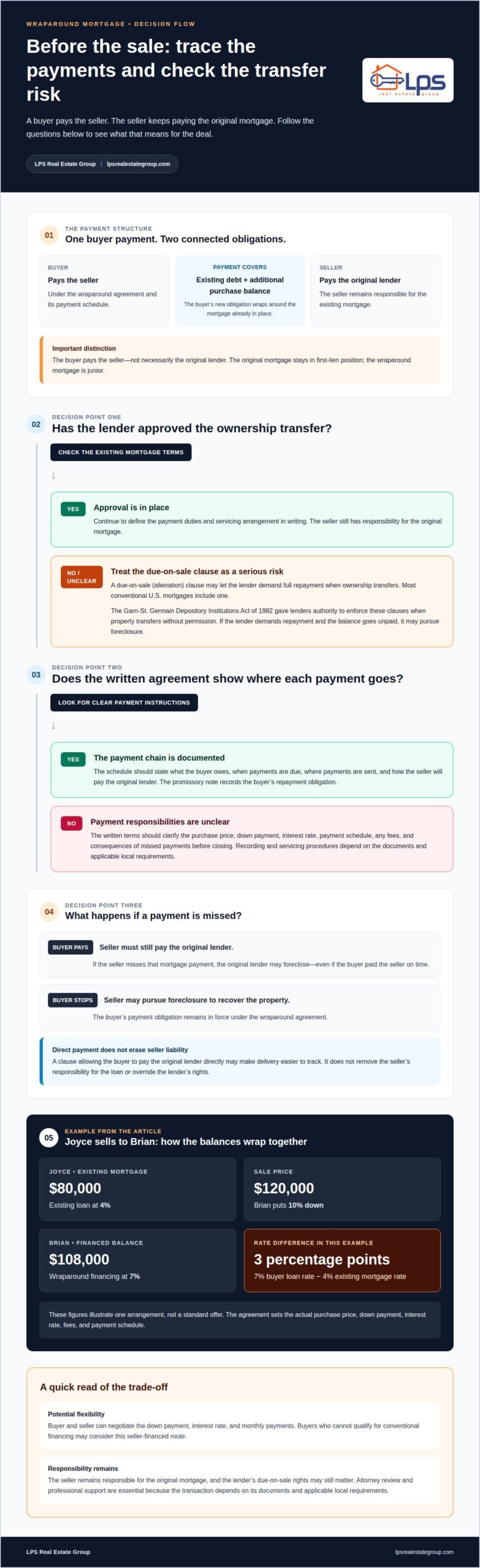
The buyer gives the seller a down payment and signs a promissory note for the financed balance. The seller continues paying the original mortgage, while the wraparound agreement sets the buyer’s payment to the seller. For example, Joyce owes $80,000 at 4% and sells for $120,000. Brian puts 10% down and finances $108,000 at 7%. The wrap includes the underlying debt and the additional financed amount. The original mortgage stays in first-lien position; the wraparound mortgage is junior. If the seller misses payments, the original lender may foreclose, even if Brian paid Joyce on time.
Terms, Rates, and Fees
The agreement sets the purchase price, down payment, interest rate, and payment schedule. There isn’t one rate or fee schedule that applies to every wraparound mortgage. Joyce and Brian’s example uses 7% for Brian’s loan and 4% for Joyce’s existing mortgage, creating a 3-percentage-point difference. Those figures illustrate one arrangement, not a standard offer. The written terms should make payment duties, any fees, and the consequences of missed payments clear before closing.
Closing and Loan Servicing
Setting up a wraparound means agreeing on the sale terms, documenting the buyer’s debt, and explaining how payments will reach the original lender. The promissory note records the buyer’s repayment obligation, while the agreement sets out the transaction terms. Recording and servicing procedures depend on the documents and applicable local requirements. The servicing arrangement should specify where the buyer sends payments and how the seller’s mortgage will be paid. Attorney review and professional support are essential because the seller remains responsible for the original mortgage, even if a third party handles payments.
What is a wraparound mortgage?
A wraparound mortgage is seller financing, while a traditional mortgage comes from a lender. Buyers who can’t qualify for conventional financing may consider a wraparound, but their payments depend on the seller continuing to pay the existing loan.
Payment Flow Between Buyer and Seller
The buyer pays the seller under the wraparound agreement, and the seller remains responsible for paying the original mortgage lender. The buyer’s payment covers the seller’s mortgage obligation plus the additional amount financed for the purchase. A written payment schedule should clarify what the buyer owes, when payments are due, and how the seller will pay the lender.
This payment chain creates a practical risk: the buyer may pay on time, but the seller could still miss a mortgage payment. The lender can then pursue foreclosure under the original mortgage. A clause allowing the buyer to pay the lender directly may make payment delivery easier to track, but it does not remove the seller’s responsibility for the loan.
Unlike a traditional mortgage, a wraparound mortgage doesn’t replace the seller’s loan with a new loan from an outside lender. It is seller financing, with the buyer and seller agreeing on the terms. Buyers may consider it when conventional financing is difficult to obtain; government-backed programs such as FHA, VA, and USDA loans are other routes to explore.
Potential Benefits and Risks
For buyers, seller financing can offer a route to ownership when conventional underwriting prevents a purchase. The buyer and seller can negotiate the down payment, interest rate, and monthly payments directly. That flexibility may help shape terms around the sale, but it doesn’t remove the buyer’s payment obligations or the risks tied to the existing mortgage.
Sellers may reach more potential buyers and receive interest income. In return, they remain responsible for the existing mortgage, even if the buyer defaults. If the buyer stops paying under the wraparound agreement, the seller may pursue foreclosure to recover the property. If the seller stops paying the original lender, that lender may also foreclose.
Creative finance solutions may help sellers consider alternatives when a conventional sale doesn’t fit their situation. Explore creative finance solutions to understand how seller financing could relate to your property needs.
Due-on-sale clauses and the Garn-St. Germain Act
A due-on-sale clause can make a change in ownership affect the seller’s original loan. Its terms may create a serious issue for a wraparound agreement.
Underlying Mortgage Restrictions
A due-on-sale clause, also called an alienation clause, lets a lender demand repayment when ownership transfers. Most conventional U.S. mortgages include one, so a wraparound sale may trigger the clause even when the buyer keeps making monthly payments. The Garn-St. Germain Depository Institutions Act of 1982 gave lenders authority to enforce these clauses when property transfers without permission. The existing mortgage’s wording matters because the wrap doesn’t erase the original lender’s rights.
Lender Approval and Foreclosure Risk
Lender approval matters because an unauthorized transfer can put the seller’s loan at risk. A lender may demand full repayment after discovering a wrap, and the seller may not have funds to pay the balance. If the original mortgage goes unpaid, the lender can pursue foreclosure, even while the buyer is paying the seller on schedule. Sending payments directly to the original lender may help track payment delivery, but it doesn’t remove the seller’s liability or override the clause.
Before closing, the parties should address the due-on-sale language and any consent required. The original lender may also need to approve a secondary loan, even though it isn’t providing the buyer’s financing. Treating a wraparound as a way to bypass a loan restriction can expose both parties to repayment demands and foreclosure.
Legal and State-Law Considerations
Wraparound mortgages are legal in the United States, but state requirements can shape how a transaction is documented and originated. In Texas, Senate Bill 43 classifies wrap mortgages as residential mortgage loans and requires the wrap originator to be licensed or registered. It also requires disclosure of an existing lien at least seven days before closing. These requirements make state-specific rules important, not optional details.
Texas law doesn’t cancel the original lender’s due-on-sale rights. A wraparound may meet state requirements and still face enforcement of the existing mortgage clause. The buyer and seller need to understand both layers: state rules for the wraparound and the original loan’s transfer restrictions.
When wraparound financing may make sense
Wraparound financing may suit a buyer who can manage negotiated payments but doesn’t qualify for a traditional mortgage. It may also let a seller consider a sale without first paying off the original loan. The decision depends on the buyer’s ability to pay, the seller’s ongoing obligations, and the existing mortgage terms.
The seller owes $100,000 on an existing mortgage at 4% APR. The difference between rates may provide interest income to the seller, while offering the buyer a negotiated route to ownership. But the seller still owes the original loan, and the buyer’s promissory note creates a separate payment obligation.
This arrangement warrants careful consideration when both parties have a clear reason to use seller financing. A buyer may value flexible qualification and terms negotiated directly with the seller. A seller may want to attract buyers who can’t secure conventional financing or avoid waiting for outside financing before closing. Neither benefit removes the need to account for the original loan, the due-on-sale clause, and the risk of missed payments.
Before agreeing, the parties should test whether the payment plan works for both sides. The buyer needs to understand the monthly obligation and the seller’s role in keeping the original loan current. The seller needs a way to manage payments and respond if the buyer defaults. The agreement should also spell out what happens if the buyer later sells or refinances. A buyer usually must own the home for at least 12 months and make all payments on time before refinancing out of a wraparound mortgage.
When a conventional sale or loan isn’t a practical fit, explore property financing options that align with the situation.
LPS Real Estate Group
LPS Real Estate Group helps homeowners consider property-sale options when an existing mortgage or financial pressure complicates a sale. If a wraparound raises concerns about ongoing payments or lender risk, the company’s creative finance solutions may offer another approach. Cash home buying and as-is property acquisition are also options for homeowners weighing alternatives to seller financing. Homeowners facing foreclosure concerns can consider a foreclosure prevention purchase. LPS buys homes as-is, with no repairs required, no commissions, and no hidden costs. Share your property details with LPS Real Estate Group to discuss a no-obligation offer and choose a closing date that works for you.
Choose a Path That Fits Your Property
Understanding what a wrap-around mortgage is can clarify one financing option, but your next step should reflect your property and priorities. If keeping an existing loan in place creates too much uncertainty, consider whether a different sale structure better suits your circumstances. Focus on choosing a path you understand and can manage, not just on the financing terms.
LPS Real Estate Group offers Cash Home Buying, Foreclosure Prevention Purchase, and As-Is Property Acquisition. These options may be relevant if you’re weighing a sale while facing mortgage pressure or property concerns. Each situation is different, and the right conversation starts with what you need from the sale.
Contact LPS Real Estate Group to discuss your property and consider a practical next step. You can move forward with greater clarity, one decision at a time.
Frequently Asked Questions
What happens if the seller stops paying back the original loan?
If the seller stops paying, the original lender may begin foreclosure, putting the buyer’s ownership and investment at risk. Payments the buyer made to the seller don’t automatically bring the underlying loan current. The buyer should keep payment records and understand the agreement’s remedies for missed seller payments. The loan statement and transaction records can help clarify whether funds reached the lender and how much remains due.
How are payments on a wraparound mortgage handled when the seller still has an existing mortgage?
The buyer pays according to the wraparound agreement, while the seller remains responsible for the separate mortgage payment. The agreement should clarify payment dates, where funds go, and how the seller accounts for amounts sent to the lender. For example, the parties can specify how the buyer will receive confirmation that the original loan payment was made. Clear records distinguish the buyer’s payment from the seller’s obligation to the lender.
What is the due-on-sale clause, and can a wraparound mortgage trigger it?
A due-on-sale clause allows a lender to demand repayment when a property changes ownership. A wraparound sale may trigger the clause because ownership can change while the original loan remains outstanding. The mortgage terms and any lender consent matter. The clause doesn’t mean foreclosure happens automatically, but it can create a repayment risk if the lender enforces it after the transfer.
What risks does a buyer face with a wraparound mortgage?
A buyer risks losing the property if the seller fails to keep the underlying mortgage current, even when the buyer has paid as agreed. The buyer may also face a higher interest rate than with other financing and fewer legal protections. Before signing, understand how the agreement handles missed payments, resale, refinancing, and payoff amounts. Keep payment receipts and copies of notices related to the property and loan.
What risks does a seller face with a wraparound mortgage?
The seller remains responsible for the original loan, so a buyer’s missed payment can leave the seller short of funds for the lender’s bill. The seller also has to manage payment records and address defaults under the buyer’s note. Before entering the agreement, consider whether the seller can cover the original payment during a disruption and how the contract handles late or missed payments.
What happens if the seller stops paying the original mortgage or the buyer misses payments?
The consequences depend on which payment is missed. If the seller misses the original mortgage payment, the lender may pursue foreclosure. If the buyer misses payments under the wraparound note, the seller may use the agreement’s default remedies, potentially including foreclosure. These are separate defaults involving different creditors and obligations. The written agreement should explain notices, opportunities to cure, and the process for resolving missed payments.