

What if the mounting pile of city violation notices in your mailbox wasn’t a dead-end for your property sale, but actually the first step toward a clean slate? It’s exhausting to watch municipal fines grow while you’re unsure how to handle unpermitted work or structural issues. You might feel stuck, believing you need a fortune in repairs before you can even think about a listing. However, it’s entirely possible to sell house with code violations without the anxiety of a traditional renovation or the fear of a failed inspection.
We understand that interacting with city officials feels intimidating, especially when funds are tight. You deserve a path forward that doesn’t involve endless permits or expensive contractors. This guide explains how to navigate legal disclosures, stop daily fines in their tracks, and secure a certain closing date without making a single repair. We’ll break down the 2026 landscape of municipal codes so you can move forward with a fair price and leave the inspector headache behind for good.
Key Takeaways
- Understand how aging infrastructure and unpermitted DIY projects lead to violations and how these issues impact your property’s safety standing.
- Learn how to sell house with code violations to halt mounting municipal fines and resolve liens before they consume your remaining home equity.
- Evaluate the most efficient path forward by comparing the high costs of full remediation against the speed and simplicity of a direct, as-is sale.
- Master the legal disclosure process to ensure you’re protected from future liability while maintaining a transparent relationship with your buyer.
- Discover how partnering with an as-is specialist allows you to hand over the inspector headache and move toward a certain closing date without making repairs.
Decoding Building Code Violations: What Homeowners Need to Know
A building code violation is essentially any part of your home’s structure that doesn’t meet current local safety or construction standards. These standards exist to protect residents, but they change frequently. Building codes are living documents that cities update every few years, which means a house built perfectly to code in 1990 might be full of violations by 2026 standards. Most homeowners don’t set out to break the law. Instead, violations often stem from aging infrastructure that has simply worn out or from well-intentioned DIY projects that skipped the permit office to save time. If you need to sell house with code violations, understanding these categories is the first step toward a solution.
Distinguishing between the types of infractions is vital for your peace of mind. Hazardous life-safety issues, such as a lack of required egress windows or unstable stairs, require immediate attention because they put people in danger. On the other hand, zoning infractions or aesthetic violations, like a fence that is slightly too high or an unapproved shed placement, are primarily administrative problems. While both can complicate a sale, life-safety issues are what usually stop traditional bank financing in its tracks. Unpermitted work is any modification made to a property without a city-issued permit and a subsequent official inspection.
Common Violations Found During Inspections
Inspectors look for specific red flags that could compromise the home’s integrity or the safety of its occupants. These are the most frequent issues we see in older properties:
- Electrical hazards: This includes outdated knob and tube wiring, ungrounded outlets, or overloaded circuits that create significant fire risks.
- Plumbing failures: Common issues involve improper venting, illegal drainage setups, or the use of outdated pipe materials like polybutylene that are prone to bursting.
- Structural concerns: These are often the most expensive to fix, including visible foundation cracks, unreinforced room additions, or noticeable roof sagging.
The Hidden Danger of Unpermitted Work
That “handyman” deck or basement remodel might look great, but it often triggers major red flags during a title search. When a buyer’s title company discovers work was done without the proper paperwork, it can stall a sale indefinitely. In some cases, the city may even force a homeowner to tear down unpermitted structures entirely at their own expense. This creates a high-stress situation for anyone trying to close a deal quickly.
Additionally, unpermitted modifications can severely complicate your homeowner’s insurance coverage. If a fire starts in a room that wasn’t built to code, your provider might deny the claim altogether. When you try to sell house with code violations, these hidden risks become public knowledge through the disclosure process, making a traditional sale much more difficult for buyers using standard mortgages.
The Financial Impact: How Violations Affect Your Home Value
When you try to sell house with code violations, the financial impact often feels like a double blow. First, you face the ‘Valuation Gap.’ This isn’t just the literal cost of fixing a foundation or replacing a roof. It’s a risk premium that buyers demand for taking on the unknown. Most retail buyers see an open permit or a safety violation and assume there are ten more hidden problems. This perception drives the price down significantly further than the actual repair estimate because buyers are pricing in the ‘inspector headache’ and potential delays.
The Certificate of Occupancy (CO) is another critical factor in determining your home’s marketability. If your property has active violations that prevent the city from issuing or maintaining a CO, the home is technically unmarketable to the general public. Traditional buyers aren’t just looking for a house; they’re looking for a home they can move into immediately. If they can’t legally live there, they’ll walk away before even making an offer. This leaves you with a property that sits on the market while daily fines continue to eat away at your equity.
Appraisal and Mortgage Hurdles
Dealing with Accrued Fines and Liens
Municipal fines are particularly aggressive because they often accumulate daily. These fines eventually become liens that attach directly to the property title. When you close, a title company will identify these debts, and they must be paid from your proceeds. You can sometimes negotiate with the city’s code enforcement board to reduce these penalties, but it requires patience and a clear plan. One of the most effective ways to protect your remaining equity is selling your house as-is to a buyer who can take over the responsibility. This stops the fine clock immediately and allows you to move on without further financial loss. If you’re feeling overwhelmed by these numbers, reaching out to LPS Real Estate Group can help you understand your property’s current value and find a path toward a fair sale.
Fix, Credit, or Sell As-Is? Weighing Your 2026 Options
When you decide to sell house with code violations, you’re usually choosing between three distinct paths. You can fix the issues yourself, offer a credit to the buyer, or sell the property as-is to a professional buyer. Each choice carries its own set of financial risks and time commitments. In 2026, these decisions are further complicated by a volatile construction market and stricter lending standards. Understanding the opportunity cost is vital; every day you spend managing contractors is another day of accruing municipal fines and property taxes.
The “right” choice depends on your liquidity and your tolerance for stress. While remediation might seem like the way to get the highest price, the hidden costs often outweigh the benefits. On the other hand, a direct sale provides the certainty of a closing date without the requirement of a single repair. Let’s look at why the traditional methods of fixing or crediting are becoming more difficult for today’s homeowners.
The Reality of Modern Repair Costs
Simple fixes rarely stay simple. We’ve seen homeowners start a minor electrical update only to discover that the entire panel needs a total overhaul to meet current standards. This “Domino Effect” is a common reality in older homes. With ongoing labor shortages and material inflation, your estimated repair budget can easily double before the first permit is even closed. It’s important to calculate your actual return on investment. If you spend $20,000 on code-compliant upgrades, but the market value only increases by $15,000, you’ve essentially paid for the privilege of doing the work. For many, the financial strain of these “invisible” repairs doesn’t make sense.
Why Seller Credits Often Fail
Many sellers think offering a price reduction is an easy way to bypass repairs. While this sounds logical, it often hits a wall during the mortgage process. Most traditional lenders won’t allow a credit to substitute for structural or life-safety repairs. They require the property to be safe and sound before they’ll release funds. If the buyer’s appraiser flags a violation, the bank may demand the fix be completed before closing, regardless of any credit offered.
There is also a psychological barrier to consider. Retail buyers are naturally cautious. If they see one glaring violation, they worry about the problems they can’t see. This fear often leads to lowball offers or buyers backing out during the inspection period. When you sell house with code violations directly to an as-is buyer, you eliminate this post-closing liability. You get a clean break from the property, ensuring that the inspector headache becomes someone else’s responsibility while you move forward with cash in hand.
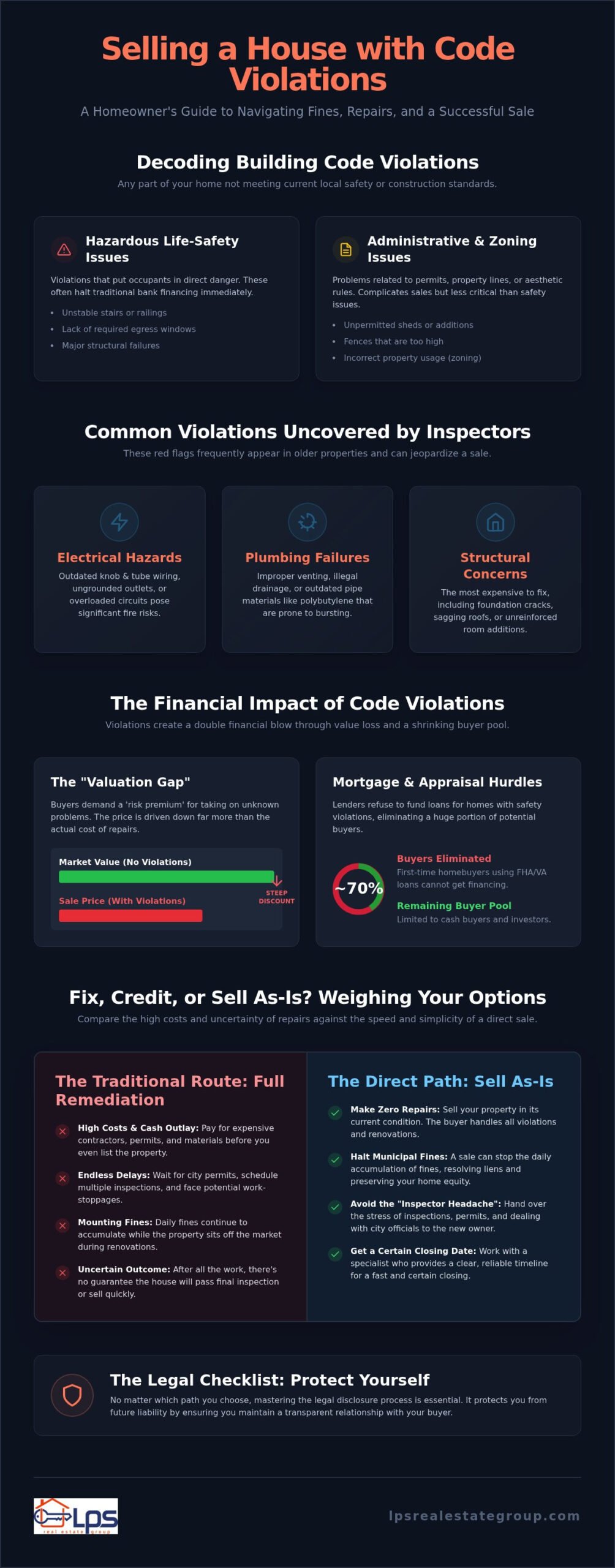
The Legal Checklist for Selling with Violations
Selling a property with existing issues requires a high level of transparency to protect yourself from future litigation. Many homeowners worry that being too honest will scare away buyers. In reality, full disclosure is your strongest legal defense. When you sell house with code violations, the law generally requires you to inform the buyer of any material defects that could affect the property’s value or safety. Failing to do so can lead to expensive lawsuits long after the closing date, even if you sold the home as-is.
Most states provide specific disclosure forms with a Known Defects section. This is where you list active municipal citations, unpermitted work, or structural concerns. To ensure a smooth transition, we recommend using a Buyer Acknowledgment form. This document proves the buyer was fully aware of the violations and agreed to take on the responsibility for fixing them. It creates a clear paper trail that protects you from post-sale claims and ensures everyone is on the same page before the keys change hands.
Navigating the Disclosure Process
You must disclose active violations, past repairs made without permits, and any known structural issues. An as-is clause is a helpful tool for setting expectations, but it doesn’t exempt you from disclosing known code issues. If you know the electrical panel was updated without a permit, you have to say so. Silent Violations, which are problems you truly don’t know about, are usually handled differently by the courts. However, deliberate omission is where legal trouble starts. Being upfront builds trust and keeps the deal moving toward the finish line.
Working with Municipal Inspectors
Interacting with code enforcement can be stressful. Some homeowners choose a pre-listing inspection to get ahead of the issues. This has pros and cons. While it provides clarity, it also makes any newly discovered problems known defects that must be disclosed to every potential buyer. If you’re currently facing a Stop Work order, it can halt a traditional sale entirely until a resolution is reached. However, many cities are willing to grant a Compliance Extension. This agreement permits the title transfer to a new owner who formally agrees to finish the work within a set timeframe. This is a practical way to move the property without doing the work yourself.
Navigating the legalities to sell house with code violations doesn’t have to be a solo journey. You can contact LPS Real Estate Group today to receive a fair offer that includes us handling the municipal paperwork and inspector meetings on your behalf.
A Straightforward Path: Selling to LPS Real Estate Group
After considering the legal hurdles and mounting repair costs, you might feel like you’re stuck in a no-win situation. At LPS Real Estate Group, we specialize in providing a way out that prioritizes your peace of mind. When you choose to sell house with code violations to us, you aren’t just finding a buyer; you’re finding a partner who understands the complexities of municipal bureaucracy. We take on the “inspector headache” entirely, managing the meetings, permits, and paperwork so you don’t have to worry about another city notice.
Our approach is built on quiet confidence and transparency. We don’t rely on high-pressure tactics or aggressive sales pitches. Instead, we offer a steady, methodical process that respects your circumstances and your time. Whether your property has minor zoning issues or deep-rooted structural failures, we provide a certain closing date that allows you to plan your future with clarity. We believe in doing the right thing for every homeowner, ensuring you feel heard and supported throughout the entire transaction.
The LPS Direct Acquisition Process
We’ve streamlined our acquisition process to be as low-stress as possible. We break everything down into three manageable stages:
- Step 1: A compassionate consultation. We start by listening. We want to understand your specific code hurdles and what you need to achieve from the sale.
- Step 2: A transparent evaluation. We perform a professional assessment of the property’s current condition, looking honestly at what it will take to bring it up to 2026 standards.
- Step 3: A fair offer. You’ll receive a straightforward offer that accounts for all outstanding fines, municipal liens, and necessary repairs. There are no hidden fees or surprises at the closing table.
Beyond Cash: Creative Real Estate Exit Strategies
Sometimes a standard cash offer isn’t the best fit, especially if daily fines have accumulated to the point where they’ve eaten most of your equity. This is where our expertise in Creative Finance becomes a powerful tool. If your property is “upside down”-meaning the total liens and fines exceed the home’s market value-we don’t just walk away. We look for innovative ways to solve the problem and protect your financial future.
We’re experts at resolving the “upside down” problem by taking on the legal and logistical heavy lifting required to clear a title. By partnering with us, you can stop the clock on municipal penalties and walk away from a stressful situation with your integrity intact. If you’re ready to find a solution that works for your unique needs, Get your fair offer today and leave the violations behind.
Take Control of Your Property’s Future
Dealing with municipal fines and unpermitted work can feel like an endless cycle of stress. We’ve explored how these violations impact your home’s value and the legal necessity of honest disclosure. You don’t have to spend months managing contractors or thousands on repairs to move forward. Instead, you can choose a path that stops the daily fines and provides a certain closing date. When you sell house with code violations to a specialist, you shift the burden of repairs and city inspections to a partner who knows how to handle them.
LPS Real Estate Group provides a compassionate, human-centric approach to these complex situations. We bring specialized expertise in resolving deep-rooted title issues and municipal liens; this ensures you receive a fair price regardless of the property’s condition. If you’re ready to leave the inspector headache behind and secure a clean slate, we’re here to listen and help.
Get a Fair Offer for Your Property-Violations and All
You have options, and you don’t have to navigate this alone. We look forward to helping you find the best solution for your unique situation.
Frequently Asked Questions
Can the city stop me from selling my house with code violations?
No, the city typically cannot prevent you from transferring ownership, but they can place significant hurdles in your path. These obstacles often include recorded liens or “stop work” orders that must be addressed at the closing table. While you have the right to sell, the buyer must usually sign an agreement acknowledging they are taking over the responsibility for any outstanding repairs or safety issues.
Do I have to pay off municipal liens before I can sell?
You don’t necessarily need to pay these liens out of pocket before the sale, as they are typically settled during the closing process. The title company will identify all outstanding debts and deduct them from your final sale proceeds. If the fines are higher than your equity, you may need to explore creative finance solutions to clear the title. This ensures the new owner starts with a property free of municipal debt.
Who is responsible for fixing code violations after a house is sold?
Once the title is transferred, the buyer becomes legally responsible for bringing the property up to current standards. This is why most retail buyers are hesitant; they don’t want the financial burden of future repairs. Professional buyers who specialize in as-is acquisitions expect these issues. They factor the cost into their offer and handle all interactions with the building department themselves, relieving you of any further obligation to the city.
What happens if I sold a house and didn’t disclose a code violation?
Failing to disclose a known defect can lead to serious legal consequences, including lawsuits for fraud or misrepresentation. Even if you sell house with code violations as-is, you’re still required to be honest about problems you’re aware of. If a buyer discovers a pre-existing violation after closing that wasn’t disclosed, they may seek damages to cover the cost of repairs and legal fees. Honesty is always the best way to protect your future.
Can I get a mortgage for a house with unpermitted work?
Securing a traditional mortgage for a home with significant unpermitted work is extremely difficult in 2026. Lenders like the FHA or VA have strict safety requirements and will often deny funding if an appraiser flags illegal additions or hazardous wiring. While some conventional lenders might proceed for minor issues, most retail buyers will find their financing blocked. This is why cash sales are often the most reliable path for properties with major infractions.
How do I find out if my house has any active building code violations?
You can find this information by contacting your local city or county building department and requesting a lien search or a formal records request. Most municipalities also have online portals where you can search by property address to see active citations or open permits. It’s better to know the facts early so you can disclose them properly. This transparency helps build trust with potential buyers and prevents the sale from falling through later.
Is it better to fix the violations or lower the price?
The best choice depends on your available funds and how quickly you need to move. Fixing violations can potentially net a higher price, but the domino effect of repairs often leads to unexpected costs. Lowering the price or offering a credit is faster but may still scare off retail buyers who can’t get a mortgage. For many, a direct sale at a fair price is the most efficient way to sell house with code violations and avoid the repair headache.
Can I sell a house that has a ‘Do Not Occupy’ notice?
Yes, you can sell a property with a “Do Not Occupy” notice, but your buyer pool will be limited to cash investors or professional renovators. Since traditional buyers cannot live in the home or get a mortgage, a retail sale is virtually impossible. A professional as-is buyer can purchase the property, handle the necessary structural or safety updates, and work with the city to have the notice removed after the closing is complete.