

What if the debt attached to your property wasn’t a permanent barrier, but simply a hurdle that requires a better map? For many homeowners, discovering a Notice of Federal Tax Lien or a judgment feels like a dead end. With the IRS filing over 214,000 liens in 2025 alone, you aren’t alone in this frustration. It’s natural to feel overwhelmed by the fear of a sale falling through or the stress of aggressive creditors. You want a clean break and a fair outcome, but selling a house with a lien often feels like a legal maze with no exit.
We understand that your primary goal is to protect your equity and move on to your next chapter without the weight of debt following you. This guide will show you exactly how to handle property liens, clear your title, and successfully sell your home even when debt is attached to the property. We’ll walk through the specific steps to resolve different types of debt, how to negotiate for a discharge, and the creative strategies that can help you maximize your cash at closing. By the end of this article, you’ll have a clear, manageable path toward financial freedom.
Key Takeaways
- Understand how a property lien works as a legal claim that needs to be satisfied to ensure a clear title transfer.
- Learn the mechanics of selling a house with a lien by using your home’s equity to pay off debts during the closing process.
- Discover creative finance options that allow for a fast sale even if your debt exceeds the property’s current market value.
- Identify the specific impacts of tax liens and contractor claims so you can prioritize which debts to resolve first.
- Follow a simple roadmap to verify your total debt and prepare for a successful closing without last minute surprises.
Understanding Property Liens and Their Impact on Your Sale
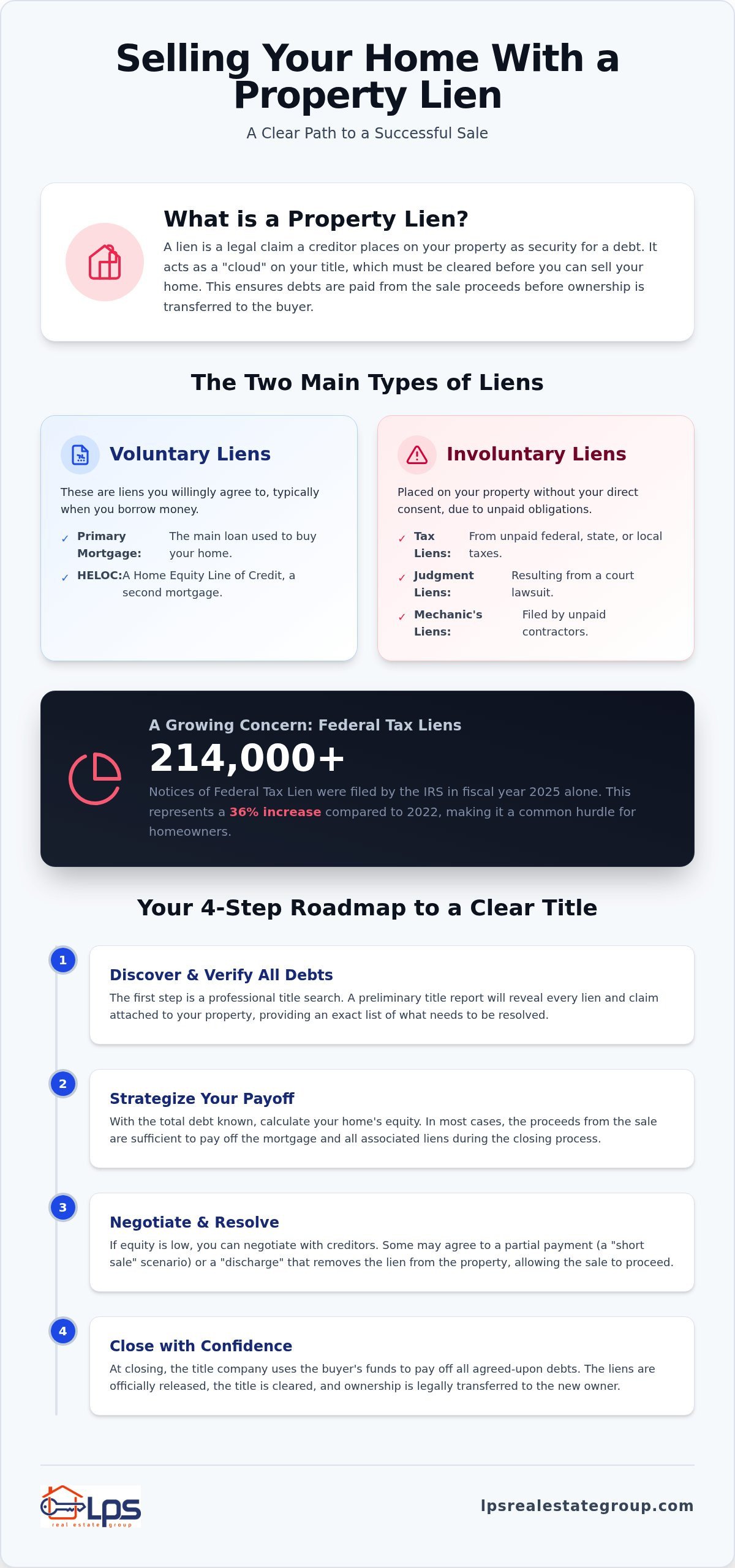
A property lien is essentially a legal claim against your home by a creditor. It serves as a safety net, ensuring that if the property is sold, the debt is paid from the proceeds. If you’ve ever asked, What is a property lien?, it’s easiest to view it as a public record that attaches a debt to your house rather than just to you personally. This record stays with the property, which is why selling a house with a lien through traditional channels can feel like a standstill.
Title companies refer to these claims as “clouds” on the title. A clear title is necessary because most buyers and their lenders won’t take on the risk of your old debts. The title company acts as a neutral third party, digging through public records to find these issues before the sale closes. While this might feel like a roadblock, it’s actually a standard part of the process. Thousands of homeowners successfully sell properties with liens every single month. It isn’t a dead end; it’s just a step that requires a specific strategy to resolve.
Voluntary vs. Involuntary Liens
Not all liens are created equal, and understanding the difference helps you plan your next move. Voluntary liens are those you intentionally agreed to, like your primary mortgage or a home equity line of credit (HELOC). You signed these documents to get the funds you needed, and you likely expect to pay them off when you sell.
Involuntary liens are more stressful because they’re placed without your direct consent. These include:
- Tax Liens: Filed by the IRS or local government for unpaid taxes.
- Judgment Liens: Resulting from a court case where a creditor won a claim against you.
- Mechanics Liens: Placed by contractors or suppliers who claim they weren’t paid for work done on the home.
Regardless of the type, each one must be satisfied or released before you can legally transfer the deed to a new owner. The goal is to ensure the new buyer starts with a clean slate.
The Title Search Process in 2026
In 2026, the title search process is faster than ever, but it remains thorough. A preliminary title report will reveal the entire history of your property, listing every active lien and ownership detail. This search usually takes between three to five business days. Once the report is in hand, you’ll see exactly what needs to be cleared.
The ultimate objective for any seller is “quieting the title.” This means you’ve successfully resolved every claim, leaving the title clear for the next owner. Whether you pay the lien from your sale proceeds or negotiate a settlement, reaching this stage is what allows the legal transfer of ownership to happen. If you’re selling a house with a lien, knowing exactly what’s on that report is your first step toward a successful closing.
Common Types of Liens and How They Affect Your Title
Not all legal claims carry the same weight. When you’re selling a house with a lien, the specific type of debt determines how much leverage you have during negotiations. Tax liens are often the most urgent. The IRS filed over 214,000 Notices of Federal Tax Lien in fiscal year 2025, which was a 36% increase compared to 2022. These government claims take precedence over almost everything else. Understanding these nuances is vital for anyone selling a house with a lien who wants to protect their remaining equity.
Mechanics liens come from unpaid contractors. If a roofer wasn’t paid for a project, they can cloud your title to ensure they get their cut before you walk away with any cash. Judgment liens are different; they stem from court rulings on credit card debt or medical bills. Even your Homeowners Association (HOA) has the power to place a lien if you’ve missed monthly dues. These smaller claims can be just as disruptive as a large mortgage if they aren’t handled before you find a buyer. If you need help resolving these community-based financial issues, you can click here to learn about the services offered by My Arizona HOA Manager.
Liens usually follow a “first in time, first in right” rule, meaning the oldest debt gets paid first. However, certain “senior” liens like your primary mortgage usually sit at the top of the list. The IRS usually holds the highest priority in a lien hierarchy. If you’re looking for A Guide for Homeowners on how to navigate these rankings, it’s helpful to know that “junior” liens only get paid if there’s equity left over after the senior creditors are satisfied.
Hidden Liens You Might Not Know About
Some encumbrances don’t appear until you’re deep into the sale process. Child support or alimony arrears can actually attach to your real estate in many states. Similarly, unpaid utility bills or municipal assessments for sidewalk repairs can create a quiet claim against your home. You can perform a DIY search by visiting your county recorder’s office or checking their online portal for any “recorded documents” under your name or address. Identifying these early is the best way to prevent a last minute collapse of your deal.
If these legal layers feel overwhelming, exploring an as-is property acquisition might provide the clarity and speed you need to move forward.
Navigating the Traditional Sale: Paying Liens from Proceeds
Calculating your net proceeds is the first step toward clarity. You need to subtract your mortgage balance, all recorded liens, and the expected closing costs from your target sale price. You might ask, Can You Sell a House With a Lien on It? The answer is a clear yes. In a traditional transaction, the title company ensures that these debts are paid off directly from the buyer’s funds at the closing table. This process allows you to walk away with a clear title and the remaining cash in your pocket.
To make this work, you must obtain a formal payoff letter from each creditor. This document lists the exact amount required to satisfy the debt by a specific date. It includes the principal, interest, and any administrative fees. The escrow officer then uses these letters to coordinate the simultaneous payoff and title release. While this is the standard path, selling your house as-is can often simplify the timeline by removing the need for bank appraisals and repairs that typically delay a traditional sale.
Negotiating with Lienholders for a Reduced Settlement
Creditors are often more flexible than they appear. They understand that a house sitting with a lien is an asset they can’t easily access. If you can show that there isn’t enough equity to pay everyone in full, some lienholders may accept a “lien release for less.” They might settle for a partial payment rather than risking a total loss through a foreclosure. This negotiation requires patience and transparency. You must get every agreement in writing and provide those documents to your title company to ensure the lien is officially removed from the public record.
When Equity Isn’t Enough
There are times when the market value of your home is simply lower than the total debt attached to it. This leads to a short sale, where you need permission from your creditors to sell the home for less than what is owed. It’s a complex process that can take months to approve. Additionally, you must consider the 5% to 6% in real estate commissions that a traditional sale requires. When you’re selling a house with a lien and equity is low, these costs can sometimes result in a deficiency judgment. Exploring every exit strategy is the best way to avoid paying out of pocket at the closing table.
Creative Finance and Direct Buyouts: Solutions for Low-Equity Liens
If you are considering a traditional sale and want to see how a professional brokerage manages these complexities, you can learn more about Ray Lyon Realty to understand their approach to residential real estate transactions involving title issues.
When the total debt against your property approaches or exceeds its market value, a traditional listing often becomes impossible. Traditional buyers typically need a clean title at the moment of closing, which you can’t provide if you lack the cash to pay off the remaining balance. This is where creative real estate exit strategies offer a lifeline. These methods allow for selling a house with a lien by restructuring how the debt is handled, rather than requiring a massive lump sum upfront from the seller.
One powerful tool is the “Subject-To” offer. In this scenario, a buyer takes over your existing mortgage payments and handles the legal responsibility of the liens while the original loan stays in your name. It’s a solution built on trust and professional management. Additionally, companies that buy houses for cash are uniquely equipped to navigate these complex title issues. Because these buyers don’t rely on traditional bank financing, they aren’t bound by the strict “clear title” rules that stop most residential lenders. You also avoid the 6% commission and closing costs, which often preserves what little equity you have left.
Partnering with a Specialist Investor
Professional investors often act as your advocate. They have the experience to negotiate directly with tax authorities or contractors to settle debts for less than the face value. This transparency is a major relief for homeowners. You receive a direct offer that shows exactly what you’ll walk away with, rather than guessing after months on the market. If your home is distressed or cluttered, a direct buyer is often the only viable path forward, as they see the potential in the property regardless of its current state.
Avoiding Foreclosure Through a Fast Sale
Speed is your best defense against a foreclosure auction. A direct sale can often be completed in days, stopping the legal clock in its tracks. By selling a house with a lien before the bank takes it, you protect your credit score from the long term damage of a public foreclosure. This “clean slate” outcome allows you to walk away from both the debt and the property at the same time. If you’re facing a tight deadline, reaching out for a direct cash offer can provide the certainty you need to move on with your life.
A Step-by-Step Roadmap to Resolving Liens and Closing Fast
Resolving complex debt doesn’t happen by accident. It happens through a methodical process that replaces uncertainty with action. If you’re selling a house with a lien, your journey to a clear title follows a specific roadmap designed to protect your interests and your time. This path ensures you don’t miss a single legal requirement that could stall your closing at the last minute.
- Step 1: Conduct a preliminary title search. This identifies every active claim against your property, from federal tax liens to local contractor judgments.
- Step 2: Calculate your total debt load. Compare this total against the 2026 market value of your home. This helps you determine if you have enough equity for a traditional sale or if you need a creative finance solution.
- Step 3: Decide on your exit strategy. Choose between a traditional listing, which requires more time and commissions, or a direct cash buyout for speed and certainty.
- Step 4: Request a sell my house fast for cash offer. Comparing a direct offer against the variables of the open market gives you a baseline for your decision.
- Step 5: Execute the closing. Work with the title company to ensure all lien releases are officially recorded with the county to finalize the legal transfer.
Gathering Your Documentation
Being organized is your best defense against delays. Create a dedicated “Lien Folder” that contains every relevant piece of paperwork, including tax bills, contractor invoices, and court orders. You’ll also need a current mortgage statement and any “intent to lien” notices you’ve received. Having these ready allows for a transparent, judgment-free consultation with a professional buyer. It shows you’re ready to find a solution and helps the buyer understand the exact steps required to clear the title.
Finalizing the Clean Slate
The process doesn’t end the moment you sign the closing papers. After the sale, verify that the “Satisfaction of Lien” document has been recorded for every debt paid off at closing. This is the legal proof that the cloud has been removed from your name. You should also check your credit report a few weeks later to ensure it reflects the resolved debt. There’s an immense sense of relief that comes with moving forward without the physical or financial burden of a distressed property. Selling a house with a lien can be the first step toward reclaiming your financial peace and starting fresh.
Take the Next Step Toward Your Fresh Start
A property lien doesn’t have to be the end of your homeownership story. Understanding the specific types of debt attached to your title is the first step toward resolving them. Whether you’re dealing with a sudden tax notice or a long standing judgment, you have options that protect your equity and your peace of mind. The process of selling a house with a lien becomes significantly easier when you move away from traditional market hurdles and toward a specialized solution.
We’re here to help you navigate these complexities with quiet confidence. At LPS Real Estate Group, we specialize in resolving complex liens and title issues that often cause traditional sales to fall through. Our process is built on transparency and empathy, ensuring you feel supported at every stage. We offer a path with no commissions, no repairs, and no out of pocket costs to clear your debt. It’s a compassionate way to secure a certain exit from a stressful financial situation.
Don’t let debt dictate your future any longer. You deserve a clear path forward and a clean slate. Get a fair, as-is cash offer for your house with liens today. You have the power to reclaim your financial freedom, and we’re ready to partner with you to make it happen.
Frequently Asked Questions
Can I really sell my house without paying off the lien first?
Yes, you can sell your property without paying the debt out of your own pocket before the sale. In most cases, the lien is satisfied at the closing table using the funds provided by the buyer. The title company or escrow officer coordinates the payment directly to your creditors. This allows you to clear the title and resolve your financial obligations using the home’s equity rather than your personal savings.
How much does a title search cost in 2026?
While prices vary based on the complexity of the property history, a standard title search in 2026 typically ranges between $150 and $500. This fee covers the labor involved in scouring public records to find any “clouds” like unpaid taxes or contractor judgments. If you choose a direct buyout, many professional buyers will cover this administrative cost as part of their service, which reduces your immediate out of pocket expenses.
What happens if a lien is discovered after I list my house?
If a surprise lien appears during the buyer’s title search, you must address it before the sale can legally close. You can either pay the debt from your sale proceeds or negotiate with the creditor for a reduced settlement. If the new debt means you won’t have enough equity to pay everyone, you might need to explore creative finance solutions to ensure the buyer receives a clear and insurable title.
Can the IRS stop me from selling my house if I have a tax lien?
The IRS won’t usually stop the sale, but they will require their portion of the proceeds to release the claim. If your equity is lower than the tax debt, you can submit IRS Form 14135 to request a Certificate of Discharge. This review process generally takes 30 to 45 days. It’s a manageable hurdle when selling a house with a lien, as tax authorities prefer receiving a partial payment over a total loss.
Do liens expire, or will they stay on my title forever?
Most liens have a specific lifespan based on state or federal law, but they don’t always vanish from public records automatically. Federal tax liens, for example, typically last 10 years from the date of assessment unless they’re refiled. Even if a lien is legally expired, it remains a “cloud” that must be formally released by the title company before you can successfully transfer the deed to a new owner.
Will a cash buyer pay a fair price if my house has multiple judgments?
Yes, professional buyers determine a fair offer by calculating the property’s market value and subtracting the cost of resolving the active liens. This approach accounts for the “heavy lifting” of negotiating with multiple creditors on your behalf. It provides a certain exit for those selling a house with a lien who want to avoid the delays and high commissions associated with a traditional real estate listing.
How do I handle a lien on an inherited property I never lived in?
You handle an inherited lien by verifying if the debt was attached to the individual or the real estate itself. If the claim is against the property, it must be settled regardless of who currently holds the deed. You can sell the home as-is, and the title company will use the proceeds to pay off the estate’s debts. This allows you to settle the inheritance without using your own cash.
Can I sell a house with a lien if I am currently in probate?
You can sell a property in probate as long as you have the court’s permission or the executor has the legal authority to do so. The title search will identify all active liens, which are then paid from the sale proceeds before the remaining inheritance is distributed. Many specialized buyers focus on probate acquisitions and can help you navigate the specific legal steps required to ensure a smooth and ethical closing.