
What if the debt attached to your property wasn’t a stop sign, but just a line item on your final closing statement? Many homeowners believe that a title cloud means they’re trapped in their home until they can scrape together enough cash to pay off creditors. You might feel overwhelmed by the pressure of tax authorities or the fear of legal action, especially with the IRS underpayment interest rate sitting at 7% for the end of 2026. It’s a heavy burden to carry when you just want a fresh start.
The truth is that selling a house with a lien is a standard process that happens every day. You don’t need liquid savings to clear your name or secure a clean title. This guide shows you exactly how to resolve these complexities and successfully sell your home, even if you don’t have the cash to pay the debt upfront. We’ll walk through the specific steps to handle different types of claims, from IRS filings to HOA assessments, ensuring your debts are settled automatically at closing. You will discover a clear path to immediate liquidity and a stress-free transition to your next chapter.
Key Takeaways
- Understand how a lien creates a “cloud on title” and why this legal claim doesn’t have to prevent you from moving forward with a sale.
- Learn the specific differences between tax and mechanic’s liens to identify the most effective resolution strategy for your situation.
- Discover the methodical process for selling a house with a lien by using your closing proceeds to settle debts automatically without needing cash upfront.
- Compare the advantages of a direct cash purchase over traditional listings when dealing with complex title issues and the need for a fast, certain closing.
- See how partnering with a compassionate expert can simplify the logistical coordination with title companies, providing you with a clear path to a clean title.
Understanding Property Liens and Their Impact on Your Home Sale
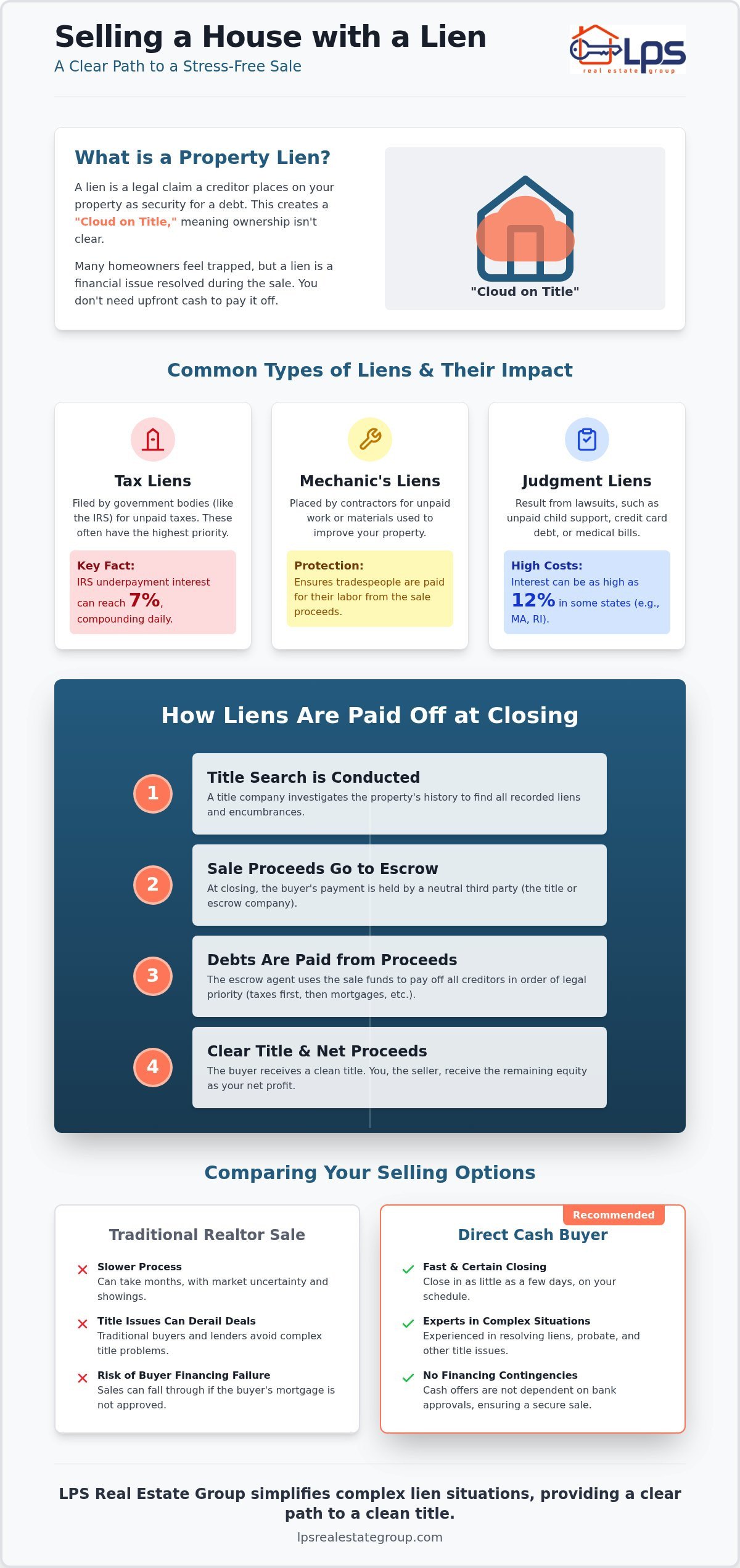
A property lien is a legal claim recorded against your home by a creditor. What is a property lien exactly? It acts as a security interest, ensuring that the debt is paid if the property is sold. When you’re selling a house with a lien, this claim creates what real estate professionals call a “cloud on title.” This means the ownership record isn’t “clean,” and most traditional buyers won’t touch it until the cloud is cleared.
The psychological weight of a lien can be heavy. Many homeowners feel paralyzed, worrying they’ll face legal consequences or that they’re effectively “stuck” with the property. It’s a stressful situation, but it’s often based on a misunderstanding of how the closing process works. A property lien is a financial hitch that is legally resolved during the title transfer process.
Voluntary vs. Involuntary Liens
Not all liens are created equal. The most common type is a voluntary lien, such as your mortgage. You signed a contract agreeing to the lien in exchange for a loan. Involuntary liens are different. These are placed on your property without your consent, usually by tax authorities, contractors, or judgment holders. Involuntary liens often carry higher legal priority, meaning they must be paid before other creditors. Tax liens, for example, can jump to the front of the line, even ahead of your primary mortgage holder. Managing these requires a proactive approach because they don’t follow the predictable structure of a standard mortgage. You need a clear strategy to handle these before they spiral into legal repercussions.
The Role of the Title Search
A title search is the investigative phase of a home sale. This process reveals any recorded encumbrances that might prevent a smooth transfer of ownership. Traditional lenders will not approve a mortgage for a new buyer if the search uncovers an unresolved debt. Discovering these issues early is vital when selling a house with a lien. A surprise at the closing table can kill a deal and increase your stress. Working with a buyer who understands complex title issues ensures that these hurdles are handled professionally and transparently. This partnership allows you to focus on your next move while the logistical puzzles are solved on your behalf.
Identifying Common Types of Liens and How They Work
Identifying the specific type of debt attached to your property is the first step toward a resolution. While many homeowners feel overwhelmed by these legal claims, most fall into a few predictable categories. A federal tax lien is common, often filed when an unpaid tax balance exceeds $10,000. With interest rates for underpayments reaching 7% in late 2026, these balances can grow quickly due to daily compounding. if you are selling a house with a lien from the IRS, you’ll need to account for this growing total in your final payoff amount.
Other common encumbrances include mechanic’s liens, which are filed by contractors for unpaid labor or materials. You might also encounter judgment liens from lawsuits, such as court-ordered child support or unpaid medical bills. Interest rates on these judgments vary significantly by state; for example, rates in Massachusetts and Rhode Island are as high as 12%. Homeowners Association (HOA) liens are another hurdle. While some states like California now cap most HOA fines at $100 per violation, unpaid assessments can still lead to foreclosure if the association records a lien against your title.
The ‘Priority’ of Liens
The order in which creditors get paid is determined by lien priority. Usually, the rule is “first in time, first in right,” meaning the oldest recorded lien is paid first. However, government tax claims often jump to the front of the line regardless of when they were filed. This priority hierarchy directly impacts your net proceeds. When selling a house with a lien, the title company uses your sale proceeds to pay off these debts in their legal order before you receive any remaining equity.
Hidden Liens and Municipal Issues
Some issues don’t appear on a standard title search immediately. Unrecorded encumbrances like delinquent utility bills or municipal code violations can surface late in the transaction. These surprises can derail a traditional sale where the buyer expects a perfect property. Choosing to sell your house as-is provides a practical way to manage these surprises without performing the repairs or settling every minor bill yourself. It’s important to distinguish between a recorded lien and a simple unsecured debt, like credit card balances. Only debts specifically recorded against the property title must be settled to complete the transfer. If you’re unsure which debts are currently attached to your home, talking with a property specialist can help you gain the clarity you need to move forward.
Comparing Your Selling Options: Traditional Realtor vs. Direct Cash Buyer
Choosing the right path to sell your home depends heavily on the complexity of your title. Most retail buyers you’ll find through a traditional realtor require a mortgage to complete the purchase. This is where the primary hurdle begins. Banks are inherently risk averse. They won’t release funds if a title search reveals an unresolved debt, such as a judgment or a mechanic’s lien. This puts real estate agents in a difficult position. They often struggle to market a home that isn’t “title-clear” or move-in ready, as their target audience simply can’t get the financing needed to cross the finish line.
This is where the direct buyer advantage becomes clear. When you’re selling a house with a lien, a cash buyer brings their own capital and experienced legal teams to the table. They aren’t waiting on a bank’s approval or a strict appraisal. Instead, they understand how to coordinate directly with title companies to ensure every debt is settled at the moment of closing. When evaluating companies that buy houses for cash, it’s vital to look for partners who have a proven track record of resolving title clouds. This expertise turns a complex legal puzzle into a straightforward transaction.
Why Traditional Financing Often Fails
Traditional lenders require a “clear and marketable title” before they will fund a loan. This is a legal standard that ensures no other party has a claim to the property. If a cloud exists, the lender sees a potential threat to their collateral. It’s common for these deals to fall through just days before the scheduled closing, leaving the seller in a desperate spot. A cash offer removes the appraisal and financing contingencies entirely. It provides a level of certainty that a retail buyer, no matter how well-intentioned, cannot match when title issues are present.
Speed and Certainty in Complex Sales
Time is often your most valuable asset when debts are mounting. A traditional sale typically takes 60 to 90 days. If you’re facing an impending tax sale or foreclosure, you don’t have months to wait for the perfect buyer. Direct sales can often be completed in as little as 7 to 14 days. This rapid timeline provides the immediate liquidity you need to settle urgent debts and stop the accumulation of daily interest. It offers a certain exit strategy, allowing you to move forward without the stress of a prolonged, uncertain listing period.
The Step-by-Step Process of Selling a House with an Existing Lien
Many homeowners feel trapped by the idea that they must pay off their debts before they can even think about moving. This is a common myth. In reality, the equity in your home is often the very tool you’ll use to clear your title. When selling a house with a lien, the goal is to use the sale proceeds to handle the debt at the closing table, rather than paying out-of-pocket beforehand. This approach provides a manageable path forward for those who don’t have liquid cash to settle debts up front.
The process follows a logical sequence to ensure transparency and legal compliance:
- Obtain a preliminary title report: This document acts as your roadmap. It identifies every recorded encumbrance attached to the property so there are no surprises later in the transaction.
- Request formal payoff letters: You must contact each creditor to get an exact, written balance. This includes daily interest, which is especially important given the 7% IRS underpayment rate for late 2026.
- Negotiate if necessary: If the total debt is close to or exceeds the home’s value, you may need to ask creditors for a partial release or a reduced settlement.
- Sign the settlement statement: At closing, the title company deducts the lien amounts directly from the final sale price.
Negotiating with Creditors
There are times when the numbers don’t quite add up. If you owe more than the house is worth, you might pursue a short sale. In this scenario, creditors agree to accept less than the full balance to allow the sale to proceed. Some creditors may also agree to a partial release, where they release the lien from the property but keep the debt attached to you personally. Professional buyers often have experience assisting with these complex negotiations, acting as a bridge between you and the debt holders to find a workable solution.
Settlement at the Closing Table
The final step happens at the closing table through a document called the “Net Sheet” or settlement statement. This clear, line-by-line breakdown shows exactly where every dollar goes. The title company takes the buyer’s funds and cuts checks directly to your creditors. Once these payments are made, the title company ensures the liens are legally satisfied and released at the county records office. You walk away with your remaining equity, and the buyer receives a clean title. If you want to skip the stress of managing these steps yourself, you can get a fair cash offer from a team that handles the entire title coordination on your behalf.
How LPS Real Estate Group Resolves Complex Lien Situations
At LPS Real Estate Group, we understand that behind every recorded debt is a person looking for a way forward. We position ourselves as a listener first, focusing on your specific circumstances before we ever look at the logistical puzzle of the title. Our team specializes in the complexities of selling a house with a lien, providing a level of care that goes beyond a simple transaction. We don’t just buy houses; we provide a clear exit strategy for homeowners who feel overwhelmed by their financial situation.
When you work with us, you aren’t just getting a buyer. You’re getting a partner who handles the coordination with title companies and creditors on your behalf. We acquire properties in their current as-is condition, which means you don’t have to worry about repairs or cleaning up the property to attract a retail buyer. Because we are direct buyers, there are no realtor commissions or hidden fees. This ensures that the maximum amount of the sale proceeds stays available to settle your debts and put cash in your pocket.
Innovative Solutions for Low Equity
Sometimes, the total amount of the liens on a property is nearly as high as the home’s market value. In these cases, a standard cash offer might not be enough to clear the debt. This is where our expertise in creative real estate exit strategies becomes a vital tool. We can often structure a “Subject-To” purchase, where we take over the responsibility for the existing debt. This method can protect your credit from the damage of a foreclosure and ensure the lien is resolved over time. It’s a specialized approach that traditional buyers and large corporate corporate entities simply don’t offer.
Getting Started with a Fair Offer
The first step toward resolving your title issues is a simple, confidential conversation. We provide a transparent evaluation based on current market data and the specific details of your property. Our goal is to offer a fair price that reflects the reality of the market while acknowledging the work needed to clear the title. If you’re selling a house with a lien and want to avoid the stress of traditional listings, reach out for a no-obligation consultation. We’ll listen to your story and show you exactly how we can clear your title, handle the creditors, and help you move on with peace of mind.
Secure Your Fresh Start Today
A property lien doesn’t have to be a permanent barrier to your next chapter. The most important takeaway is that your home’s equity is often the solution itself. You don’t need to find extra cash to clear your name before you list. Instead, you can use the sale proceeds to settle debts automatically at the closing table. This methodical approach removes the fear of legal repercussions and replaces it with a clear, manageable plan that protects your future.
LPS Real Estate Group is A+ rated by homeowners and serves as a trusted specialist in complex title issues. We’re here to handle the heavy lifting, from title company coordination to final payoffs, all with no closing costs or hidden fees. If you’re ready to simplify the process of selling a house with a lien, our team is ready to partner with you. You can move forward with the quiet confidence that your property’s challenges are being handled with integrity and care.
Get a Fair Cash Offer and Leave the Lien Behind
Frequently Asked Questions
Can I sell my house with a lien without paying it off first?
Yes, you can sell your home without paying the debt out-of-pocket before the listing. When selling a house with a lien, the title company coordinates the payoff using the money the buyer brings to the closing table. This ensures the creditor is satisfied and the buyer receives a clean title. It’s a standard procedure that allows you to resolve financial hurdles using your home’s equity rather than your personal savings.
What happens if the lien is more than the house is worth?
If your debt exceeds the property’s market value, you’re facing a “short sale” or a low-equity situation. You can negotiate with creditors to accept a lower amount or seek creative finance solutions. We often structure deals to protect your credit and resolve the balance over time. This approach prevents foreclosure and provides an exit when traditional sales methods fail due to the high debt-to-value ratio.
Do I need a lawyer to sell a house with a lien?
While you aren’t legally required to hire a private attorney in every state, having professional guidance is helpful. Most of the logistical work is handled by the title company. They request payoff letters and ensure all legal documents are recorded properly. If you work with a specialized direct buyer, their team often manages these complex title issues, reducing your need for outside legal counsel during the transaction.
Will a lien on my house affect my credit score after I sell?
Resolving the debt through a sale is generally better for your credit than leaving a lien unpaid. While the initial filing of a judgment or tax lien can impact your score, satisfying the debt stops the accumulation of interest and penalties. It also shows future lenders that you’ve handled your obligations. Successfully selling a house with a lien allows you to clear your record and start rebuilding your financial standing.
How long does it take to clear a lien during a home sale?
The timeline depends on how quickly creditors provide formal payoff letters. In a traditional sale, this happens during the 30 to 60 day escrow period. However, if you’re working with a cash buyer, the process is much faster. We can often coordinate with title companies to identify all encumbrances and reach the closing table in as little as 7 to 14 days, providing a rapid resolution.
Can a contractor put a lien on my house without me knowing?
Contractors must generally follow strict state-specific notice requirements before recording a mechanic’s lien. Most states require a preliminary notice within a specific timeframe, often between 20 and 45 days of starting work. While you should receive a copy of the recorded claim, these issues sometimes surface unexpectedly during a title search. Staying in communication with your contractors and requesting lien waivers after making payments is the best way to prevent these surprises.
What is the difference between a lien and a mortgage?
A mortgage is a voluntary lien that you agree to when borrowing money to purchase a home. In contrast, other liens like tax or mechanic’s liens are involuntary. These are placed on your title without your consent because of unpaid debts. Both types create a claim against your property, but involuntary liens often require more proactive management during a sale because they can impact your legal standing with various authorities.
Can the government seize my house if I have a tax lien?
The government does have the legal authority to seize your property to satisfy a tax debt, but this is usually a last resort. They often file a notice when balances exceed $10,000 and apply a 7% interest rate, compounded daily. Most authorities prefer to collect through payment plans or by waiting for you to sell the home. Selling the property voluntarily is a proactive way to prevent a forced tax sale and stop penalties.