

What if the person everyone expects to sell the family home isn’t authorized to sign? When selling a house held in a family trust, start by confirming who can act for the trust and what the trust document requires. That question can feel especially difficult when beneficiaries disagree or the title and tax details are unclear. A careful review can make the next steps more manageable.
This guide explains how to identify the person with authority to sell, which trust and property records may be needed, and how a sale typically moves toward closing. The right process depends on the trust’s terms, the home’s ownership, and the family’s circumstances. Beneficiaries may need clear communication even when their approval isn’t required.
You’ll also learn why tax questions deserve attention before a sale and how to compare possible routes, including a direct as-is purchase, with other options. Check authority first, then review documents, closing requirements, and proposed terms to make a more informed decision.
Key Takeaways
- Before selling a house held in a family trust, verify the title and trust terms to identify who can authorize and sign for the sale.
- Follow a clear sequence: review ownership documents, coordinate decision-makers, choose a sale route, and prepare for closing.
- Compare a traditional listing, a direct purchase, and other suitable options by weighing preparation, offer terms, responsibilities, and closing arrangements.
- Beneficiaries don’t automatically share the trustee’s authority. Disagreements and probate questions depend on the trust and estate circumstances.
- Before accepting an offer, check the expected net proceeds, contingencies, required records, and any tax questions with an appropriate professional.
Selling a House Held in a Family Trust Starts With One Question: Who Can Act?
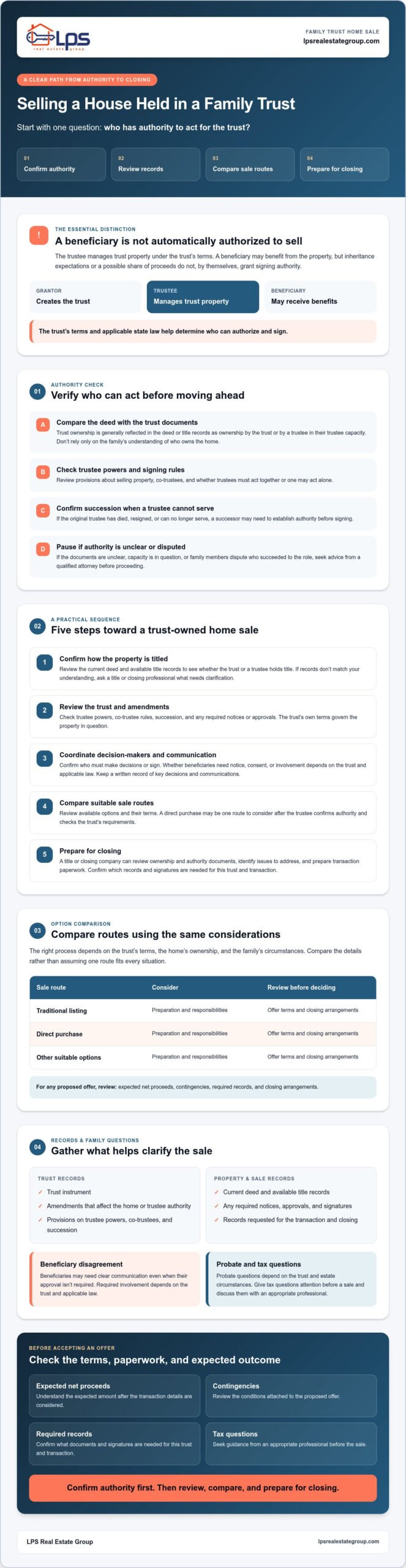
Trust paperwork can feel unfamiliar, especially when a home and family decisions are involved. Start with one question: who has authority to act for the trust? Before selling a house held in a family trust, confirm how the property is titled and review the documents that govern it. Those records help establish who may approve the sale and sign the paperwork.
A trustee manages trust property under the trust’s terms. A beneficiary may benefit from that property but doesn’t automatically have authority to sell it. The trust document and applicable state law help determine what the trustee can do. A family member’s role or expectation of receiving proceeds doesn’t, by itself, grant signing authority.
What does it mean when a house is held in a family trust?
A trust is a legal arrangement that holds and manages property for purposes or beneficiaries described in its terms. The grantor creates the trust, the trustee manages its property, and the beneficiaries may receive benefits under its terms. A Living trust is one common arrangement for holding assets, including real estate.
A home is generally described as trust-owned when the deed or other title records show ownership in the trust or in a trustee’s capacity as trustee. Don’t rely only on a family’s understanding of who owns the property. Compare the recorded deed with the trust documents, since the exact wording and current title can affect who needs to act.
Who can sign the paperwork to sell a trust-owned house?
The named acting trustee may be able to authorize and sign for a sale, but the trust’s terms and applicable state law control. The document may require co-trustees to act together or describe when one trustee can act. If the original trustee has died, resigned, or can no longer serve, a successor may need to establish their authority before signing.
Check the trust’s provisions on selling property, trustee powers, and succession. A beneficiary isn’t automatically a signer simply because they may inherit or receive a share of the proceeds. If the documents are unclear, a trustee’s capacity is in question, or family members dispute who succeeded to the role, seek advice from a qualified attorney before moving ahead. Resolving authority first can help avoid delays later in the sale.
How to Sell a House Held in a Family Trust: A Step-by-Step Process
Once you’ve identified who can act, use an orderly process to keep the sale moving and catch issues early. Selling a house held in a family trust can involve different records and steps depending on the trust terms, the home’s title, and state requirements. Use this sequence as a starting point, then confirm the requirements for the specific property.
- Confirm how the property is titled. Review the current deed and available title records to check whether the trust or a trustee holds title. If the records don’t match your understanding, ask a title or closing professional what needs clarification.
- Review the trust terms. Locate the trust instrument and relevant amendments. Check provisions on trustee powers, co-trustees, succession, and any required notices or approvals. For a plain-language reference to the legal definition of a trust, Cornell Law School’s Legal Information Institute explains the roles involved. The trust’s own terms govern the property in question.
- Coordinate the people involved. Confirm who must make decisions or sign, and communicate with co-trustees and relevant family members. Whether beneficiaries must receive notice, consent, or take part depends on the trust and applicable law. Keep a written record of key decisions and communications.
- Choose a sale route. Compare available options and their terms before proceeding. A direct purchase may be one route to consider after the trustee confirms authority and checks the trust’s requirements.
- Prepare for closing. A title or closing company can review ownership and authority documents, identify issues to address, and prepare transaction paperwork. Ask which documents and signatures are needed for this trust and transaction.
Which trust and property records should you gather first?
Start by locating the trust instrument and any amendments that affect the home or trustee authority. Ask an attorney or other appropriate professional which portions are needed. Don’t assume every party needs the full trust. Also gather the current deed, mortgage information, property tax records, and available title documents. A title or closing professional can identify additional records based on the property and applicable requirements.
How do trustee decisions, beneficiaries, and closing fit together?
Beneficiary involvement isn’t identical in every trust. Check the document and applicable law before treating notice or consent as either required or unnecessary. Clear, documented communication can reduce confusion, particularly when co-trustees are involved. Title and closing professionals can review paperwork and explain transaction requirements, but they don’t replace legal advice when authority is disputed or unclear.
Confirm authority and title before marketing the home or accepting an offer. Mortgages, liens, occupancy arrangements, or unresolved title questions may affect what needs to happen before closing, so raise them early. If you’re comparing a direct purchase as one possible route, review direct home purchase options and compare the proposed terms and closing process with other choices.
Compare Your Options for Selling a Trust-Owned Home
There isn’t one sale route that fits every trust. The right comparison depends on the property’s condition, the trustee’s capacity to manage the process, the trust’s requirements, and the terms available. A traditional market listing may offer broad exposure, while a direct purchase may reduce the need to prepare the home. Other routes, such as creative finance, may be worth asking about if they fit the seller’s circumstances.
| Factor | Traditional market listing | Direct purchase | Other suitable options |
|---|---|---|---|
| Preparation | The trustee may need to coordinate cleaning, repairs, or presentation. | An as-is sale may reduce preparation, though the buyer’s expectations should be confirmed. | Requirements depend on the specific route and property. |
| Marketing | The home is marketed to potential buyers, with showings to coordinate. | The trustee evaluates a proposal from a direct buyer. | Exposure and process vary by option. |
| Offer evaluation | Compare offers, contingencies, and proposed terms. | Review the written offer, conditions, and closing arrangements carefully. | Assess terms against the trust’s needs and priorities. |
| Closing coordination | The trustee coordinates with the listing and closing professionals. | The trustee and buyer coordinate transaction details with the closing professional. | Confirm the parties, documents, and steps involved. |
| Seller responsibilities | Allow time for preparation, access, decisions, and negotiations. | Confirm authority, review terms, and meet applicable obligations. | Responsibilities depend on the arrangement. |
When might a traditional listing suit a trust sale?
A market listing may suit a trustee who values exposure to a range of potential buyers and the opportunity to compare offers. That route can also require more coordination: preparing the property, arranging showings, reviewing offers, and managing negotiations. Before listing, confirm who can approve the listing terms and make decisions about offers under the trust.
When might a direct, as-is purchase be worth comparing?
A direct purchase may be worth considering if reducing preparation or coordinating fewer sale steps is a priority. “As-is” describes the approach to selling. It doesn’t automatically waive disclosures or other obligations that may apply. Review written terms, contingencies, and closing arrangements before deciding. For more context on inherited homes, see this inherited-property sale guide.
For a trust sale, a direct buyer’s proposal still deserves careful comparison with other available routes. Consider the responsibilities each option places on the trustee, not just the headline offer. If a direct purchase is on your shortlist, discussing the property and circumstances with a buyer can help you assess whether it fits, without assuming it’s right for every trust.
Address the Hard Questions: Beneficiary Disagreement, Probate, and Taxes
Family members may share an interest in a home without sharing the same authority over its sale. The trust document, title records, applicable law, and estate circumstances all matter. This section offers general process guidance, not legal or tax advice. Before selling a house held in a family trust, get case-specific answers rather than assuming who can approve a sale, whether probate is involved, or how taxes will be handled.
What if beneficiaries or co-trustees disagree about selling?
Start by reviewing the trust’s decision-making provisions, including how co-trustees must act and whether the document sets out beneficiary notice or participation. Keep a clear record of proposals, decisions, and communications. Don’t assume a beneficiary can compel or block a sale without reviewing the governing documents and applicable law. If disagreement prevents progress, an estate attorney can explain the available options. Mediation may also help the parties work toward a resolution.
Separate questions of authority from differences over the preferred outcome. For example, co-trustees may need to resolve who can approve a proposed sale, while beneficiaries may have concerns about the offer or timing. Addressing each issue in writing can help clarify what remains unsettled and what professional guidance is needed.
Could probate, liens, or taxes affect the sale?
A home titled to a trust may follow a different process from property titled solely in a deceased person’s name and handled through an estate. But trust ownership alone doesn’t answer every probate question. The deed, trust terms, and circumstances of the estate may affect what steps are needed. For more on probate-related sales, read this guide to selling a house in probate.
Outstanding mortgage debt, liens, title concerns, or unresolved estate matters can affect the transaction. Raise them with a title or closing professional. Tax treatment also depends on the facts, including the trust type and property history. Ask a tax professional about the home’s tax basis, reporting obligations, and any trust-specific questions before estimating what beneficiaries may receive from the sale.
There isn’t a single answer that applies to every trust or family. An estate attorney can address authority and probate concerns, a tax professional can review potential tax consequences, and a title or closing professional can identify transaction issues. If you’re also considering a direct purchase, ask about a direct purchase for the property and compare its proposed terms with other options after confirming who can act for the trust.
Prepare for Closing and Choose a Sale Path That Fits the Trust
Before accepting an offer, make sure the proposed sale works for the trust as well as the property. Selling a house held in a family trust involves more than comparing offer amounts. Review the full written terms, confirm who can approve them, and understand what the trustee will need to do before closing.
What should a trustee review before accepting an offer?
Use this checklist to organize the final review:
- Confirm authority: Check that the person accepting the offer can act for the trust and that any required co-trustee involvement or approvals are addressed.
- Gather records: Keep the relevant trust documents, deed, and property records available. Ask the closing professional which documents and signatures are required for this transaction.
- Compare written terms: Look beyond the headline offer amount. Review proposed timing, contingencies, property condition terms, and who is responsible for each closing task.
- Understand the proceeds: Ask how mortgage balances, liens, transaction costs, or other deductions may affect the expected net proceeds. Confirm the figures with the appropriate professionals.
- Coordinate closing: Clarify the planned steps, required signatures, and any decisions the trustee must make before the transaction is complete.
A title or closing professional can identify which trust certifications, supporting records, and signatures may be needed to complete the transaction. Requirements can vary with the trust and property, so confirm them rather than relying on a document list from another sale.
How can a direct buyer fit into a trust-sale plan?
A direct purchase is one option for a trustee to compare after confirming authority and reviewing the trust requirements. LPS Real Estate Group buys residential properties directly and offers cash purchases, creative finance solutions, and as-is acquisitions. An as-is approach may reduce the need to prepare or repair the home, but it won’t be the right fit for every trust or property.
Ask how a proposed offer is structured, what contingencies apply, which closing steps the trustee will handle, and whether any proposed financing arrangement changes the terms or process. Compare those details with other sale routes before deciding. This cash home buyer comparison guide offers another reference point as you review your choices.
If a direct purchase may suit the property, discuss the home and available purchase options. Compare the proposed terms with the trust’s requirements before deciding whether to take the next step.
Take the Next Step With a Clear Plan
Selling a house held in a family trust is easier to approach when you start by confirming authority, verifying how the property is titled, and following the trust’s requirements before committing to a sale. Then compare written offers and sale routes based on the full terms, responsibilities, contingencies, and closing arrangements, not just the headline amount.
Trust and estate questions can have different answers depending on the documents and circumstances. An estate attorney, tax professional, or title professional can help clarify issues specific to your situation. Once you know who can act and what the trust requires, you can compare which sale path best fits the property and the people involved.
LPS Real Estate Group directly acquires residential properties and works with as-is, probate, and inherited-property situations. A direct purchase may be one option to compare, not the right fit for every trust. If you’d like to explore whether it could suit your circumstances, discuss a direct purchase option for your trust-owned property.
Frequently Asked Questions
Can a trustee sell a house held in a family trust?
Yes, a trustee may be able to sell the home if the trust terms and applicable law give them that authority. First, verify how the property is titled and review the trust’s provisions on selling real estate. Co-trustees, a successor trustee, or another required party may also need to participate. If authority or trustee succession is unclear, consult an estate attorney before signing or accepting an offer.
Do all beneficiaries have to agree to sell a trust-owned house?
Not necessarily. Beneficiaries don’t automatically have the same authority as the trustee, and unanimous consent isn’t a universal requirement. The trust document and applicable law determine whether beneficiaries must receive notice, approve the sale, or take part in decisions. Review those requirements before proceeding, and document communications with beneficiaries. If disagreement prevents a decision, an estate attorney can explain the options that apply to the trust.
What documents are needed to sell a house held in a family trust?
Requirements vary, but a trustee may need the current deed, the trust instrument and relevant amendments, mortgage information, property tax records, and available title documents. The closing professional may also request a trust certification or evidence that the signer has authority. Ask which parts of the trust should be provided, since not every party necessarily needs a full copy. Confirm the final document list with the title or closing professional.
Can you sell a trust-owned house without going through probate?
Possibly. Property properly titled to a trust may be handled through the trust rather than as property titled solely to a deceased person’s estate. But trust ownership doesn’t settle every probate question. The deed, trust terms, estate circumstances, and any unresolved title matters can affect the process. Ask an estate attorney or title professional to review the specific records before assuming probate is or isn’t required.
How do you sell a house held in an irrevocable trust?
Start by confirming that the property is titled to the trust and identifying the acting trustee. Then review the trust terms for the trustee’s power to sell, required approvals, and any limits on handling proceeds. Irrevocable trusts can have distinct tax and administration considerations, so don’t rely on guidance for a revocable trust. Consult an estate attorney about authority and a tax professional about the consequences before proceeding.
Does selling a house held in a family trust affect taxes?
It can, but the tax result depends on the trust type, ownership history, property basis, and other facts. A revocable trust may be treated differently from an irrevocable trust, and the sale may raise questions about gain calculation and reporting. Don’t assume a particular exclusion or basis adjustment applies. Before accepting an offer, ask a tax professional to review the trust and property records and explain the potential tax treatment.
Can a trust sell a house as-is?
A trust may be able to sell a home as-is if the trustee has authority and the sale terms meet the trust’s requirements. An as-is sale can reduce the need to prepare or repair the property, but it doesn’t automatically remove applicable disclosure or other obligations. Review the written offer, contingencies, property-condition terms, and closing responsibilities. Confirm any required disclosures with a qualified professional familiar with the transaction and applicable state requirements.