

What can you do when one heir wants to sell an inherited home and another refuses? The disagreement can feel personal, especially while the family is grieving. Understanding how to force the sale of an inherited property starts with a key distinction: during probate, an executor or administrator may control a sale, while heirs named on the deed may have co-owner rights once the estate is settled. The rules depend on the ownership documents and state law.
You don’t have to jump straight to court. This guide explains who may have authority to sell, what to check before taking action, and which options could help resolve a deadlock. You’ll learn how negotiation, a co-owner buyout, an agreed sale, or a direct as-is purchase may fit different situations, and when a partition action may be considered.
Court action can take time, add legal expense, and strain family relationships, so it’s often sensible to explore agreement first. The steps ahead can help you clarify ownership, compare practical paths, and know when to seek advice from an attorney familiar with your state’s rules.
Key Takeaways
- Confirm who has legal authority to sell by reviewing ownership and probate documents before making plans.
- Learn how to force the sale of an inherited property and why court action may be a later step, not the first move.
- Compare an agreed sale, a buyout, continued co-ownership, and a possible partition action based on cooperation, control, and complexity.
- Prepare for a productive discussion by gathering the will, probate records, deed, mortgage statements, and relevant communications.
- Choose a practical next step, from exploring an agreement to seeking state-specific legal advice or comparing a direct property sale.
How to Force the Sale of an Inherited Property: Start by Confirming Ownership
A disagreement between heirs doesn’t mean an inherited home can never be sold. Before deciding how to force the sale of an inherited property, find out who legally controls it. The answer may depend on whether the home is still part of the estate, whether title has passed to heirs, how the property is titled, and which state’s laws apply.
A forced sale is pursued without every co-owner’s agreement, through a legal process where permitted. It differs from a voluntary sale, where the people with authority agree on the decision and terms. Heirs may not yet own the home individually if probate is ongoing, and a co-owner’s options can depend on the way title is held.
Who has authority to sell an inherited home?
While a property remains in an estate, the executor or personal representative may be responsible for managing estate assets, including a possible sale. That authority can be limited by the will, probate orders, or state law. The person’s role alone doesn’t confirm that a sale can proceed without further approval.
After title passes to heirs, they may become co-owners with rights defined by the deed and applicable law. Review the will, probate orders, deed, and current title records to establish the home’s status and who can act. If the documents conflict or authority is unclear, ask a qualified attorney in the relevant state before signing an agreement or promising a sale.
What if one heir refuses to sell?
One heir’s refusal may prevent the co-owners from making a voluntary sale together, but it doesn’t necessarily settle every legal option. If title has passed to multiple heirs, they may own the home together. Depending on state law and any agreements affecting the property, a co-owner may be able to ask a court to divide the property or order a sale through a partition action. The process and possible outcomes vary, so don’t assume the same rules apply everywhere.
Before treating court action as the next step, confirm whether the estate still controls the home or whether the heirs now own it directly. That distinction helps you ask an attorney the right questions and avoid confusing an estate sale with a dispute among co-owners.
In short: Estate sale authority concerns who may act for the estate while the home remains under probate administration. Co-owner remedies apply after ownership has passed to heirs and may include asking a court to address a deadlock, subject to state law. Confirm the property’s status and get state-specific legal advice before proceeding.
Resolving Inherited Property Disputes Before Court
Once you’ve confirmed who can act, try to turn the disagreement into a practical decision. A structured conversation can help heirs compare choices without treating a court case as the only way forward:
- Clarify each person’s goal. Ask who wants to sell, keep the home, or continue sharing ownership.
- Gather the facts. Review ownership records, the property’s condition, outstanding debt, and possible tax questions.
- Compare options. Discuss a voluntary sale, one heir buying out the others, or continued co-ownership.
- Record decisions and open questions. Write down what everyone has agreed to and identify issues that need professional advice.
A home’s value, mortgage or other debt, taxes, and repair needs can all affect what feels fair. One heir, for example, may favor selling promptly while another wants to keep the home and needs time to assess whether a buyout is workable. Agreeing on a valuation method can give the discussion a clearer starting point. If talks stall, a neutral professional may help the family communicate and compare options. Mediation or similar assistance isn’t automatically a legal requirement.
Can one heir buy out the others?
A buyout may allow one heir to keep the property while giving the others a way to exit. Before discussing payment terms, agree on how to establish value, such as choosing an independent appraiser together. Put the proposed amount and key conditions in writing, then ask qualified professionals about funding, title transfer, tax consequences, and probate requirements. A private agreement alone may not complete the transfer.
How can heirs document a workable agreement?
Write down decisions clearly, even when everyone currently agrees. Include the sale method, who handles property-related responsibilities, expected timing, and how proceeds will be allocated. Written terms can reduce misunderstandings, but they don’t replace legal or tax advice. For more context on the sale process, see this guide to selling an inherited property.
If no agreement is possible, a co-owner may ask a court about compelling a partition, a legal process that can end shared ownership. Whether that route applies depends on the circumstances and state law. Learning how to force the sale of an inherited property should include considering less adversarial options first and getting advice from a qualified attorney before taking legal steps.
If the heirs agree to consider a direct purchase, they can compare written terms from a buyer such as an as-is property buyer with other sale options. Review the terms together and consult an attorney if ownership or probate authority is unclear.
Partition Action or Agreed Sale: Compare the Main Paths
There isn’t one right route for every inherited home. The choice depends on whether the heirs can cooperate, whether someone wants to keep the property, and what the ownership and probate documents allow. Use this comparison to identify the questions to discuss before deciding how to proceed.
| Option | Cooperation needed | Complexity | Control over timing | Professional advice |
|---|---|---|---|---|
| Agreed sale | Co-owners with authority to sell must agree on the sale. | Often more straightforward if terms and responsibilities are clear. | Co-owners can coordinate the process, subject to required approvals. | Useful for confirming authority, sale documents, and proceeds. |
| Heir buyout | Heirs must agree on value and transfer terms. | Requires agreement on valuation, payment, and transfer details. | Parties can set terms together, subject to probate and title requirements. | Important for title, tax, and transaction questions. |
| Continued co-ownership | Heirs need enough cooperation to manage shared decisions. | Can become difficult if responsibilities or future plans are unclear. | Co-owners retain the property, but decisions may depend on ongoing agreement. | Helpful for documenting responsibilities and understanding ownership rights. |
| Possible partition action | One co-owner may seek a court process despite disagreement. | May involve legal proceedings and case-specific issues. | Less direct control; timing and outcome depend on the process. | Seek state-specific legal advice before considering this route. |
What is a partition action in an inherited-property dispute?
A partition action is a court process a co-owner may seek to resolve shared ownership. Depending on the facts and governing law, a court determines the appropriate remedy. It isn’t a guaranteed way to produce a particular kind of sale, and rules on eligibility, process, and outcomes vary by state and ownership circumstances. Before taking steps, ask an attorney about standing, whether probate is complete, likely costs, and possible alternatives.
This distinction matters if you’re researching how to force the sale of an inherited property. A co-owner’s disagreement doesn’t by itself mean a court will order a sale. The legal route depends on the property’s status and applicable law.
When might a direct property sale be worth comparing?
If the home needs work, an as-is sale to a direct buyer may be an alternative to preparing it for a traditional listing. Compare written terms carefully, including the basis for valuation, any contingencies, who handles closing responsibilities, and whether all necessary parties have authority to agree. A direct purchase is an option to evaluate, not a substitute for confirming ownership or obtaining legal advice. For more context, see this guide to companies that buy houses for cash.
Steps Before Seeking Forced Sale of Inherited Property
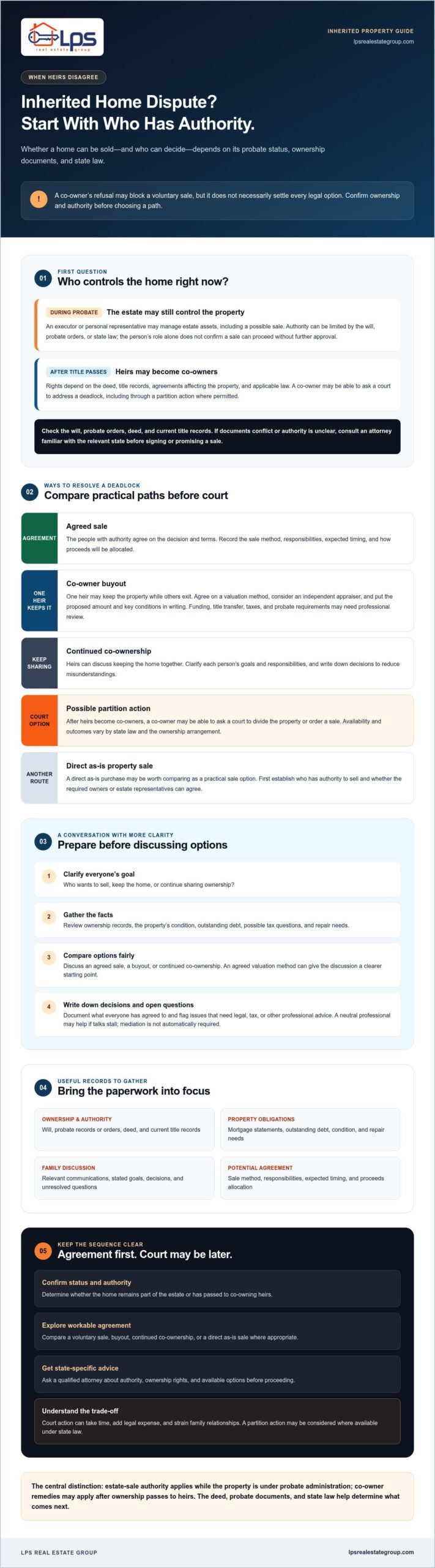
Before contacting an attorney or discussing a sale, organize the facts. A clear record can help a professional assess who has authority, what the co-owners disagree about, and which options may be available. The process, timing, and possible remedies depend on state law and the details of the ownership and probate situation.
Which documents and facts should heirs gather?
Start with documents that show who owns the home and whether the estate still controls it. Collect:
- The will and probate documents, including court orders and papers identifying the executor or personal representative.
- The deed and current title records, along with mortgage statements and information about other loans or liens.
- Records of property expenses, such as maintenance, insurance, and payments made by an heir.
- Available condition records, including inspection reports, repair estimates, or dated photos.
- Relevant communications among co-owners about occupancy, upkeep, costs, a possible sale, or a buyout.
Write down who currently lives in the property, who has keys, how maintenance is handled, and whether insurance coverage is in place. Note any disagreement about access or expenses. Don’t transfer title, restrict another person’s access, or stop making payments based on assumptions. Ask an attorney how to handle these issues while ownership is unresolved.
Who should you consult before filing a case?
Look for an attorney experienced in probate, real estate, or partition matters in the state where the property is located. Bring your documents and ask whether the estate or heirs currently have authority to act, what alternatives could resolve the dispute, what procedure may apply, and what expenses or effects each co-owner should consider. Ask how occupancy, debts, and the property’s condition could affect the options.
Rules differ by state and ownership circumstances, so general information can’t confirm whether a particular court action is available or appropriate. Before acting, ask counsel to verify the local process and explain what remains uncertain. For background on estate-sale expenses, see this guide to the real cost to sell a house in probate.
Organizing these details can also help heirs compare a court-based route with a direct property sale, without assuming a sale is authorized. If the people with authority are considering a direct, as-is purchase, compare a written property purchase option with other paths and review the terms with your own attorney if probate authority or ownership is unclear.
Choose a Clear Next Step for Your Inherited Property
You don’t need to settle every family disagreement at once. Start by confirming who has authority over the property, exploring whether the heirs can agree, comparing available sale routes, and getting state-specific legal advice before formal action. This sequence helps separate practical choices from legal questions.
The best next step depends on what the heirs want and what the property needs. If one heir hopes to keep the home, discuss whether a voluntary buyout is workable. If everyone with authority supports selling, compare a traditional market sale with a direct sale. If the family remains divided about rights or authority, an attorney can help clarify the options before anyone files a case.
How can heirs compare a direct buyer with a traditional sale?
A direct as-is sale may reduce the need to prepare the property for a traditional listing, which can be useful if repairs or clearing the home are difficult. A traditional market sale may offer broader exposure to potential buyers, but often requires planning for preparation, showings, and the sale process. Neither route guarantees a particular price or timeline.
Compare written terms, the basis for the proposed value, any contingencies, and who is responsible for closing tasks. Make sure every authorized decision-maker understands the terms, and confirm what consent is required before moving forward. For more on the as-is option, see this guide to selling a house as-is.
What is a sensible next step if heirs remain divided?
If the disagreement continues, consider a private consultation with an attorney familiar with probate, real estate, or partition matters in the state where the property is located. Before the meeting, write down each heir’s preferred outcome and the unresolved questions. Ask what alternatives are available, what legal steps may apply, and how each option could affect the co-owners. This advice can help you assess how to force the sale of an inherited property without assuming a court will order a particular result.
LPS Real Estate Group is one possible direct buyer for inherited properties, not a source of legal representation. If the people authorized to decide are open to comparing a direct purchase, share the property’s condition and circumstances and review any written terms carefully. Discuss a possible inherited-property purchase as one option, without assuming an offer or particular outcome is guaranteed.
Take the Next Step With Clarity
A disagreement over an inherited home doesn’t mean court is the only path. First confirm who has authority to act, then see whether a buyout or agreed sale is possible. If the heirs remain divided, compare the available routes and consult an attorney familiar with the property’s state before taking legal action. The right approach to how to force the sale of an inherited property depends on the ownership documents and applicable law.
If a direct sale is worth considering, LPS Real Estate Group specializes in probate and inherited-property buyouts. A direct as-is acquisition may offer an alternative to preparing a home for listing. LPS focuses on tailored exit strategies and transparent communication, but doesn’t provide legal representation. Confirm authority and co-owner consent, and review any written terms with your own attorney when questions remain.
Discuss an inherited property sale with LPS Real Estate Group to explore whether a direct purchase may fit your circumstances. Share the property’s situation and consider the option without assuming an offer or outcome. Take it one step at a time; a clear, informed decision can make the way forward easier to see.
Frequently Asked Questions
Can one heir force the sale of an inherited house?
Sometimes, but it depends on whether the heir is a legal co-owner and what state law allows. If the property is still held by the estate, an heir may not have authority to sell it individually. Once title passes to heirs, a co-owner may be able to ask a court to resolve a deadlock, but a sale isn’t guaranteed. Confirm ownership and consult an attorney before acting.
What happens if one sibling refuses to sell an inherited property?
A sibling’s refusal can stop a voluntary sale if their agreement is required, but it may not end every option. First determine whether the property remains in the estate or is owned by the siblings as co-owners. If the heirs own it, they can discuss a buyout, continued shared ownership, or legal remedies available under state law. A qualified attorney can explain which options fit the title and probate status.
How does a partition action work for inherited property?
A partition action is a court process a co-owner may seek to resolve shared ownership. The court considers the facts and governing state law to determine an appropriate remedy, which may involve dividing the property or a sale. The process varies, and an outcome can’t be assumed in advance. Before filing, ask an attorney about eligibility, probate status, likely procedure, costs, and alternatives.
Can an executor sell inherited property without every heir agreeing?
Possibly, but an executor’s authority depends on the will, probate orders, and state law. The executor or personal representative acts for the estate while it holds the property; heirs may not yet have individual ownership rights. A sale might require court approval or be subject to other limits. Review the will and probate documents, then ask a probate attorney to confirm who can authorize a sale and what approvals are needed.
Can one heir buy out the other heirs instead of selling the house?
Yes, if the heirs and anyone with authority over the property agree to the buyout terms. They should choose a fair valuation method, document the proposed payment and conditions, and confirm how title will transfer. Funding, taxes, outstanding debt, and probate requirements can affect whether the arrangement is workable. Each heir should review the written terms and seek appropriate legal or tax advice before completing the transaction.
How long does it take to force the sale of an inherited property?
There’s no single timeline. The time required depends on the state, probate status, court process, co-owner disagreements, and property circumstances. For context, Stone & Sallus LLP estimates California partition actions typically take 6 to 12 months, while a 2026 Texas home-sale guide gives 12 to 18 months or longer for a partition by sale. These examples aren’t predictions for other cases. Ask local counsel about your situation.
Can inherited property be sold before probate is complete?
Sometimes, but heirs shouldn’t assume they can sell a home before probate ends. The property may still be controlled by the estate, and the executor or personal representative’s authority can depend on the will, court orders, and state law. Some property may pass outside probate, but ownership records still matter. Before signing a sale agreement, confirm who has authority and whether court approval or other steps are required.