

Waiting until you know exactly how you’ll catch up can cost you options. If you’re looking for behind on mortgage help, contact your loan servicer as soon as you can, even if you can’t make a payment right now.
It’s understandable to feel unsure what to say, worry that foreclosure is inevitable, or wonder whether you qualify for assistance. You don’t have to solve everything before asking questions. Your loan type, financial situation, and how far behind you are can affect which paths may be available.
This guide explains what to do first, what information to gather, and how to ask your servicer about options such as forbearance or other hardship assistance. You’ll also learn where a HUD-approved housing counselor may help, how to watch for scams, and what to weigh if keeping the home isn’t workable. A direct sale may be one option, but understand the written terms, mortgage payoff, liens, and timing before deciding. Taking informed steps early can help you see your choices more clearly.
Key Takeaways
- Organize mortgage notices and payment details so you can ask your servicer focused questions.
- Ask which hardship options may fit your loan and circumstances. Eligibility and terms can vary.
- A trusted housing counselor can help you understand your choices and prepare for conversations with your servicer.
- Compare keeping the home with selling if the payments no longer fit your budget. Review a sale’s written terms, payoff, liens, and timing before deciding.
- This guide to behind on mortgage help offers practical steps for evaluating choices without assuming one solution works for everyone.
Behind on Mortgage Payments? Start With These Facts and Immediate Steps
Missed mortgage payments can make it hard to know what to do first. Gather the facts about your account, notices, and household budget. That information can help you ask specific questions and identify a realistic next step. If you’re looking for behind on mortgage help, confirm where things stand rather than assuming what happens next.
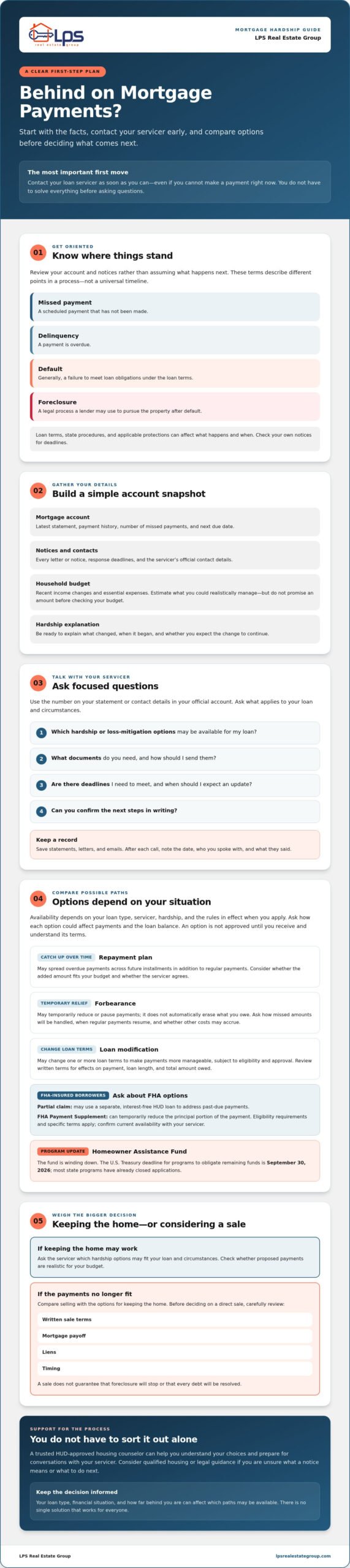
The terms describe different points in a process. A missed payment is a scheduled payment that hasn’t been made. Delinquency means the payment is overdue, while default generally refers to a failure to meet loan obligations under the loan terms. Foreclosure is a legal process a lender may use to pursue the property after default. These stages don’t follow one universal timeline. Loan terms, applicable state procedures, and any protections that apply can affect what happens and when. For general background, see this overview of mortgage law; for advice about your situation, consult a qualified housing counselor or legal professional.
What to check before deciding what to do
Review your latest mortgage statement, payment history, and every letter or notice from the servicer. Note the number of missed payments, the next due date, the servicer’s contact information, and any response deadlines. Then look at recent income changes and essential household expenses. Work out what payment you could realistically manage, but don’t promise an amount until you’ve checked your budget.
Keep a record of your outreach. Save statements, letters, and emails. After each call, write down the date, who you spoke with, and what they said. This makes follow-up easier and helps you track deadlines and requests.
Why contacting the mortgage servicer matters
Contact the servicer promptly using the number on your statement or the contact details in your official account. Explain the hardship plainly: what changed, when it began, and whether you expect the change to continue. You don’t need a perfect script. The goal is to understand what applies to your loan and what to do next.
Ask direct questions and record the answers:
- Which hardship or loss-mitigation options may be available for my loan?
- What documents do you need, and how should I send them?
- Are there deadlines I need to meet, and when should I expect an update?
- Can you confirm the next steps in writing?
Procedures and protections can depend on the loan type and state, so verify deadlines in your own notices. If you’re unsure what a notice means, ask the servicer to explain it. Consider qualified housing or legal guidance before making a decision.
Mortgage Hardship Options: What Help May Be Available
There isn’t one standard form of behind on mortgage help. Available options depend on your loan type, servicer, hardship, and the rules in effect when you apply. Ask which options the servicer will review, what you must provide, and how each choice could affect your payments and loan balance. An option isn’t approved until you receive and understand its terms.
How common mortgage assistance paths differ
A repayment plan may spread overdue payments across future installments in addition to your regular payments. It may help you catch up over time, but only if the added amount fits your budget and the servicer agrees.
Forbearance may temporarily reduce or pause payments. It doesn’t automatically erase what you owe. Before accepting, ask how missed amounts will be handled afterward, when regular payments resume, and whether other costs may accrue. A loan modification changes one or more loan terms to make payments more manageable, subject to eligibility and approval. Request the proposed terms in writing, then check how they affect the payment, loan length, and total amount owed.
Some programs are specific to the type of loan. For example, FHA-insured borrowers may be able to ask their servicer about a partial claim, which uses a separate, interest-free HUD loan to address past-due payments, or the FHA Payment Supplement, which can temporarily reduce the principal portion of the payment. These options have eligibility requirements and specific terms, so confirm current availability and details with your servicer. The Homeowner Assistance Fund is winding down: the U.S. Treasury’s deadline for programs to obligate remaining funds is September 30, 2026, and most state programs have already closed applications.
A sale is another path to evaluate if keeping the home isn’t financially workable. Compare it with options for keeping the home rather than assuming either path is right. A direct purchase may be worth exploring, but review the written terms, mortgage payoff, liens, and timing carefully. A sale doesn’t guarantee that foreclosure will stop or that every debt will be resolved.
Where to seek reliable, independent guidance
A HUD-approved housing counselor can help you understand possible options and prepare questions for your servicer. Use HUD’s Find a HUD-approved housing counselor tool to locate current counseling resources. The Consumer Financial Protection Bureau’s mortgage resources can also help you understand servicing and hardship topics, though general information isn’t a decision about your specific case.
If you’re facing a legal question or a time-sensitive notice, consider speaking with a qualified attorney. If you want to compare a direct sale with keeping the property, learn about direct home purchases as one possible option. LPS Real Estate Group buys homes directly; it isn’t a mortgage servicer or housing counselor.
Should You Keep the Home or Consider Selling?
Selling isn’t the only answer if you’re behind on payments. Ask the mortgage servicer about available options for keeping the home, then compare their terms with your household budget and the time you have to act. Exploring behind on mortgage help may lead to a workable option for keeping the home. In other situations, continuing to own it may no longer be financially realistic.
Questions to weigh before choosing a path
Look beyond the immediate past-due amount. Compare the expected housing costs under each option with your reliable income and essential expenses. If a proposed payment plan adds to your regular payment, consider whether you could sustain the combined amount month after month.
Ask what happens to missed payments under each path. Do they need to be repaid over time, added to the loan balance, or handled another way? Request key terms in writing, including payment amounts, deadlines, and conditions. Also consider how much time you have, the property’s condition, your household’s needs, and whether moving is practical. A side-by-side comparison can make difficult tradeoffs clearer.
When a direct home sale could be one option
If keeping the home isn’t financially workable, a sale may be worth evaluating. A direct buyer may consider an as-is property without a traditional listing. This may be relevant if the home needs repairs or preparing it for sale would be difficult. Still, a direct sale isn’t automatically the best fit. Compare written offers, conditions, expected net proceeds, and closing schedules before making a decision.
Request a current mortgage payoff figure from your servicer. The amount needed to pay off a loan may differ from the balance shown on a statement. Ask how liens and any applicable transaction costs could affect proceeds, and confirm the proposed closing timing with the servicer and appropriate professionals. A sale does not automatically stop foreclosure or resolve every debt; the timing and consequences depend on your circumstances and the relevant process.
If you’re assessing this path, read how to sell a house in pre-foreclosure for more questions to consider. Review all documents carefully and don’t let pressure rush you into a decision before you understand the terms.
A Practical Checklist for Getting Mortgage Help
A short plan can make your next conversation easier to manage. Use this checklist to organize your search for behind on mortgage help, prepare what the servicer may need, and keep a clear record of each step.
- Gather your account details. Note the missed payments, next due date, loan servicer, and any deadlines in notices. Keep recent statements and payment records nearby.
- Prepare a brief hardship summary. Write down what changed, when it began, whether you expect it to continue, and how it affected your ability to pay. Add current household income and essential expenses so you can discuss a realistic payment amount.
- Contact your servicer through a verified channel. Use the number on your statement or sign in through the official account. Ask which options may apply to your loan, how eligibility is decided, what documents are needed, and when you can expect a decision.
- Send requested documents securely. Confirm the correct submission method with the servicer before sharing sensitive information. Keep copies of everything and note the date sent, any reference number, and the deadline for follow-up.
- Get the terms and next steps in writing. Ask for an explanation of proposed payment changes, fees, and amounts that would remain owed. Record the representative’s name, call date, commitments, and any decision. If something is unclear, ask for clarification before agreeing.
Recognize warning signs before sharing money or documents
Be cautious if someone guarantees they can prevent foreclosure, pressures you to sign immediately, or tells you to stop communicating with your servicer or stop making payments. Don’t rely on unsolicited payment instructions. Independently verify an organization or professional using trusted sources, and confirm payment instructions directly with your servicer using its official contact details.
Never sign papers you don’t understand or hand over property ownership based on a promise that isn’t clearly documented. If you’re unsure, pause and seek guidance from a HUD-approved housing counselor or a qualified attorney, especially if a notice includes a time-sensitive deadline.
If you’ve reviewed your options and a sale is on your shortlist, you can explore a direct home purchase as one possible path. Compare the written terms, payoff, liens, and timing with your other options before deciding.
Next Steps for Mortgage Help, and How to Evaluate a Home Sale
If you’re still looking for behind on mortgage help, start with actions you can verify: organize notices and account details, contact your servicer, seek guidance from a HUD-approved housing counselor, and write down every deadline. Ask questions until you understand the options and any proposed terms. No single path fits every homeowner, and you don’t have to decide about a sale before finding out whether keeping the home may be workable.
What to expect when exploring a direct purchase
LPS Real Estate Group buys residential properties directly and may consider homes in as-is condition. A direct purchase is one option to evaluate, not mortgage counseling or legal advice. If you explore it, ask how the offer is determined, what conditions apply, how the mortgage payoff would be coordinated, and what closing schedule is proposed. Request the details in writing, including any contingencies and anything that could affect timing.
Compare the expected proceeds with the current mortgage payoff and any liens or other obligations that may affect the amount left after closing. Confirm the payoff figure and relevant deadlines with your servicer. A purchase doesn’t guarantee that foreclosure will stop or that every debt will be resolved. The result and timing depend on your circumstances, property details, and the terms of the transaction.
Choose a next step without pressure
Compare a written purchase proposal with any available options for keeping the home. Consider whether the proposed schedule gives you enough time to meet relevant deadlines, arrange your next housing plan, and review the documents. If anything is unclear, ask for an explanation and consult an appropriate professional before signing.
For a broader overview of the process, read selling a house fast for cash. If you’d like to ask whether a direct purchase is worth evaluating for your situation, contact LPS Real Estate Group. You can ask questions and review the information without assuming a sale is the right choice or that it will produce a particular outcome.
Take Your Next Step With More Clarity
Being behind on payments can feel overwhelming, but you can make progress one decision at a time. Gather your account information, contact your servicer to ask what options may fit your loan, and track notices, deadlines, and written terms. A HUD-approved housing counselor or qualified attorney can help with questions that need independent guidance.
No single choice works for every homeowner. Compare the terms and long-term affordability of options for keeping the home. If that isn’t workable, a sale may be worth evaluating. LPS Real Estate Group buys residential properties directly, including as-is homes, and offers cash purchases and creative finance solutions. A sale isn’t guaranteed to stop foreclosure or resolve every debt, so review the mortgage payoff, liens, written terms, and timing before deciding.
If you’re seeking behind on mortgage help and want to explore whether a direct sale could fit your circumstances, talk with LPS Real Estate Group about a direct home sale. Ask questions, review the terms, and choose your next step with care.
Frequently Asked Questions
What should I do first if I am behind on my mortgage?
First, review your mortgage statement, payment history, and any notices so you know what’s overdue and whether a deadline is approaching. Then contact your servicer using the number on your statement or in your official account. Explain what changed, ask which options may be available for your loan, and record the answers. Keep copies of notices and follow-up messages, and consider contacting a HUD-approved housing counselor for independent guidance.
Can I get mortgage help if I have already missed several payments?
You can still ask your servicer about assistance after missing several payments, though available options depend on your loan, circumstances, and current program rules. Contact the servicer promptly rather than assuming you no longer qualify. Ask what options it will consider, what documents are needed, and whether any deadlines apply. If you’ve received legal notices, read them carefully and consider speaking with a qualified attorney about your specific situation.
Will my mortgage servicer work with me if I explain my hardship?
Your servicer can explain which hardship options may be available and how to apply, but explaining your situation doesn’t guarantee approval. Be ready to describe what changed, when it began, and what payment you may be able to manage. Ask about eligibility, required documents, decision timing, and how missed amounts would be handled. Request proposed terms in writing and keep a record of each conversation.
Can a HUD-approved housing counselor help if I am behind on mortgage payments?
Yes. A HUD-approved housing counselor can help you understand possible options, prepare questions, and communicate with your servicer. Counseling can provide useful support, but it doesn’t replace a decision from your servicer or legal advice from an attorney. Use HUD’s official counselor search tool to find current assistance, and be cautious of anyone who claims to be HUD-approved without letting you verify their credentials independently.
What happens if I ignore mortgage delinquency or foreclosure notices?
Ignoring notices can mean missing important deadlines or opportunities to respond, and the servicer may continue its collection or foreclosure process. The steps and timing vary based on your loan and applicable state procedures, so don’t assume you have a set amount of time. Read each notice, contact your servicer promptly, and ask a qualified attorney about legal notices or deadlines you don’t understand.
Can selling my house help if I am behind on mortgage payments?
Selling may be worth evaluating if keeping the home isn’t financially workable, but it isn’t the only possible path and won’t automatically stop foreclosure or resolve every debt. Request a current payoff figure and review liens, written sale terms, expected proceeds, conditions, and closing timing. Confirm timing with your servicer and appropriate professionals. A direct buyer may consider an as-is home, but compare the proposal with available options for keeping the property.
How can I tell whether a mortgage relief or foreclosure-prevention company is legitimate?
Verify the organization independently, check exactly what service it provides, and read every agreement before sharing sensitive information or signing. Be wary of guaranteed foreclosure prevention, pressure to act immediately, or instructions to stop communicating with your servicer. LPS Real Estate Group buys homes directly; it isn’t a mortgage servicer, government program, or foreclosure-prevention counselor. For counseling, use HUD’s official resources. Ask a qualified attorney about legal concerns or documents you don’t understand.