
What if the right alternative to a short sale depends less on the lender’s decision and more on whether keeping the home is sustainable? If you’re weighing alternatives to a short sale for homeowners, it’s understandable to worry about losing your home, credit effects, or a balance you may still owe.
Start by separating options that may help you stay from those that involve leaving. A loan modification, forbearance, repayment plan, or payment deferral may help address payment trouble, depending on your loan and circumstances. If keeping the home isn’t realistic, compare a deed in lieu with sale options. Each path has different approval, financial, and credit considerations, so no single route fits everyone.
This guide explains what each option may help you achieve and what to clarify before deciding. It also covers what information to gather and why contacting your mortgage servicer early can help you understand available loss-mitigation choices. If selling is the better fit, a direct, as-is purchase may be one path to compare, with the payoff, liens, title, and lender requirements factored in.
Key Takeaways
- First decide whether keeping the home is financially sustainable. That helps narrow the options worth exploring.
- Compare repayment plans, forbearance, loan modification, and refinancing against your ability to meet any revised payments.
- If staying isn’t practical, weigh a traditional sale, direct as-is sale, short sale, and deed in lieu against your equity, property condition, liens, and lender requirements.
- Use this guide to compare alternatives to a short sale for homeowners and identify the loan, income, property, and hardship records to gather.
- A direct sale may be worth comparing if you decide to sell, but the payoff, liens, title, and applicable lender requirements still matter.
Alternatives to a Short Sale: First Decide Whether You Can Keep the Home
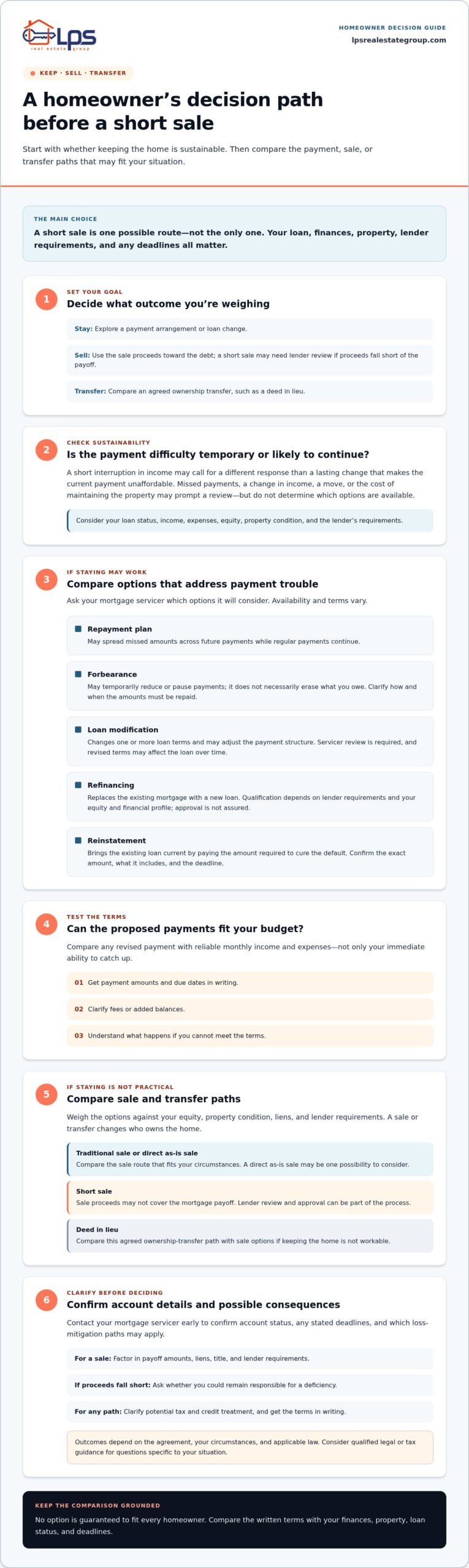
A short sale is one possible route, not the only one. If payments have become difficult or your plans have changed, start by identifying the outcome you want: stay in the home, sell it, or transfer ownership. That distinction makes the alternatives to a short sale for homeowners easier to compare.
A short sale is a property sale where the proceeds may not cover the mortgage payoff. Because the lender may receive less than the amount owed, lender review and approval can be part of the process. A short sale is different from changing your payment terms to keep the home, and it doesn’t automatically resolve every question about what you may owe afterward.
In brief, the three broad paths are to keep the home through a payment or loan change, sell it and use the proceeds toward the debt, or transfer ownership through an agreed process. Which path may fit depends on your loan terms and status, equity, income, property condition, lender requirements, and any deadlines. None is a guaranteed outcome; the details of your situation matter.
When might a homeowner consider an alternative?
Missed or unaffordable payments, a change in income, a move, or the cost and responsibility of maintaining a property may prompt you to review your choices. Financial difficulty alone doesn’t determine which options are available. Your loan, finances, property, and the lender’s review all affect what may be possible.
Contact your mortgage servicer early to confirm your account status, understand any deadlines it has stated, and ask which paths may apply. If you’re trying to avoid foreclosure, knowing where the loan stands can help you focus on timely next steps. The linked overview provides general background on foreclosure and some alternatives; your servicer can address your account specifically.
What makes a short sale different from other options?
A short sale involves marketing and selling the property, then seeking lender review if the expected proceeds won’t pay off the mortgage and other relevant costs. A payment arrangement or loan change, by contrast, aims to make continued ownership possible. A sale or transfer changes who owns the home, so it may be more relevant when staying isn’t practical.
Before choosing a path, clarify what happens if sale proceeds fall short, whether you could remain responsible for a deficiency, and how the transaction may be treated for tax and credit purposes. These outcomes depend on the agreement, your circumstances, and applicable law. Get the terms in writing and consider qualified legal or tax guidance for questions specific to your situation.
Options That May Help You Keep Your Home Instead of Short Selling
If staying in the home is your priority, consider whether the hardship is temporary or likely to continue. A short interruption in income may call for a different response than a lasting change that makes the current payment unaffordable. The alternatives to a short sale for homeowners depend on the loan, the servicer’s review, and whether the proposed payments are manageable for your household.
Ask your mortgage servicer which options it will consider, what information it needs, and how each option affects future payments. The Consumer Financial Protection Bureau outlines several options to avoid foreclosure. Availability and terms vary, so request the decision and any repayment terms in writing before agreeing.
How do repayment plans, forbearance, and loan modification differ?
These options address payment trouble in different ways. A repayment plan may spread missed amounts across future payments while you continue making regular payments. Forbearance may temporarily reduce or pause payments, but it doesn’t necessarily erase what you owe. Before entering one, understand how and when you must repay the paused or reduced amounts.
A loan modification changes one or more loan terms and may adjust the payment structure to make ongoing payments more manageable. It requires servicer review, and the revised terms may affect the loan over time. Compare the proposed payment with your reliable monthly income and expenses, not just your immediate ability to catch up.
When might refinancing or reinstatement be worth exploring?
Refinancing replaces the existing mortgage with a new loan. It may be worth asking about if you can qualify under a lender’s requirements and have the equity and financial profile needed for underwriting. Approval isn’t assured, and a new payment should fit your budget over the long term. Reinstatement is different: it means bringing the existing loan current by paying the amount required to cure the default. Confirm the precise amount, what it includes, and the deadline with your servicer.
For any option, get written details about payment amounts, due dates, fees or added balances, and what happens if you can’t meet the terms. If selling becomes more realistic than keeping the home, review the guide to selling a house in pre-foreclosure for considerations around that path. LPS Real Estate Group purchases residential properties directly, including as-is homes. A direct sale is one possibility to compare if you’ve decided not to stay. Learn about direct home-buying options, while keeping payoff amounts, liens, title, and lender requirements in view.
If Keeping the Home Is Not Practical, Compare Sale and Transfer Paths
If staying in the home isn’t workable, compare what each path could leave you with after accounting for the mortgage payoff, other liens, and transaction costs. A traditional sale and a direct as-is sale both involve selling the property. A short sale may require lender approval if proceeds won’t cover the amount owed. A deed in lieu is different: it transfers ownership to the lender if the lender agrees.
The right route depends on the likely net proceeds and the approvals needed to complete the sale or transfer. Equity, property condition, title issues, lienholders, and your loan status can all affect what’s feasible. For general guidance and links to housing assistance, see government help for homeowners.
How does a regular or direct sale compare with a short sale?
If sale proceeds are enough to cover the mortgage payoff and other amounts due, a regular sale may allow the loan to be paid through closing, subject to final payoff figures and clear title. If proceeds fall short, the lender may need to review and approve the proposed short sale. A direct purchase doesn’t automatically remove that requirement: if the price won’t cover the debt, you still need to address the shortfall with the lender.
A direct as-is sale may suit an owner who wants to sell without preparing the property for a traditional listing. LPS Real Estate Group buys residential properties directly, including as-is homes. For more detail on what to consider, read this guide to selling a house for cash. Whichever sale path you consider, compare the written offer with the payoff, liens, title requirements, and any lender conditions.
Could a deed in lieu or another transfer option fit?
With a deed in lieu of foreclosure, a homeowner voluntarily transfers the property to the lender, but the lender must agree to accept it. Existing liens or other title issues may affect whether the transfer can proceed. Before signing, get written terms that explain what happens to the mortgage debt, any possible remaining balance, and other obligations. The effect on credit and potential tax consequences can vary by circumstances and jurisdiction.
If you’re weighing a transfer alongside a sale, lay out each option’s requirements, expected proceeds, and outstanding obligations before deciding. Bankruptcy or other legal remedies can have significant, situation-specific consequences, so speak with a qualified attorney for advice about your circumstances.
How to Compare Short-Sale Alternatives Before a Deadline
A useful comparison starts with facts, not assumptions. Confirm your loan status and any written deadlines with the mortgage servicer, then gather records that explain your finances and the property. If you’ve received a foreclosure notice or another time-sensitive document, act promptly and get advice from qualified professionals. Don’t rely on an estimated timeline or verbal assurance when a written deadline is involved.
What information should you gather before choosing?
Collect your latest mortgage statement, payment history, and notices from the servicer. Add a concise account of the hardship, household income, essential expenses, and the amount you could realistically put toward future payments. Gather property details, its current condition, known liens, and relevant title or ownership documents. These records can support a more useful discussion of repayment options, possible sale proceeds, and payoff requirements.
Next, estimate the property’s likely value and compare it with the mortgage payoff and known liens. A rough estimate can help frame the choices, but it isn’t a substitute for a reliable valuation or written payoff information. The guide to creative real estate exit strategies explains additional sale structures you may want to consider.
Which questions help compare the written options?
Ask the servicer or transaction contact to explain each proposal in writing. Compare the monthly payment, any amount due upfront, fees or added balances, deadlines, and conditions. Then check the larger consequences: will you keep ownership, sell, or transfer the home; what happens to the mortgage balance; and could you remain responsible for any shortfall?
These questions make alternatives to a short sale for homeowners easier to evaluate side by side. A lower immediate payment may not solve a long-term affordability problem, and a sale offer may not cover the payoff or satisfy lien and lender requirements. Keep copies of estimates and proposals. If a term is unclear, request a plain-language explanation before agreeing.
- Can I afford it? Compare revised payments with income and essential expenses.
- What must I pay, and by when? Identify upfront funds, ongoing payments, and deadlines.
- What happens to ownership and debt? Confirm the outcome and any possible remaining liability in writing.
If selling is the direction you’re considering, LPS Real Estate Group purchases residential properties directly, including as-is homes. Review direct home-buying options as one possibility to compare, accounting for payoff figures, liens, title, and applicable lender requirements.
A Direct Sale May Be One Practical Alternative to a Short Sale
If you’ve decided that keeping the property isn’t realistic, a direct sale may be one of the alternatives to a short sale for homeowners worth comparing. LPS Real Estate Group purchases residential properties directly, including as-is homes. This may suit owners who would rather not prepare the property for a traditional listing, but it doesn’t guarantee a particular outcome or remove the need to address mortgage and title details.
Start by comparing the expected sale proceeds with the mortgage payoff and any known liens. If the proceeds won’t cover what’s owed, a direct sale isn’t automatically a substitute for lender approval. The servicer’s requirements, title issues, and agreement terms can affect whether and how the sale resolves the situation. Weigh these details alongside your goals and deadlines.
What should homeowners weigh before choosing a direct sale?
An as-is purchase can avoid preparing the property for a traditional listing, which may help if repairs, cleanout, or ongoing maintenance feel difficult to manage. Balance that convenience against the expected proceeds and the amount needed to pay the mortgage and other obligations. A sale still requires attention to payoff figures, liens, and title. If proceeds may fall short, clarify what lender review or approval is required before relying on the sale to resolve the debt.
Consider the complete picture, not only the proposed sale price. Ask how the transaction handles known liens and title issues, and make sure you understand any applicable conditions. No sale path can promise lender acceptance, foreclosure prevention, a particular closing date, or a specific financial or credit result.
What can a thoughtful next step look like?
Before discussing a sale, write down what you hope to accomplish, your current loan status, the property’s condition, and any deadlines in notices from your servicer. Have your latest mortgage statement and information about known liens available. This gives you a clearer starting point for considering whether a direct purchase could fit your circumstances.
A direct sale isn’t right for every homeowner, and it’s reasonable to compare it with the options your servicer has outlined. If you’d like to discuss whether selling directly could align with your goals, explore a direct home sale with LPS Real Estate Group. You can consider the offer alongside your other options before choosing a path.
Choose Your Next Step With More Clarity
The right path depends first on whether keeping the home is financially sustainable. If it may be, compare payment options such as forbearance, repayment plans, modification, or refinancing against what your budget can realistically support. If staying isn’t practical, compare sale and transfer paths by their expected proceeds, required approvals, and possible remaining obligations.
Alternatives to a short sale for homeowners are easier to assess once you’ve confirmed your loan status, gathered financial and property records, and reviewed written terms. A direct sale may be one option if you’ve decided to sell. LPS Real Estate Group purchases residential properties directly, including as-is homes, through cash offers and creative finance solutions. The company offers tailored exit strategies, while each sale still depends on the property, payoff, liens, title, and applicable requirements.
If selling is worth exploring, explore a direct home sale with LPS Real Estate Group and compare it with your other options. You don’t have to settle every question at once. A clear next step can help you move forward with greater confidence.
Frequently Asked Questions
What can I do instead of a short sale?
Your options depend on whether you want to keep the home, sell it, or transfer ownership. If you hope to stay, ask your mortgage servicer about a repayment plan, forbearance, loan modification, or refinancing. If selling is more practical, compare a regular sale, a direct as-is sale, and a short sale. A deed in lieu may be another path if the lender agrees. The alternatives to a short sale for homeowners depend on your finances, loan terms, property, and lender requirements.
Can I sell my house without doing a short sale?
Yes. If sale proceeds can cover the mortgage payoff and other amounts due, you may be able to sell without a short sale, subject to title and closing requirements. A direct as-is purchase may also be worth comparing if you prefer not to prepare the property for a traditional listing. If proceeds won’t cover the debt, contact your servicer before assuming the sale can proceed without lender approval. Liens and title issues may also affect the transaction.
Is a loan modification better than a short sale?
It depends on whether keeping the home is affordable and matches your goals. A loan modification changes loan terms and may make ongoing payments more manageable, subject to servicer review. A short sale involves selling the property and may require lender approval if proceeds fall short of the payoff. Compare the proposed modified payment with your budget, and ask in writing how each option affects the debt, ownership, and any remaining obligations.
How does forbearance differ from a short sale?
Forbearance is a temporary arrangement that may reduce or pause payments for a period, while a short sale involves marketing and selling the property. Forbearance doesn’t necessarily forgive missed payments, so ask the servicer how and when deferred amounts must be repaid and what happens when the arrangement ends. A short sale may involve lender review if the sale proceeds won’t cover the mortgage payoff. The right comparison depends on your hardship and longer-term plans.
What happens if my home is worth less than my mortgage balance?
If the expected sale price is below the mortgage payoff, the sale may not generate enough to clear the debt. A short sale may be considered, but lender review or approval can be necessary. A direct sale doesn’t automatically resolve the shortfall or replace lender approval. Ask the servicer for current payoff information and written terms explaining any remaining balance. Responsibility for a deficiency and potential tax effects vary by agreement, circumstances, and applicable law.
Can a direct cash sale stop foreclosure?
A direct cash sale may be one option to explore if you’ve decided to sell, but it can’t be assumed to stop foreclosure. The outcome depends on the sale terms, timing, mortgage payoff, liens, title, and lender requirements. Contact your mortgage servicer promptly about your account status and deadlines, and don’t treat an offer or planned sale as a pause in the foreclosure process. Get relevant terms and any lender decisions in writing.
Should I contact my mortgage servicer before choosing an alternative?
Yes. Your servicer can confirm your loan status, provide payoff or arrears information, explain stated deadlines, and discuss options it may review. Have your latest mortgage statement, payment history, income and expense details, and any notices ready for the conversation. Ask for proposed terms and consequences in writing, including what happens to ownership and any possible remaining balance. If you’ve received a legal notice, consider speaking promptly with a qualified professional about your circumstances.