

What if the hardest part of settling an estate isn’t the months of legal paperwork, but the moment the court finally hands you the keys? Many heirs find that while probate is a legal hurdle, the actual liquidation of the property is the emotional one. You’ve likely spent months waiting for legal authority, and now you’re facing ongoing holding costs like insurance and maintenance that eat into the estate’s value every day. It’s exhausting to manage these details while also balancing the different opinions of multiple family members. You’ve done the hard work of honoring a legacy, and now you simply want a fair, quiet way to move forward.
We’re here to help you find that path. This guide will show you exactly how to sell house fast after probate in 2026 so you can secure immediate liquidity and finally find the closure your family needs. We’ll walk through the current tax implications, including how to use the “stepped-up” basis to your advantage, and provide a clear sequence for transitioning from legal heir to successful seller without the stress of traditional home showings.
Key Takeaways
- Understand the specific legal authority required to move forward, including the critical role of Letters of Testamentary or Administration in the 2026 market.
- Learn how to conduct a “triage inspection” to assess the home’s condition without becoming overwhelmed by cleaning tasks or deferred maintenance.
- Discover how to sell house fast after probate by comparing the efficiency of a cash buyout against the lengthy timelines and hidden costs of traditional listings.
- Find out how to manage “as-is” properties and hoarder houses without the need for expensive repairs or exhausting professional clean-outs.
- Establish a clear path toward immediate liquidity, helping your family move from legal compliance to a strategic and stress-free exit.
Navigating the Transition: What Happens After the Probate Court Order?
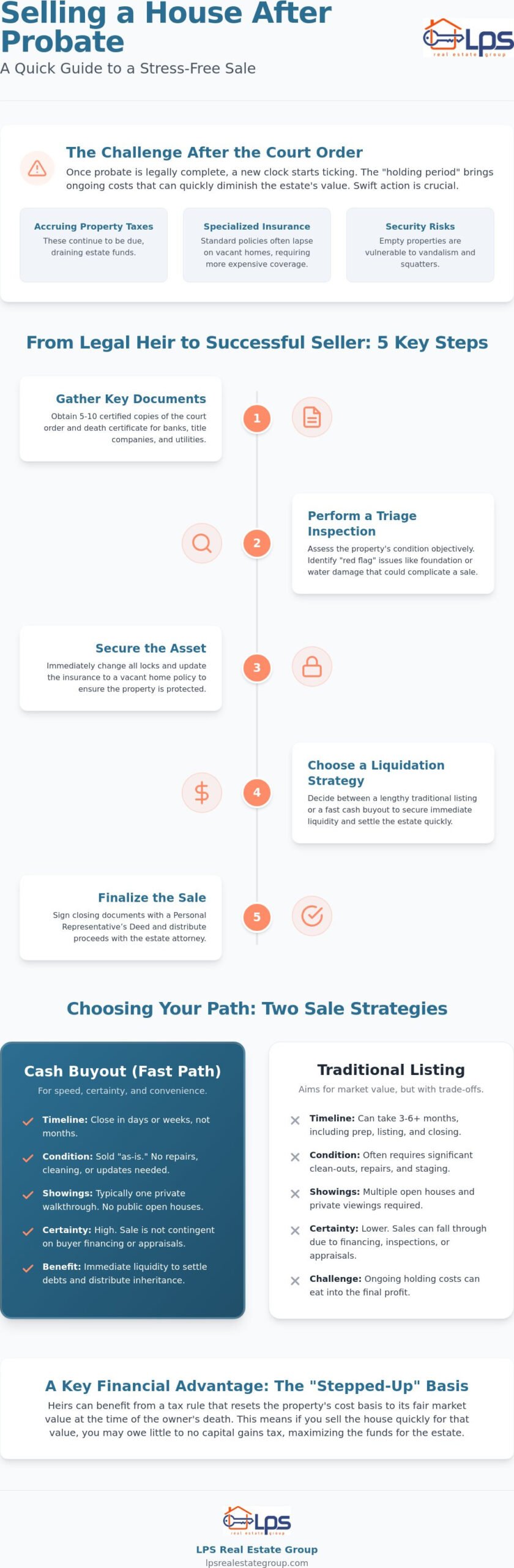
The moment a judge signs the probate court order, a heavy weight usually lifts from your shoulders. You’ve spent months navigating legal filings and waiting for the court’s approval. However, it’s a common misconception that this signature automatically makes the house ready for a “For Sale” sign. In reality, the court order is simply the starting gun for the real estate phase of the estate settlement. To sell house fast after probate, you must shift your focus from legal compliance to active property management immediately.
While the legal hurdles are clearing, the financial ones are often just beginning. This period is known as the “holding period,” and it carries specific risks that can drain the estate’s value. Property taxes continue to accrue, and standard homeowner insurance policies often stop providing coverage if a home remains vacant for more than 30 to 60 days. You may need to secure a specialized vacant home policy to protect the asset. Additionally, empty homes are targets for vandalism or squatters, making security a top priority the moment you gain control.
Understanding Your Legal Authority to Sell
Your ability to move quickly depends heavily on the type of authority the court granted you. If you have “Independent Administration,” you can typically list and sell the property without seeking further court approval for every decision. “Dependent Administration” is more restrictive; it requires the court to oversee and approve the final sale price and terms, which can add weeks or months to your timeline. Letters of Testamentary serve as the primary key to property liquidation, granting you the legal power to sign closing documents on behalf of the estate. Understanding the nuances of the Probate Sale Process is essential to ensure you don’t accidentally overstep your authority and invalidate a potential sale.
Clearing the Title for a Smooth Sale
Even with court authorization, title companies will perform a rigorous “Probate Bridge” search before they allow a sale to close. They are looking for any lingering debts, unpaid medical bills, or tax liens that must be satisfied from the sale proceeds. If you want to sell house fast after probate, you should address these potential “clouds” on the title early. Inherited properties frequently carry unresolved encumbrances, and knowing how to sell a house with title issues before they surface at closing can save the estate significant time and money. You’ll eventually use a Personal Representative’s Deed to transfer the property to a buyer. This specific type of deed confirms that you have the legal right to sell the deceased’s assets, providing the buyer and the title company with the security they need to finalize the transaction. By preparing these documents and identifying creditors now, you prevent a last-minute collapse at the closing table.
Step-by-Step: Moving from Legal Heir to Property Seller
Once the court grants your legal authority to sell, the transition from grieving heir to effective property seller begins. It’s a shift that requires both tactical precision and emotional resilience. You aren’t just selling a building; you’re managing an estate’s most significant asset. To sell house fast after probate, you need a methodical roadmap to navigate the weeks ahead.
- Step 1: Gather Documentation. Obtain at least five to ten certified copies of the court order and the death certificate. Banks, utility companies, and title agents will all require original certified versions, not photocopies.
- Step 2: Perform a Triage Inspection. Walk through the home with a neutral eye to separate sentimental value from marketable condition.
- Step 3: Secure the Asset. Change the locks immediately and update the insurance policy to reflect the home’s vacant status.
- Step 4: Choose a Liquidation Strategy. Decide if you have the time for a traditional listing or if you need the speed of probate and inherited property buyouts to settle debts quickly.
- Step 5: Finalize the Sale. Sign the closing documents and work with the estate attorney to distribute the proceeds according to the will’s instructions.
The Triage Inspection: Assessing the Estate
During this phase, it’s easy to feel overwhelmed by the sheer volume of personal belongings. Start by identifying “Red Flag” issues like foundation cracks, water damage, or outdated electrical systems that could derail a traditional sale. It’s helpful to implement a “Keep, Sell, Donate” plan for the home’s contents. This prevents the “analysis paralysis” that often happens when multiple heirs try to decide the fate of every item at once. Remember that a cluttered home often hides structural problems that buyers will eventually find during an inspection. If the repairs seem too daunting, you may want to sell house fast after probate in its current “as-is” condition.
Securing the Asset Post-Probate
Protecting the property is your primary responsibility as the personal representative. Most standard homeowner insurance policies don’t cover claims if the house is empty for more than 30 days. You must notify the provider and likely switch to a “Vacant Property” policy to ensure the estate is protected against fire or theft. Changing the locks is equally vital. You don’t know who might have had a spare key over the years, from former contractors to distant relatives. Finally, manage the utility transfers carefully. Keeping the heat on at a minimum level prevents pipe bursts in winter, while keeping the electricity active ensures that security lights and sump pumps continue to function.
Traditional Listing vs. Cash Buyouts: Choosing the Fastest Path
Choosing between a traditional market listing and a cash buyout is often the most significant decision an executor makes. In the current 2026 market, the traditional route often stretches between 6 and 9 months when you factor in the time needed for repairs, staging, and the standard closing period. If your goal is to sell house fast after probate, this timeline can be a significant burden. Conversely, a cash buyout typically closes within 7 to 14 days. This speed isn’t just about convenience; it’s about stopping the financial bleed of an empty property.
Many heirs are surprised by the hidden costs that come with a traditional sale. Beyond the standard agent commissions, you have to account for professional staging, pre-listing repairs, and the risk of a buyer’s financing falling through at the last minute. In a market where interest rates remain a hurdle for many traditional buyers, the certainty of a cash offer provides a level of security that a financed offer cannot match. You can find more detail on these complexities in this complete guide to selling a house in probate.
Calculating the Real Net Proceeds
It’s vital to look past the sticker price of a potential offer. A lower cash offer can often net more than a higher retail offer after expenses. When you list a home traditionally, you’re responsible for several months of holding costs that eat into the final check. These include:
- Property Taxes: These continue to accrue and are prorated at closing, often totaling thousands of dollars over a six-month period.
- Utilities: Keeping the lights and climate control active for showings is a constant monthly drain on estate funds.
- Maintenance: Lawn care, snow removal, and general upkeep are necessary to keep the home market-ready.
- Insurance: Vacant home premiums are significantly higher than standard policies and must be paid upfront.
In 2026, cautious buyer pools mean houses often sit longer. Every extra month on the market is money taken directly from the heirs’ inheritance. Understanding the full cost to sell a house in probate — from court filing fees to ongoing vacancy expenses — is essential before committing to any liquidation strategy.
The Emotional ROI of a Fast Sale
The administrative burden of an estate is heavy. Choosing a path that allows you to sell house fast after probate offers a clean break that many families find invaluable. You eliminate the stress of keeping a house show-ready and the frustration of dealing with looky-loo neighbors who are more curious about the interior than the purchase. Most importantly, a fast sale provides immediate liquidity. This allows heirs to pay off estate debts, settle final taxes, and move forward with their own financial lives without the weight of an inherited property hanging over them.
Managing the ‘As-Is’ Reality: Repairs, Cleaning, and Heir Consensus
Inherited homes often come with a lifetime of memories and years of deferred maintenance. When you want to sell house fast after probate, the prospect of fixing a leaky roof or clearing out decades of clutter can feel like an impossible second job. You’re likely dealing with emotional fatigue. This makes it even harder to tackle a “hoarder house” situation or a property that hasn’t been updated for decades. The key is to stop viewing the property as a family home and start seeing it as a strategic asset that needs a clean exit.
Skip the Renovations: The Power of As-Is Sales
Spending the estate’s cash on “minor” updates like new carpet or fresh paint often backfires. These small projects frequently turn into major budget leaks as you uncover hidden issues behind walls or under floors. Professional buyers typically value properties based on their “after-repair value” (ARV). This is the estimated worth of the home once it’s fully renovated. By selling in its current state, you pass the risk of construction delays and cost overruns to the buyer. This approach is often the most efficient way to how to sell an inherited property without draining the liquid cash heirs are waiting to receive.
Resolving Heir Conflict and Reaching Consensus
Disagreements between siblings or beneficiaries are the most common reason estate sales stall. One heir might want to hold out for a “perfect” retail price. Another might need immediate liquidity to pay off personal debts. To keep the process moving, consider using a neutral third party to present offer data. This removes the emotional history between family members and focuses the conversation on market realities. If you need to sell house fast after probate, setting a firm “Liquidation Date” at the start of the process prevents endless debate. It ensures everyone understands when the transition will conclude.
Consult your attorney regarding whether your state requires “unanimous consent” or “majority rules” for the sale. Handling sentimental items is often the final hurdle. A fair approach is to set a deadline for heirs to claim personal belongings before a professional donation service is brought in. If the logistics of cleaning and repairing seem too heavy for your family to carry, you can request a fair cash offer for your as-is property to simplify your exit and move forward with peace of mind.
Securing Your Exit Strategy with LPS Real Estate Group
Settling an estate is a journey that requires patience and steady guidance. At LPS Real Estate Group, we specialize in the specific complexities of the post-probate transition. We understand that you aren’t just looking for a transaction; you’re looking for a partner who respects the family’s legacy while providing a clear path forward. Our “Compassionate Acquisition” process is designed to prioritize your needs, offering a reliable way to sell house fast after probate without the typical stress of the retail market.
When you work with us, the “hidden costs” mentioned earlier, like agent commissions, staging fees, and repair budgets, simply disappear. We purchase properties in their current as-is condition. This means you don’t have to spend another weekend cleaning out a basement or worrying about whether the plumbing will pass a rigorous inspection. Our offers are transparent and straightforward, reflecting our commitment to quiet confidence and honesty in every interaction. We believe in doing the right thing for the estate, ensuring that heirs receive their proceeds without unnecessary delays or high-pressure tactics.
A Streamlined Path to Liquidity
We take the heavy lifting off your plate. From resolving minor title discrepancies to managing any remaining personal property you choose to leave behind, our team handles the logistics. If you’re concerned about liens or encumbrances discovered during the closing process, our guide on how to sell a house with title issues explains exactly how these situations can be resolved without derailing your sale. We offer the flexibility to close on your specific timeline. Whether the estate needs liquidity within days to settle debts or you require a few months to coordinate with other beneficiaries, we adapt to your schedule. You can learn more about choosing the right partner in our guide on Finding a reliable cash buyer for inherited house.
Your Next Steps for a Stress-Free Sale
Starting the process is simple and requires no commitment on your part. We begin with a quiet, respectful assessment of the property’s current state. Our goal is to provide a sense of relief, helping you move from the weight of legal compliance to the freedom of a completed sale. Our 3-step process ensures clarity: first, we listen to your specific goals; second, we provide a fair, transparent offer based on current 2026 market data; and third, we handle all the paperwork for a smooth closing. If you’re ready to sell house fast after probate and move forward with peace of mind, Request your fair cash offer today and experience a transition defined by integrity and care.
Moving Forward with Confidence and Clarity
Transitioning from the legal complexities of the courtroom to the practical steps of property liquidation doesn’t have to be an overwhelming burden. You’ve seen that securing your legal authority is only the beginning of the process. By prioritizing an as-is sale, you can avoid the financial drain of ongoing holding costs and the emotional strain of managing repairs or family disputes. Choosing a path that offers certainty allows you to honor your loved one’s legacy while finally finding the closure your family deserves.
At LPS Real Estate Group, we specialize in probate and inherited property buyouts. We provide transparent as-is acquisitions with zero hidden fees, focusing on empathy and speed to help you sell house fast after probate. Our direct cash offers are designed to give you a clean break and immediate liquidity without the stress of traditional home showings. When you’re ready to step away from the heavy responsibilities of the estate, we’re here to provide a steady, reliable hand. Get a Fair, Stress-Free Cash Offer for Your Inherited Property. You’ve done the hard work of settling the estate; now it’s time to move forward with peace of mind.
Frequently Asked Questions
Can I sell the house before probate is officially closed?
Yes, you can sell the property before the entire probate process concludes. Once the court issues Letters Testamentary or Letters of Administration, the executor has the legal authority to liquidate assets. Selling early often helps the estate pay off creditors and avoid ongoing holding costs like property taxes or insurance premiums while the rest of the estate is settled.
Who has the legal right to sign the sales contract for a probate house?
Only the person designated by the court as the Personal Representative has the legal right to sign the sales contract. Even if the will names you as the primary heir, you cannot sign on behalf of the estate until the court formally grants you authority. This ensures the title transfer is legally valid and recognized by title companies and future buyers.
What if there are multiple heirs who don’t agree on the sale price?
The executor typically holds the legal authority to sell, but heir disagreements can stall the process significantly. It’s often best to present professional appraisals or direct cash offers to the group to demonstrate fair market value. If a consensus isn’t reached, a judge may need to intervene to ensure the estate’s debts are paid and assets are distributed according to the law.
Do I need to clean out the house before selling to a cash buyer?
No, you don’t need to clean out the property when working with a direct cash buyer. Many families find it helpful to sell house fast after probate by leaving unwanted furniture or personal items behind. We handle the removal of remaining junk, allowing you to focus only on the sentimental items you truly wish to keep for your family.
How long does it typically take to sell a house fast after probate?
A direct cash sale typically takes between 7 and 14 days once your legal authority is confirmed. In contrast, a traditional market listing in 2026 often requires 6 to 9 months of preparation, staging, and waiting for buyer financing. Choosing a cash buyout is the most reliable way to sell house fast after probate and secure immediate liquidity for the estate.
Are there extra taxes I need to pay when selling an inherited property in 2026?
You’ll likely owe little to no federal capital gains tax due to the “stepped-up” basis rule. In 2026, the property’s cost basis is reset to its fair market value at the time of the owner’s death. If you sell shortly after inheriting, the taxable gain is often minimal. However, you should check your specific state’s tax laws, as states like Georgia or Texas have different requirements.
What happens if the house has a mortgage that is currently in default?
If the mortgage is in default, the estate must act quickly to prevent a foreclosure sale. The lender still has a legal lien on the property that must be satisfied from the sale proceeds at closing. A fast cash sale can provide the funds needed to pay off the arrears and protect the remaining equity for the beneficiaries before the bank takes action.
Is a probate sale public record, and how does that affect the price?
Probate filings are public records, which means information about the estate and the property is accessible to anyone. While this can sometimes attract speculators, a reputable direct buyer provides a private and professional transaction. This allows you to maintain your family’s privacy while ensuring the sale price reflects the property’s actual condition and the current 2026 market value.