

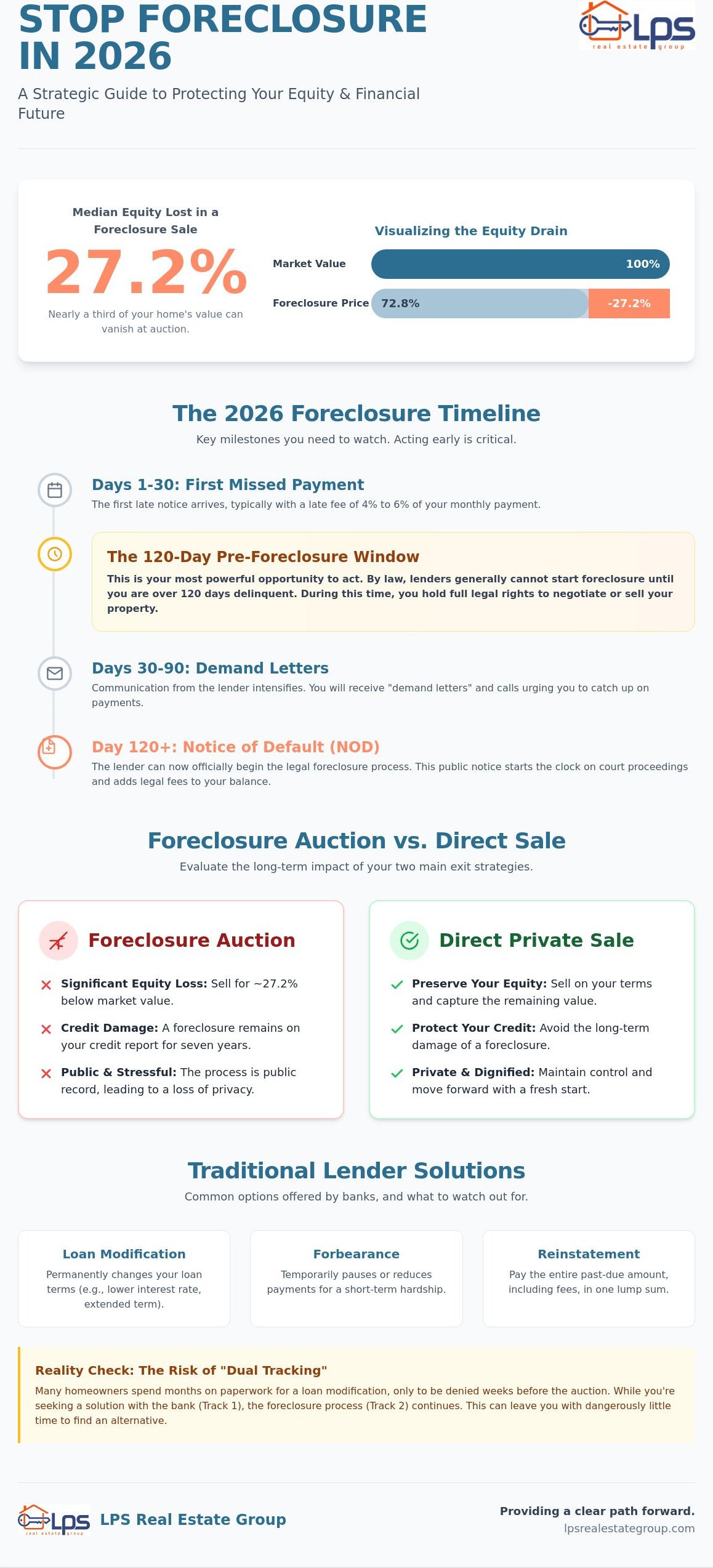
Did you know that the median foreclosed home in 2026 sells for 27.2% below its actual value? That is nearly a third of your equity vanishing the moment the auction gavel falls. It’s a staggering loss, yet many homeowners feel they have no choice but to let it happen. It is exhausting to deal with constant calls from mortgage servicers and the confusion of complex legal timelines. You’ve worked hard for your home, and the fear of displacement or a seven-year credit scar is a heavy weight to carry. We understand that you need a clear path forward, not more pressure or empty promises.
This guide will show you exactly how to stop foreclosure, protect your financial future, and explore compassionate exit strategies that work in the current market. You’ll discover how to navigate the federal 120-day pre-foreclosure window and use loss mitigation to your advantage. We will walk through the steps to halt the auction process, preserve your remaining equity, and find a dignified way to move into your next chapter with your credit score protected. Whether you want to stay in your home or find a fresh start, there is a logical way to regain control.
Key Takeaways
- Map out the 2026 foreclosure timeline so you can take action before the critical 120-day pre-foreclosure window closes.
- Compare the long-term credit impact of a public auction versus a private sale to protect your future borrowing power and financial stability.
- Learn the specific steps to stop foreclosure by using a direct sale to bypass the months of waiting required for a traditional market listing.
- Identify how to calculate your payoff amount and walk-away equity to make an informed, stress-free decision about your home’s future.
- Explore how creative finance solutions can provide a compassionate and dignified exit strategy when traditional bank options are no longer available.
Understanding the Foreclosure Timeline in 2026
Foreclosure isn’t an overnight event; it is a methodical legal process where a lender attempts to recover the remaining balance of a mortgage loan after a borrower stops making payments. By Understanding the Foreclosure Process, you can identify the exact windows of opportunity to intervene before it is too late. In 2026, the timeline is strictly governed by federal regulations that provide a specific safety net for homeowners during the early stages of delinquency.
Most people don’t realize that under the Consumer Financial Protection Bureau’s Regulation X, a mortgage servicer generally cannot start the legal foreclosure process until you are more than 120 days delinquent. This 120-day window is a critical period designed for loss mitigation. The timeline typically moves through these marks:
- Day 1-30: The first missed payment occurs. You will likely receive a notice and a late fee, usually ranging from 4% to 6% of your monthly payment.
- Day 30-90: You enter the pre-foreclosure phase. Communication from the lender becomes more frequent as they send “demand letters” urging you to catch up.
- Day 120+: If no solution is reached, the lender may issue a Notice of Default (NOD). This is a public document that officially starts the legal clock.
Why the Pre-Foreclosure Window is Your Best Opportunity
During the initial 120-day window, you still hold the deed and full legal rights to the property. This is the most effective time to stop foreclosure because you have the widest range of options available. You can still negotiate a loan modification with the bank or learn how to sell a house in pre-foreclosure to protect your equity. Acting during this phase is vital because once the legal process matures, the lender begins adding attorney fees and court costs to your total balance, which can quickly drain your remaining equity.
Decoding Lender Communication
It’s natural to feel a sense of dread when the mailbox fills with letters from your servicer. However, opening every piece of mail is the only way to stay ahead of the timeline. You must distinguish between a standard demand letter and a formal legal summons. A critical term to watch for is the “Acceleration Clause.” This is a provision in your contract that allows the lender to demand the entire remaining loan balance immediately once you’ve defaulted. Once this clause is triggered, simply paying the missed installments may no longer be enough to stop foreclosure.
The final milestone is the Notice of Sale, which sets a specific auction date. This is often viewed as the point of no return. While your rights vary by state, your ability to preserve your credit and equity is significantly higher if you execute a strategy before this date is finalized.
Traditional Ways to Stop Foreclosure with Your Lender
When you first realize you might fall behind, your mortgage servicer is often the first point of contact. Lenders have specific programs designed to help you stop foreclosure, but these options require strict adherence to paperwork and timelines. Understanding how foreclosure works from the bank’s perspective can help you decide if these traditional paths are truly viable for your family.
There are three common ways banks attempt to resolve delinquency:
- Loan Modification: This involves permanently changing the terms of your mortgage. The lender might lower your interest rate, extend the loan term, or wrap the past-due amount into the principal balance.
- Forbearance Agreements: If you’re facing a temporary hardship, like a medical emergency or job loss, the lender may allow you to pause or reduce payments for a few months. You’ll still owe the money later, often through a repayment plan.
- Reinstatement: This is the most direct way to stop foreclosure. You pay the entire past-due amount, including late fees and legal costs, in one lump sum to bring the loan current.
While these options sound promising, there is a significant reality check to consider. Many homeowners spend months submitting documents for a loan modification only to receive a denial letter weeks before the auction date. This “dual tracking” can leave you with very little time to find an alternative. If the bank’s process feels too slow or uncertain, exploring creative finance solutions might offer the speed and certainty you need.
Working with HUD-Approved Counselors
If you feel overwhelmed by your lender’s requirements, a HUD-approved housing counselor can act as a bridge. These non-profit professionals provide free guidance on loss mitigation and can often mediate between you and the servicer. You can find a counselor through the HOPE NOW alliance or the official HUD website. They are excellent for explaining your rights, but they cannot force a lender to approve your application. It’s wise to have a backup plan ready.
The Pros and Cons of a Short Sale
A short sale occurs when you sell your home for less than what you owe on the mortgage, with the lender’s permission. While this prevents a full foreclosure on your record, it still causes a significant credit drop. It is often a lengthy process that requires the bank to approve the buyer’s offer, which can take months. Before committing to this path, you should learn how to avoid short sale complications by looking at faster, more reliable exit strategies.
Foreclosure vs. Cash Sale: Evaluating Your Best Exit Strategy
Choosing the right path depends on your ultimate goal. If keeping the home is no longer feasible or desired, you must weigh the long-term effects of an auction against a private sale. Official resources provide foundational knowledge on how to avoid foreclosure, but they rarely discuss the nuances of a private exit. When you stop foreclosure through a sale, you take the power back from the lender and decide how your financial story ends.
The difference in credit impact is stark. A foreclosure remains a public record on your credit report for seven years, affecting your ability to secure future housing, car loans, or even employment. In contrast, selling your property results in a “Paid in Full” or “Settled” status, which is significantly less damaging. Beyond credit, there is the issue of equity preservation. Homes at auction often sell for about 27.2% less than their actual value, meaning you lose the wealth you have built up over years. A direct sale allows you to capture that equity yourself. You can see a detailed foreclosure vs selling for cash breakdown to help you visualize the financial difference.
The Role of Creative Finance in Saving Your Credit
One of the most effective tools to stop foreclosure instantly is a “Subject-To” offer. In this scenario, a buyer takes over your existing mortgage payments. The loan stays in your name, but the buyer becomes responsible for the debt. This is a win-win because the lender gets paid, the foreclosure stops immediately, and your credit score can actually begin to improve as the buyer makes consistent, on-time payments on the original loan. It is a compassionate solution for homeowners who want to protect their credit but can no longer manage the monthly bill.
When a Direct Cash Offer Makes the Most Sense
A traditional MLS listing requires repairs, staging, and months of waiting. This is a luxury most people facing a legal deadline simply don’t have. A direct cash offer provides certainty in an uncertain time. There are no bank appraisals or lengthy inspections that could derail the deal at the last minute. Once the sale closes, your lender issues a “Certificate of Satisfaction,” which officially notifies the county and the credit bureaus that the debt is resolved. This as-is acquisition allows you to walk away with cash in hand and your dignity intact.
How to Stop Foreclosure Fast: A Step-by-Step Guide to a Direct Sale
When the legal clock is ticking, the most effective way to stop foreclosure is to execute a strategy that prioritizes speed and certainty. A direct sale to a property acquisition firm removes the variables of open houses and buyer financing. This process is methodical and transparent, allowing you to settle your debt before the lender takes the property at auction. Following these steps ensures you remain in control of the transition.
- Request a payoff statement: Contact your mortgage servicer and ask for a formal payoff statement. This document is different from your monthly statement because it includes exact interest amounts and legal fees calculated to a specific date. This is your “walk-away” number.
- Secure an as-is valuation: Reach out to a reputable acquisition firm. They will evaluate your property in its current condition, meaning you don’t have to spend a dime on repairs or cleaning.
- Evaluate the equity: Subtract your payoff amount from the offer. This helps you understand how much cash you will walk away with after the debt is settled.
- Halting the auction: Once you sign a purchase agreement, the title company coordinates with the lender’s foreclosure attorney. They provide a preliminary settlement statement that proves the debt will be paid in full, which typically pauses the foreclosure proceedings.
- Close and transition: You choose the closing date that fits your needs. This allows you to move into your next home with your credit intact and cash in your pocket.
Preparing Your Payoff and Documentation
To move quickly, you should have your paperwork organized before making the first call. You will need your most recent mortgage statement, any property tax bills, and all letters from the lender’s legal department, including the Notice of Default (NOD). Transparency is your best tool here. If you have a second mortgage or a tax lien, disclose these early. A professional buyer can often find creative ways to resolve these additional hurdles, but they need the full picture to help you stop foreclosure effectively.
Avoiding Scams During the Process
Unfortunately, homeowners in distress are often targeted by high-pressure “sharks.” Be wary of any company that asks for upfront fees or guarantees a specific legal outcome. A legitimate firm will never ask you to sign over your deed in a private setting; all signatures should happen through a licensed, third-party title company. Look for a partner who demonstrates empathy and listens to your needs rather than just pushing a contract. If you are looking for a transparent partner to guide you through this transition, you can explore as-is property acquisition to see how a direct sale provides the certainty you need.
Moving Forward: How LPS Real Estate Group Provides a Fresh Start
Reclaiming your peace of mind is the ultimate goal of this process. While the previous sections outlined the mechanics of how to stop foreclosure, the partner you choose to walk beside you matters just as much as the strategy itself. LPS Real Estate Group operates with a philosophy that prioritizes your long-term financial health and emotional well being over a simple transaction. We provide a bridge between the stress of a legal deadline and the relief of a clean slate.
Our approach is built on a foundation of reliability and quiet confidence. We specialize in foreclosure prevention through direct cash purchases and creative finance solutions. Because we are a national firm, we offer a level of liquidity and transparency that smaller, local operations often cannot match. This allows us to move at the speed your lender’s timeline requires, providing a sense of certainty in an otherwise unpredictable situation. We don’t rely on bank appraisals or outside financing, which means when we make an offer, we have the resources to follow through immediately.
Creative finance is one of the ways we solve problems that traditional buyers simply won’t touch. If you have little to no equity, or if your interest rate is a hurdle for others, our “Subject-To” and other creative purchase models can stop foreclosure instantly. These strategies are designed to keep the original loan in place while we take over the responsibility, often helping to preserve or even rebuild your credit score over time. It is a sophisticated, compassionate way to handle debt that traditional bank programs often ignore.
A Compassionate Partner in Your Transition
We pride ourselves on being a “listener first” organization. We understand that the calls from mortgage servicers and the stack of legal notices are overwhelming. Our team takes over the heavy lifting, from navigating complex title issues to communicating directly with your lender’s legal department. We are committed to doing the right thing for your specific circumstances. This means we provide honest, straightforward options tailored to your needs, ensuring you feel fully informed and respected at every stage of the narrative.
Your Next Steps to Stopping Foreclosure
Taking control of your future starts with a single, low-pressure conversation. It is not too late to explore your options, even if you are deep into the pre-foreclosure timeline or have an auction date looming. You can request a no-obligation evaluation today to see how our as-is property acquisition can provide the exit strategy you need. We invite you to reach out and discover a path forward that protects your equity, saves your credit, and allows you to move into your next chapter with dignity. Don’t let the bank decide how your story ends; take the first step toward a fresh start now.
Take Control of Your Financial Future Today
We have explored how the federal 120-day pre-foreclosure window offers a vital chance to intervene and how a strategic private sale can prevent the long-term credit damage of a public auction. By understanding the legal timeline and your rights, you can move from a place of uncertainty to a position of strength. Choosing the right partner to stop foreclosure is the final step in protecting the equity you have built over the years.
LPS Real Estate Group provides the national expertise and specialized solutions, including direct cash purchases and creative finance, to make this transition as smooth as possible. We focus on transparency and fairness, ensuring you have a clear path to a fresh start without the pressure of traditional bank negotiations. Our team is here to listen and help you find the best outcome for your unique situation, handling the complex details so you can focus on your next chapter.
Get a Compassionate, No-Obligation Offer to Stop Your Foreclosure Today
You don’t have to face this process alone. There is a dignified way forward, and it starts with making an informed decision for your family and your future.
Frequently Asked Questions
Can I stop a foreclosure by selling my house?
Yes, you can sell your home at any point up until the auction to satisfy the mortgage debt in full. This is a common way to avoid the long term damage of a public auction and preserve your remaining equity. Selling directly to a firm that specializes in as-is property acquisition ensures the deal closes quickly enough to meet the lender’s legal deadline.
How many days before a foreclosure auction can I stop the process?
You can technically stop the process up until the moment the gavel falls at the auction, though most lenders require a settlement statement several days in advance. Federal law provides a 120 day pre-foreclosure window for homeowners to find solutions. Even after this window closes, you can halt the proceedings by paying the loan in full or executing a private sale.
Will stopping foreclosure through a sale save my credit score?
Yes, resolving the debt through a sale is significantly less damaging than a full foreclosure, which stays on your record for seven years. While missed payments already impact your score, a “Paid in Full” or “Settled” status prevents the catastrophic drop associated with a public auction. This allows your credit to begin recovering much sooner than if you lost the property to the bank.
What is the difference between pre-foreclosure and foreclosure?
Pre-foreclosure is the period after you miss payments but before the lender officially takes the property, while foreclosure is the legal completion of that process. During pre-foreclosure, you still own the home and have the right to sell it or negotiate a modification. Once the foreclosure is finalized at auction, you lose all legal rights and equity in the property.
Do I need to make repairs to sell my house and stop foreclosure?
No, you don’t need to make repairs if you sell to a firm that offers as-is property acquisition. This is a major advantage when you are under a tight deadline to stop foreclosure. Traditional buyers using bank loans often require repairs to meet appraisal standards, but a direct cash purchase removes this hurdle and allows for a much faster closing.
What happens to my equity if my house goes to a foreclosure auction?
You typically lose most or all of your equity at auction because homes often sell for significantly less than their market value. In 2026, foreclosed homes sell for a median of 27.2% below their estimated value. Any remaining funds after the debt and legal fees are paid are returned to you, but these costs often consume your entire balance.
Can a lender refuse to let me sell my house if I am in foreclosure?
Generally, a lender cannot stop you from selling your home as long as the sale price covers the full amount of the debt plus all late fees and legal costs. If the sale price is less than what you owe, you would need the lender’s permission for a “short sale.” However, if you have equity, you have a legal right to sell at any time.
How does creative financing help stop foreclosure?
Creative financing, such as a “Subject-To” agreement, allows a buyer to take over your existing mortgage payments to bring the loan current immediately. This is a powerful tool to stop foreclosure because it doesn’t require the buyer to get a new bank loan. It provides a fast solution that protects your credit while ensuring the lender’s debt is satisfied and the auction is cancelled.