
The choice to sell to Zillow vs local buyer isn’t quite what it used to be, and the most common path might actually be the most expensive one. While many homeowners still search for a way to sell their property directly to the tech giant, Zillow shifted its model years ago to focus on agent referrals rather than direct purchases. This means that instead of a quick sale to a platform, you’re often funneled back into a traditional process with extra layers of hidden costs.
It’s completely natural to feel overwhelmed by the technicality of these platforms or anxious about being lowballed by a company that doesn’t know your neighborhood. You want a fair outcome without the burden of expensive repairs or the uncertainty of a shifting market. This guide will help you navigate these options so you can protect your equity and avoid unnecessary out-of-pocket expenses.
We’ll provide a transparent breakdown of your potential net proceeds and explain how the 2026 referral fees impact your bottom line. You’ll also learn how a direct local buyer can provide a guaranteed closing date and a simple, human-centric alternative to the digital grind.
Key Takeaways
- Understand the 2026 shift where Zillow serves as a referral network, fundamentally changing how you evaluate the choice to sell to zillow vs local buyer.
- Learn why direct local buyers offer a “certainty gap” advantage, often closing in 10-14 days while avoiding the high cancellation rates common with tech platforms.
- Compare the bottom line of each method to see how skipping commissions and hidden service fees can help you keep more of your home’s equity.
- Evaluate whether your property is “Instagram-ready” or needs work to determine which selling path fits your specific timeline and budget.
- Discover the value of working with a compassionate expert who listens to your unique situation instead of relying on a rigid digital algorithm.
The 2026 Home Selling Landscape: Zillow vs. Direct Local Buyers
The 2026 real estate market looks very different than it did just a few years ago. If you are deciding whether to sell to zillow vs local buyer, it’s vital to understand that these two paths lead to very different outcomes. Zillow has evolved into a sophisticated digital marketplace that primarily connects homeowners with a network of preferred agents. They are no longer the direct purchaser. In contrast, a local direct buyer acts as the principal in the transaction, using their own funds to buy your property without the need for a middleman.
What is a Tech-Platform Sale?
Algorithms and data points drive the tech-platform model. When you request an offer through a large platform, your initial valuation is often based on an automated tool. While these tools provide a general idea of value, they struggle to account for the unique character or specific challenges of an individual property. Looking back at Zillow’s iBuyer history, the company moved away from direct purchasing to focus on a referral-based ecosystem. This means that if you use their platform in 2026, you’re likely working with a third-party partner who pays Zillow a “success fee” that can range from 15% to 40% of the agent’s commission. These partners typically look for “market-ready” homes that require very little work. Tech platforms often use a one-size-fits-all approach because their business model relies on volume. This can lead to:
- Conservative offers that protect the platform’s profit margins.
- High “risk fees” for properties that don’t fit a standard profile.
- Automatic rejection of homes needing significant structural repairs or cleaning.
What Defines a Local Direct Buyer?
A local direct buyer offers a more personalized, principal-to-principal relationship. Instead of an algorithm, you’re dealing with a human who evaluates your home’s potential rather than just its current flaws. This approach is especially helpful if your situation is complex, such as managing an inherited property or facing foreclosure. Local buyers don’t require your home to be “Instagram-ready.” We look at the bones of the house and the potential of the land. Because the buyer is the one actually providing the capital, the process is streamlined. You aren’t waiting for a third-party approval or a bank’s appraisal. You get a clear, transparent explanation of how the offer was calculated based on local market trends and the specific needs of your property. This direct path removes the layers of fees and commissions that often eat into your equity when working through a large tech platform’s agent network.
Speed, Certainty, and the ‘As-Is’ Reality
When you weigh the option to sell to zillow vs local buyer, the “Certainty Gap” is often the deciding factor. A local direct buyer can typically close in as little as 10 to 14 days because they use private capital and skip the traditional mortgage approval process. In contrast, selling through a tech platform often takes 30 days or more. These platforms coordinate with third-party inspectors, appraisers, and legal teams, which naturally slows down the timeline. If you need to move quickly due to a job transfer or a financial deadline, these extra weeks can create significant stress.
The iBuyer Inspection Trap
Many homeowners are initially attracted to the high numbers they see on a digital dashboard. However, these figures are often just a starting point. Once a physical walkthrough occurs, platforms frequently request “repair credits” or price adjustments that can significantly lower your net proceeds. This is part of how real estate agents work with iBuyers to manage risk and protect their margins. A direct buyer provides a firm, fixed offer from day one, giving you the peace of mind that the price won’t change at the last minute.
Choosing to selling your house as-is means you don’t have to lift a finger. You can leave the old furniture, the trash in the attic, and the outdated wallpaper exactly where they are. When you compare the choice to sell to zillow vs local buyer, remember that platforms usually expect a property to be in good condition. If it isn’t, they’ll either pass on the offer or charge you heavily for the inconvenience of managing the repairs themselves.
Creative Finance: Solutions Zillow Can’t Provide
One of the biggest advantages of working with a direct buyer is flexibility. If you have little equity or a complex financial situation, a standard cash offer might not be the best fit. We can offer creative real estate exit strategies like “Subject-To” purchases, where the buyer takes over your existing mortgage payments. This can be a lifesaver for homeowners who need to preserve their credit or move without bringing cash to the closing table.
Seller-financing is another tool that can lead to a higher overall sales price by spreading payments out over time. These human-centric solutions aren’t available through a rigid algorithm. If you’re facing a unique hurdle, it’s often worth speaking with a specialist who can tailor a plan to your specific needs instead of trying to fit into a tech company’s box.
Comparing the Bottom Line: Fees, Commissions, and Net Proceeds
When you look at a sales contract, the most important number isn’t the purchase price at the top. It’s the final amount written on the check you receive at the end. When deciding to sell to zillow vs local buyer, many homeowners are surprised to find that a higher offer doesn’t always lead to a higher payout. The difference lies in the layers of fees that tech platforms often include to cover their operational costs and the risk of holding your property.
Deconstructing Tech-Platform Service Fees
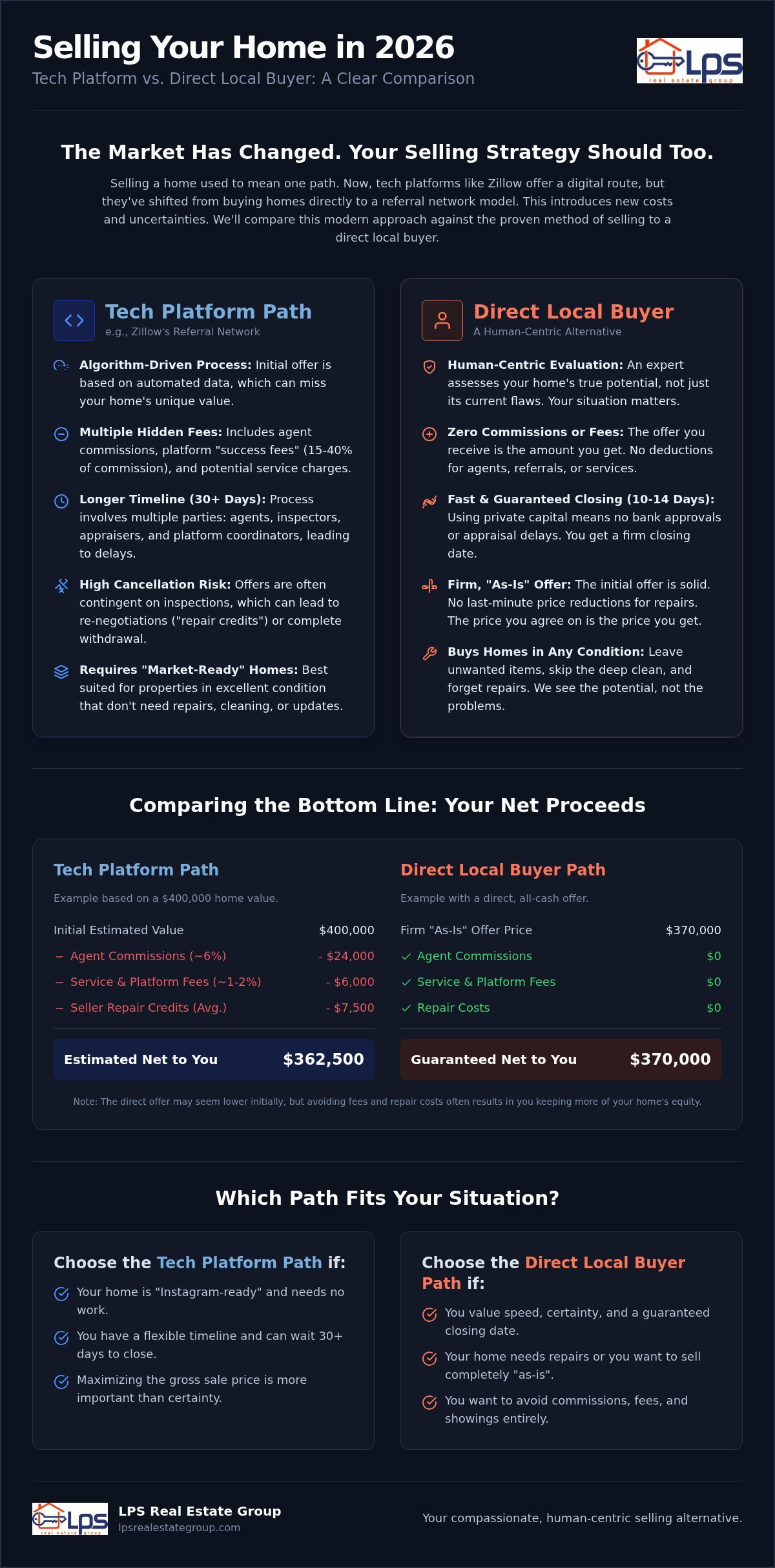
While Zillow has shifted toward an agent-referral model in 2026, the ecosystem still carries significant costs. Homeowners using these platforms often encounter service fees that typically range from 5% to 13%. These aren’t just for the convenience of the digital interface. They cover the platform’s administrative overhead and the referral “success fees” paid by their partner agents. On top of these percentages, you may see deductions for “market risk” or holding costs. This is a vital part of the consumer perspective on iBuyers that often goes unmentioned until the final paperwork arrives. Net proceeds are the final funds you actually keep after every fee, repair credit, and commission has been subtracted from the sale price.
The Zero-Fee Advantage of Direct Purchases
A direct buyer operates on a model of radical simplicity. Because there are no agents or referral networks involved, you can instantly save the standard 5% to 6% in commissions. Beyond commissions, direct buyers typically cover the costs that a seller usually pays in a traditional sale. This includes title insurance, escrow fees, and transfer taxes. When you work with companies that buy houses for cash, the offer you see is much closer to the number you’ll actually receive. This transparency removes the anxiety of “closing table surprises” where last-minute deductions eat into your equity.
The “Net Proceeds” test is a simple way to see past the noise. Imagine a platform offers you $400,000 but charges 10% in fees and requires $15,000 in repairs. Your net is $345,000. If a local buyer offers $350,000 with zero fees and no repair requirements, you actually walk away with more money. Choosing to sell to zillow vs local buyer requires this level of honest math. We believe in providing a clear, line-by-line breakdown so you can make a choice based on facts rather than marketing promises. This straightforward approach ensures that you feel respected and fully informed throughout the entire process.
Decision Framework: Which Path Fits Your Situation?
Choosing the right path requires an honest look at your property and your personal goals. There is no single “best” way to sell a home; there is only the way that best serves your current needs. When you analyze the choice to sell to zillow vs local buyer, you should start by looking at the physical state of your house. Is it “Instagram-ready” with a fresh roof and modern kitchen, or does it need significant work that you aren’t prepared to fund? Your timeline and financial standing also play a major role in this decision.
Complex legal or financial hurdles often make the choice much clearer. For instance, if you are selling a house in pre-foreclosure, you don’t have the luxury of a 60 day waiting period or the budget for repairs. Similarly, properties tied up with liens or difficult title issues require a buyer who can navigate those obstacles with patience and expertise. A digital platform is rarely equipped to handle these human complexities, as their systems are built for standard, straightforward transactions.
When Zillow (or its Partners) Makes Sense
The Zillow ecosystem is designed for a specific type of property. It’s often the right fit for homes built after 2000 that are located in stable suburban neighborhoods. If you have high equity and don’t mind paying a premium for the convenience of a digital-first process, their referral network can connect you with agents who specialize in quick listings. This path is also practical if you are already using their platform to shop for your next home and want to keep your search and sale within one digital environment. It works best for those who have the time to wait for a traditional closing and a house that is already in great condition.
When a Direct Buyer is the Superior Choice
A direct buyer becomes the better option when your house or your situation doesn’t fit into a standard box. If your property needs structural repairs, a new HVAC system, or major cosmetic updates, a local buyer will take it off your hands exactly as it is. This is also the most compassionate route for sensitive life events like divorce or inheritance. Dealing with the cost to sell a house in probate can be exhausting, and having a buyer who understands the legal requirements can save you months of frustration.
When you sell to zillow vs local buyer, the local option gives you total control over the calendar. You can choose a closing date that aligns with your move, whether that is in seven days or two months. This flexibility is invaluable if you are trying to coordinate two moves at once. If you’re ready to see how a tailored solution can work for you, get your fair cash offer today and skip the uncertainty of the platform model.
The LPS Real Estate Group Difference: A Human-Centric Alternative
At LPS Real Estate Group, we understand that the decision to sell to zillow vs local buyer is often about more than just a house. It’s about your future, your peace of mind, and your financial security. While tech platforms view your property as a line of code in an algorithm, we see it as a home with a story. Our approach is built on quiet confidence. We don’t use high-pressure tactics because we rely on honesty and a deep commitment to doing the right thing for every homeowner we serve.
We believe that transparency is the foundation of a successful partnership. You won’t find any hidden fees, administrative “convenience” charges, or last-minute price drops here. When we make an offer, it’s a firm commitment backed by our own capital. This eliminates the “certainty gap” often found with large platforms that might back out after a lengthy inspection process. We take care of all the standard closing costs, ensuring that the number we discuss is the amount you actually receive at the closing table.
Our expertise allows us to handle properties that tech giants often label as “un-sellable.” If your home has significant structural issues or complex title liens, we don’t walk away. Instead, we use creative finance solutions to find a path forward. We’ve helped countless homeowners navigate difficult situations with a reliable closing that protects their equity and their dignity.
Beyond the Algorithm: Solving Real Problems
Navigating life’s most difficult transitions, such as probate or the threat of foreclosure, requires a listener first and a service provider second. We specialize in these complex equity situations that most digital platforms simply aren’t equipped to handle. Whether your property needs significant structural work or you’re managing an inherited estate from across the country, we act as your compassionate expert. We treat you as a valued partner rather than just another data point in a database. Our offers are based on your specific needs and the unique potential of your property, not just a generic ZIP code average.
Taking the First Step Toward a Stress-Free Closing
Starting the process is simple and requires no obligation on your part. We follow a methodical, three-step review to ensure you feel fully informed at every stage. First, we have a calm conversation to understand your goals and timeline. Second, we perform a straightforward property assessment, looking at the “as-is” condition. Finally, we present you with a clear, transparent breakdown of your options. This patient, steady rhythm allows you to absorb the information without feeling rushed or overwhelmed by technical jargon.
Get your fair, transparent offer from LPS Real Estate Group today.
Securing Your Home’s Future with Confidence
The decision to sell to zillow vs local buyer in 2026 is no longer just about choosing a website; it’s about choosing the level of certainty and care your situation deserves. While tech platforms provide a digital convenience, they often come with hidden referral fees and high repair expectations that can erode your final proceeds. A direct local buyer offers a streamlined alternative, focusing on the actual value of your property in its current condition without the need for middleman commissions.
Every home has a unique story and every seller has a specific goal. Whether you need a guaranteed closing date to coordinate a move or a compassionate expert to help navigate probate, a human-centric approach ensures you aren’t treated like a data point. By focusing on net proceeds and as-is acquisitions, you can avoid out-of-pocket costs and walk away with the equity you’ve worked hard to build. LPS Real Estate Group is A+ rated for transparency and specializes in foreclosure prevention and probate situations. We offer a simple path forward with no fees, no commissions, and zero repair requirements.
Request Your Fair Cash Offer from LPS Real Estate Group
You have the power to choose a selling experience that prioritizes your peace of mind and financial well-being. We are here to listen and help you take that next step forward today.
Frequently Asked Questions
Is Zillow still buying houses directly in 2026?
No, Zillow does not directly buy houses in 2026. The company discontinued its direct-purchase iBuyer program years ago and now operates primarily through a referral network. When you use their platform, they connect you with a “Zillow Preferred” agent. These agents pay Zillow a success fee that typically ranges from 15% to 40% of their commission once your home sale closes.
Do local cash buyers really pay a fair price for homes?
Fairness is measured by the net proceeds you keep and the convenience you gain. When you evaluate the choice to sell to zillow vs local buyer, remember that a direct buyer’s offer reflects the “as-is” value minus the costs of future repairs. Because you save on commissions and closing costs, the final amount in your pocket is often very competitive compared to a traditional sale.
What are the hidden costs of selling to a tech platform like Zillow?
The primary hidden costs are service fees and repair deductions. Platforms and their partners often charge service fees between 5% and 13% to cover their administrative overhead. Furthermore, after a physical walkthrough, they frequently request “repair credits.” These credits are subtracted from your final check to ensure the home meets their specific resale standards, which can significantly lower your initial offer.
Can I sell my house to a local buyer if I am facing foreclosure?
Yes, selling to a local buyer is a highly effective way to prevent foreclosure and protect your credit. We specialize in fast property acquisitions that can stop the legal process before the auction date. By providing a clear cash offer and an accelerated timeline, we help you settle your debt with the bank and walk away with your remaining equity.
How do I know if a local home buyer is legitimate and trustworthy?
A trustworthy buyer will be transparent about their process and won’t use high-pressure tactics. Look for a buyer with a clear local presence and a history of handling complex situations like probate. Legitimate buyers, such as LPS Real Estate Group, provide a line-by-line breakdown of their offer and encourage you to ask questions so you feel fully informed and respected.
What happens if my house needs more repairs than Zillow allows?
If your home requires major structural or cosmetic work, tech platforms will likely decline the property. This is where a direct local buyer provides a clear path forward. We purchase homes in any condition, which means you don’t have to clean, paint, or make a single repair. We evaluate the potential of the property, allowing you to move on without out-of-pocket renovation costs.
Will I have to pay a commission when selling to a direct buyer?
No, you don’t pay any agent commissions when selling directly to a principal buyer. Since there are no agents or referral networks involved, you save the standard 5% to 6% fee. Additionally, we cover all standard closing costs, including title insurance and escrow fees. This ensures that the offer you accept is the actual amount you receive at the closing table.
How fast can a local buyer actually close on my property?
We can typically close on a property in 10 to 14 days. Because we use private capital and skip the traditional bank appraisal process, the timeline is much shorter than a platform sale. This speed is ideal for homeowners who need to relocate for a job or those who want to resolve a complex financial situation without the uncertainty of a 60-day wait.