

What if the most expensive mistake you make as an executor isn’t a legal error, but simply waiting too long to act? When you’re managing an estate, every month the property sits vacant is another month of property taxes, insurance premiums, and maintenance costs draining the inheritance. You might feel like you’re stuck between a rock and a hard place, but selling a house in probate without a realtor is often the most direct path to protecting the estate’s value. You don’t have to follow the traditional path of staging, cleaning, and paying high commissions just to settle a loved one’s affairs.
It’s completely normal to feel overwhelmed by the logistics of probate, especially when you’re already dealing with the emotional weight of a loss. We understand that you want a solution that’s both legal and fast so you can finally provide the heirs with their rightful distribution. This 2026 guide will show you how to navigate the probate sale process efficiently, avoid the stress of making repairs, and ensure a certain closing. We’ll walk through the specific steps to secure a fair, as-is sale that respects your time and the estate’s bottom line.
Key Takeaways
- Understand how the type of probate administration—independent or supervised—determines your level of legal authority to sell estate property.
- Identify the hidden holding costs, such as taxes and insurance, that drain an estate’s value during a traditional six-month listing period.
- Learn the specific steps for selling a house in probate without a realtor to avoid high commissions and the stress of property repairs.
- Discover how to use a “Notice of Proposed Action” to keep heirs informed and ensure the sale process remains legally compliant.
- Realize the benefits of an as-is cash sale for providing immediate liquidity to heirs without the need for cleaning or staging.
What Does It Mean to Sell a House in Probate?
At its core, What Does It Mean to Sell a House in Probate? involves a court-supervised process of validating a will and ensuring assets reach the right heirs. While liquid assets like savings accounts are relatively easy to distribute, real estate is often the most complex piece of the puzzle. It’s a physical asset that requires constant attention, and it can’t be divided as easily as a bank balance. Because the property is technically owned by the “estate” rather than an individual, the legal requirements for a transfer are much stricter than a standard home sale.
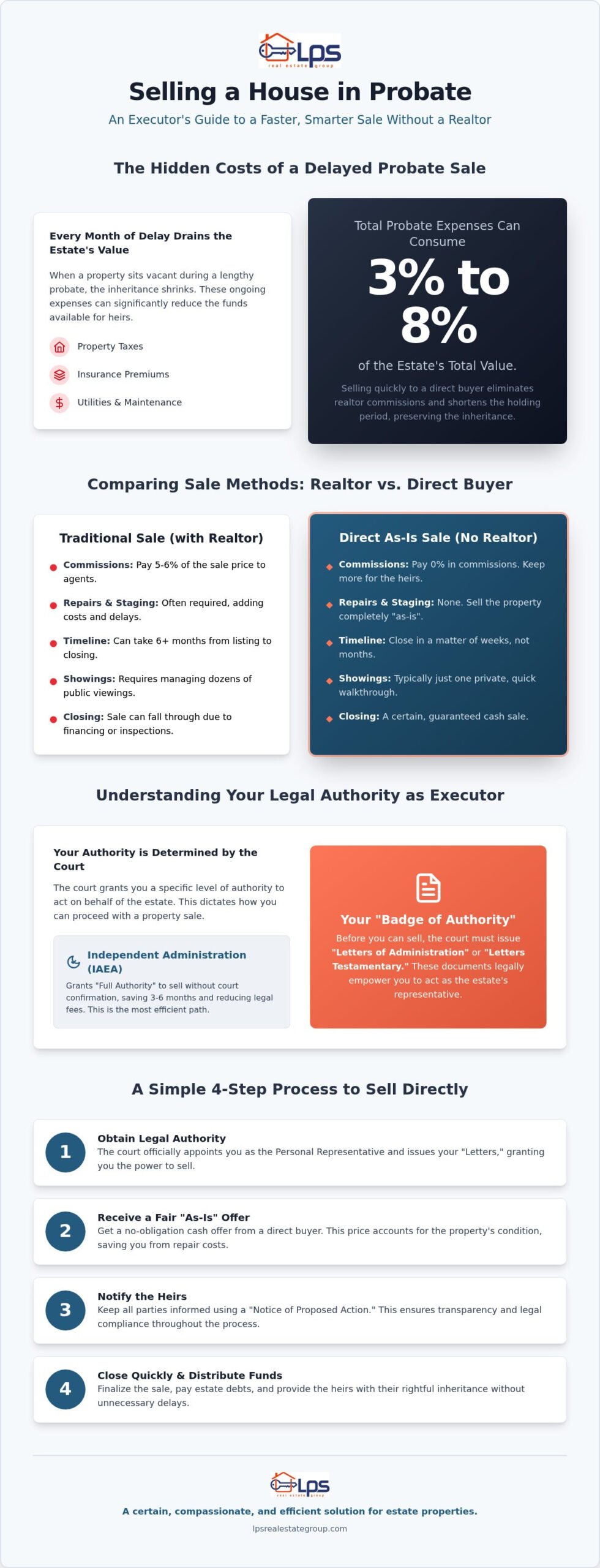
The Personal Representative, also known as an Executor, carries the weight of managing this asset. This role involves protecting the property from theft, keeping the lawn mowed, and ensuring the bills are paid. It’s a demanding job that comes with a harsh financial reality. Every month the probate process drags on, holding costs like property taxes, utility bills, and insurance premiums drain the estate’s total value. According to verified industry data, total probate expenses typically range from 3% to 8% of the estate’s value. Choosing the path of selling a house in probate without a realtor can significantly lower these expenses by removing high commission fees from the equation.
When Can You Legally Sell the Property?
You don’t have the legal right to sell the home until the court officially appoints you. This appointment comes in the form of “Letters of Administration” or “Letters Testamentary.” These documents act as your badge of authority, proving to title companies and buyers that you have the right to act on behalf of the deceased. While you can begin discussions with buyers before these letters arrive, you cannot finalize a deed transfer. The Personal Representative is the only individual with the legal authority to sign a sale contract. Once you have this authority, you can choose to sell the property at any point during the probate proceedings to provide liquidity for the estate’s debts or for distribution to heirs.
The Realtor Myth: Is an Agent Legally Required?
One of the biggest misconceptions heirs face is the idea that the court mandates a traditional MLS listing. This simply isn’t true. The law protects your right to choose how to liquidate assets, including selling a house in probate without a realtor to a direct buyer or through a “For Sale By Owner” process. In many cases, a traditional listing is actually a disadvantage. A realtor might suggest expensive repairs or staging to attract a retail buyer, but these costs often don’t provide a high enough return to justify the effort. Bypassing a realtor allows the estate to save the standard 5% to 6% commission immediately. This keeps more cash in the hands of the heirs and simplifies the closing process, as you won’t have to manage dozens of showings while you’re still grieving.
The Legal Framework for Selling Without a Realtor
Navigating the legalities of an estate sale often feels like learning a new language. Understanding The Legal Framework for Selling Without a Realtor starts with knowing which type of administration the court has granted you. This determines how much freedom you have to make decisions and how many check-ins you’ll need with a judge. In most cases, the court’s goal is simply to ensure the heirs are treated fairly and the estate’s debts are paid.
Independent Administration and Your Freedom
If the estate qualifies for the Independent Administration of Estates Act (IAEA), your job becomes much simpler. With “Full Authority,” you can manage the process of selling a house in probate without a realtor by accepting an offer directly. You won’t have to wait for a court confirmation hearing, which often saves the estate three to six months of waiting. This streamlined path also helps preserve estate funds by minimizing the billable hours your attorney spends on court appearances and filings. It’s the most efficient way to move from a vacant property to a settled estate.
Meeting Court Requirements Without an Agent
To meet court standards, you must prove the sale price is reasonable. A common hurdle is defining “Fair Market Value” without a public bidding war. You can solve this by obtaining a professional appraisal to establish a baseline price. When you consider the cost to sell a house in probate, a direct offer that bypasses repairs and commissions often nets the heirs more than a higher retail price would. A direct buyer’s offer is easy to justify to a judge when you factor in the thousands of dollars saved on holding costs and renovations.
Even when you bypass a traditional listing, you still have a duty to keep heirs informed. If your case involves supervised administration, you’ll need to file a Petition to Sell to get the court’s explicit blessing. Along with this, you’ll use a “Notice of Proposed Action” to inform heirs of the sale details. They typically have 15 days to review the price and terms. This transparency protects you from future disputes and ensures the inheritance is settled fairly. If you’re looking for a partner to help simplify this transition, reaching out to a trusted probate buyer can help you weigh your options with quiet confidence.
Comparing Sales Methods: Realtor vs. Direct Cash Buyer
While many people default to a real estate agent, selling a house in probate without a realtor is often a more strategic choice for an estate’s bottom line. A traditional sale focuses on the highest gross price, but for an executor, the most important number is the “net to estate.” This is the actual amount of cash that remains after every fee, repair, and commission is paid. When you prioritize speed and certainty, the direct route often proves more beneficial for the heirs than a traditional listing.
The Financial Breakdown: Netting More for Heirs
When you list with an agent, you’re immediately losing about 6% of the sale price to commissions and roughly 2% to closing costs. If the home needs significant repairs to meet retail standards, that money comes directly out of the heirs’ inheritance. Then there’s the cost of time. A typical probate sale through a realtor can take six months or more to resolve. During that half-year, the estate is paying for several ongoing expenses:
- Property taxes and homeowners association (HOA) dues.
- Utility bills and basic lawn maintenance.
- Vacant home insurance, which is often significantly more expensive than standard policies.
These “holding costs” can easily drain thousands of dollars from the estate’s cash reserves. By contrast, a direct cash offer provides immediate liquidity. It stops the financial bleed the moment you close, which can often be in as little as a few weeks. This efficiency ensures that the value of the estate isn’t slowly eaten away by carrying fees while waiting for a retail buyer to appear.
Managing the Physical Burden of the Estate
The emotional weight of an inherited property is often heavier than the financial one. Cleaning out a house filled with decades of memories is an exhausting task. Realtors usually require the property to be “broom clean” or professionally staged, which means weeks of sorting through belongings and disposing of trash. Direct buyers offer a much simpler path. You can sell house as is, meaning you take the family heirlooms you want and leave everything else behind.
This “as-is” advantage removes the need for renovations or stressful showings. You also avoid the common “buyer financing” hurdle. Retail buyers often depend on mortgage approvals that can fall through if the house has an old roof or outdated electrical systems. A direct cash buyer removes that uncertainty. You get a clear, guaranteed path to settle the estate so you can focus on your family instead of managing a construction project.
Steps to Sell Your Probate House to a Direct Buyer
Selling a house in probate without a realtor follows a clear, logical progression. It’s about moving from legal authority to financial distribution with as little friction as possible. By following a structured sequence, you ensure the estate remains compliant with court requirements while protecting your interests as the personal representative. This methodical approach helps demystify the logistics and provides a sense of relief during a complex time.
- Step 1: Secure your legal authority. You must have your court-issued Letters Testamentary or Letters of Administration before you can sign any binding sale documents.
- Step 2: Request a direct cash offer. Getting an offer early establishes a price floor for the property. This gives you a concrete number to discuss with heirs and the court.
- Step 3: Issue the Notice of Proposed Action. This formal document informs all beneficiaries of the sale terms, price, and buyer identity, giving them a window to review the decision.
- Step 4: Execute the sale contract. Once the notice period clears, you can sign the purchase agreement and coordinate with a probate-literate title company to handle the deed transfer.
- Step 5: Close the sale. The buyer provides the funds, the title company records the deed, and the proceeds are deposited directly into the estate’s bank account.
Navigating the Offer and Heir Approval
Transparency is your best tool when dealing with siblings or other beneficiaries who may have sentimental ties to the home. When presenting a direct offer, it’s helpful to show the “net” comparison. Explain how avoiding repairs, commissions, and months of utility bills actually preserves the inheritance. The Notice of Proposed Action serves as a critical legal shield, protecting the executor from future liability by giving heirs a formal window to object before the sale is finalized. Most objections disappear once heirs see a clear path to a fair, certain closing.
Closing the Transaction and Distributing Funds
Probate-literate title companies are essential because they understand how to verify “clear title” in the context of an estate. They’ll ensure all liens are paid and the transfer is legally sound. Once the closing is complete, the proceeds must go directly into a dedicated estate bank account. You should never accept funds into a personal account, as this can lead to serious legal complications regarding the commingling of assets. If you’re ready to see how this works for your specific situation, you can get a fair cash offer today from a team that respects your family’s needs. This is often the most reliable way to sell house fast after probate and move forward with peace of mind.
Why LPS Real Estate Group is the Trusted Choice for Estates
Managing an estate is a heavy responsibility that requires more than just a buyer. It requires a partner who understands the legal and emotional landscape of probate. LPS Real Estate Group brings a sense of quiet confidence to every transaction, ensuring that the logistical hurdles don’t become a burden for the family. Selling a house in probate without a realtor shouldn’t feel like a solo mission, and our team is here to provide the professional authority needed to navigate complex title and court requirements.
We specialize in direct property acquisitions, which means we understand the nuances of probate-specific paperwork. Our process is designed to be transparent and straightforward, providing a clear path to liquidity so the estate can be settled without the typical delays of the retail market. By handling the heavy lifting of the property sale, we allow you to focus your energy where it matters most: supporting your family and honoring your loved one’s legacy.
A Compassionate Approach to Inherited Properties
We recognize that every inherited home carries a history. The emotional toll of sorting through a lifetime of belongings is often the most difficult part of being an executor. That’s why we prioritize the human side of the transaction. Our “leave it as-is” policy is a core part of our commitment to your peace of mind. Whether the property is in pristine condition or faces challenges like hoarder situations or significant deferred maintenance, we buy the house exactly as it stands today.
You don’t need to spend weeks cleaning, painting, or making repairs. You can take the family heirlooms and personal mementos you want to keep and simply leave the rest to us. For those who need to store these items during the transition, JOIN ME self storage offers an example of the flexible, secure options available to help you manage the physical burden of an estate. This approach provides a sense of relief, as the sale is guaranteed regardless of the property’s condition. It eliminates the anxiety of wondering if a traditional buyer will demand expensive upgrades or back out after a home inspection.
Taking the first step toward settling the estate is easy and comes with no obligation. You can request an evaluation of the property to establish a baseline for your decision-making process. The LPS Real Estate Group promise is built on fairness and transparency. We don’t charge commissions, and there are no hidden fees to worry about. This ensures that the estate preserves as much value as possible for the heirs.
When you compare us to other companies that buy houses for cash, you’ll find that our focus remains on ethical, patient, and personalized care. We move at a pace that feels comfortable for you, providing the information you need to feel fully informed at every stage. If you’re ready to explore a simplified path to closing, we’re here to listen and help you find the best outcome for the estate.
Moving Forward with Confidence and Clarity
Navigating the complexities of probate doesn’t have to be a source of constant stress for your family. You now understand that the legal framework often allows for a streamlined sale, and that avoiding traditional commissions can significantly increase the final distribution to heirs. By choosing a path that bypasses the traditional market, you eliminate the need for costly repairs and the emotional burden of cleaning out a house filled with memories.
Choosing the right partner for selling a house in probate without a realtor ensures that the process remains transparent and legally sound. At LPS Real Estate Group, our specialized probate buyout experts handle the heavy lifting so you can focus on your family’s needs. We buy homes exactly as they are, meaning there are no repairs or cleaning required, and we work to close on your timeline. You deserve a solution that provides certainty and respects the weight of your situation.
Request a Compassionate Cash Offer for Your Estate Property today. You have the power to settle the estate with integrity and ease.
Frequently Asked Questions
Can I sell the house if the deceased didn’t leave a will?
Yes, you can sell the property even if there’s no will. This is known as an “intestate” estate. The court will appoint an administrator, usually the next of kin, to manage the assets. This administrator has the legal authority to sell real estate once they receive letters of administration. The process of selling a house in probate without a realtor remains a viable option for intestate estates, provided you follow the court’s guidelines for distributing the proceeds.
How long does the probate sale process typically take without a realtor?
The timeline depends heavily on the level of authority granted by the court. If you have “Full Authority” under the Independent Administration of Estates Act, a direct sale can often close in 30 to 45 days. However, if the court requires “Limited Authority,” you must wait for a confirmation hearing, which can add three to six months to the process. Direct buyers help speed this up by removing the time needed for traditional marketing and inspections.
Do all heirs have to agree to sell the house to a direct buyer?
While the executor holds the legal power to sign a contract, keeping heirs informed is vital for a smooth process. You’ll typically issue a Notice of Proposed Action to all beneficiaries. Heirs generally have 15 days to review the terms and file an objection. If no one objects, you can proceed with the sale. Gaining a consensus early on often prevents legal delays and ensures a much calmer transition for everyone involved in the estate settlement.
What happens if the house has a mortgage or is in foreclosure during probate?
A mortgage doesn’t stop the probate process, but the lender must be paid from the sale proceeds. If the property is facing foreclosure, selling to a direct buyer can be a strategic move to save the estate’s equity. A fast cash closing allows you to pay off the outstanding debt before the bank completes the foreclosure process. This protects the remaining inheritance for the heirs and stops the accumulation of late fees and legal costs that drain the estate.
Who pays the closing costs when selling to a cash buyer?
When you sell directly to a professional buyer like LPS Real Estate Group, the buyer typically covers all traditional closing costs. This includes title insurance, escrow fees, and recording charges. This arrangement is a significant benefit when selling a house in probate without a realtor, as it preserves more cash within the estate. You won’t have to worry about out-of-pocket expenses or surprise deductions from the final check, making the financial distribution to heirs much easier to calculate.
Can I sell the house before the probate process is officially finished?
Yes, you can sell the property while the probate case is still open. In fact, many executors choose to sell early to pay off estate debts, taxes, or attorney fees. You simply need the court’s appointment and, in some cases, a petition to sell. You don’t have to wait for the final decree of distribution to liquidate the real estate. Selling during the process provides the liquidity needed to handle other estate obligations without using your personal funds.
What if the property has significant code violations or structural damage?
Structural issues or code violations don’t prevent a probate sale to a direct buyer. Professional investment groups specialize in as-is acquisitions, meaning they take on the responsibility for all repairs and legal compliance after the closing. This is a major relief for estates that don’t have the cash reserves to fix a leaking roof or foundation issues. You can sell the property exactly as it stands today without spending any money on renovations or stressful cleaning.
Is a court hearing always required to approve the sale price?
A court hearing isn’t always necessary for an estate sale. If you’ve been granted “Full Authority” under the Independent Administration of Estates Act, you can usually finalize the sale without a judge’s approval of the price. A hearing is typically only required if you have “Limited Authority” or if an heir files a formal objection to the Notice of Proposed Action. This is why obtaining independent administration is often the preferred path for executors looking for a faster sale.