

An easement can affect how a property owner uses part of the land, but it doesn’t automatically make a home difficult to sell or lower its value. The challenges selling a house with an easement depend on its purpose, location, and impact on access, privacy, or future plans.
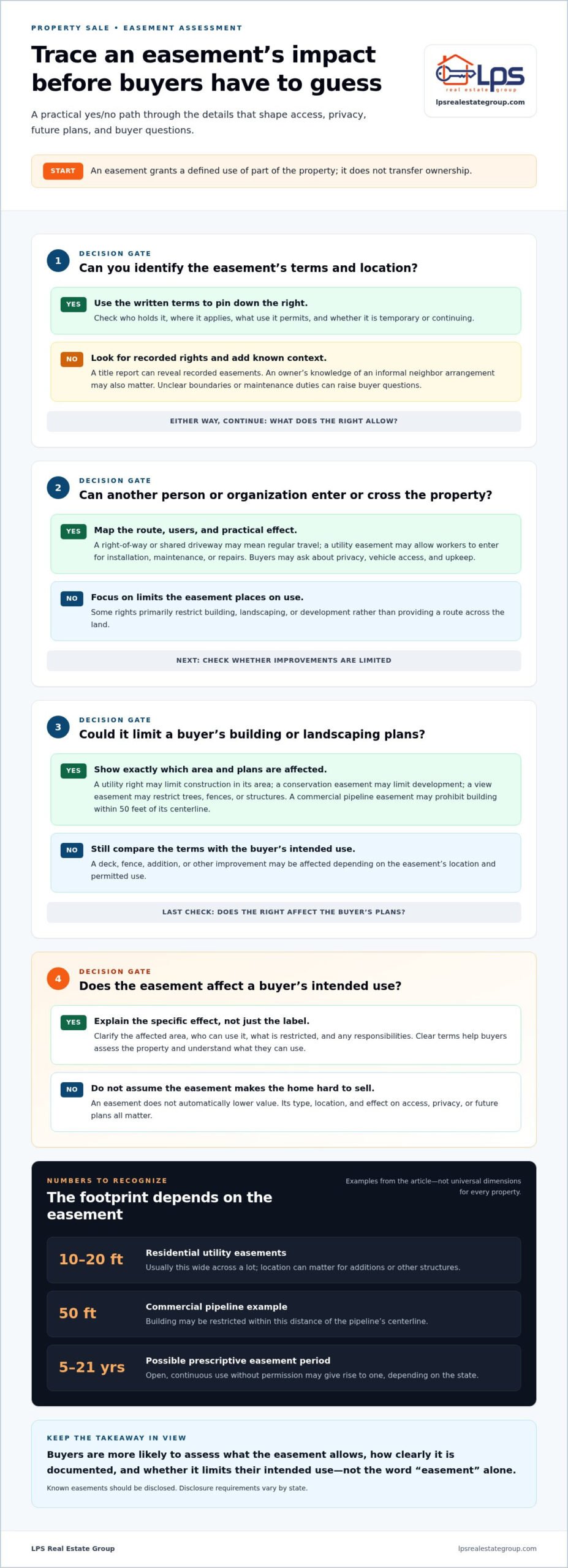
It’s understandable to worry that buyers will view an easement as a drawback. In practice, they’re more likely to focus on what the easement allows, how clearly its terms are documented, and whether it limits their intended use of the property. A utility easement, for instance, raises different concerns from a shared driveway or a restriction on building.
This article explains what an easement means, how it can affect buyer interest and property value, and which professionals can help clarify its terms. It also explores when a direct, as-is sale may be an option if an easement creates uncertainty or makes a traditional sale more complicated.
Key Takeaways
- An easement gives someone else a defined right to use part of a property, without transferring ownership; its terms and location shape what it means for a sale.
- Access and utility rights can affect privacy or limit plans for fences, additions, and other improvements, so clear documentation helps buyers understand the property.
- Title searches, surveys, attorneys, and appraisers can each help clarify easement boundaries, obligations, and potential effects on value.
- An easement doesn’t reduce every property’s value by the same amount; its type, location, and effect on use all matter.
- When an easement makes a conventional sale more complicated, an as-is cash sale may offer another route to consider.
What is an Easement in Real Estate?
An easement gives another person, company, or organization a specific right to use part of your property without owning it. Sellers should disclose known easements. Disclosure requirements vary by state, so the rules that apply depend on where the property is located.
Common Easement Types
Utility, access, private, and conservation easements grant different rights or impose different limits on specific parts of a property. A utility company may need access to maintain lines, while a neighbor’s access easement may allow passage across a driveway. A private easement can grant a defined use to a person or entity, and a conservation easement may limit development to protect natural areas.
These distinctions matter because an easement doesn’t transfer ownership, but it can shape how the owner uses the affected land. A conservation restriction, for example, may prevent building in a protected area, while a utility right may allow workers to enter for repairs. Review the written terms to understand who holds the right, where it applies, and what use it permits.
Easements may be recorded in property documents, but an owner may also know about an informal arrangement with a neighbor. A prescriptive easement may arise after open, continuous use without permission for 5-21 years, depending on the state. Knowing how an easement began can help explain its scope and why a buyer may ask questions about it.
Right-of-Way and View Easements
A right-of-way easement allows someone to travel across another person’s property, often to reach a nearby home or road. A view easement protects a neighbor’s scenic view by restricting construction or landscaping. Both can affect a buyer’s plans: a shared route may bring regular traffic, while a view restriction may limit changes to trees, fences, or structures.
Consider a shared driveway that crosses the edge of a yard. The easement terms may define who can use it, but unclear boundaries or maintenance responsibilities can make the arrangement harder to assess. For a view easement, the permitted height or location of landscaping may matter. Buyers may want to know whether the rights are permanent and how they affect future improvements.
Some easements are temporary, such as those granted for construction, and typically have a set expiration date. That differs from a continuing right-of-way, which may remain in place under its terms. Clear documents help distinguish a temporary access need from an ongoing right that will affect the property after a sale.
Utility and Commercial Easements
A utility easement gives utility companies access to install, maintain, or repair lines for services such as water, electricity, gas, or telecommunications. Residential utility easements are usually 10 to 20 feet across a lot. Their location can matter if a buyer hopes to add a structure or change the affected area.
Commercial easements can also grant rights for infrastructure serving a business or wider area. For example, a commercial pipeline easement may prevent building within 50 feet of its centerline. That restriction could influence where a buyer places an addition, outbuilding, or other improvement. The easement document and mapped location clarify what land is affected and which activities are restricted.
Utility access doesn’t mean a company owns the land. The property remains privately owned, but the easement grants specific use rights. Before a sale, understanding the purpose, location, and terms helps explain how the right works. Those details give buyers a clearer picture of the property’s usable area and help prevent confusion about future plans.
Easement-related concerns affecting privacy and resale
An easement can affect privacy, property use, buyer interest, and the terms of a sale. Its practical impact depends on the rights granted and the part of the property they cover.
Effects on Ownership and Property Use
An easement limits some uses of land while ownership remains with the property owner. For example, an access right can allow another person to cross a yard, while a utility right can allow workers to enter for repairs.
These rights can affect daily routines and future plans. A buyer hoping to build a deck or fence might find that the easement area limits where it can go. A shared driveway can also raise questions about vehicle access, privacy, and upkeep. Clear terms help buyers distinguish what they own from what another party is allowed to use.
Known easements should be disclosed to buyers. A title report can reveal recorded rights, while a seller’s knowledge of informal arrangements with a neighbor can add important context. Leaving an easement unexplained may create uncertainty during negotiations or complicate the transaction.
Easement Types and Sale Impacts
Different easements affect a sale through varying limits on access, privacy, or development. A utility easement can restrict construction in a defined area, while a conservation easement may limit development to protect natural land.
A right-of-way can mean regular travel across the property, which may concern buyers who value privacy. A view easement can restrict landscaping or construction to preserve a neighbor’s view. The specific location matters: a route along a lot’s edge may affect use differently from one that crosses a yard or driveway.
Buyers may also ask whether an easement is permanent, who can use it, and whether responsibilities are clearly defined. Unclear boundaries, outdated terms, and access rights shared by multiple people can raise concerns. Explaining the easement’s practical effect helps buyers assess the property without assuming every easement has the same impact.
Financing and Sale Difficulties
An easement doesn’t automatically prevent a home sale, but its terms can complicate a transaction. Financing can become harder if access rights, property use, or title questions affect how a lender evaluates the home as collateral.
Buyers and lenders may focus on whether the property has practical access, whether the easement is recorded, and whether restrictions limit intended use. A title review can identify recorded rights and help clarify what transfers with ownership. An unresolved dispute, such as disagreement over how a right-of-way is used, can add uncertainty to negotiations.
For sellers facing added complexity, a direct sale may offer a different path. An as-is property acquisition can be relevant when the owner wants to sell without resolving every property issue through a conventional listing process.
Marketing a Home With an Easement
An agent can market a home with an easement by describing the right accurately and explaining its location and practical effect. Clear information helps buyers understand the property instead of discovering an unexpected restriction late in the sale.
Useful materials can include the recorded easement document, a title report, and a survey showing the affected area. For a shared driveway, the listing can identify the route and explain known access or maintenance arrangements. For a conservation restriction, it can describe development limits in plain language.
Accurate disclosure matters more than minimizing the easement’s presence. A buyer who understands the terms can judge whether the property fits their plans, while vague wording can prompt more questions. Sellers can also distinguish unrestricted areas from the easement area, helping buyers see how the rest of the property may be used.
Professional help from attorneys, appraisers, and title companies
A title search, property survey, attorney review, and appraisal each answer different questions about an easement. Together, they can clarify its location, terms, and possible effect on a sale.
Finding Easements in Searches and Surveys
A title search reviews public records for ownership issues, liens, restrictions, and recorded easements. A property survey shows boundaries and may identify where an easement lies. For example, a survey can help show whether a driveway or utility pole is within a recorded easement area.
Local zoning rules govern permitted land uses, while public property records can reveal recorded easements and restrictions. Compare those records with the survey: zoning may allow a structure that an easement prevents in a specific location.
Prescriptive Easements in Title Searches
A prescriptive easement may arise after someone uses property openly and continuously without permission for 5-21 years, depending on the state. Because this right can develop through use, it may not appear as a recorded easement in a title search.
A survey can show physical signs, such as a worn path or shared driveway, but it doesn’t establish the legal right by itself. If a neighbor has regularly crossed the property, describe that history to the attorney reviewing the title. The use, permission history, and location can matter when assessing a possible claim.
Reviewing Title Reports and Surveys
A title report summarizes recorded interests affecting ownership, while a survey helps locate boundaries and easements on the ground. Read them together, matching each recorded description to the mapped area and noting any gaps.
For example, a report may identify a utility easement, while the survey shows it crossing the site of a planned addition. These professionals clarify different issues, so one document cannot replace the others.
Title Insurance, Closing, and Documentation Risks
A title search can identify recorded easements for review before closing, and the title insurance policy’s terms and exceptions show how those matters are treated. A standard home closing takes 30-45 days; a dispute or unclear document can complicate that timeline by leaving access, boundaries, or permitted use unresolved.
For buyers and sellers, key risks include disputed access, uncertain easement boundaries, outdated agreements, and unclear maintenance duties. A real estate attorney can review disclosure forms and easement terms, and may help negotiate a modification or release. Sellers benefit from resolving inconsistencies in the documents early, so buyers can understand what rights transfer with the property.
Buyer concerns about privacy and property access
A buyer may focus less on the word “easement” and more on how it changes everyday use. A right-of-way across a side yard, for example, can mean another person regularly passes near windows or outdoor living space. Buyers may also consider whether utility access brings workers onto the property or whether a route crosses an area they hoped to use for parking, gardening, or play.
Privacy concerns depend on where people or vehicles may travel and what the easement allows. A shared driveway beside a patio can feel more intrusive than one along the far edge of a lot. Buyers may want to understand who holds access rights, whether multiple people can use the route, and whether the recorded terms clearly describe its location. These details help them picture daily routines, not just property boundaries.
Access can also affect how a buyer reaches a home or uses a garage. A private road or shared driveway may provide an important route, but unclear rights can raise questions about reliable passage. Maintenance adds another practical concern: if an agreement doesn’t explain who handles repairs, buyers may worry about future disagreements. A clear understanding of access and upkeep helps distinguish a workable arrangement from an uncertain one.
Physical features can make easement limits easier to notice during a viewing. A utility pole, worn path, or driveway crossing the lot may prompt questions about where the easement runs. Buyers may also consider whether restrictions affect fences, pools, decks, additions, covered porches, or outbuildings. For instance, a planned fence might conflict with access rights, while an addition could fall within a restricted area.
Unclear locations, outdated agreements, and privacy impacts can make buyers hesitate, especially when documents don’t match visible conditions. Sellers can reduce confusion by explaining known uses and sharing relevant property documents early in discussions. For example, identifying a shared driveway helps buyers understand access before making plans. Clear information also gives buyers a better basis for weighing the easement against the home’s layout and intended use.
A buyer’s concern isn’t always a reason to abandon the purchase. Some may accept a defined utility or access right if it leaves their plans intact. Others may reconsider if several users cross a private outdoor area or the agreement leaves maintenance unclear. The practical effect on privacy and access, rather than the label alone, determines how the easement fits the buyer’s needs.
Easement impact on property value
An easement can affect value, but the impact depends on its type, location, and effect on the property. A narrow utility corridor along a lot’s edge may matter less than access rights crossing a private yard or restrictions that limit useful building space. The key question isn’t simply whether an easement exists, but how it changes a buyer’s practical use of the home.
Why Easement Types Matter to Value
An easement’s effect on property value can vary depending on its type, location, and impact. A personal easement in gross may reduce value by 2-10%; a prescriptive easement may reduce it by 10-20%. Commercial easements in gross may have a larger effect, estimated at 10-25%.
These ranges are estimates, not a fixed deduction from every property’s price. A utility easement outside the home’s usable yard may have a different effect from one that limits a planned addition. Likewise, a right-of-way affecting privacy or driveway access may matter more than a right that rarely changes daily use.
What Buyers and Appraisers Weigh
Location matters. An easement across land needed for a garage, pool, or addition can make the property less appealing to buyers with those plans. A restriction at the far edge of the lot may leave the home’s main outdoor space unaffected. The rights granted, area involved, and effect on access or privacy all shape the assessment.
An appraiser considers the easement alongside the property’s other features and relevant comparable sales. For example, two similar homes may differ in value if one has unrestricted access and the other shares a driveway with unclear maintenance duties. Easement documents and a survey help show what land is affected; the impact depends on the actual limits, not just the document’s label.
Buyers also consider whether an easement narrows future choices. A commercial pipeline easement that prevents building within 50 feet of its centerline could matter if that area is important for an expansion. A personal easement in gross is rarely transferable to a buyer, so its terms and transferability can shape how buyers understand the property’s future use.
Setting a Defensible Sale Price
For a seller, a useful valuation starts with the easement’s location, permitted uses, and restrictions. Compare those details with how buyers can use the rest of the property, then consider comparable sales and an appraisal if the easement has a substantial effect. A transparent explanation helps buyers assess the home based on its actual limitations rather than assumptions.
If an easement complicates a conventional sale, explore an as-is property sale as another option for selling without undertaking renovations.
LPS Real Estate Group: Cash Home Buying
LPS Real Estate Group offers cash home buying and as-is property acquisition for homeowners who want to sell without making easement-related repairs or preparing the property for a traditional listing. If access rights, title questions, or restrictions complicate a sale, a direct purchase may provide another option to consider. Creative finance solutions may also suit some property situations. The right approach depends on the home and the seller’s circumstances, so it’s helpful to understand the easement’s terms and disclose what you know. For homeowners dealing with foreclosure concerns, a foreclosure prevention purchase may also be relevant.
If you’re considering a direct sale, contact LPS Real Estate Group to discuss your property and receive a no-obligation offer.
Choose a Sale Path That Fits Your Priorities
The challenges of selling a house with an easement can make the next move feel complicated, but you can choose a path based on your priorities: preparing the property, clarifying the easement’s terms, or selling as-is. Consider how much time and effort you’re comfortable putting into the sale, then weigh that against your plans for the home.
If a traditional sale feels difficult to manage, LPS Real Estate Group offers cash home buying and as-is property acquisition. Homeowners facing foreclosure concerns can also consider its foreclosure prevention purchase. With no repairs, commissions, or hidden costs, these options offer another way to sell while accounting for the property’s circumstances.
You don’t need to settle on a decision before discussing your situation with LPS Real Estate Group. Share your property details to receive a no-obligation offer, then choose a closing date that works for you.
Contact LPS Real Estate Group to discuss your property and consider your next step with clarity.
Frequently Asked Questions
What Is an Easement on a Property?
An easement gives another party a limited right to use part of a property without owning it. For example, a utility company may have the right to reach equipment, or a neighbor may cross a driveway to access their home. The written terms define the right’s purpose and boundaries. The key point for a homeowner is that the land remains privately owned, even though specific uses may be shared or restricted.
Are all easements permanent?
No. Some easements are temporary and include an expiration date, such as an agreement allowing access during construction. Others continue under their written terms. In many cases, easements are permanent unless the agreement says otherwise. Before assuming a right has ended, review its document for duration, conditions, and termination language. The type of easement and how it was created also affect whether it continues.
Can an easement be removed?
Sometimes, but removing an easement depends on how it was created and whether the parties agree. Parties may mutually agree to remove an easement; in rare cases, removal may be possible if the need for it no longer exists, and legal action is typically required. A real estate attorney can review the document and explain whether its terms support a release or modification.
What’s an Easement and How Does It Affect Your Sale?
An easement is a specific use right affecting part of a property, and it can influence how buyers assess the home. The challenges of selling a house with an easement often come down to practical questions: Where does the right apply? Who can use it? Does it limit the buyer’s plans? Clear answers help buyers compare the home with their needs and understand the rights that come with ownership.
What types of easements commonly affect residential properties in the United States?
Residential properties commonly have utility easements, access or right-of-way easements, and conservation easements. A utility easement can provide access to service lines, while a right-of-way can allow passage across a lot. Conservation easements may restrict development to protect land. Private agreements can also grant a neighbor a defined use. The actual document matters because similar labels can cover different locations and permitted activities.
How can a seller find and verify easements on a property?
Start with a title search and compare its findings with a current property survey. The title search reviews public records for recorded easements; the survey can show boundaries and may map easement locations. Also consider known informal arrangements, such as a neighbor regularly using a path. If physical use and recorded documents don’t align, share that history with a real estate attorney for review.
How does an easement affect a home’s market value and sale price?
An easement affects value through its practical limits, not its name alone. A buyer may value a home differently if the easement blocks a planned garage, reduces usable outdoor space, or creates uncertainty about access. A valuation can compare the property’s usable areas, easement terms, and comparable sales. The clearer the effect on a buyer’s intended use, the easier it is to explain the asking price.
What documents should a seller provide about an easement?
Useful documents include the recorded easement agreement and amendments, a title report, and a survey showing the affected area. If an arrangement is informal, provide relevant written communications and accurately describe what you know. Include available information about access and maintenance responsibilities, such as a shared driveway agreement. Disclosure forms also matter because state requirements vary; a real estate attorney can review them before the sale.