

What if selling your home didn’t mean receiving all the money at closing? If you’re asking, “how does owner financing work for the seller,” the key trade-off is straightforward: you receive some or all of the purchase price over time instead of receiving all the proceeds upfront, and you take on the role of creditor. Weigh the potential income from payments against the risk of late or missed payments, as well as the possibility that a balloon balance won’t be paid when due.
Owner financing can give a buyer who can’t use traditional financing another way to purchase a home. For the seller, though, the terms, legal documents, and protections need careful attention. An existing mortgage, the way the debt is secured, and the tax treatment can all affect whether the arrangement suits your situation. Review those details before agreeing to a deal.
This guide explains how seller-held financing works and what to consider, including the down payment, interest rate, payment schedule, default protections, and any balloon payment. It also compares financing over time with a direct sale, including an as-is purchase, if a more defined closing and access to proceeds are higher priorities. LPS Real Estate Group buys residential properties directly and offers creative-finance solutions, giving sellers options to consider without assuming one structure suits everyone.
Key Takeaways
- Learn how does owner financing work for the seller, from negotiating terms to receiving and managing payments over time.
- Compare seller financing with a cash sale by weighing possible interest income against delayed access to proceeds and ongoing payment risk.
- Use a practical checklist to assess the buyer, title, payment plan, and written documents before agreeing to the arrangement.
- Consider whether a balloon payment has a realistic repayment or refinancing plan, rather than relying on a future promise.
- Compare a direct property sale or another tailored exit strategy if you want proceeds at closing and less ongoing involvement.
What Does Owner Financing Mean for the Seller?
Owner financing is a sale in which the seller accepts repayment over time and remains the buyer’s creditor under agreed terms. Instead of receiving all the sale proceeds at closing, the seller receives a down payment, if negotiated, and later payments according to the agreement. Some of the property’s value therefore remains tied to the buyer’s future payments rather than becoming immediately available cash.
In a conventional sale, the buyer typically gets funds from a mortgage lender, and the seller receives the agreed proceeds at closing, subject to transaction costs and any debts to be paid. With seller financing, the seller provides credit for some or all of the purchase price. The buyer’s ownership and the seller’s security rights depend on how the transaction is structured and documented. The seller generally remains a creditor, not necessarily the owner of the home.
So, how does owner financing work for the seller in practical terms? The seller gives up immediate access to some proceeds in exchange for a contractual right to collect payments over time. Those payments may provide income, but the seller depends on the buyer to follow the agreed schedule.
What does the seller receive, and when?
The payment arrangement is negotiated, not automatic. A buyer may pay part of the price upfront, then make scheduled payments that include principal and interest. The agreement sets the amounts, timing, interest rate, and repayment period. Some deals include a final balloon payment, while others use a different repayment structure.
For example, the seller and buyer might agree to a down payment at closing followed by monthly payments. The seller receives the down payment then and collects the remaining balance over time. In a conventional cash sale, by contrast, the seller generally receives the remaining sale proceeds at closing. The actual timing and size of payments depend on the negotiated terms, so consider not only the total price but also when you can use each portion of the proceeds.
Why might a seller consider financing?
Owner financing may give a buyer who can’t obtain conventional financing another way to purchase a home. That can widen the range of potential buyers, though it doesn’t guarantee a sale or a particular price. The seller may also value the opportunity to negotiate the down payment, interest, schedule, and repayment period.
That flexibility comes with a trade-off. The seller doesn’t receive all proceeds upfront and may need to track payments and respond if one is late or missed. Payments can provide a stream of income, but they aren’t the same as cash in hand: access to the balance depends on the contract and the buyer’s ability to pay. Before choosing this route, consider whether delayed proceeds fit your plans and financial needs. A direct property sale, including an as-is purchase, may be a better comparison if receiving proceeds at closing matters more than collecting payments over time.
How Does Owner Financing Work for the Seller, Step by Step?
Seller financing involves several decisions, from reviewing a buyer’s proposal to tracking payments after closing. The exact process and documents can vary by transaction and location. Working through each stage helps clarify what you’re agreeing to, what needs to be documented, and when you can expect to receive funds.
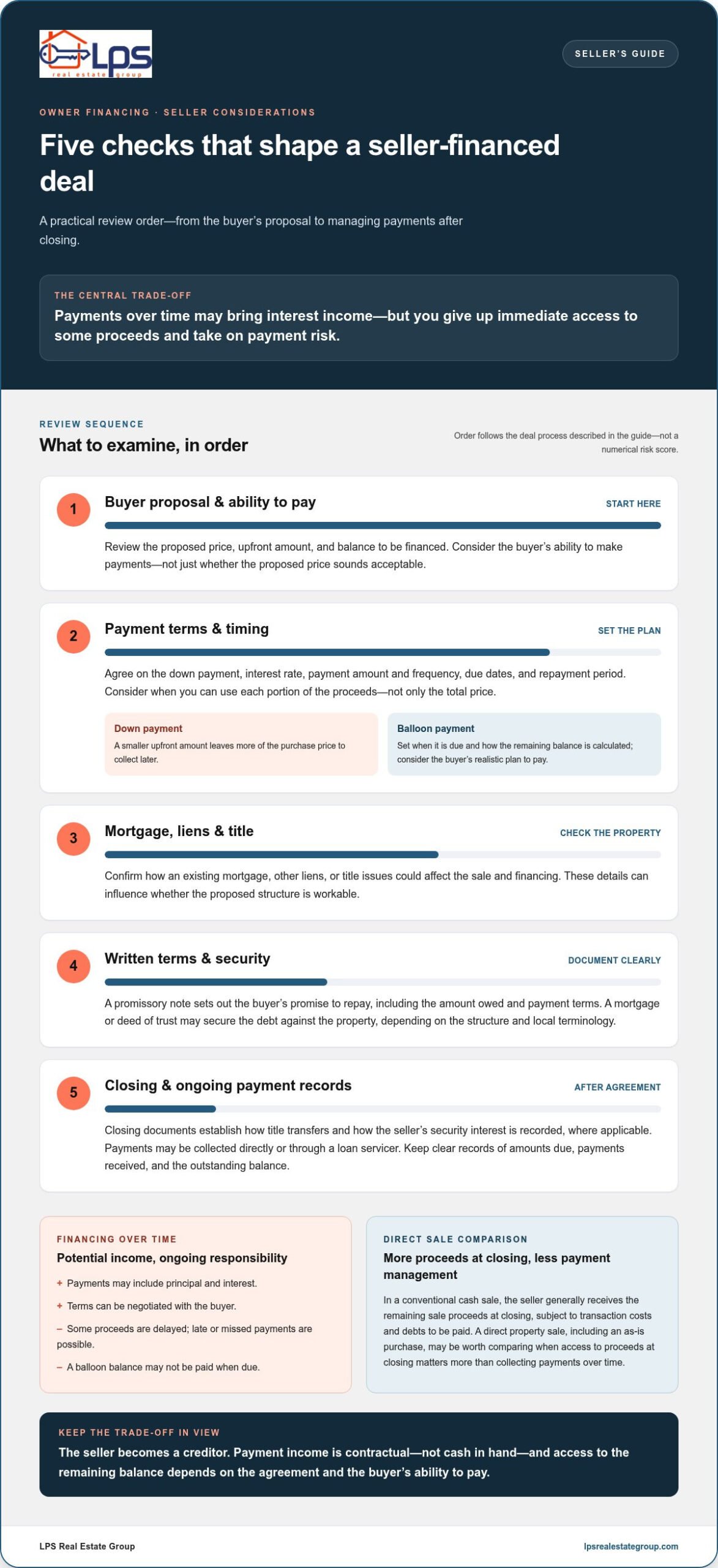
- Discuss the buyer’s proposal. Review the proposed purchase price, how much the buyer can pay upfront, and the balance they want to finance. Consider the buyer’s ability to make payments, not just whether the proposed price sounds acceptable.
- Negotiate the financial terms. Agree on the down payment, interest rate, payment amount and frequency, due dates, and repayment period. If there’s a balloon payment, establish when it’s due and how the remaining balance will be calculated.
- Check the property and transaction details. Confirm how an existing mortgage, other liens, or title issues could affect the sale and financing. These details can influence whether the proposed structure is workable, so include them in your review before committing.
- Prepare and review the documents. A promissory note sets out the buyer’s promise to repay, including the amount owed and payment terms. A mortgage or deed of trust may secure that debt against the property, depending on the structure and local terminology.
- Close and administer payments. The closing documents establish how title transfers and how the seller’s security interest is recorded, where applicable. Payments may be collected directly or through a loan servicer. Keep clear records of amounts due, payments received, and the outstanding balance.
Agreeing on the financial terms
There’s no single set of terms that fits every seller. Consider the price, down payment, interest, payment dates, loan term, and any balloon provision as parts of one plan. A lower down payment, for example, means more of the purchase price remains to be collected later. A balloon creates a larger amount due at a set time, so consider whether that timing suits your needs and whether the buyer has a realistic plan to pay it.
Compare the expected payment schedule with your own income needs. Work out how much you’ll receive at closing, what you’ll rely on receiving each month, and when the remaining principal is due. The sale price alone won’t tell you whether the cash flow works for you.
Documenting and administering payments
The signed documents, not verbal expectations, define the repayment obligations. A servicing company may help collect payments, maintain records, and provide account information, but the arrangement and each party’s responsibilities should be clear in writing. Keep copies of the signed note and security documents, along with records of payments and communications about the loan.
Title transfer and lien structure can have important legal effects, and names and procedures differ by jurisdiction. Have a qualified real estate attorney review the documents and explain how they address any existing mortgage before signing. If you’re comparing an installment arrangement with a direct property sale, LPS Real Estate Group’s property sale and creative-finance options offer another path to consider.
Owner Financing vs. a Cash Sale: What Does the Seller Trade?
A cash sale generally turns the agreed sale proceeds into funds at closing; owner financing spreads repayment over time and leaves the seller relying on the buyer to pay. That difference matters more than the possibility of earning interest. A higher total amount collected over time may not meet your immediate cash needs, and scheduled payments aren’t guaranteed until received.
Here’s how the two approaches compare from the seller’s perspective. A direct sale’s actual proceeds depend on transaction costs and any mortgage or other obligations paid at closing.
| Consideration | Owner financing | Direct cash sale |
|---|---|---|
| Timing of proceeds | Some funds may be paid upfront, with the balance collected over time. | Proceeds are generally paid at closing, after applicable costs and payoffs. |
| Ongoing involvement | The seller may need to track payments, maintain records, and address missed payments. | Once the sale is complete, the seller generally has fewer payment-related duties. |
| Payment risk | The buyer could pay late or default, leaving the seller to manage the debt issue and pursue remedies under the agreement and applicable law. | The seller doesn’t depend on future buyer installments after receiving the closing proceeds. |
| Flexibility | The parties can negotiate financing terms, subject to legal and practical limits. | The transaction centers on the agreed sale and closing terms, rather than a seller-held repayment plan. |
When payment flexibility may matter more than immediate proceeds
Installments may be worth considering if you can manage without the full balance at closing and prefer the possibility of receiving principal and interest over time. Negotiated terms may also help structure a transaction for a buyer who can’t use conventional financing. But a buyer’s financing challenge doesn’t automatically make seller financing a good fit for you.
Start with your own cash-flow needs. Consider whether you need sale proceeds for another purchase, debt, or near-term expenses, and whether the proposed payment schedule would support your plans. Treat possible interest income as one part of the comparison, not as a substitute for funds you need now.
When a direct sale may fit the seller’s priorities
A direct sale may better suit a seller who values receiving proceeds at settlement and having fewer ongoing payment duties. An as-is sale can also reduce the need to prepare the home for listing or complete repairs before selling, though the terms still depend on the specific transaction.
If you’re comparing these priorities, the article Sell My House Fast for Cash: The Definitive 2026 Homeowner’s Guide explores selling a house fast for cash as another approach. LPS Real Estate Group buys residential properties directly and offers tailored creative-finance solutions, so sellers can compare a direct acquisition with a financing structure without assuming one option works for everyone.
How Can a Seller Reduce Risk in an Owner-Financed Sale?
Understanding how does owner financing work for the seller also means looking beyond the promised payments. A careful review can help you spot issues before signing, though no checklist can guarantee that a buyer will pay or prevent a dispute. Focus on the buyer’s ability to repay, the property’s title and existing debt, the payment plan, and the written terms.
- Buyer: Review appropriate information about the buyer’s income, debts, and repayment capacity. Apply the same process consistently and keep a record of the information used.
- Title and existing debt: Identify mortgages, liens, and other title issues that could affect how the transaction is structured or whether it can proceed as planned.
- Payment plan: Check that the payment amount and schedule are realistic for the buyer and that the timing works for your own financial needs.
- Documents: Confirm that the written agreement clearly addresses payment terms, late or missed payments, the remaining balance, and any balloon payment.
- Administration: Decide how payments will be collected and recorded, and how you’ll track the balance and share account information.
Reviewing the buyer, title, and payment plan
A buyer’s willingness to agree to terms isn’t the same as a demonstrated ability to meet them. Use relevant, consistently documented information to assess repayment capacity, and avoid building the payment plan around optimistic assumptions about future income or refinancing. Review the property’s title and any current mortgage early, since existing obligations may affect the available structure. A payment amount that looks workable on paper still needs to fit both the buyer’s ability to pay and your need for dependable cash flow.
Give special attention to a balloon payment, which requires the buyer to pay a larger remaining balance at a specified point. Before accepting one, consider whether the buyer has a realistic repayment or refinancing plan. If that plan depends on a future loan approval, rising income, or another uncertain event, the balloon may not be paid as expected. Make sure the agreement explains when it is due and what happens if the buyer can’t pay.
Planning for missed payments and legal compliance
Before signing, have qualified professionals review which federal and state requirements may apply to the transaction, including lending, disclosure, servicing, and foreclosure rules. The agreement should describe the process for addressing missed payments, but notices, remedies, and steps to enforce the debt must follow both the documents and applicable law. Don’t assume a contract clause alone determines what you can do after a default.
Clear records matter. Keep payment histories, account statements, the current balance, and communications about any payment issue. A loan servicer may help maintain records and administer collections, but it doesn’t remove the underlying risk that payments could stop. An attorney’s review can help clarify the documents and applicable requirements; a tax professional can explain potential tax treatment. Neither review eliminates financial, legal, or payment risk.
If you’re weighing those responsibilities against a direct property sale, review property sale options with LPS Real Estate Group.
When Should a Seller Consider an Alternative Sale Through LPS?
Owner financing can make sense for some sellers, but it also means waiting for proceeds and taking on ongoing creditor responsibilities. To decide whether another route fits better, start with your priorities: receiving proceeds at closing, avoiding payment administration, or collecting payments over time. There isn’t one right answer for every property or seller.
Signs another sale structure may better match your needs
A different structure may be worth considering if you need sale proceeds for a near-term expense, don’t want to monitor payments, or would find a buyer default difficult to manage. A buyer’s financing challenge alone doesn’t make installments the right choice for you. Your own circumstances matter too.
- You need access to proceeds: Consider whether waiting for scheduled payments would disrupt other financial plans.
- You want fewer ongoing duties: Collecting payments and responding to missed installments may not fit your preferences or capacity.
- The sale has added complexity: Probate, foreclosure concerns, an inherited home, or the property’s condition may shape your priorities and the options worth comparing.
These factors don’t automatically point to one solution. They help clarify which trade-offs deserve attention before you commit to a sale structure.
Exploring a direct property sale with LPS
LPS Real Estate Group buys residential properties directly and offers tailored creative-finance solutions for different situations. A direct acquisition can be a useful comparison if you’d rather not remain responsible for collecting payments over time. LPS also purchases properties as-is, which may suit owners who prefer not to complete repairs or prepare a home for sale first. The terms and fit depend on the individual property and circumstances.
For a broader look at possible approaches, Creative Real Estate Exit Strategies: A Homeowner’s Guide to Certainty in 2026 explores how homeowners can compare paths based on their priorities. As you consider alternatives, focus on the outcome you need, not just the proposed sale price. Timing, condition, ongoing duties, and the complexity of your situation can all affect what feels manageable.
If you’re still asking, “how does owner financing work for the seller,” compare future payment obligations with the certainty you want from a sale. A direct purchase or another tailored approach may be worth considering if immediate proceeds or fewer ongoing responsibilities matter more to you.
Discuss your home-selling options with LPS Real Estate Group and consider which path best fits your property and priorities.
Choose a Sale Path That Fits Your Next Step
The question “how does owner financing work for the seller” becomes most useful when you connect it to your plans. Think about when you’ll need the proceeds, how much uncertainty you can accept, and whether staying involved in payments fits your priorities. Those answers can help you compare options without feeling pressured to choose a structure simply because it works for a buyer.
If your situation is complex, a clear conversation about your goals can help bring the available paths into focus. LPS Real Estate Group takes a transparent, seller-focused approach to discussing property sales and tailored exit strategies. You can talk through what matters most and consider a route that fits your circumstances.
Discuss your home-selling options with LPS Real Estate Group. A thoughtful next step can help you move forward with greater clarity and confidence.
Frequently Asked Questions
Can a seller offer owner financing if there is still a mortgage on the property?
Possibly, but an existing mortgage can complicate the sale and should be reviewed before you agree to terms. Check the loan documents for transfer restrictions and clarify how the lender’s lien and any payoff would be handled. Buyer payments to you don’t automatically satisfy your own mortgage obligation. A qualified real estate attorney and mortgage professional can help assess the proposed structure and potential lender implications before you sign.
Is interest received through seller financing taxable?
Interest received from buyer payments may have tax consequences, and the sale itself can affect when and how income is reported. For example, the interest portion of a payment may be treated differently from the portion that reduces the unpaid purchase balance. The details depend on the transaction and your circumstances. Keep the signed documents and payment records, then ask a qualified tax professional to explain the current rules for your situation.
Can a seller check a buyer’s credit before offering owner financing?
A seller may consider a prospective buyer’s credit history when assessing repayment capacity. The exact process should respect applicable privacy and consent requirements. Credit history is only one part of the picture: it doesn’t show every current obligation or guarantee future payments. If you’re asking how does owner financing work for the seller, remember that evaluating the buyer and setting affordable terms are related but separate decisions.
Can a buyer pay off seller financing early?
Early payoff depends on the signed agreement and applicable law. Before closing, make sure the documents say whether the buyer may prepay, whether any conditions apply, and how the payoff figure will be calculated on a chosen date. For example, the balance may include unpaid principal and interest accrued through the payoff date. Clear payoff instructions help both parties avoid confusion about the final amount and release of the seller’s security interest.
What happens if a buyer wants to sell an owner-financed home?
The buyer’s ability to sell before repaying the seller depends on the agreement, the recorded security interest, and applicable law. A sale may involve paying the remaining debt from the new transaction’s proceeds, but the specific process depends on the documents and circumstances. Address transfer, notice, and payoff terms in the original agreement. That gives everyone a clearer reference if the buyer later wants to move or sell the property.
Does owner financing require the seller to collect payments personally?
No, the seller doesn’t necessarily have to handle every payment task directly. Depending on the arrangement and applicable requirements, a loan servicer may process payments, track balances, and provide account statements. Before choosing that approach, clarify how payments will be credited, how records will be shared, and who will communicate about missed payments. Using a servicer can organize administration, but it doesn’t remove the seller’s underlying risk if payments stop.