
Selling may transfer ownership, but it doesn’t automatically erase code fines, violations, or liens. If you’re asking how to avoid fines for code violations by selling the property, start by finding out what you owe and whether a penalty has become a recorded lien. Those details can affect the buyer, title review, and closing, and the rules depend on the property’s location.
It’s understandable to hope that a sale will end the problem, especially when time or money for repairs is limited. But selling and resolving a violation are separate matters, so don’t assume an as-is sale clears either one. Before signing a contract, identify open notices, deadlines, penalties, and any recorded claims, then find out how each must be handled.
This guide explains the difference between violations, fines, and liens, and what to resolve before closing. You’ll compare correcting the issue, seeking an administrative resolution, disclosing it, or selling as-is. A direct sale may reduce repair and listing demands, but the fines and liens still need to be addressed through the applicable process.
Key Takeaways
- A code violation, an enforcement fine, and a recorded lien are different things. Identifying which applies helps clarify what needs attention before closing.
- Ask the issuing authority for written details about the case status, deadlines, and any appeal or resolution options.
- Compare correcting the issue, seeking an administrative resolution, and selling with disclosure to understand the trade-offs.
- Knowing how to avoid fines for code violations by selling the property starts with understanding your obligations. A sale alone doesn’t erase fines or liens.
- An as-is direct sale may reduce repair and listing demands, but confirm how fines or liens will be handled in the transaction.
Selling a Property With Code Violations: What Fines Can Mean
A code violation doesn’t automatically make a property impossible to sell. It does mean you should understand what the notice says, whether a penalty has been issued, and whether anything has been recorded against the property. These details can help you decide whether to correct the issue, seek a resolution, or consider an as-is sale.
A building code sets requirements for how buildings are designed, built, or maintained. These rules can support public health and safety and become enforceable through applicable laws. For background, see this explanation of building codes. A property may be cited for work done without required approval or for a condition an authority says doesn’t meet an applicable requirement. The specific rules depend on the property’s location and circumstances.
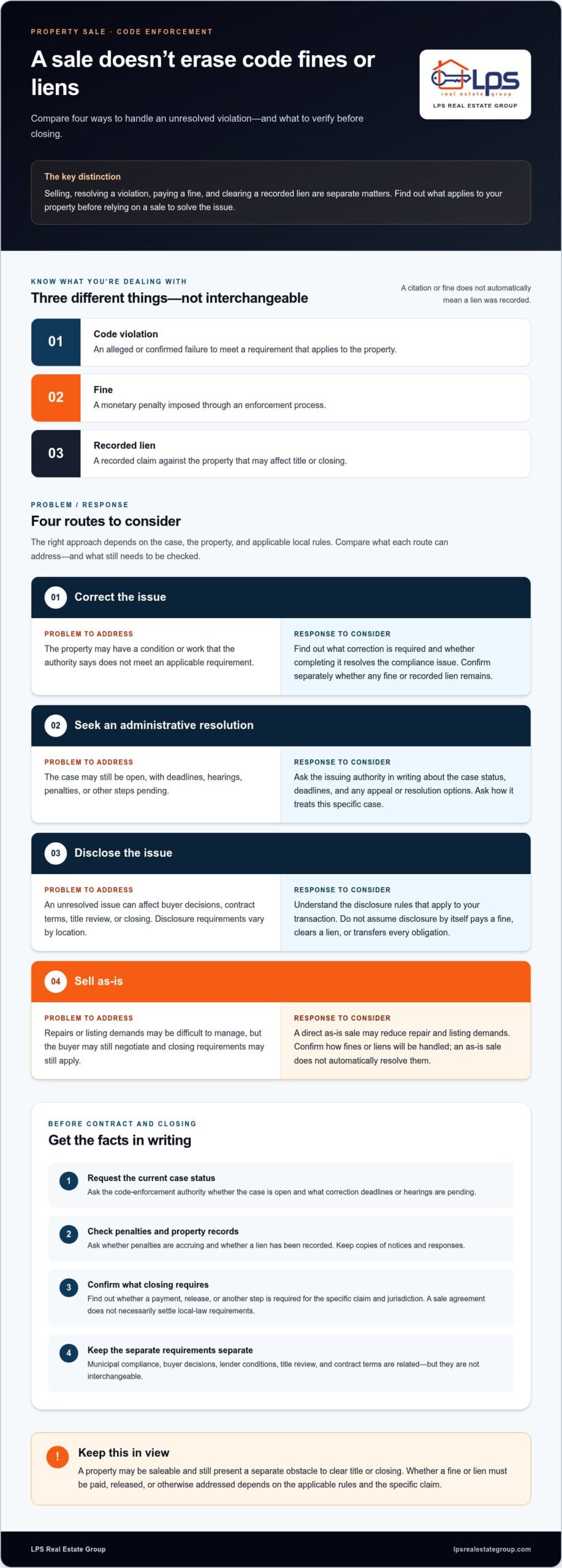
What is the difference between a code violation, fine, and lien?
A code violation is an alleged or confirmed failure to meet a requirement that applies to the property. A fine is a monetary penalty imposed through an enforcement process. A lien is a recorded claim against property that may affect title or closing.
A citation is notice of an alleged or confirmed code issue; a lien is a recorded claim that may attach to the property. A citation or fine doesn’t automatically mean a lien has been recorded. Selling the property also doesn’t automatically cancel penalties or transfer every legal obligation to the buyer. Whether a lien must be paid, released, or otherwise addressed at closing depends on the applicable rules and the specific claim.
Can you sell a property with an unresolved code violation?
A sale may be possible, but an unresolved violation can affect the terms and closing. Signing a purchase contract is different from meeting title, disclosure, or local requirements. A buyer may negotiate based on the issue, and a lender or closing agent may have requirements that affect whether the transaction can proceed. Don’t assume the buyer will accept the violation or take responsibility for penalties.
Disclosure rules and the handling of recorded claims vary by location. Before relying on a sale to address an enforcement case, find out whether the notice is still open, whether a fine has been imposed, and whether a lien appears in the property records. These facts help you plan how to avoid fines for code violations by selling the property, but a sale alone doesn’t guarantee fine relief. A direct as-is purchase may reduce repair demands, while fines and liens still need to be handled through the applicable process.
How Code Violation Fines and Liens Can Affect a Property Sale
An unresolved citation can become more complicated over time. Depending on local procedures, an enforcement authority may set a correction deadline, add penalties, schedule a hearing, or record a claim if the matter remains open. Procedures vary, so don’t assume the case has stopped progressing just because the property is for sale.
Get the current status directly from the code-enforcement authority in writing. Ask whether the case is open, what deadlines or hearings are pending, whether penalties are accruing, and whether a lien has been recorded. Keep copies of notices and responses. This helps distinguish a compliance issue, such as a required correction, from a title issue involving a recorded claim.
What happens to unpaid fines when ownership changes?
There’s no single answer for every sale. The effect of an unpaid fine depends on local rules, the enforcement status, and whether the amount has become a recorded lien. Don’t assume the buyer automatically inherits a personal penalty or that your obligation disappears when ownership changes. Ask the issuing authority how it treats the specific case and request the response in writing.
The purchase contract may describe how the parties intend to handle an outstanding amount, but contract language doesn’t necessarily settle what local law requires. A sale, a fine, and a recorded lien are separate matters. Confirm any required payment, release, or other closing step for the property and jurisdiction.
Can a code violation or lien delay closing?
It can. A title review may uncover recorded liens or other property-related records that need clarification before closing can proceed. Separately, a buyer may ask for repairs, a price adjustment, or another arrangement, while a lender may have its own requirements for the property’s condition. Municipal compliance rules, buyer decisions, lender conditions, and title requirements are related, but they aren’t interchangeable.
A property may be saleable while still presenting a separate obstacle to clear title or closing. Agreeing on a sale doesn’t guarantee that the buyer’s financing, title review, or local requirements will be satisfied. Responsibility and payment arrangements depend on applicable law and the contract both parties sign.
Disclosure rules also vary. For example, a state statute requires builders of new dwellings in specified circumstances to disclose known material defects that would constitute a violation of any applicable building code. The rule applies to the circumstances described in the statute, not necessarily every seller or transaction. If repairs aren’t practical, a direct as-is sale may be an option. Selling a property as-is still doesn’t automatically resolve a fine or lien.
Fix, Negotiate, Disclose, or Sell As-Is: Compare Your Options
There isn’t one best route for every property. The right choice depends on the violation, the enforcement case, your resources, and what the buyer and closing process require. Use this comparison to identify what to find out before committing to a path.
| Option | Likely benefit | Trade-off | What to verify |
|---|---|---|---|
| Complete required corrections | May address the underlying issue and help document compliance. | Requires arranging and completing the work, which may take time. | What work is required, any deadline, and how the authority records completion. |
| Seek an administrative resolution | May clarify the case or provide a defined way to resolve or contest it. | Doesn’t guarantee that a fine will be reduced, waived, or resolved on a particular schedule. | Available appeal or resolution steps, hearing dates, and written case status. |
| Sell with disclosure | Allows you to discuss the known issue and negotiate terms with a buyer. | A buyer may request a different price, repairs, or other contract terms. | Applicable disclosure rules and how the contract addresses open cases and penalties. |
| Sell as-is | May suit an owner who can’t or doesn’t want to complete corrections before selling. | The condition remains, and fines or liens may still need separate attention. | Title findings, local requirements, and how the transaction documents address the issue. |
Contract terms can allocate responsibilities between buyer and seller, but they don’t override applicable law or automatically remove a recorded lien. Before relying on an agreement, understand what the authority requires and how any lien must be handled.
When might correcting or resolving the violation make sense?
Start with the enforcement notice. Any correction deadline, hearing, or appeal process can shape your options. Completing required work may make sense when it’s practical and addresses the cited issue. Keep permits, inspection records, receipts, and written confirmation of any agreed resolution so you have a clear record of what was completed or settled.
When might an as-is sale be worth considering?
An as-is offer may be worth exploring if repairs or correction work aren’t practical for you. “As-is” describes the property’s condition; it doesn’t cancel fines, liens, disclosure responsibilities, or other legal obligations. The sale terms and next steps depend on the property and your circumstances. For more detail, read this guide to selling a house as-is.
If you’re weighing how to avoid fines for code violations by selling the property, compare the cost and effort of addressing the issue with the terms of each sale path. A direct as-is purchase can reduce repair and listing demands, but make sure you understand how outstanding penalties or liens will be addressed. Don’t assume the sale resolves them.
How to Prepare for a Sale With Code Violations
A well-organized file can make conversations with the enforcement authority and transaction professionals more productive. Before choosing a sale path, gather your records, confirm the current status, and identify questions that need answers before you sign an agreement.
What documents should you gather before listing or accepting an offer?
Start with the paperwork you already have, then fill in any gaps:
- Gather violation notices, case numbers, and property records. Note the notice date, the named owner or property, and any stated deadline.
- Collect related records. Include hearing documents, permits, inspection reports, correction receipts, and records of payments or agreements.
- Save written communication. Keep letters and emails with code enforcement, along with notes of calls and any follow-up responses.
- Ask the issuing authority for written clarification. Confirm whether the case is open, what deadlines remain, and whether an appeal or administrative resolution is available.
Keep the documents together and flag anything that doesn’t match, such as a notice naming a prior owner or a deadline that appears to have passed. Resolving discrepancies early can help prevent confusion during the sale.
What should you clarify before signing the sale agreement?
Before committing, confirm the status of fines, liens, permits, required corrections, and pending deadlines or hearings. Share known material issues as required by applicable law and the contract. An as-is clause describes the property’s condition, but it doesn’t replace required disclosures or resolve an enforcement case.
Local rules and contract terms determine how unresolved items are handled. Review title findings and closing requirements with the professionals involved in your transaction. Clarify how the agreement addresses any identified obligation or funds at closing, and whether a recorded lien requires payment, release, or another step. Put agreed terms in writing rather than relying on a verbal understanding.
These checks make how to avoid fines for code violations by selling the property a practical planning question, not an assumption that transferring ownership will settle the case. If you’re considering a direct as-is sale while reviewing the property’s records, explore a direct property sale.
Selling With Code Violations: How to Choose a Clear Next Step
You don’t have to settle every question at once. Use a clear sequence to compare your options without assuming that a sale will erase an enforcement issue:
- Establish the status. Review notices and get written confirmation of open cases, deadlines, hearings, and recorded liens.
- Understand your obligations. Find out what the authority requires and what needs attention for the property’s title and closing.
- Compare sale paths. Weigh correction work, administrative resolution, and sale options against your time, resources, and the property’s condition.
- Proceed with clear terms. Disclose known issues as required and make sure the agreement explains how identified obligations will be handled.
This sequence turns how to avoid fines for code violations by selling the property into a more manageable question: what needs to be resolved, what can be negotiated, and which sale path fits your circumstances?
How can a direct as-is sale fit a property with open issues?
A direct acquisition can be an alternative if preparing the home for a traditional listing or completing repairs isn’t practical. LPS Real Estate Group buys properties directly and offers cash purchases and creative finance solutions. The sale structure and next steps depend on the property and your circumstances. An as-is sale may reduce repair and listing demands, but it doesn’t automatically cancel citations, fines, liens, or disclosure duties. For more background, see this guide to companies that buy houses for cash.
Keep the sale and the enforcement case distinct. A contract may describe how the parties intend to handle an obligation, but it can’t override applicable law or guarantee that a recorded lien will be cleared. Understand the case status and required closing steps before relying on a proposed sale arrangement.
What is a practical next step if you are considering a sale?
Gather your notices, case numbers, permits, property records, and written responses from the authority before comparing sale structures. Then weigh timing, repair needs, and documented obligations alongside the terms of each path. If an as-is direct sale fits what you’re considering, discuss the property and compare an option tailored to your situation. The right route depends on the seller and the property.
Discuss your property with LPS Real Estate Group to explore a potential sale path while keeping fines, liens, and legal obligations clearly in view.
Choose Your Next Step With a Clearer Picture
Selling with a code violation can still be possible, but a sale doesn’t automatically erase fines, liens, or other obligations. Start by confirming the enforcement status and deadlines, then find out whether a lien is recorded and what local rules and closing requirements apply. With those facts in hand, you can compare correcting the issue, seeking a resolution, or selling with disclosure or as-is terms.
Understanding how to avoid fines for code violations by selling the property means planning for the enforcement matter as well as the sale. LPS Real Estate Group buys properties directly and offers as-is purchases, cash offers, and creative finance solutions. For complex sale situations, the next steps can be tailored to the property and your circumstances, without assuming the sale itself will settle a fine or lien.
If you’re weighing your options, discuss a clear path for your property with LPS Real Estate Group. Review the records, understand the obligations, and explore a direct sale option that fits your circumstances.
Frequently Asked Questions
Can I sell a house with code violations?
Yes, you may be able to sell a house with code violations, but the issue can affect buyer interest, financing, title review, and closing. Whether the sale can proceed depends on the violation, local requirements, title status, and contract terms. Signing a purchase agreement doesn’t mean closing requirements are satisfied. Before agreeing to terms, establish whether the case is open and what steps the authority requires.
Does selling a property make code violation fines go away?
No, selling a property doesn’t automatically erase code violation fines or recorded liens. The result may depend on local law, the enforcement status, and what the sale documents say. To understand how to avoid fines for code violations by selling the property, request a written account of the case and any balance from the relevant authority. Review title and closing requirements too. An as-is clause alone doesn’t cancel a penalty or determine legal responsibility.
Can code violation fines become a lien on my house?
They may, depending on the jurisdiction and the type and status of the unpaid penalty. An outstanding citation or fine isn’t automatically a recorded lien, and there’s no single nationwide process. Check public property records and ask the issuing authority in writing whether a lien has been recorded, released, or remains active. Knowing the difference can help you understand what may need attention during a sale and title review.
Will a code violation stop my home sale from closing?
It may delay or complicate closing if a title review finds a lien, the local authority requires action, or the buyer or lender has conditions. Still, not every violation automatically prevents a sale. Review notices and title information early, and clarify contract terms and jurisdiction-specific requirements before proceeding. A buyer’s willingness to purchase doesn’t necessarily mean the lender, title process, or local authority will accept an unresolved issue.
Do I have to disclose code violations when selling my property?
Disclosure duties vary by state and may depend on the issue, what you know, and the transaction documents. There isn’t one answer that applies to every seller or property. Provide accurate information and review the applicable disclosure rules with an appropriate real estate or legal professional before signing or completing required forms. Don’t assume that selling as-is removes disclosure duties or makes it acceptable to leave known information out.
Can I sell my house as-is if it has code violations?
An as-is sale may be an option, but it doesn’t automatically remove disclosure duties, fines, liens, or required local approvals. Buyers and transaction professionals may still need to address title and contract requirements, and the sale terms depend on the property and circumstances. Compare an as-is sale with resolving the issue before deciding. Make sure you understand how any open enforcement matter will be handled rather than assuming the sale settles it.
Should I pay code violation fines before selling my property?
There’s no single answer for every property. The authority may require payment, correction, an appeal, or another documented resolution, and a recorded lien may affect closing. Ask the issuing authority for the current balance and case status in writing. Then review the sale implications with the professionals involved in closing before paying or negotiating. Confirm whether the amount is a fine, a recorded lien, or both, since those can involve different steps.