
The fastest way to sell a tenant-occupied duplex may not be asking tenants to move out. If you’re researching how to sell a duplex with tenants quickly, start by documenting each unit’s lease, rent, occupancy, and access arrangements. Those facts help you identify buyers whose plans fit the property and avoid preventable confusion as you compare sale options.
Existing leases, tenant coordination, and property visits can make a sale feel complicated. You don’t need to promise tenants a timeline before you understand the sale process and any rules that apply. This guide explains what records to gather, how to compare a traditional listing with a direct sale, and what to resolve before choosing a next step. Notice, access, deposits, and purchase rights can depend on state and local requirements, so verify the rules that apply to your property before making plans. A clear picture of the leases and your priorities can help you choose a practical way forward.
Key Takeaways
- An occupied duplex can still be sold. Documenting each tenancy helps you explain the property and identify buyers whose plans may fit.
- Learn how to sell a duplex with tenants quickly by organizing key property and lease details before choosing a sale route.
- Compare a traditional listing with direct acquisition based on tenant coordination, property condition, and your priorities.
- Separate practical preparation from legal questions about leases, access, notices, and deposits, which depend on applicable rules.
- Weigh speed, certainty, tenant needs, and transaction structure before deciding what to do next.
Selling a Duplex With Tenants Quickly Starts With the Right Facts
If a sale feels urgent, an occupied duplex can seem like an extra complication. But tenants don’t automatically make a property unsellable. The key is understanding how occupancy, lease terms, property condition, and your priorities fit together. Those details can shape which buyers may be interested and which sale route is manageable for you.
Start with information you can document. Create a separate record for each unit, even if both have similar rental arrangements. A consistent summary helps you explain the property to a potential buyer and catch missing or conflicting details before they cause delays.
Which duplex and tenant details should you gather first?
Gather the current paperwork and note what you know about each unit. Record whether it’s occupied, the lease type and term, rent, and any renewal dates. Collect signed leases, amendments, rent records, and deposit documentation. Add known repair needs, current access arrangements, and any conversations with tenants about a possible sale.
If a detail is unclear, flag it for follow-up instead of guessing. For example, distinguish a written fixed-term lease from a month-to-month arrangement, and note when a document is missing. Keep information organized by unit so you don’t mix up lease terms, rent, or deposit records.
Does a duplex have to be vacant before you sell?
No universal rule makes vacancy a prerequisite for selling an occupied property. But whether a property can be sold and whether a particular buyer prefers it vacant are separate questions. A buyer interested in rental income may consider an occupied duplex, while someone planning to live in one unit may prefer vacant possession. Lease terms, property condition, and the buyer’s intended use can all affect interest.
Don’t assume what happens to a tenancy at closing. Lease rights, notice, access, deposits, and sale procedures depend on the applicable rules and the documents in place. Verify the requirements for your property before making commitments. The broad overview of landlord and tenant law can provide context, but it doesn’t replace guidance specific to the property’s jurisdiction.
For a practical first pass, put the facts in one place:
- Unit A and Unit B: Record occupancy and lease details separately.
- Paperwork: Gather agreements, amendments, rent history, and deposit records.
- Property and access: Note known repair needs and existing arrangements for entering each unit.
- Communication: Record what you’ve told tenants, without suggesting a sale or move-out date you can’t confirm.
This groundwork won’t determine the outcome, but it gives you a reliable basis for comparing a traditional listing with direct acquisition. If coordinating access is a concern, include that practical factor in your comparison. Complete, unit-by-unit information helps you discuss the property clearly and decide on a next step without making premature promises.
How to Prepare a Tenant-Occupied Duplex for a Faster Sale
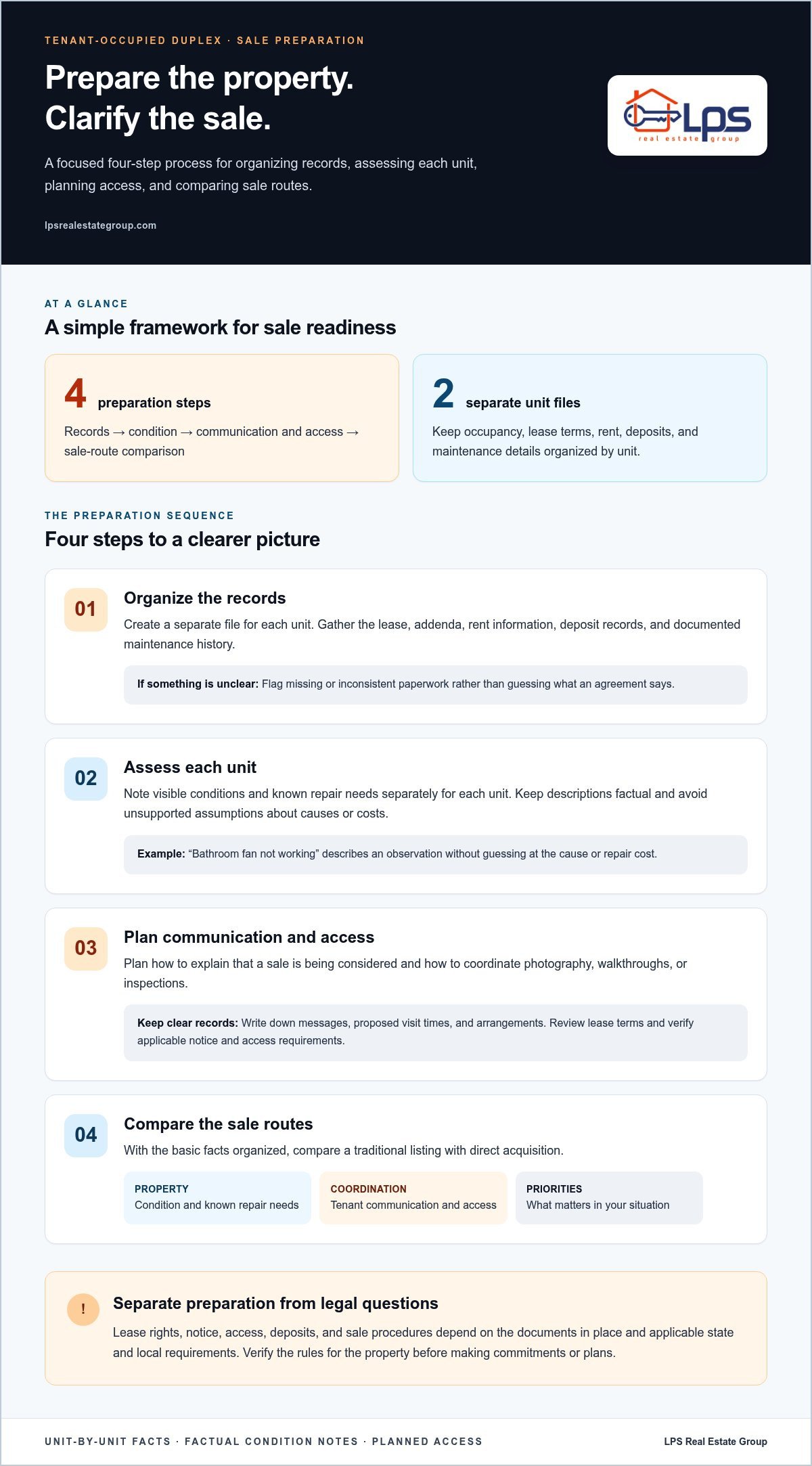
Preparing a duplex for sale doesn’t have to mean disrupting tenants or making the property look like a vacant model home. A focused process can help you answer buyer questions, identify issues, and choose a sale route that fits your situation. Work through the records first, then assess each unit, plan communication and access, and compare your options.
- Organize the records. Create a separate file for each unit with the lease, addenda, rent information, deposit records, and documented maintenance history. Flag missing or inconsistent paperwork rather than guessing what an agreement says.
- Assess each unit. Note visible conditions and known repair needs separately. Keep descriptions factual, such as “bathroom fan not working,” rather than making unsupported assumptions about the cause or cost.
- Plan communication and access. Decide how you’ll explain the sale process and coordinate photography, walkthroughs, or inspections while respecting lease terms and applicable requirements.
- Choose a sale route. Once the basics are clear, compare a traditional listing with direct acquisition based on the property’s condition, your priorities, and the tenant coordination involved.
Create a clear lease and property file for both units
Make each file easy to follow, with documents labeled by unit and date. Include current lease agreements, amendments, rent records, deposit documentation, and maintenance details you can support. A consistent file helps a prospective buyer understand each tenancy and may reduce follow-up questions during review. If dates or terms don’t line up, note the discrepancy and find accurate records before presenting the information as settled.
Keep condition notes separate from lease documents. Record visible concerns, completed repairs, and items that may need attention, but don’t present estimates as confirmed facts. Tenants shouldn’t be expected to stage, renovate, or take on sale-preparation work. If the property needs work, this guide to selling a house as-is can help you consider how condition may factor into your approach.
Plan tenant communication and property access carefully
Tell tenants calmly that you’re considering a sale, and don’t imply that the sale automatically ends their tenancy. Before arranging photography or visits, review the lease and verify the state and local requirements for notice and access. Don’t assume the same notice period applies everywhere. Keep a written record of messages, proposed visit times, and arrangements so everyone has a clear reference.
Use plain language and avoid implying that tenants must agree to a particular schedule. For general context on tenant advocacy and tenant rights, the National Renters Authority discusses the role of tenant advocacy organizations. Requirements for your property still depend on the relevant local rules.
Once your documents, condition notes, and access plan are in order, you’ll have a firmer basis for deciding how to sell a duplex with tenants quickly. If coordinating a traditional listing feels difficult, compare it with a direct acquisition. You can explore a direct property sale as you consider an exit strategy suited to your property and priorities.
Compare Sale Routes for a Duplex With Tenants
Once you understand the leases and the property’s condition, compare sale routes by the work each involves, not just by how quickly you hope to close. A traditional MLS listing and a direct acquisition can attract different buyers and require different levels of coordination. Neither route guarantees a faster sale or a better financial outcome. The right fit depends on your priorities and the details of the duplex.
When might a traditional listing fit an occupied duplex?
A traditional listing can expose the property to buyers with different plans, including investors and people considering living in one unit. That wider pool may be useful, though buyers can have different expectations about occupancy, access, condition, and lease terms. Their interest will depend partly on what your records show and how they intend to use the property.
Plan for the practical demands of marketing, including photography, showings, buyer questions, and possible follow-up visits. Coordinating those steps around tenants takes planning and can affect their privacy. Before choosing this route, consider how much access you’re comfortable arranging, your preferred timing, and whether visits can be coordinated around tenants’ schedules while following applicable rules.
When could a direct sale be worth comparing?
A direct acquisition may suit an owner who wants to avoid some preparation and showing steps associated with a traditional listing. LPS Real Estate Group directly acquires properties through cash purchases and creative finance solutions. Compare the proposed terms and transaction structure with your needs rather than assuming a particular timeline or result.
This route can be relevant if the duplex needs work or repeated tenant access would be difficult to coordinate. LPS Real Estate Group purchases properties as-is, giving owners an option to consider without completing renovations first. The property’s condition remains part of the sale discussion. A broader overview of companies that buy houses for cash can also help clarify how direct buyers differ from a listing process.
Compare the routes using the same questions to make the trade-offs easier to see:
- Buyer fit: Which buyers may consider the current leases and intended use?
- Tenant coordination: How much photography, access, and scheduling might be involved?
- Preparation: Does the property need work, and are you willing to address it before a sale?
- Seller priorities: How do privacy, timing, certainty, and transaction structure weigh against one another?
For example, a duplex with documented leases and tenants who can accommodate planned visits may be workable to market to a broad pool of buyers. If access is difficult or repairs are a concern, compare a direct sale alongside that option. These are starting points, not guarantees. To decide how to sell a duplex with tenants quickly, weigh the likely process and buyer fit against your needs, then choose the path you can manage with clear expectations.
Avoid Delays: Resolve Lease, Access, and Sale-Readiness Questions
Small uncertainties can lead to repeated follow-up during a sale. A missing lease amendment, conflicting occupancy notes, or an assumption about access can leave buyers waiting for clearer answers. Reduce avoidable back-and-forth by separating tasks you can handle now from questions that depend on state and local requirements. That preparation supports a more informed decision about how to sell a duplex with tenants quickly, without pressuring tenants or promising access that hasn’t been arranged.
Check lease terms and tenant-related records before marketing
Review the records for both units and compare them with the current situation. Confirm that the documents identify the occupants and reflect the lease terms, amendments, rent information, and deposit records you have. If a lease is missing, dates conflict, or a detail is disputed, flag it for careful review instead of presenting an assumption as fact. Clear, consistent information helps you answer buyer questions accurately.
You can organize files, list known gaps, and prepare a unit-by-unit summary. Legal conclusions are different: before describing notice requirements, tenant rights, access rules, or other obligations, verify what applies to the property’s jurisdiction. Avoid relying on a rule you’ve heard about elsewhere, since requirements can differ by state and locality.
Set realistic expectations for showings and buyer review
Prepare a concise summary for each unit so you can give consistent answers about occupancy, lease details, and known property issues. For photography, walkthroughs, or inspections, coordinate with tenants and follow applicable requirements and lease terms. Don’t pressure residents to accommodate visits, and don’t promise buyers entry until the arrangements are properly made.
Buyer review can include questions about documents, condition, occupancy, and the transaction. The steps and pace vary, so avoid committing tenants or buyers to a fixed timeline before the details are clear. Keep a simple record of questions received, answers provided, and access discussions. That makes it easier to track unresolved items and avoid giving different answers as the sale progresses.
Before moving forward, sort tasks into two groups:
- Organize now: Reconcile available records, flag gaps, prepare unit summaries, and note access conversations.
- Verify first: Check the requirements for notices, tenant rights, entry, deposits, and any purchase rights.
- Keep open: Buyer review timing and access plans that depend on tenant coordination or transaction details.
Once you know what’s ready and what needs verification, you can compare sale routes with fewer open questions. Owners weighing alternatives can explore creative real estate exit strategies as part of the decision. LPS Real Estate Group offers direct property acquisition, including cash purchases and creative finance solutions, for owners considering a different path. Discuss a tailored property sale in light of your property and priorities.
Choose Your Next Step for Selling a Duplex With Tenants
You don’t need to settle every detail before deciding what to explore next. Start with the facts you’ve gathered, identify what matters most, and compare sale routes against the realities of the duplex. This helps you move forward without promising tenants a move-out date or assuming a buyer will accept a particular arrangement.
Match the sale route to your priorities and property facts
Ask what you most want the sale process to accomplish. Is your priority fewer preparation steps, broad exposure to potential buyers, less tenant coordination, or a transaction structure that fits your circumstances? There may be trade-offs. A traditional listing can reach buyers with varied plans, while a direct acquisition offers a different process to consider. Neither route is automatically right for every owner.
Use the property facts to make the comparison concrete. Consider who occupies each unit, what the leases say, whether the records are complete, the property’s condition, and how much access can realistically be arranged. Think about your preferred timing, too, but treat it as a priority rather than a promised closing date. A clear lease file may help explain the property to buyers, but interest and review can still vary.
A simple decision sequence can keep the next steps manageable:
- Organize the facts: Note occupancy, lease details, property condition, and unresolved questions.
- Set your priorities: Weigh timing, tenant coordination, preparation, and your preferred transaction structure.
- Compare routes: Consider a traditional listing and direct acquisition in light of those priorities.
- Discuss the path forward: Review the relevant details before communicating a timeline to tenants or buyers.
Discuss a direct sale with LPS Real Estate Group
If tenant coordination or property condition makes a traditional listing less appealing, a direct sale is another option to consider. LPS Real Estate Group directly acquires residential properties through cash purchases and creative finance solutions. The transaction structure and next steps depend on the property and your circumstances. A discussion lets you explore fit without assuming a particular price, closing date, or outcome.
Share the duplex’s occupancy, lease information, condition, and your priorities to give the conversation a useful starting point. Keep tenant communication measured until you understand the potential path and have verified the rules that apply to your situation.
If you’re ready to explore a direct-acquisition option, discuss your tenant-occupied duplex with LPS Real Estate Group. A clear conversation about the facts can help you decide what makes sense next while respecting your goals and your tenants.
Take a Clear Next Step
Your next move doesn’t have to lock you into a sale route. Use it to understand how your priorities fit the property and its tenant arrangements. If you’re still considering how to sell a duplex with tenants quickly, decide what you need to learn before making commitments: how a proposed process would work, which details need review, and what you’re ready to communicate to tenants.
A useful conversation should bring clarity, not pressure you to decide before you’re ready. Discuss the duplex, your preferred transaction structure, and the circumstances shaping your decision, then consider whether the proposed path aligns with your goals. Don’t assume a particular timeline or outcome before the details are understood.
When you’re ready to explore a direct purchase, discuss your tenant-occupied duplex with LPS Real Estate Group and your preferred path forward.
Frequently Asked Questions
Can I sell a duplex if both units have tenants?
Yes, it may be possible to sell a duplex while both units are occupied. The buyer’s plans and the terms of each tenancy can affect interest and transaction details. For example, an investor may assess the leases differently from a buyer hoping to live in one unit. Keep the two tenancies distinct in your records, and don’t tell either tenant that the sale itself ends their lease. Check applicable requirements before making commitments.
Do tenants have to agree before I sell my duplex?
Not necessarily. A tenant’s consent to the sale itself isn’t universally required, but the lease or local rules may affect other parts of the process. Selling, arranging a property visit, and ending a tenancy are separate issues. Review the lease and verify requirements before scheduling access or discussing a move-out. If an agreement or local rule may give a tenant a purchase right, account for it before proceeding with another buyer.
What if a tenant refuses access for a showing or inspection?
Don’t force entry or treat the planned sale as automatic permission to enter. Review the lease and applicable local requirements, then calmly ask what access arrangements may work. Keep a record of the request and response. If you can’t resolve the disagreement, get guidance specific to the property’s jurisdiction before trying again. A direct sale may involve a different process, but it doesn’t remove tenant protections or override applicable access rules.
Can a tenant buy the duplex before I sell it to someone else?
Possibly, if the tenant wants to buy and the situation allows it. First review the lease and any separate agreements for purchase options or other relevant terms. Some locations may also have rules that affect a tenant’s opportunity to purchase. Don’t assume a right exists or that it doesn’t. Confirm the documents and local requirements before negotiating with another buyer, so you can avoid conflicting commitments.
Will selling my duplex end the tenants’ leases?
Don’t assume it will. The effect of a sale on an active lease can depend on the agreement, transaction structure, and applicable law. Before discussing a move-out date, review the lease and verify the rules that apply to the property. If a buyer asks about occupancy after closing, describe only what you’ve confirmed. Accurate information can prevent tenants and prospective buyers from relying on different assumptions.
Should I make tenants move out before selling my duplex?
Not automatically. Keeping tenants in place may suit some buyers, while others may prefer an empty property. Asking tenants to leave can involve practical and legal considerations, so don’t promise vacancy until you’ve reviewed the lease and verified applicable requirements. Compare the access and preparation needs of each sale route with your priorities. Depending on the facts and a buyer’s plans, an occupied sale may remain an option.
How can I keep a tenant-occupied duplex sale from becoming stressful?
Keep a written record of decisions and communications, and share only information you’ve verified. For example, if a buyer asks whether a unit will be vacant, distinguish confirmed lease dates from a hoped-for move-out date. Avoid guaranteeing a sale or closing schedule to tenants. To evaluate how to sell a duplex with tenants quickly, focus on a process you can manage and expectations that remain realistic as questions arise.