

Heirs usually do not all have to agree to sell an estate home. In a probate sale, an executor or court-appointed administrator generally has authority to act, although court approval may be required and state rules differ. Selling a home to settle a family estate may also have tax consequences, so ownership details and timing matter.
When family members are grieving, decisions about a home can be difficult. This guide explains who can authorize a sale, how heir disagreements may be handled, and what changes if you sell before, during, or after probate. It also covers estate, inheritance, and capital gains tax considerations to help you understand the key steps and make informed decisions about the property.
Key Takeaways
- Read the will and property deed to identify who can make decisions about the home and whether probate authority is needed.
- Before assuming every heir must agree, understand the executor’s role and the options available if family members dispute a sale.
- Compare the timing and responsibilities of selling before, during, or after probate, including court approval and property upkeep.
- Review possible estate, inheritance, and capital gains tax implications before deciding how to handle the sale proceeds.
Who Has the Legal Authority to Sell a Probate Property?
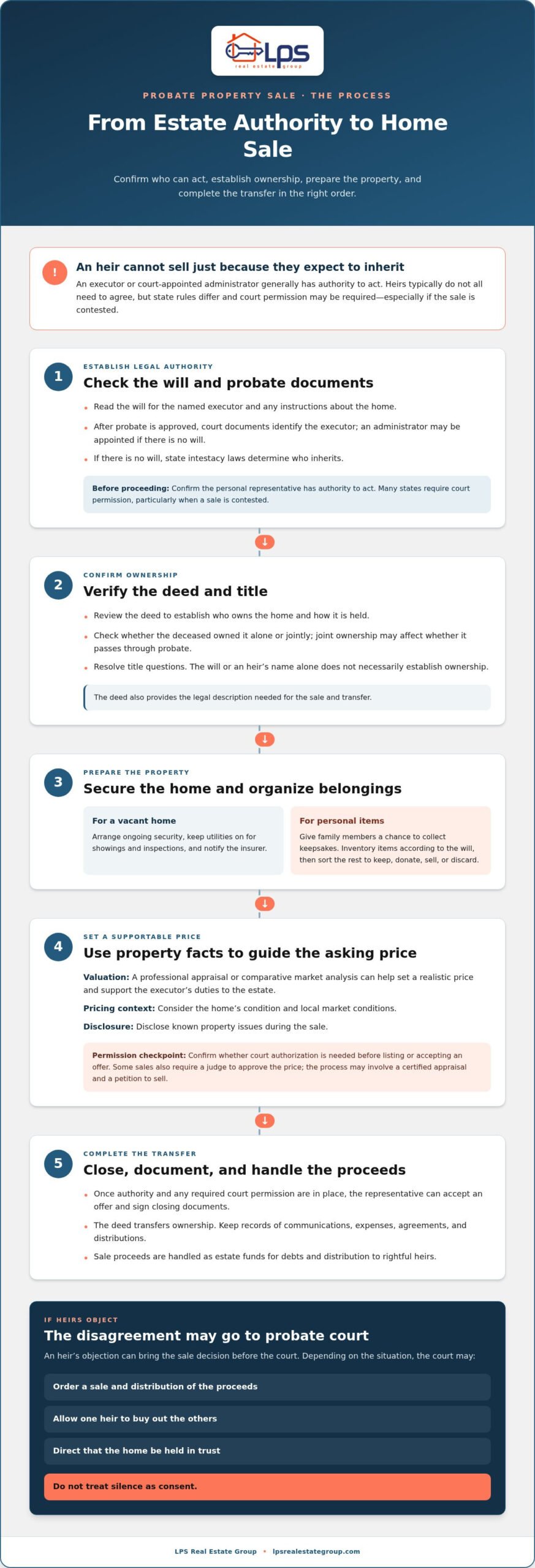
An executor or administrator generally has authority to sell estate property, but an heir cannot sell a home simply because they expect to inherit it. The steps include confirming authority and ownership, valuing the home, obtaining any required court permission, and completing the transfer.
-
Determine Authority Under the Will or Intestacy Rules
Read the will to identify the executor and any instructions about the home. Once probate is approved, court documents name the executor; an administrator may be appointed if there is no will. When someone dies without a will, state intestacy laws determine who inherits, which may differ from what family members expect. Before selling, confirm that the personal representative has authority to act. Many states require court permission, especially if the sale is contested.
-
Verify Ownership and Title
Review the property deed to establish who owns the home and how it is held. Check whether the deceased owned it alone or jointly, since joint ownership may affect whether the home passes through probate. The deed also provides the legal description needed for the sale and transfer. Resolve title questions before proceeding; an heir’s name or the will alone does not necessarily establish ownership.
- Secure the home and organize belongings. For a vacant property, arrange ongoing security, keep utilities on for showings and inspections, and notify the insurer. Give family members a chance to collect keepsakes, then inventory personal items according to the will. Sort remaining belongings to keep, donate, sell, or discard before preparing the home.
- Set a supportable asking price. A professional appraisal or comparative market analysis can help the executor price the property realistically and meet their duties to the estate. Consider the home’s condition and local market conditions. Disclose known property issues during the sale.
- Complete the sale and transfer. Once the representative has authority and any required court permission, they can accept an offer and sign the closing documents. Keep records of communications, expenses, agreements, and distributions. The deed transfers ownership, and sale proceeds are handled as estate funds for debts and distribution to rightful heirs.
Should You Work With a Probate Real Estate Agent?
A real estate agent experienced in probate can help the executor manage pricing, marketing, and negotiations. First, establish whether probate applies and whether court approval is required for the sale.
-
Choose a Probate-Experienced Agent
Choose an agent familiar with probate transactions and their paperwork. Ask how they coordinate listing details with the executor and estate attorney, prepare disclosures, assess market value, and handle negotiations. A comparative market analysis can support a realistic asking price and help the executor meet their responsibilities to the estate. Look for clear explanations, not pressure to list before authority is established.
-
Review the Executor’s Responsibilities
Write down the executor’s sale-related duties before choosing a timeline. The executor may need to liquidate estate assets, address creditor claims, and distribute what remains to rightful heirs. They should keep beneficiaries informed about the proposed price, agent, timeline, and proceeds. The executor is also responsible for disclosing known property issues and securing a vacant home while it is marketed.
-
Check Permission to Sell
Confirm whether probate court must authorize the sale before an offer is accepted. Many states require court approval, and some sales also require a judge to approve the price. If heirs object, the court may consider the executor’s reasons, the estate’s interests, and the objections. An agent experienced in probate can coordinate marketing and negotiations, but cannot replace required court permission.
-
Consider State Rules and Probate Alternatives
Identify the state where the property is located, since probate procedures vary. In Michigan, a probate attorney can help administer the estate under the will or intestacy laws, address debts and taxes, and handle title transfer. A home may pass outside probate through a living trust, joint ownership, or a transfer-on-death deed. About 30 states have adopted transfer-on-death deeds, but availability and requirements depend on state law.
If probate is underway and a direct sale may suit the estate, explore inherited-property sale options as one possible path.
Selling a House Before, During, or After Probate?
Choose the timing based on ownership and probate status. An executor typically does not need unanimous heir approval, although a contested sale may require probate-court approval. Pay estate obligations and creditor claims from the proceeds, then distribute the remaining estate funds to rightful heirs.
-
Confirm Heir Approval Requirements
Review the will and the executor’s authority before seeking signatures from every heir. An executor typically can sell estate property without unanimous consent, but an heir’s objection can bring the decision before probate court. If family members disagree, the court may order a sale and distribution of proceeds, allow one heir to buy out the others, or direct that the home be held in trust. Do not treat silence as consent.
-
Obtain Court Approval and Sale Confirmation
Ask whether the estate needs court permission before listing the home or accepting an offer. Many states require the executor to receive authorization, and some sales require a judge to approve the price. The process may involve a certified appraisal and a petition to sell. A court-confirmed sale may allow competing offers, so follow the court’s instructions before treating an offer as final.
-
Organize Sale Records and Expenses
Keep one record of communications, offers, agreements, expenses, and distributions. File receipts for property costs, such as insurance, utilities, maintenance, and closing expenses, with court and professional paperwork. Clear records help explain decisions to heirs and the court. Do not mix sale proceeds with personal funds or distribute money before estate obligations and required approvals are addressed.
-
Divide Proceeds Among Heirs and Creditors
List creditor claims and estate expenses, then track how sale proceeds are used before heirs receive distributions. The remaining funds go to the appropriate heirs under the will or applicable estate process. An attorney can help address disputed claims or unclear ownership. Common mistakes include paying heirs too early, overlooking creditors, and dividing proceeds without documenting each recipient’s share.
Estate, inheritance, and capital gains tax considerations
- Separate the tax questions. Estate tax concerns the estate, while inheritance tax may apply to a beneficiary receiving assets. State rules matter, and one U.S. state imposes both an estate tax and an inheritance tax. Identify where the deceased lived and where the home is located, then determine which state rules may apply. This helps families discuss potential obligations before dividing proceeds or making estate-planning decisions.
- Establish the home’s tax basis. For stepped-up basis purposes, an inherited home’s value generally resets to its market value at the time of death. Capital gains may depend on the difference between that basis and the eventual sale price. Keep the valuation record with the sale documents. Selling soon after inheritance or after the home’s value changes can result in different tax calculations.
- Keep tax records organized. Save the valuation, closing statement, estate documents, and records of property-related expenses. The Internal Revenue Service generally requires income tax returns to be kept for three years, with exceptions that may require longer retention. An executor should preserve records that explain the home’s value, sale, and treatment of proceeds. Organized documents can also help address family disputes over the estate’s assets.
- Consult about filings before distributing proceeds. Whether an estate tax return is needed depends on how property passes to heirs and the estate’s circumstances. Federal and state tax treatment can differ, so consider the ownership, transfer documents, sale timing, and applicable state rules together. A tax professional can apply those details to the family’s situation. If selling is the practical choice, explore an inherited-property buyout as one possible way to move the sale forward.
LPS Real Estate Group: Cash Home Buying
LPS Real Estate Group buys homes for cash and provides probate and inherited property buyouts for estate representatives considering a direct sale. If the home needs repairs or the family wants to avoid preparing it for a traditional listing, an as-is sale may be a practical option. Creative finance solutions can also provide another way to structure a property transaction.
The executor or authorized representative still needs to follow the estate’s requirements, including obtaining any required court approval, before completing a sale. A direct purchase may suit families seeking a practical option for an inherited home, but it is not the right fit for every estate, including those better served by a market listing. For a property facing foreclosure, LPS Real Estate Group also offers foreclosure prevention purchases.
If you’re weighing a direct sale for an estate property, contact LPS Real Estate Group to discuss the next step.
Choose the Next Step That Fits the Estate
The next step is to turn what you have learned into a shared plan. Before moving forward, make sure the authorized representative understands the family’s priorities, the property’s condition, and any unresolved decisions. A clear plan can reduce misunderstandings and keep decisions about the home separate from the emotions surrounding a loss.
If selling a home to settle a family estate is the right path, consider which type of sale best fits the property and the estate’s needs. LPS Real Estate Group offers cash home buying, as-is property acquisition, and foreclosure prevention purchases. A direct sale may suit an estate that wants to avoid preparing the home for a listing or needs to address a property requiring attention. These options do not replace required estate approvals or tax advice, but can be part of the sale decision.
When you’re ready to discuss a possible sale, contact LPS Real Estate Group. You can take the next step at a pace that respects both the estate’s responsibilities and your family’s needs.
Frequently Asked Questions
Do All Heirs Have to Agree to Sell?
No. An executor typically can sell estate property without unanimous agreement from the heirs. When selling a home to settle a family estate, the executor should document the reasons for the sale and keep beneficiaries informed. An objection can bring the proposed sale before probate court, where the executor’s reasons and the estate’s interests matter. Possible outcomes include a court-ordered sale, an heir buyout, or holding the property in trust.
Do you pay capital gains tax on an inherited house?
Capital gains tax may apply if the home sells for more than its tax basis. Selling a home to settle a family estate can involve comparing the sale price with the home’s basis, which generally resets to its market value when the owner dies. Keep a record of that valuation and the final sale documents. State taxes and how ownership passes can also affect the estate’s tax situation.
Should I Call an Attorney Before Selling My Family Member’s Home?
Yes. An estate attorney can clarify authority and address legal complications before a sale moves forward. This can be especially useful if the will is disputed, ownership is unclear, creditors have claims, or heirs object to the plan. In Michigan, legal guidance can help administer the estate under the will or intestacy laws and address debts, taxes, and title transfer. Bring the will and deed to the discussion.
What Does It Mean to Sell a Home in Probate?
Selling a home in probate means the property is handled as part of the deceased person’s estate while the court-supervised process is underway. The personal representative manages the sale under their legal authority and any required court oversight. For example, the estate may need court permission before accepting an offer. The proceeds remain estate funds for obligations and distribution; they do not automatically belong to one heir.
What Paperwork Will I Need to Sell My Deceased Family Member’s Home?
Gather the will, court documents naming the executor or administrator, and the property deed. The deed establishes ownership and supports the transfer to the buyer. Also organize available mortgage or lien records, property disclosures, insurance details, and documents showing estate expenses. The closing process uses the authority and title paperwork to complete the transfer. Keep copies of offers, agreements, and final sale records with the estate file.
What if there is a mortgage, loan, or reverse mortgage on the home?
Identify the loan type and gather the latest statements before planning the sale. The outstanding balance and lien information affect the title transfer and the proceeds remaining for the estate. For a reverse mortgage connected to a deceased borrower, the Federal Housing Administration is a source of information for executors. Keep loan correspondence with estate records and account for any payoff during the transaction.