

Yes, you can sell a manufactured home without land. The home is typically treated as personal property, and its title must be transferred under the process in your state. The sale may take more planning if the buyer needs to find a new site and move the home.
The logistics can feel like the hardest part. Beyond finding a buyer, park rules, lot agreements, moving arrangements, and title paperwork can all shape how the sale proceeds.
This guide explains how to sell a manufactured home without land, including how to reach potential buyers, plan for relocation, and gather title, lease, and sale documents. Sorting out these details early helps you describe the transaction clearly and avoid preventable delays.
Key Takeaways
- Start by reviewing park rules and the lot lease, since approval requirements can affect who may buy and when the sale can proceed.
- Plan for relocation early: buyers may need a new site, transport, permits, and setup, all of which can shape interest in the home.
- Find out whether the home is titled as real or personal property, then follow the applicable state process to transfer ownership.
- Gather the title, lease, lien information, and other sale records so you can address paperwork needs before closing.
Challenges of moving a home and finding a buyer
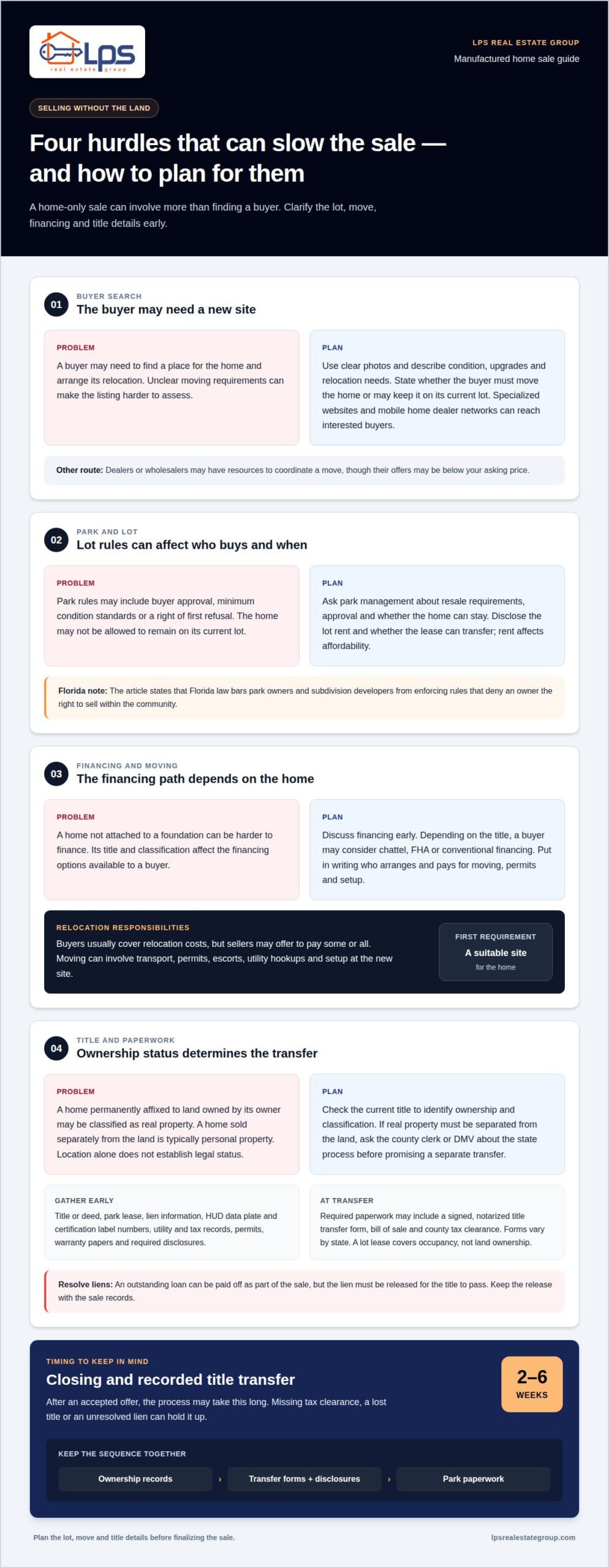
Selling without land is possible, but buyers may need to find a site and arrange the move. Address park rules, financing, and relocation before finalizing the sale.
-
Market the Listing to Qualified Buyers
Create a listing with clear photos and details about the home’s condition, upgrades, and relocation needs. Say whether the buyer must move it or can keep it on its current lot. Specialized websites and mobile home dealer networks can help you reach interested buyers. Dealers or wholesalers may also have resources to coordinate a move, though their offers may be below your asking price.
-
Address Lot Rent and Park Approval
Ask park management about resale requirements, buyer approval, and whether the home can remain on its current lot. A community may set minimum condition standards or hold a right of first refusal. In Florida, the Florida Legislature bars park owners and subdivision developers from enforcing rules that deny an owner the right to sell within the community. Lot rent affects affordability, so disclose the amount and whether the lease can transfer.
-
Coordinate Financing and Moving Responsibilities
Discuss financing early: a home that is not attached to a foundation can be harder to finance. Depending on the title, a buyer may consider chattel, FHA, or conventional financing. Its classification as personal property affects the available options. Put in writing who will arrange and pay for moving, permits, and setup. Buyers usually cover relocation costs, but sellers may offer to pay some or all of them. Moving can involve transport, permits, escorts, utility hookups, and setup at the new site. The buyer also needs a suitable place for the home.
Selling a Mobile Home Without Land: Is It Possible?
Yes. You can sell the home separately, but its title and classification affect the transfer. State dealer-license rules depend on the circumstances, including whether the sale is a private sale or dealer activity.
-
Check the Home’s Property Classification
Find the current title and identify who owns the home and the land. A manufactured home permanently affixed to land owned by its owner may be classified as real property and sold through a traditional real estate transaction. A home sold separately from the land is typically personal property. The title classification determines whether ownership transfers through a real estate transaction or a personal-property title process. Don’t assume the home’s physical location alone establishes its legal status.
-
Retitle the Home as Personal Property
If the home is classified as real property, contact the county clerk or Department of Motor Vehicles to learn how to separate its title from the land. The process may involve changing the classification and obtaining a new title from the DMV or a similar authority. Requirements vary by state, so follow the applicable process before finalizing a separate sale. Keep records of the change; the buyer will need a clear ownership document for the title transfer.
- Match the listing to the home’s classification. Describe it as a home-only sale, not a land sale or traditional house listing. Keep the ownership and title details consistent across the listing and sale documents. If the current title identifies the home and land together, resolve the classification before promising a separate transfer. This helps clarify what the buyer is purchasing and which document will convey ownership.
For dealer licensing, distinguish a private owner selling their own home from someone conducting business as a dealer. State rules and circumstances determine how that distinction applies, so don’t assume one nationwide licensing rule covers every private sale.
Titles, lot leases, and other sale documents
Organize the paperwork early to clarify ownership, occupancy, and transfer details. State forms and disclosures can vary for a home-only sale.
-
Gather Sale Documents and Disclosures
Gather the title or deed, any mobile home park lease, and records related to the home. Useful documents include HUD data plate and certification label numbers, utility and tax records, permits, and active warranty papers. Keep required disclosures with the sale documents and use the forms required in your state. If the title is missing, request a duplicate from the state DMV or applicable authority.
Selling costs vary by state and transaction. Possible expenses include title processing, outstanding loan payoff, taxes, and moving arrangements. Factor them in when setting your asking price.
-
Transfer Ownership and Title
At closing, transfer the home’s title to the buyer and complete the required paperwork and disclosures. The buyer’s filing may include a signed, notarized title transfer form, a bill of sale, and county tax clearance. Forms vary by state, so follow the applicable process rather than assuming one form works everywhere. A lot lease documents the buyer’s occupancy arrangement, but does not transfer ownership of the land.
If a loan remains, arrange its payoff and lien release before transferring the title. You can complete a sale with an outstanding loan, but the lien must be released for the title to pass. Confirm the payoff is included in the closing plan and keep the release with your sale records.
- Set a document sequence before agreeing on a closing date. Gather ownership records first, then prepare transfer forms, disclosures, and park paperwork. Closing and recorded title transfer may take 2-6 weeks after an accepted offer. Missing tax clearance, a lost title, or an unresolved lien can hold up the process, so keep each completed document together for the buyer and relevant filing office.
Selling a mobile home without owning the land
Compare selling the home alone with selling it together with land. The title, buyer’s financing, and park arrangements shape the transaction.
- Set the terms based on what the buyer will receive. A manufactured home permanently affixed to land owned by its owner may be sold as real property through a traditional real estate transaction. Without land, the buyer purchases the home alone and must arrange a place to site it. Consider the home’s condition, age, features, and relocation needs when setting the price, rather than comparing it directly with a traditional house.
- If the home is in a mobile home park, clarify whether the buyer can keep it on the lot. Park rules may affect a resale, and management may have approval requirements or a right of first refusal. In Florida, the Florida Legislature bars park owners and subdivision developers from enforcing rules that deny an owner the right to sell within the community. That does not mean the buyer automatically takes over the existing lot arrangement.
- Make the listing useful to buyers deciding whether they can complete the purchase. State whether the land is included, whether the home can stay in the park, and whether a move is expected. Financing options depend partly on title classification, and personal-property status can affect them. A dealer or mobile home dealer may also be a potential buyer; compare the convenience of that option with its offer and terms.
- For a Florida sale with a tight timeline, organize the title, park requirements, and buyer’s site plans early. A home sold without land may take 30-120 days to sell, while condition, pricing, location, and buyer readiness affect timing. If financing or timing is complicating your sale, discuss a direct sale path suited to your situation.
LPS Real Estate Group: Cash Home Buying
LPS Real Estate Group buys residential properties directly through cash offers and creative financing. For homeowners whose situation also involves a property to sell, the company offers an as-is alternative to a traditional listing, with no repairs, no commissions, and no hidden costs. Share the property details to receive a no-obligation offer.
If you’re facing financial pressure, LPS Real Estate Group also offers foreclosure prevention purchases. Creative finance solutions may suit circumstances where a straightforward cash purchase is not the right fit. The best approach depends on the property and your situation. Share details about ownership, condition, and your preferred outcome to discuss possible next steps.
Contact LPS Real Estate Group to discuss your property and possible next steps.
Choose a Sale Path That Fits Your Priorities
Decide what matters most: a manageable sale, avoiding additional property work, or addressing a time-sensitive situation. That priority can help you choose between continuing to pursue individual buyers and considering a direct purchase. A clear plan for how to sell a manufactured home without land starts with choosing an approach that fits your circumstances, not rushing into the first offer.
Before speaking with a buyer, write down your preferred outcome and the tradeoffs you can accept. For example, decide whether keeping the home on its current lot matters more than selling quickly, and whether you can accommodate the buyer’s relocation needs. This keeps discussions focused and helps you assess proposed terms against your priorities.
If the sale is connected to foreclosure concerns, LPS Real Estate Group offers Foreclosure Prevention Purchase. Contact LPS Real Estate Group to discuss your situation and take the next step at a pace that feels manageable.
Frequently Asked Questions
Can I Sell My Mobile Home to Be Moved?
Yes, you can sell a mobile home to a buyer who plans to move it. Before agreeing, clarify whether the buyer has a destination site and who will coordinate transportation, permits, and setup. Moving may require an inspection to confirm the home is safe and roadworthy. Put each party’s responsibilities in writing so neither assumes the other is handling a necessary step.
What do I need to consider when selling a manufactured home?
Consider the home’s condition, title status, remaining loan, lot arrangement, and the buyer’s plans to occupy or move it. For example, a buyer who wants to keep the home in its current park may need to meet the community’s approval process. Make the terms clear about what is included, when possession transfers, and who handles outstanding obligations related to the home.
Real property or personal property (aka chattel)?
Real property generally means a home treated as part of the land; personal property, also called chattel, is titled separately. A manufactured home permanently affixed to land owned by its owner may be classified as real property. If sold separately, personal-property title rules generally apply. The classification affects the transfer process and may influence the buyer’s financing options.
What does the bill of sale for a mobile home look like?
A bill of sale records the transaction between the seller and buyer in writing. It may accompany a signed title transfer form and county tax clearance. Use the form required for the state and transaction, and keep a copy with the title records. The bill of sale should describe the ownership being transferred and not imply that land is included.
How do you sell a manufactured home without the land?
To sell a manufactured home without land, establish its title classification and follow your state’s process for transferring ownership. Then clarify whether the buyer can stay on the current lot or must move the home. For example, a park lease may affect whether the buyer can remain. Make sure the sale documents describe a home-only transaction and exclude the land.
Is a manufactured home without land titled as personal property or real estate?
A manufactured home sold without land is typically treated as personal property, not real estate. The current title still matters: a home previously classified as real property may need reclassification before a separate sale. The process may involve obtaining a new title from the state DMV or a similar authority. The buyer should receive the ownership document required for that classification.