

To sell vacant land by owner at a fair price, compare recent sales and active listings, then assess the parcel’s access, boundaries, zoning, and potential uses. Unlike a house, vacant land may attract a smaller pool of buyers, who often want clear answers about building restrictions, easements, and utilities. A realistic asking price and accurate property details help buyers evaluate the land.
Selling without an agent can give you more control, but you’ll also manage pricing, buyer questions, showings, negotiations, and paperwork yourself. This guide explains how to sell vacant land by owner, including how to research comparable properties, decide whether an agent’s support is worthwhile, and prepare for a smooth closing. You’ll also learn which records can help buyers assess the land and where an attorney or title company may help with contracts, title work, and closing documents. With a clear plan, the process can feel more manageable, even if you haven’t sold land before.
Key Takeaways
- Build a fair asking price from comparable land sales, current listings, and the property’s potential use.
- Choose a selling approach that fits your timeline, desired control, and willingness to handle buyer outreach.
- Prepare clear property information and plan to address buyers’ questions about access, boundaries, and land use.
- Organize the sale documents and understand where legal and title professionals can help move the transaction toward closing.
Q: How can I determine the fair market price for my land?
Tax consequences depend on your cost basis, sale proceeds, holding period, and applicable federal and state rules. Property-tax adjustments may also be addressed at closing, so account for them in your planning.
A useful listing identifies the parcel, acreage, access, boundaries, zoning, known easements, and asking price. Add clear photos and relevant records, such as a survey, soil or water tests, timber records, and water-rights information.
- Gather the parcel details. Find the parcel number, legal description, tax information, and maps. The Franklin County Auditor’s real estate page allows searches by address, owner name, or parcel number. Its records include maps and recorded sales details. Treat a county tax value as a tax figure, not a sale-price estimate.
- Document the land’s features. Collect existing surveys, topographical information, easement records, zoning details, and access information. A survey can clarify boundaries and potential easements. Organize soil and water tests, timber records, wildlife censuses, and water-rights information when available. These details help land buyers assess the property before buying.
- Decide whether to sell the parcel whole. If you’re considering a subdivision, first understand how the proposed parcels would be accessed and used. A survey can help identify boundaries, while zoning rules affect what uses may be permitted. Discuss the proposed division with the county before advertising separate parcels.
- Compare similar properties. Review completed sales and current listings for nearby land with comparable size, access, features, and potential use. Completed sales show what buyers paid; listings show sellers’ asking prices. A landlocked or difficult-to-access property may attract fewer buyers and have lower value. For added perspective, request comparative market analyses from 2-3 land professionals.
- Set and explain your asking price. Weigh comparable sales, current competition, and the land’s highest and best use. Include supporting records and photos in your real estate listing. A clear document trail helps a neighbor or other buyer understand how you arrived at your pricing.
Federal and state tax rules may apply, depending on your cost basis, sale proceeds, and holding period. Property-tax adjustments may also be handled at closing.
Why is selling land different than selling a house?
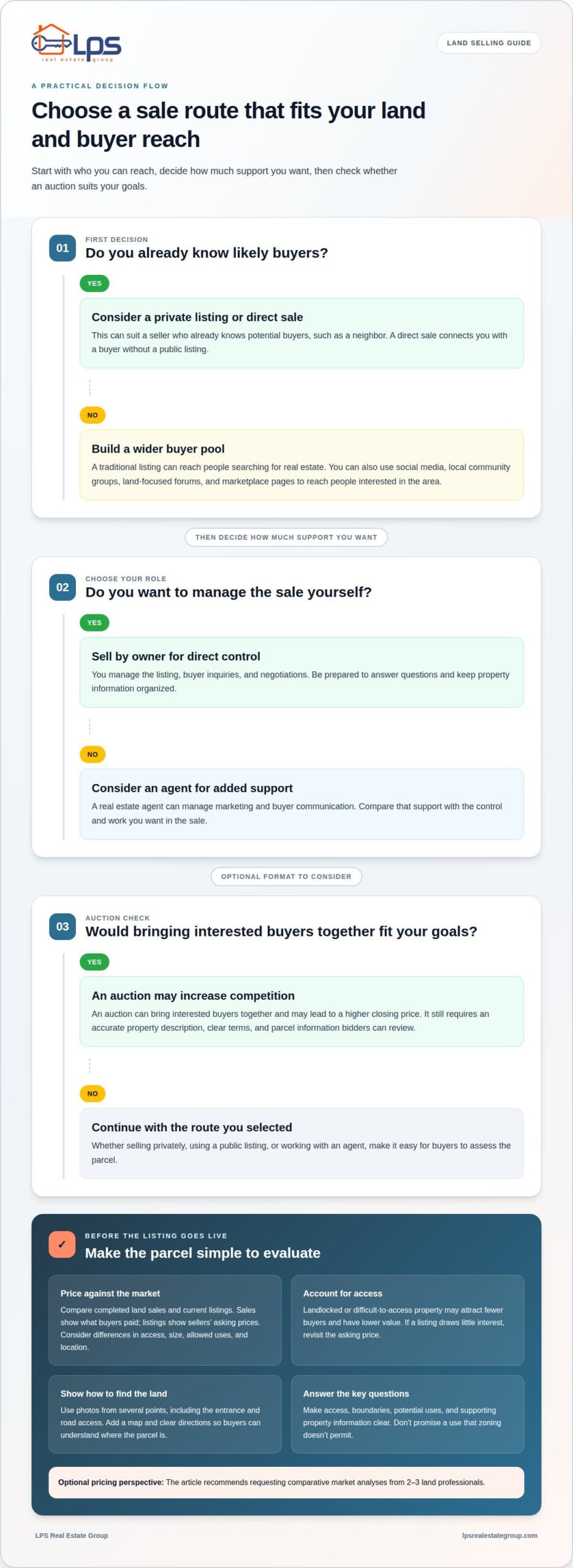
Vacant land usually attracts a smaller buyer pool than housing, so reaching likely buyers matters. Use these steps to choose a selling approach and present the parcel clearly.
- Choose who will manage the sale. Selling by owner gives you direct control over the listing, inquiries, and negotiations. A real estate agent can manage marketing and buyer communication, while a direct sale connects you with a buyer without a public listing. Compare the added work with the support you want before choosing your route.
- Match the listing method to your buyer pool. A traditional listing can put the parcel in front of people searching for real estate. A private listing may suit a seller who already knows likely buyers, such as a neighbor. Social media, local community groups, land-focused forums, and marketplace pages can also help reach buyers interested in that area.
- Consider whether an auction fits your goals. An auction can bring interested buyers together and increase competition, potentially leading to a higher closing price. It doesn’t remove the need to describe the property accurately. Set clear terms and share parcel information so bidders can assess the land before making a purchase.
- Use the market to review your asking price. Compare the parcel with completed land sales and current listings. Sales show what buyers paid; listings show what sellers hope to receive. Differences in access, size, allowed uses, and location can explain why a comparable property is not a perfect match. Revisit the asking price if the listing draws little interest.
- Make the listing easy to assess. Take photos from several points, including the entrance, road access, and notable features. A map and clear directions help buyers understand where the parcel sits. Listings can stall when buyers can’t tell how to reach the property, what uses may be allowed, or how its price compares with similar land.
Should you work with a real estate agent?
Vacant land attracts fewer buyers than housing, so focused outreach and clear communication matter. Use these steps to manage showings, identify interested buyers, and compare the support an agent provides.
-
Show the Land and Answer Questions
Show interested buyers access routes, visible boundaries, and notable features. They may ask about building restrictions, water rights, previous crops, or elevation, so keep relevant property records available. Don’t guess about land use or boundaries. A survey and zoning information can help you give accurate answers and explain what you know.
-
Handle Inquiries and Negotiate Offers
Give each interested buyer the same accurate parcel details, then compare offers against your priorities. Consider the purchase price, due diligence terms, proposed payment arrangement, and closing date, not just the price. Keep written records of offers and counteroffers. Before accepting, confirm that the terms and any disclosures reflect your understanding.
- Identify buyers by likely land use. Consider who may value the parcel’s features. A farmer may focus on soil, water, and agricultural potential. A hunter may value wildlife habitat and brush, while a neighbor may want to expand adjoining property. Tailor your outreach and answers to the buyer’s intended use, without promising a use that zoning doesn’t permit.
- Market beyond a single listing. Share the property listing through local community groups, land-focused forums, and marketplace pages. Include directions, parcel details, and photos that show access and terrain. Focused descriptions help potential buyers decide whether to arrange a showing. An agent may handle marketing and buyer communications, while an owner manages those tasks directly.
- Plan the direct-buyer closing. A cash or bank-financed land sale generally closes on an agreed date, transfers the deed, and pays the seller the full purchase price at once. The timeline depends on the agreed closing date and the steps needed for due diligence, title work, and financing. Set expectations in the purchase agreement and keep disclosure and transfer documents organized.
Land-sale paperwork and professional assistance
Organized paperwork helps clarify the agreement, title transfer, and payment at closing. Land-sale requirements vary by state, so make sure the documents match the property and transaction.
-
Gather Land-Sale Documents
Gather the purchase agreement, applicable disclosure forms, deed, and closing statement. The agreement typically identifies the price, property location, title information, due diligence terms, and closing date. Disclose known hazards or other issues as required. Keep a current survey and parcel records available to clarify boundaries or the legal description.
A deed transfers ownership from seller to buyer. Warranty, quitclaim, and special-purpose deeds offer different forms of protection. The appropriate document depends on the transaction and state requirements, so don’t choose a deed solely from an online template.
-
Use a Title Company to Close
A title company can coordinate key closing tasks, such as searching title records, arranging title insurance, holding documents and funds in escrow, and recording the deed. These steps help organize the transfer and payment and identify title matters that may need attention before closing.
Ask the title company to explain its role in your transaction and which documents it will handle. A real estate attorney can review the agreement, assess legal requirements, and guide the closing. This can be especially useful when ownership records, easements, or estate documents need careful review.
- Protect the transaction and payment. Keep signed agreements and payment instructions in a consistent, documented channel. Before sharing sensitive records or acting on changed payment instructions, confirm the details through a trusted contact method. Be cautious with online platforms that pressure you to pay upfront or bypass written sale terms.
- Coordinate the final closing documents. Confirm that the closing statement reflects the agreed transaction, and that the deed describes the property correctly. Follow the title company’s process for signing, notarization, escrow, and recording. Deed execution requirements vary by state, so use the local closing process rather than assuming one procedure applies everywhere.
For a direct conversation about your property-sale options, connect with a real estate team.
LPS Real Estate Group
LPS Real Estate Group buys residential properties directly from homeowners, with cash or creative offers, including properties sold as-is. Its options include cash home buying, foreclosure prevention purchases, and probate and inherited property buyouts. If your property is vacant land, first confirm that it is a residential property suitable for a direct purchase. LPS does not provide traditional MLS listings.
If your property is residential and a direct sale may suit your situation, LPS Real Estate Group offers a simple process: provide the property details, receive a no-obligation cash or creative offer, then choose a closing date. There are no repairs required, no commissions, and no hidden costs. Contact LPS to discuss your property and see whether a direct purchase fits your needs.
Choose a Sale Path That Fits Your Priorities
Decide what matters most: managing the sale yourself, reducing the work involved, or addressing a larger property challenge. If the land is vacant, verify that your chosen selling route applies to that property type. A direct purchase from LPS Real Estate Group is for residential properties, not a vacant-land listing service. Keep your goals and the steps you can manage in mind as you choose.
If a direct property sale feels more suitable than handling every stage alone, LPS Real Estate Group offers options including cash home buying, foreclosure prevention purchases, and as-is property acquisition. These may be relevant when property condition or financial pressure affects your next move. A conversation can help you explore whether its approach fits your circumstances, without changing the care you take over the decision.
Contact LPS Real Estate Group to discuss your property-sale situation. Choose the path that supports your needs, and take the next step with clarity.
Frequently Asked Questions
Can you sell a piece of your property “by owner”?
Yes, you can sell part of your property yourself if it can be legally separated. Before marketing it, find out whether local subdivision requirements allow the split and whether the proposed parcel will have usable access. A survey can map the boundaries, and county requirements may affect approval. A divided parcel may appeal to fewer buyers than the original property.
How much will you save selling by owner?
Owner sales are estimated to save 5-10% of the sale price in commissions. Your actual savings depend on the services you would otherwise pay for and the work you take on yourself. For example, managing buyer communication and showings means more direct involvement. Compare the potential commission savings with the time required to market the land and move the transaction forward.
Q: Should I offer seller financing, and what is a land contract?
Seller financing may attract a buyer, but you won’t receive the full purchase price upfront. The buyer typically makes a down payment, then pays installments with interest under agreed terms. A land contract is one form of seller financing, though terms and legal treatment vary by state. Consider the payment schedule and default terms, and seek legal review before agreeing.
What Happens After You Find a Buyer?
After accepting an offer, both parties follow the purchase agreement’s due diligence and closing terms. The buyer reviews the property, while title work may identify ownership issues that need attention. Before closing, confirm that the deed and closing statement match the agreed sale. At closing, ownership transfers and payment is handled according to the transaction terms.
What’s the title process in your state?
The title process varies by state. A title company can search ownership records and identify issues that may affect transfer. It may also arrange title insurance, hold documents and funds in escrow, and record the deed. Be ready to provide parcel and ownership information. Understand the state-specific signing and recording steps before agreeing on the closing process.
Why Sell Without a Realtor?
Selling without a realtor gives you direct control over the asking price, buyer conversations, showings, and negotiations. It can also avoid an agent commission, but you’ll take responsibility for keeping the listing and transaction organized. This approach may fit sellers comfortable managing inquiries and deadlines themselves. If you prefer a direct property purchase instead, LPS Real Estate Group offers cash home buying.