

What if another price cut isn’t the first change your listing needs? When showings are slow or offers fall short, it’s natural to wonder whether the price, condition, photos, or timing is the problem. The reasons a house is not selling in 2026 can vary, and guessing may lead to changes that cost time and money without addressing the real obstacle.
A quiet listing can feel especially stressful when you’re carrying the home’s costs, preparing for a move, or dealing with a change in your circumstances. Before making another reduction, look at what buyer response is telling you. Few showings may point to a different issue than steady interest with no offers, and neither automatically means your home needs major work.
This guide will help you read those signals, identify practical changes, and decide what to do next without rushing. We’ll look at pricing, presentation, condition, marketing, and market timing, then compare continuing with a listing against a direct sale or another exit strategy. The goal is to choose a next step that fits both the property and your priorities.
Key Takeaways
- Use the pattern of inquiries, showings, repeat visits, and offers to narrow down what may be slowing your sale.
- Compare your home’s price and presentation with relevant comparable properties before deciding what to change.
- The reasons a house is not selling in 2026 may call for a targeted listing adjustment, not automatically another price reduction.
- Review buyer feedback, listing materials, showing access, and comparable homes before choosing a measured next step.
- Weigh a revised listing strategy against a direct, as-is sale based on your preparation needs, timing, and priorities.
Reasons a House Is Not Selling in 2026: Start With the Listing Signals
A slow sale can have several identifiable causes, and the pattern of buyer response can help you decide what to investigate first. A listing with online views but no inquiries raises different questions from one with regular showings but no offers. Treat each signal as a clue, not a diagnosis. Price, condition, presentation, buyer access, and competing listings can all affect whether a home attracts interest.
What does low activity, or no offers, actually tell you?
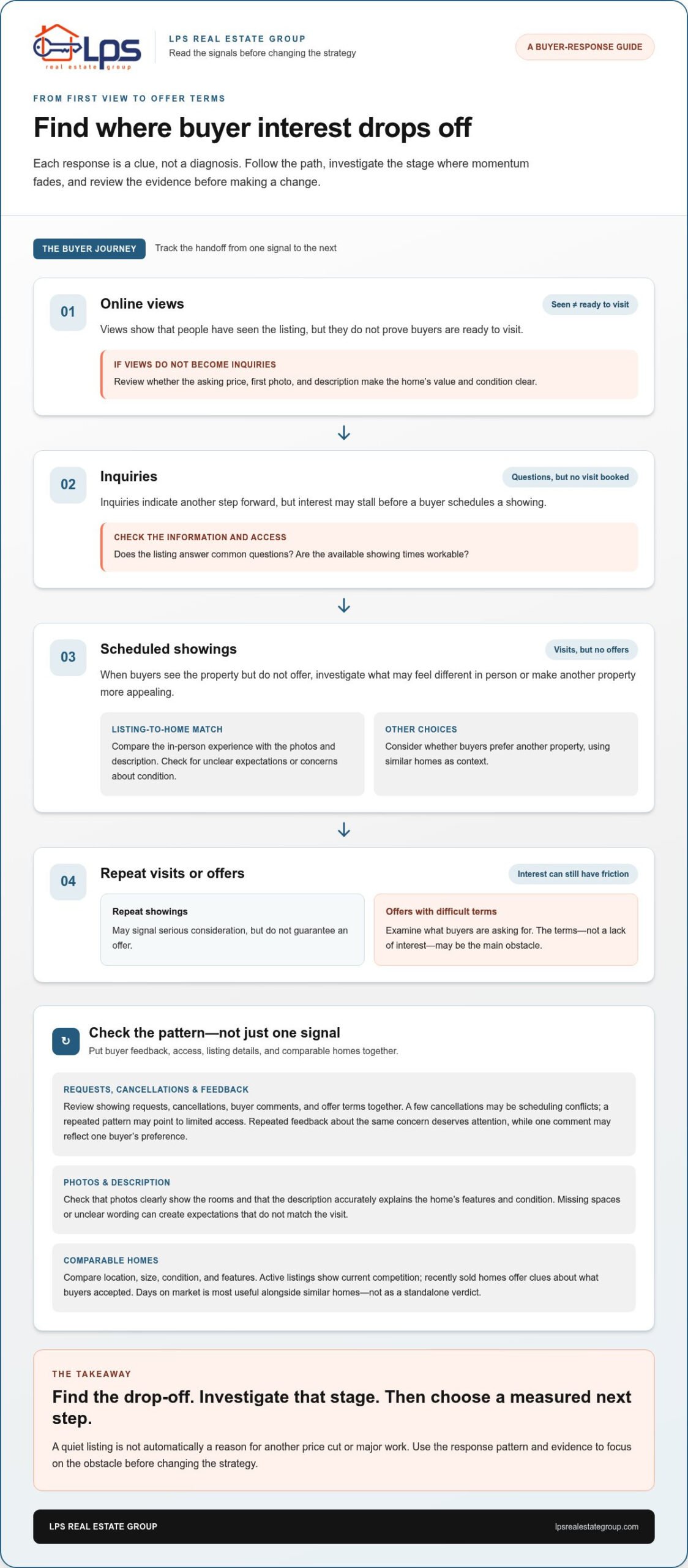
Online views show that people have seen the listing, but they don’t prove that buyers are ready to visit. Inquiries indicate another step forward, while scheduled showings show that someone has chosen to see the property. If views aren’t turning into inquiries, review whether the asking price, first photo, and description make the home’s value and condition clear. If buyers ask questions but don’t schedule a visit, check whether the listing answers common questions and whether showing times are workable.
Showings without offers call for a different review. Buyers may see a mismatch between the listing and the home in person, have concerns about condition, or prefer another property. Repeat showings can indicate serious consideration, but they don’t guarantee an offer. If offers arrive with difficult terms, examine what buyers are asking for and whether the terms, rather than a lack of interest, are the main obstacle.
Compare these patterns over time with similar listings: homes with comparable location, size, condition, and features. Recently sold homes offer clues about what buyers have accepted; active listings show what your home competes against now. Days on market means how long a home has been listed for sale. That number is most useful alongside similar homes, not as a standalone verdict. Supply and demand shape these choices, as explained in this overview of real estate economics.
Which listing signals deserve attention first?
Look at showing requests, cancellations, buyer feedback, and offer terms together. A few cancellations could reflect scheduling conflicts, while a repeated pattern may point to limited access. Feedback about the same concern from several visitors deserves attention, but one comment may simply reflect a single buyer’s preferences.
Review the listing photos and description against the home as it looks today. Do the images show the rooms clearly? Does the description accurately explain the property’s features and condition? A photo that leaves out a key space or wording that creates an unclear impression can leave buyers with expectations that don’t match what they see in person.
Buyer response is a diagnostic map: identify where interest drops off, then investigate that stage before changing your strategy. This keeps the reasons a house is not selling in 2026 from becoming a guessing game and helps you focus on evidence rather than reacting to one quiet week.
How Price, Presentation, and Buyer Access Affect a House Sale
Once you’ve identified where buyer interest drops off, look for practical reasons behind it. Price, presentation, and access can each create friction, and several may be involved at once. Broader market conditions also shape buyer choices. The U.S. Department of the Treasury discusses how demographic trends and housing supply affect rising housing costs, but a national trend can’t tell you whether a specific listing needs a price review, clearer photos, or easier showing access.
Is the asking price aligned with current buyer expectations?
Compare your home with properties buyers are likely to consider as alternatives. Look at location, size, condition, and features, then separate active listings from completed sales. Active asking prices show your current competition, but they don’t prove what buyers are willing to pay. Completed sales show accepted prices, though differences in condition, timing, or features still matter.
A pricing review is a reasoned reassessment, not an automatic reduction. If comparable homes are attracting interest while yours isn’t, consider whether the difference is price, condition, or presentation. One comparison can be misleading, so look for a consistent pattern across relevant homes.
Could photos, condition, or showing access be limiting interest?
Photos shape a buyer’s first impression. Check whether the opening images are clear, well lit, and show the home’s strongest features. The description should match the property as it is, including its condition. If buyers arrive expecting a different layout or level of upkeep, that gap may affect their response.
Start with straightforward presentation: clear surfaces, tidy rooms, and visible maintenance concerns. A slow sale doesn’t automatically mean you need a major renovation. Also consider whether narrow showing windows, unclear entry instructions, or delayed responses make it harder for an interested buyer to visit.
| Possible issue | Clues to review | Practical first check |
|---|---|---|
| Price or competition | Similar active homes draw more attention; recent sales differ in condition or features. | Compare current listings and completed sales with genuinely similar homes. |
| Photos or listing details | Key rooms are hard to see, or the description doesn’t match the home. | Review the listing as a buyer would, starting with its first image and description. |
| Condition or presentation | Feedback mentions upkeep, odors, clutter, or features that appear differently in person. | Address clear, proportionate presentation concerns before considering larger work. |
| Showing access | Requests are canceled, delayed, or difficult to schedule. | Review available windows, entry instructions, and how promptly requests are handled. |
These checks can help narrow the reasons a house is not selling in 2026 without treating every concern as a reason to spend more. If repairs or listing changes don’t fit your circumstances, compare them with a direct as-is home sale option before deciding what to do next.
Should You Cut the Price, Improve the Listing, or Wait?
A price reduction can attract fresh attention, but it isn’t automatically the right first move. Choose a change based on where buyer interest is dropping off. If people view the listing but don’t book showings, clearer photos or more flexible access may be worth reviewing. If showings happen but buyers consistently compare the home with similar properties at a lower price, a pricing review may be more relevant. No single signal proves the cause, so weigh feedback alongside activity on comparable listings.
When might a listing change be more useful than another price reduction?
Start with adjustments that address an identified obstacle. Clarify confusing listing details, make sure photos show the home accurately, or review whether showing arrangements are workable. Presentation changes can be modest: decluttering and improving how rooms appear may be more proportionate than taking on major renovations. The National Association of REALTORS® shares findings in its Profile of Home Staging, a resource to consider when weighing how presentation may affect buyer perception.
Repairs and upgrades deserve a separate calculation. Consider the likely cost, time, and disruption, then ask whether the work addresses a concern buyers have actually raised. If preparing the home feels burdensome, read this guide to selling a house as-is to understand the trade-offs of selling without completing repairs. An as-is sale may reduce preparation demands, but compare any offer with your priorities and other available paths.
When does waiting, or changing the selling route, make sense?
Waiting can be reasonable when your costs are manageable, there’s no pressing deadline, and recent buyer response gives you a specific change to test. Set a review point and decide in advance what evidence you’ll revisit, such as showing activity, feedback, and competing listings. Waiting without a review point may extend carrying costs without clarifying what to do next.
Deadlines, ongoing maintenance, an upcoming move, or a property that needs substantial work can make continued market exposure harder to manage. A direct sale is another option to compare, not a universal solution. Consider preparation needs, the expected process, the terms offered, and how much certainty matters to you. A cash offer or creative finance solution may fit some circumstances, but no sale route guarantees an outcome. This guide to cash home-buying options explains considerations for a direct sale.
The reasons a house is not selling in 2026 don’t point every homeowner toward the same fix. Match the next step to the evidence and your circumstances. If you’re comparing a listing change with a direct purchase, explore direct home sale options as part of that decision.
A Practical 2026 Plan to Get a Stalled House Moving Again
A stalled sale can make every possible change feel urgent. A simple sequence can help you respond thoughtfully instead of changing the price, photos, and showing arrangements all at once. The goal is to learn from buyer response, make a proportionate adjustment, and choose a next step that fits your timeline.
- Gather the evidence. Review listing activity, showing requests and cancellations, buyer feedback, and any written offers or terms. Look at the information together: interest that doesn’t lead to showings calls for different checks than several visits with no offers. Note what buyers actually said, but don’t let one comment define the whole picture.
- Compare the home fairly. Review current competing properties and completed sales that are genuinely similar in location, size, condition, and features. Check whether your listing gives buyers a clear picture of the home, with accurate details and photographs. Look for practical barriers too, such as narrow showing windows, complicated entry instructions, or delayed responses to requests.
- Choose one focused adjustment. Start with a low-disruption change that matches the evidence. That could mean correcting unclear listing details, improving access, or addressing a presentation concern. Consider a price review if comparisons and buyer response suggest a mismatch. Avoid taking on major work or making a rushed reduction without a clear reason.
- Set a reassessment point. Before making the change, decide what signal you’ll monitor and when you’ll review it. For example, track whether inquiries turn into showings, whether showing activity changes, or whether offers have more workable terms. Your review point should reflect your deadlines and carrying costs, not an assumed universal timeline.
Changing several things at once can make it hard to tell what helped. If practical, make one primary adjustment and keep a brief record of what changed and how buyers responded. If the response remains weak, revisit the diagnosis instead of repeating the same move. The reasons a house is not selling in 2026 may include more than one obstacle, and new feedback can change which issue deserves attention.
Review, adjust, reassess, then compare routes. That sequence keeps the decision grounded in evidence while leaving room to change course. If continued listing adjustments don’t fit your property or circumstances, compare them with a direct purchase, including an as-is option, and weigh the terms against your priorities.
If you’re ready to compare a direct sale with your next listing step, explore your home-selling options.
If Your House Still Is Not Selling, Compare Your Next Selling Options
If you’ve reviewed buyer response and listing changes still don’t fit, changing course may be worth considering. There isn’t one best route for every seller. A revised listing strategy and a direct property acquisition differ in preparation, buyer interactions, and how much uncertainty remains before a sale is complete.
What should you weigh when comparing a continued listing with a direct sale?
Continuing to market the home may make sense if you’re comfortable with further showings and the work needed to keep the property ready. A revised strategy could address a specific concern, but it can also mean more time on the market, ongoing ownership responsibilities, and possible repairs or other preparation.
A direct sale follows a different process: a buyer assesses the property and presents terms for you to consider. LPS Real Estate Group buys homes directly, including as-is properties, and offers cash purchases and creative finance solutions. An as-is option may suit sellers who prefer not to complete repairs first, though the property’s condition and the buyer’s assessment may affect the offer. No particular offer or outcome is guaranteed.
Compare the full terms with your priorities, not just the headline price. Consider the preparation involved, how showings and continued marketing fit your schedule, any deadlines or carrying responsibilities, and how predictable you need the next steps to be. A direct offer may reduce some listing-related demands, but it won’t necessarily be the right financial or personal fit for everyone. This overview of selling a house for cash explains more factors to weigh.
How can LPS Real Estate Group help explore an alternative?
LPS Real Estate Group evaluates direct property acquisitions and creative finance solutions around each seller’s circumstances. If you’re weighing an as-is sale, you can discuss the home’s condition and your priorities without treating repairs as a requirement. The aim is to understand the terms and compare them with what matters to you, rather than assume a direct sale is automatically the answer.
The reasons a house is not selling in 2026 can lead sellers toward different decisions. You might continue with a revised listing approach, consider a direct purchase, or take time to compare both. If you’d like to talk through your situation and selling options, discuss your selling options with LPS. A conversation can help you understand a possible path; the choice remains yours.
Choose Your Next Step With Confidence
A slow sale doesn’t automatically mean you need another price cut. Buyer activity can help you identify whether pricing, presentation, access, or another factor deserves attention. The reasons a house is not selling in 2026 may involve more than one issue, so use the evidence to guide a focused change rather than guessing.
Set a point to reassess after making an adjustment, and weigh the results against your timing, carrying costs, and priorities. If continuing to market the home no longer fits, a direct sale is another route to compare. LPS Real Estate Group buys residential properties directly, including as-is homes, and offers cash purchases and creative finance solutions tailored to individual circumstances. Evaluate any offer against the terms and outcome that matter to you.
If you’d like to talk through your situation and compare possible paths, discuss your home-selling options with LPS Real Estate Group. You can make your next decision at a pace that feels right for you.
Frequently Asked Questions
What are the most common reasons a house is not selling in 2026?
Common reasons include a price that doesn’t match comparable homes, listing photos or details that don’t make the property appealing or clear, condition concerns, and difficulty scheduling showings. Buyer demand and competing listings can also affect interest. The reasons a house is not selling in 2026 aren’t always obvious from time on market alone. Review whether interest drops off at online views, inquiries, showings, or offers to identify what to investigate.
Should I lower the price if my house is not selling?
Not necessarily. First compare your asking price with similar active homes and comparable completed sales, taking condition, size, and features into account. Then consider where buyer interest is dropping off. If people aren’t booking showings, clearer photos or easier access may be worth reviewing; if showings happen without offers, feedback and pricing may deserve a closer look. A price change is one option, not an automatic first step.
How long should I wait before changing my home listing?
There’s no universal number of days that applies to every listing. Set a clear review point based on your deadlines, carrying costs, and the buyer response you’re seeing. Track inquiries, scheduled showings, cancellations, feedback, and comparable homes. If you make an adjustment, decide what signal you’ll monitor and when you’ll reassess it. That creates a useful review process without relying on an arbitrary market-wide timeline.
Can poor listing photos keep a house from selling?
Yes, unclear or unflattering photos can make it harder for buyers to understand a home’s layout, condition, and strongest features before visiting. Review the opening images first: do they show key rooms clearly and accurately? Make sure the description matches the property, too. If online interest isn’t turning into inquiries or showings, improving the listing’s images and details may be a practical first step before considering larger changes.
What happens if a house gets showings but no offers?
Showings without offers mean buyers are considering the property but haven’t chosen to make an offer. Review visitor feedback for recurring concerns about price, condition, layout, or how the home compares with other options. One buyer’s comment may reflect personal preference, so look for patterns rather than treating a single reaction as a verdict. Compare your home with similar listings and sales, then consider a targeted adjustment based on the evidence.
Should I make repairs before relisting a house that did not sell?
Not automatically. First identify which condition concerns came up in buyer feedback and whether they appear to be affecting interest. Weigh any proposed repair against its cost, time, and likely value to buyers. Simple presentation improvements may be enough, while larger work may not fit your budget or timeline. You can also compare listing again with an as-is sale, where repairs aren’t completed before the property is sold.
Can I sell my house directly if it is not selling on the market?
Yes. A direct property acquisition is an alternative to continued market exposure, and LPS Real Estate Group buys residential properties, including as-is homes. The company offers cash purchases and creative finance solutions for sellers. Review any offer’s terms, how the property’s condition is assessed, and how well the option fits your priorities. A direct sale may suit some situations, but no particular offer or outcome is guaranteed.