
What if a foundation crack or a sagging roofline wasn’t the financial dead end you’ve been led to believe? It’s natural to feel a sense of dread when you discover your property’s bones aren’t as strong as they used to be. You might be losing sleep over the thought of a buyer’s inspection gone wrong or the mounting pressure from insurance providers to fix issues you simply can’t afford. Understanding your options for selling a home with severe structural damage is the first step toward regaining control of your situation.
We know that the traditional real estate path often feels stacked against properties that aren’t in pristine condition. This guide promises to help you manage these hurdles without the stress of a renovation nightmare. We’ll walk you through your legal disclosure requirements in 2026 and provide a clear comparison between the high cost of repairs and the benefits of an as-is sale. You’ll finish this article with a reliable roadmap to a fast, certain exit strategy that prioritizes your financial health and your peace of mind.
Key Takeaways
- Learn how to identify severe structural issues in the current 2026 market and why they don’t have to mean financial ruin.
- Discover why most traditional buyers can’t secure financing for distressed properties and how to avoid wasted time on failed inspections.
- Explore your various options for selling a home with severe structural damage, including a side-by-side comparison of costly repairs versus an efficient as-is sale.
- Understand how specialized cash buyers and creative finance solutions provide a certain exit strategy without the need for permits or contractors.
- Master the steps of a transparent closing process that protects your equity and eliminates the risk of legal liability after the sale.
Understanding the Reality of Selling a Structurally Compromised Home
Owning a home with a failing foundation or a compromised frame is an emotional and financial weight that few people are prepared to carry. In the 2026 real estate market, severe structural damage refers to any defect that affects the home’s ability to support its own weight or resist environmental forces. Common signs include foundation heaving, noticeably sagging rooflines, and cracks in load-bearing walls that are wider than a quarter-inch. It’s easy to assume your property is worthless when these issues arise, but that simply isn’t true. Even with significant defects, your land and the existing structure hold value for the right buyer. Understanding your options for selling a home with severe structural damage begins with a realistic assessment of the property’s condition.
Identifying the Scope of the Damage
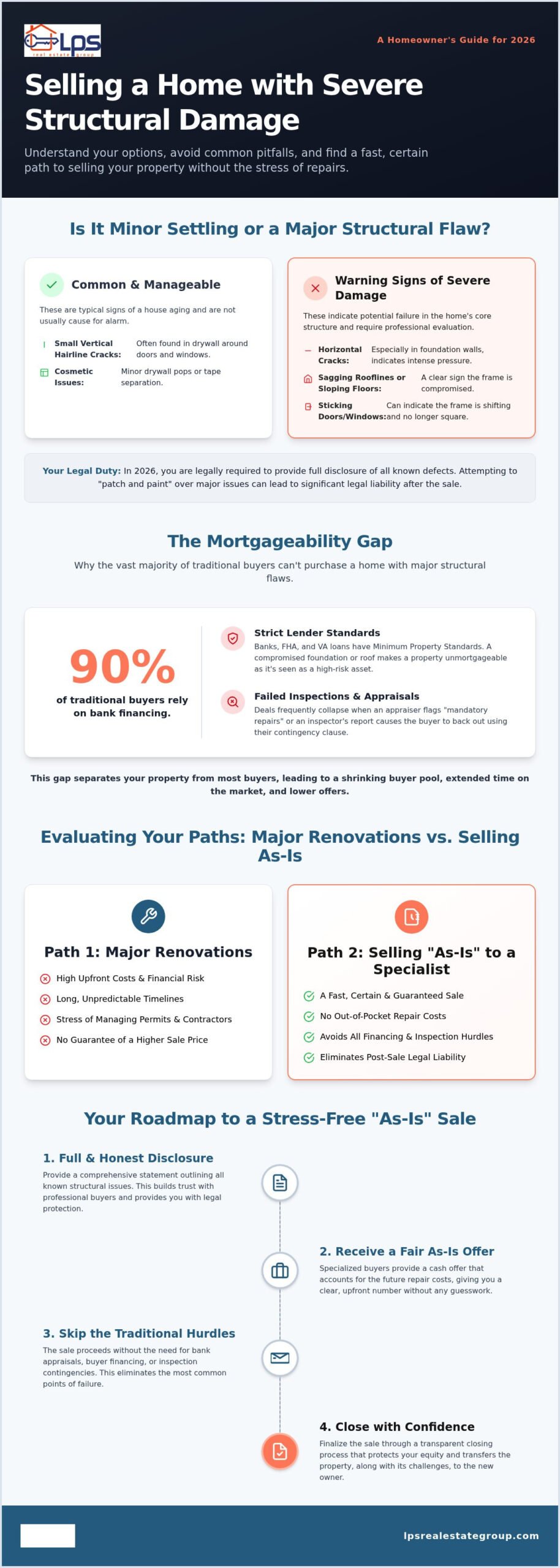
Distinguishing between minor settling and a major failure is the first step toward clarity. Most homes experience some cosmetic settling over time, resulting in small, vertical hairline cracks. In contrast, structural shifts often manifest as horizontal cracks, sloping floors, or doors that suddenly stick in their frames. While a general home inspector can point out these red flags, you’ll need a licensed structural engineer to determine the root cause and the safety of the building. For homeowners in the Hampton Roads area, you can visit A Premier Home Inspection to get a comprehensive review of your property’s condition. We recommend avoiding the temptation to “patch and paint” over these issues. Temporary fixes don’t just fail to address the core problem; they can lead to significant legal liability if the damage isn’t properly disclosed to a future owner.
Transparency is your best protection during a sale. You have a legal duty to provide a comprehensive disclosure statement that outlines every known defect. Some sellers still believe in the “Caveat Emptor” or “Buyer Beware” philosophy, but modern regulations in 2026 prioritize consumer protection. Failing to mention a cracked foundation or a compromised roof can lead to lawsuits long after you’ve moved out. When you explore your options for selling a home with severe structural damage, remember that documenting the issues actually builds trust with professional buyers. Specialized acquirers aren’t looking for perfection. They’re looking for an honest assessment so they can provide a fair, as-is offer that accounts for the necessary repairs.
The Mortgageability Gap: Why Traditional Sales Often Fail
It’s a common heartbreak for sellers. You spend weeks preparing for a sale, find a motivated buyer, and sign a contract, only for the deal to collapse because of a bank appraisal. In fact, roughly 90% of traditional buyers rely on financing that simply won’t cover a house with significant defects. This reality creates a massive barrier when exploring options for selling a home with severe structural damage through the usual channels. When a bank sees a property as a liability rather than an asset, the sale almost always hits a dead end.
Lender Requirements and Structural Integrity
Banks prioritize safety, security, and soundness above all else. In 2026, FHA and VA loans maintain strict Minimum Property Standards that specifically target structural integrity. If an appraiser spots foundation movement or a failing roof, they’ll likely flag the property for mandatory repairs. This “Appraisal with Repairs” effectively kills the deal because most buyers don’t have the liquid cash to fix a foundation before they even own the home. Conventional lenders are equally cautious, often viewing active structural shifts as a risk that makes the property unmortgageable.
Even if a lender is initially on board, the inspection contingency often acts as a trap. Traditional contracts give buyers an “out” if an inspection reveals issues they aren’t comfortable with. When an inspector identifies a load-bearing wall that’s compromised, the anxiety usually leads to the buyer backing out at the eleventh hour. This leaves you back at square one, often with a property that other buyers will now view with suspicion after a failed contract.
The Shrinking Buyer Pool
The pool of people willing to take on a project of this scale is remarkably small. Most retail buyers are stretched thin by modern down payments and living costs; they simply don’t have the appetite for a renovation nightmare. As your property sits on the traditional market, its days on market (DOM) increase, which often leads to lower offers and more skepticism from the few buyers who remain. The Mortgageability Gap is the primary hurdle for sellers of damaged homes, as it separates the property from the vast majority of qualified buyers in the open market. If you’re feeling stuck, talking to a specialist who offers as-is property acquisition can help you bypass these lender-driven roadblocks entirely.
Evaluating Your Paths: Major Renovations vs. Selling As-Is
Deciding whether to repair your property or sell it in its current state is a pivotal moment. Many homeowners assume that fixing the damage is the only way to protect their investment, but the financial reality is often more complex. When you weigh the options for selling a home with severe structural damage, you’re looking at a choice between a long-term construction project and a swift, certain exit. Structural repairs aren’t simple weekend fixes; they require deep pockets and a high tolerance for uncertainty.
A typical structural renovation in 2026 can stretch between six and twelve months. During this period, your equity is tied up while you manage engineers, permits, and labor. In contrast, a direct sale can often be completed in 7 to 14 days. The Return on Investment (ROI) for major structural work is rarely a dollar-for-dollar gain. It’s common to spend significant sums on foundation piers or roof trusses only to find that the market value doesn’t rise enough to cover those costs. You’re essentially paying for the privilege of doing the work yourself.
The Hidden Costs of Fixing It Yourself
Beyond the contractor’s initial bid, “holding costs” can quietly eat away at your profit. You’ll continue to pay property taxes, high-risk insurance premiums, and utility bills throughout the repair phase. There’s also the danger of discovery. Once you open up the walls to address a structural shift, you’re likely to find secondary problems like outdated wiring or hidden water damage. Navigating 2026 building codes adds another layer of difficulty, as inspectors may require you to bring the entire house up to modern standards once major work begins. The resulting “Renovation Fatigue” can take a heavy toll on your mental well-being and your bank account.
The Advantages of an As-Is Direct Sale
Opting for a direct sale allows you to bypass the stress of the construction site entirely. You won’t need to worry about cleaning, staging, or making the property “show-ready” for the traditional market. This path provides a non-contingent offer that isn’t dependent on bank approvals or invasive inspections. Understanding the process of selling your house as-is helps you see how to protect your equity without the gamble of a renovation. This is one of the most reliable options for selling a home with severe structural damage because it offers a guaranteed timeline and a clean break from a distressed asset.
Specialized Selling Strategies: Cash Offers and Creative Finance
Traditional buyers might walk away when they see a foundation report, but professional investors and specialized firms look for exactly these types of properties. These buyers understand that a house is more than its foundation cracks. They possess the resources and construction knowledge that retail buyers lack. To see how specialized firms approach these challenges, you can discover VULPIN Capital and their work in project management and sustainable housing. When you explore your options for selling a home with severe structural damage, these specialized strategies often provide the most direct path to a closing table without the stress of managing a construction site.
Specialized firms use a straightforward math formula to decide on an offer. They start with the After-Repair Value (ARV), which represents what the house would be worth in 2026 if it were in perfect condition. From that number, they subtract the estimated cost of structural repairs and a reasonable profit margin to account for their risk. This approach is often much cleaner than a traditional offer because it doesn’t rely on bank appraisals or government inspections. Professional cash home buyers provide the value of speed, often closing within weeks instead of waiting months for a retail buyer’s financing to clear.
Leveraging Creative Finance Solutions
A direct cash buyout is helpful, but it isn’t always the perfect fit for every homeowner. This is especially true if you have low equity or if the repair costs are exceptionally high. In these cases, creative real estate exit strategies can bridge the gap. One effective method is a “Subject-To” transaction. This is where a buyer takes over your existing mortgage payments while the deed transfers to them. Because the buyer doesn’t have to secure a new, high-interest loan, they can often offer you a higher net price than a standard cash offer would allow.
LPS Real Estate Group uses these specialized tools to provide tailored solutions for homeowners facing complex structural challenges. We act as a partner first, listening to your specific financial goals before suggesting a path forward. Whether it’s a straightforward cash purchase or a more complex creative finance arrangement, our goal is to provide a certain exit from a difficult property. If you’re ready to see which strategy fits your situation, you can get a fair offer for your property today and leave the structural worries behind.
Navigating the Closing Process with Confidence
Once you’ve evaluated your options for selling a home with severe structural damage and selected a path, the final hurdle is the closing process. For many, this is where the most anxiety resides. You might worry about last-minute price drops or hidden fees that eat into your remaining equity. Choosing an ethical partner is the most effective way to ensure the final wire transfer matches the initial promise. A transparent buyer will walk you through each step, from the moment the offer is signed to the day the keys are handed over.
Vetting a direct buyer is a critical part of your due diligence. In 2026, a reputable firm should easily provide proof of funds to show they have the cash ready to close without bank interference. You should also look for a consistent history of positive reviews and a solid professional standing. At LPS Real Estate Group, we position ourselves as a compassionate expert. We understand the stress you’ve been under, and our goal is to handle the heavy lifting so you don’t have to. We coordinate with the title company, manage the paperwork, and ensure every legal disclosure is handled correctly. This partnership protects you from future liability while providing the certainty of a guaranteed closing date.
What to Expect at Closing
Direct sales typically involve zero commissions and no hidden closing costs. A neutral title company manages the escrow, ensuring a protected transfer of funds and title. You can also expect a hassle-free move-out. There’s no need to spend days cleaning or hauling away unwanted items; you simply take what you want and leave the rest to us. This simplicity allows you to focus on your future instead of the house’s past.
Your Path Forward Starts Here
It’s vital to remember that you aren’t defined by your property’s problems. A foundation crack is a structural issue, not a personal failure. By seeking a consultation and exploring all available options for selling a home with severe structural damage, you’re taking a proactive step toward financial freedom. You deserve a solution that respects your time and your equity. Request a transparent, no-obligation offer from LPS Real Estate Group today.
Moving Forward with Clarity and Confidence
Dealing with a structurally compromised property can feel like an endless cycle of stress and uncertainty. However, you now know that a cracked foundation or a sagging roof doesn’t have to dictate your financial future. We’ve explored how the mortgageability gap often prevents traditional buyers from closing and why major renovations rarely provide a full return on your investment. By understanding your options for selling a home with severe structural damage, you can choose a path that prioritizes your peace of mind over a renovation nightmare.
You don’t have to face these challenges alone. Whether you prefer a direct buyout or a creative finance solution, help is available to ensure you move forward on your terms. Our team is here to handle the logistics so you can focus on your next chapter instead of being stuck in the past.
Get a Fair, As-Is Cash Offer for Your Damaged Home and experience a process with no repairs or cleaning required, zero commissions or closing costs, and the ability to close on your timeline. You’ve carried the weight of this property long enough; it’s time to start fresh with a partner you can trust.
Frequently Asked Questions
Is it legal to sell a house with severe structural damage?
It is perfectly legal to sell a house with structural defects as long as you provide full written disclosure to the buyer. In the 2026 market, failing to disclose known issues like a cracked foundation can lead to serious legal consequences after the sale. Being honest about the property’s condition protects you from future liability and helps you find the right options for selling a home with severe structural damage through specialized buyers.
How much does structural damage devalue a home in 2026?
Structural damage typically devalues a home by the estimated cost of the repairs plus a risk premium of 10% to 20%. Buyers account for the uncertainty of construction and the high cost of specialized labor. While some sources suggest a flat percentage, the real impact depends on whether the house is still mortgageable. If a bank won’t lend on the property, the value shifts from a retail price to a specialized acquisition price.
Will insurance cover structural damage before I sell?
Insurance coverage depends entirely on the cause of the damage. Standard policies usually cover structural issues resulting from sudden events, such as a fire or a fallen tree, but they rarely cover gradual settling, soil expansion, or general wear and tear. You should review your policy or speak with your agent to see if a claim is possible. If coverage is denied, selling the property as-is becomes a practical path forward to avoid out-of-pocket costs.
Can I sell a house with foundation issues to a traditional buyer?
Selling to a traditional buyer is challenging because most lenders won’t approve a mortgage for a home with safety concerns. FHA and VA loans have strict 2026 property standards that require the structure to be sound before closing. Even if a buyer is willing to take on the project, their bank will likely reject the loan once the appraisal or inspection report highlights the structural movement, causing the deal to fall through at the last minute.
Do I have to fix structural issues before selling as-is?
You are not required to make any repairs when choosing an as-is sale. The primary benefit of this strategy is that it allows you to walk away from the property in its current condition. Professional buyers who specialize in options for selling a home with severe structural damage have their own teams to handle the engineering and construction. Your only responsibility is to provide an honest disclosure of the issues you are aware of before the closing occurs.
What is the fastest way to sell a house that needs major repairs?
The fastest route is a direct sale to a cash property acquisition firm. This method eliminates the need for traditional inspections, appraisals, and the long wait for buyer financing approval. Because these buyers use their own capital, they can often close in as little as 7 to 14 days. This speed is especially helpful if you are facing pressure from lenders or insurance companies regarding the safety or the mounting costs of the structure.
How do I avoid getting “lowballed” by an investor?
To avoid low offers, choose a buyer with a transparent valuation process and a strong reputation. A professional partner should explain how they calculated their offer based on the property’s potential value and the specific repair costs. Avoid buyers who pressure you to sign immediately or refuse to provide proof of funds. Checking recent reviews and asking for a clear breakdown of the closing process will help you ensure a fair and honest transaction for your equity.
What documents do I need to sell a damaged house fast?
You will primarily need a valid form of identification, your property’s title or deed, and a completed disclosure statement. If you’ve already had a structural engineer or a foundation specialist look at the property, providing those reports can actually speed up the process. These documents help the buyer understand the scope of the work quickly, allowing them to finalize their offer and move toward a certain closing without unnecessary delays or repeated inspections.