

What if the first step toward selling a house after a contentious divorce isn’t choosing an asking price, but confirming who has authority to make decisions? When spouses disagree about timing, price, or whether to sell at all, it’s understandable to worry that each step could trigger another argument.
A more manageable path starts by separating three questions: what the divorce documents or court orders allow, what will happen to the property, and how the proceeds will be handled. Before taking action, confirm ownership, required signatures, mortgage responsibilities, and any restrictions with your divorce attorney. Keep a written record of proposals and decisions to reduce confusion, even when agreement is difficult.
This guide compares a traditional listing, a negotiated buyout, and a direct sale, with trade-offs to weigh rather than assuming one option fits every situation. You’ll also find practical questions to resolve before moving forward and a checklist for documenting a workable plan for the house and its proceeds. The goal isn’t to erase every disagreement. It’s to make the next decision clearer and better grounded in your circumstances.
Key Takeaways
- Before responding to a refusal to sell, review the court orders and property documents, then get legal advice about which options are authorized.
- When selling a house after a contentious divorce, compare a listing, buyout, and direct sale by weighing preparation, cooperation, terms, and likely trade-offs.
- Gather financial and property records so you can assess proposed terms and estimated proceeds using the same information.
- Put agreed decisions and the plan for dividing proceeds in writing, and confirm closing requirements with qualified professionals.
Selling a House After a Contentious Divorce: What Must Be Decided First?
Conflict over a home can make every practical decision feel loaded. You don’t have to settle every disagreement at once. Start by clarifying three things: who owns the property, what the divorce documents or court orders say, and who has authority to take the next step. These answers help identify which decisions need agreement, which require professional guidance, and what options may be available.
Ownership, responsibility for the mortgage, and authority to sell are related, but they aren’t the same question. The deed shows who holds title, the loan documents identify borrowers, and divorce orders or applicable law may affect who can authorize a sale. State rules on the division of property can differ, including how marital assets are divided. Don’t assume that a spouse must sign, or that a sale can proceed without their signature. Check the relevant documents and get advice specific to your situation before acting.
Which documents should you review before discussing a sale?
Gather the recorded deed, current mortgage information, divorce petition, any settlement agreement, and relevant court orders. Check whether the documents address the home, a deadline to sell or transfer it, or a requirement for both spouses to approve decisions. These records may clarify ownership, restrictions, and obligations, but they don’t automatically answer every question about a proposed sale. Ask a divorce attorney or title professional to explain what applies to this property. Don’t rely on a divorce agreement alone to confirm recorded title or lender requirements.
Why do the mortgage and the deed matter separately?
The deed concerns ownership; the mortgage concerns the loan and the people responsible for repayment. A change in title doesn’t necessarily remove a borrower from the mortgage, so confirm lender requirements before assuming one spouse is no longer liable. Before signing a deed, listing agreement, or purchase contract, seek written professional guidance on the documents, required signatures, and any court conditions that may apply.
Once you know what the paperwork says, you can discuss a sale path with a clearer starting point. That doesn’t guarantee agreement, but it can keep the next conversation focused on decisions the parties are authorized to make. For selling a house after a contentious divorce, establishing that foundation is a practical first step toward a documented plan.
What If Your Ex-Spouse Refuses to Sell or Cannot Agree?
A refusal can affect the timing of a sale, who is authorized to act, and which options are available. It doesn’t automatically tell you what you can do next. For selling a house after a contentious divorce, don’t try to work around a co-owner, court order, lender, or required signature. The next step depends on the title, applicable orders, and state-specific procedure.
Use a measured sequence: review the relevant orders and ownership documents, make a clear written proposal, consult a divorce attorney, then evaluate only the routes that are authorized. A proposal can state the sale option you’re suggesting, how you’d handle preparation or access, and how you’d like decisions and proceeds addressed. Mediation or attorney-led communication may give both spouses a more structured way to discuss price, timing, and responsibilities. Neither approach guarantees agreement, so ask your attorney what to do if discussions stall.
How can you keep property discussions focused and documented?
Keep proposals factual and specific. State the decision you’re asking your former spouse to consider, any relevant dates, and when you’d appreciate a response. Save messages and maintain records of mortgage payments, property expenses, and arrangements you’ve both agreed to. Avoid threats or informal promises, and don’t sign documents under pressure. If a proposed step is unclear, pause and ask counsel before responding.
When should you ask an attorney about court involvement?
Get legal advice if an order is unclear, a co-owner is blocking an action, or you’re concerned a deadline may apply. Ask what lawful options are available and what each could mean for timing, costs, and responsibilities. Don’t assume a court will order a particular outcome. If you’re considering delaying a sale, ask a tax professional about the tax implications of selling and how your circumstances may affect them.
Keep the goal practical: identify the question that needs resolving, support it with documents, and get advice before taking action. If a direct property sale is among the options your attorney confirms you can consider, you can review direct property acquisition options as one possible route. A buyer can’t settle a legal disagreement or replace required consent, so confirm communication and signing requirements before moving forward.
Compare Three Ways to Sell a House After a Contentious Divorce
There isn’t one sale route that guarantees agreement, convenience, or the best net proceeds. A traditional listing, a buyout, and a direct sale involve different levels of cooperation and preparation. Compare each option using the same questions: What approvals are required? What work must be done before the transaction? What costs and obligations affect the expected proceeds? The right comparison considers the whole transaction, not just the possible sale price.
| Option | Cooperation and preparation | Process and trade-offs | Professional checks |
|---|---|---|---|
| Traditional open-market listing | Usually requires coordination on preparation, access for showings, offer decisions, and sale terms. | Can expose the home to market buyers, but preparation, showings, and negotiations require coordination. Net proceeds depend on the eventual offer and transaction costs. | Confirm authority to list, required signatures, pricing process, and how offers and proceeds will be handled. |
| Buyout by one spouse | Requires agreement on the transfer and a way for the spouse keeping the home to meet the financial terms. | May avoid a sale to an outside buyer, but the buyout amount and loan arrangements need careful review. | Get an independent valuation and legal and lender guidance. Confirm how title and mortgage responsibility will be addressed. |
| Direct property sale | Owners must still confirm consent and authority. A buyer may consider a home as-is, which could reduce preparation needs. | Offers an alternative to listing, but compare the offer terms, property value, closing conditions, and expected net proceeds. Convenience alone doesn’t establish financial fairness. | Review the purchase terms, required signatures, closing conditions, and division of proceeds with qualified professionals. |
When might a traditional listing or spouse buyout fit?
A listing may suit spouses who can coordinate home preparation, showings, and decisions about offers. Before listing, clarify who will arrange access, approve repairs or other preparation, respond to offers, and communicate with the listing agent. A buyout may fit if one spouse wants to keep the home and can meet agreed financial and legal terms, including any lender requirements. Before settling on a buyout amount, seek an independent valuation and have both the legal arrangement and financing reviewed.
When might a direct sale be worth comparing?
A direct buyer may offer a different process from a traditional listing and may consider an as-is property. That can be useful to evaluate if preparing the home is difficult, but it doesn’t remove the need to compare value, terms, closing conditions, and each owner’s consent. Review this cash home-sale guide for background, and consider how the property’s condition and any required work affect each option.
For selling a house after a contentious divorce, compare the written terms of each viable route, then ask your attorney and financial professionals how the choice affects authority, obligations, and proceeds.
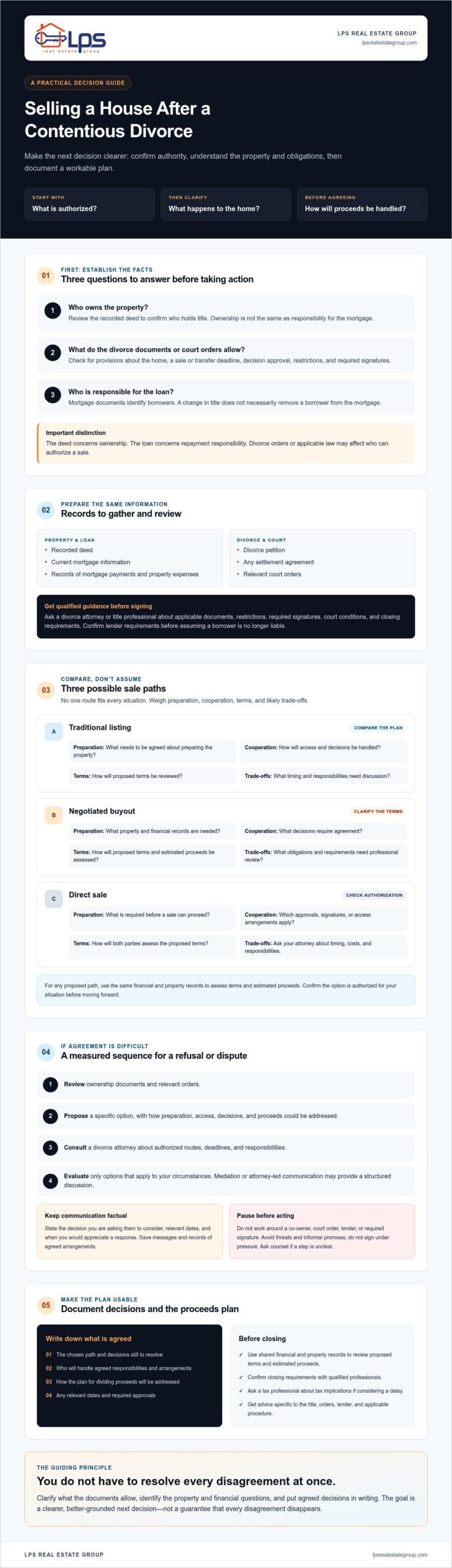
How to Prepare a Fair, Documented Sale Plan
A written plan can turn broad intentions into decisions both spouses can review. For selling a house after a contentious divorce, work through the steps in order, and check each one against the relevant court orders and professional advice:
- Confirm authority. Verify who can make decisions and what approvals or signatures may be needed.
- Gather property facts. Assemble current records so both spouses can consider the same information.
- Compare sale routes. Review the practical steps, written terms, and estimated proceeds for each option under consideration.
- Document any agreement. Record responsibilities, decision points, and how proceeds are to be handled, subject to applicable orders and professional guidance.
- Coordinate closing. Confirm documents, obligations, and closing arrangements with the relevant professionals before signing.
Useful records include the mortgage balance, property tax information, known liens, insurance, utility accounts, repair history or estimates, and ownership documents. For a clearer comparison, note the source and date of each estimate, and distinguish confirmed expenses from costs that still need to be verified. Title, tax treatment, liens, court orders, and closing practices can vary, so ask qualified legal, tax, title, and lending professionals to review the details that apply to your situation.
How should the spouses evaluate an offer and likely proceeds?
Compare the written offer with an estimate of what may remain after known debts, transaction expenses, and agreed obligations. Check which costs are included in the estimate and which assumptions still need confirmation. Ask a qualified professional to explain the estimate. An informal valuation is not a guaranteed sale price or net amount. Before accepting terms, document how proceeds are expected to be held and distributed, consistent with court orders and professional advice.
How can you reduce conflict during preparation and closing?
Put practical responsibilities in writing: who arranges access, handles routine upkeep, gathers documents, and responds to transaction questions. Agree on a communication channel and a reasonable process for reviewing offers or requests. If a point is disputed, involve attorneys or transaction professionals rather than relying on unclear verbal agreements. Keep material information about property condition, debts, and offers transparent to those entitled to receive it.
If the parties are considering a nontraditional structure, review this creative real estate exit strategies guide as background, then verify available terms and conditions independently. To explore a direct property acquisition as one possible route, review direct sale options. A written plan and professional review can help clarify the next steps, but they can’t replace required consent or resolve a legal dispute.
Choose a Sale Path That Fits Your Situation and Take the Next Step
The right route depends on what the owners can agree to, what the documents allow, and what each person needs from the outcome. A traditional listing may fit when both spouses can coordinate preparation, access, and offer decisions. A buyout may work when one spouse wants to keep the home and can meet agreed financial and legal terms. A direct sale is another process to compare, particularly if the owners want to consider an alternative to listing. None is automatically best for every property or situation.
Before choosing a buyer or signing anything, confirm legal authority, document the proposed terms, and make sure each person whose consent is required understands the transaction. Independent legal and financial advice can help you assess the consequences. A buyer can explain its proposed transaction, but can’t resolve a dispute or replace required court approval or consent.
What should you ask a direct home buyer before proceeding?
Ask how the buyer evaluates the property, prepares an offer, handles title concerns, and communicates when there are co-owners. Request the terms in writing, including contingencies, closing responsibilities, and any conditions that could affect the transaction. Then ask your attorney or relevant closing professional whether both owners or court approval are required for that specific sale. Take time to compare the written proposal with other available routes.
How can LPS Real Estate Group be one option to consider?
LPS Real Estate Group purchases properties directly and offers cash purchases, as-is acquisitions, and creative finance solutions. Whether an approach is available or suitable depends on the property, ownership, consent, and proposed terms. Before proceeding, verify how communication with multiple owners is handled and review the transaction conditions in writing. Consider this option alongside independent legal and financial advice, not as a substitute for it.
If you’re selling a house after a contentious divorce, a calm first plan can be simple:
- Review the ownership documents and relevant court orders.
- Consult your divorce attorney about authority, signatures, and any restrictions.
- Compare written options, including estimated proceeds and conditions, before deciding.
You can Discuss your property and explore your options with LPS Real Estate Group while seeking independent professional advice. No conversation or offer determines the legal outcome, and any decision should be based on verified terms and the requirements that apply to your property.
Take the Next Step With a Clear Plan
Selling a house after a contentious divorce can feel difficult, but you don’t have to resolve every issue at once. First, confirm what the ownership documents and court orders allow. Then compare realistic sale options and document how decisions, expenses, and proceeds will be handled. A traditional listing, a spouse buyout, and a direct sale each involve different trade-offs, so choose based on your circumstances rather than assuming one route is best.
LPS Real Estate Group offers direct property acquisitions, cash purchases, as-is acquisitions, and creative finance solutions. Whether an option fits depends on the property and proposed transaction terms. Ask for written terms and confirm consent requirements and closing conditions. For legal and financial questions, consult professionals who can advise on your specific situation.
If a direct sale is one option you’d like to compare, Discuss your property and explore your options with LPS Real Estate Group. Take the process one informed step at a time. A documented, workable plan can help you move forward with greater clarity.
Frequently Asked Questions
Can I sell a house after divorce if my ex-spouse refuses?
Possibly, but a refusal may limit what you can do without further agreement or legal direction. Check the deed, divorce judgment, settlement, and any court orders, then ask a divorce attorney what options apply in your state. Don’t try to bypass a co-owner or sign on their behalf. For selling a house after a contentious divorce, document proposals and responses, and ask counsel about lawful next steps if talks stall.
Do both spouses have to sign to sell a house after divorce?
It depends on recorded ownership, the divorce orders, and the requirements for the particular transaction. A closing professional can identify which signatures are needed, but should not replace legal advice about authority to sell. Before signing a listing agreement or purchase contract, check the deed, court documents, and lender requirements. If either spouse is unsure, ask a divorce attorney or title professional to review the situation first.
What happens if a divorce decree says to sell the house but one spouse will not cooperate?
Ask a divorce attorney how to address noncooperation under the specific decree and state procedure. The attorney can explain whether clarification or court involvement may be appropriate and what consequences could follow. Keep records of the order, communications, expenses, and steps taken toward the sale. Don’t assume a particular outcome or attempt to force access, sign for the other spouse, or ignore the order without legal guidance.
Can one spouse buy out the other spouse’s share of the house?
Yes, a buyout may be possible if both spouses agree to the terms and the spouse keeping the home can meet the financial and legal requirements. Start with an independent property valuation and have an attorney review how the transfer fits the divorce agreement or court orders. Ask the lender how the mortgage will be handled, since transferring title alone may not release a borrower from loan responsibility.
How are sale proceeds divided when divorced owners sell a house?
The division depends on state law, ownership, the divorce agreement or court orders, and any debts or expenses addressed in the sale. Don’t assume proceeds will automatically be split equally. Ask an attorney to interpret the governing documents and a closing professional to explain how debts and transaction expenses affect the estimated amount available. Put the agreed distribution in writing and confirm how proceeds will be handled before closing.
Can you sell a house during a divorce before the divorce is final?
It may be possible, but whether the spouses can proceed depends on state rules, court orders, and any restrictions that apply after a divorce case is filed. Both spouses may need to agree, and court approval may be required in some situations. Before listing, accepting an offer, or transferring the property, ask your divorce attorney to review the case documents and explain the requirements for your property.
Is a direct cash sale better than listing a house after a contentious divorce?
Not necessarily. A direct cash sale may offer an alternative to listing and may allow an as-is property to be considered, while a traditional listing provides exposure to market buyers. Compare written terms, property condition, preparation needs, closing conditions, and estimated net proceeds. LPS Real Estate Group offers direct acquisitions and cash-purchase options, but suitability depends on the property and transaction terms. Seek independent advice before deciding.