
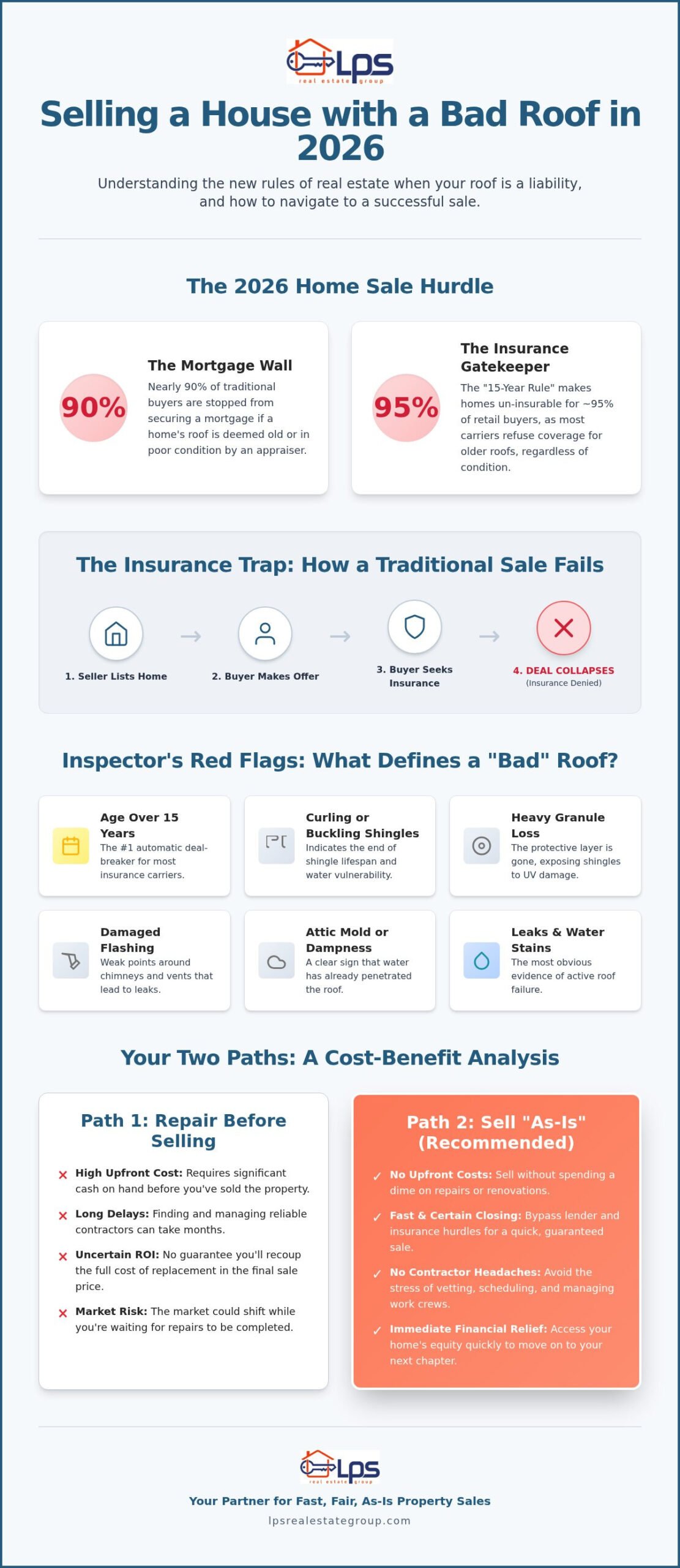
A bad roof isn’t just a maintenance problem; it’s a financial wall that stops nearly 90% of traditional buyers from securing a mortgage in 2026. If you’re trying to sell house with bad roof, you’ve likely realized that many buyers can’t even get insurance coverage if your shingles are past their prime. It’s a frustrating cycle where you’re told to fix the roof to sell, but you might need the sale proceeds to actually afford the work. You shouldn’t have to choose between draining your savings or letting your property sit on the market indefinitely.
We understand the weight of this situation and the anxiety that comes when an inspector flags an aging roof just days before closing. This guide will show you how to navigate these challenges and discover the most profitable way to sell your property without the headache of managing contractors. We’ll explore why lenders have become stricter, how to avoid the “Insurance Trap,” and why an as-is sale is often the fastest path to a stress-free transition. You deserve a clear, fair way forward that respects your time and your home’s current condition.
Key Takeaways
- Understand why 2026 insurance standards make it harder to sell house with bad roof through traditional channels.
- Learn how the “15-year rule” acts as a gatekeeper, preventing many buyers from securing the necessary coverage to close a deal.
- Compare the true cost of roof replacement against the holding costs of your home to determine the most profitable exit strategy.
- Discover why full disclosure is your best legal defense and how an honest assessment can actually speed up your sale.
- Explore how an as-is property acquisition allows you to bypass contractors and close quickly without making any repairs.
The Reality of Selling a House with a Bad Roof in 2026
In 2026, the definition of a “bad” roof has expanded beyond visible leaks or missing shingles. While structural sagging and daylight peeking through the attic are obvious signs of trouble, simple age has become a primary deal-breaker. If you want to sell house with bad roof, you have to look at the property through the lens of a modern inspector. A roof that appears functional but has reached the end of its projected lifespan is now often classified as a failed system by lenders and insurance carriers alike.
This shift in 2026 is driven by a tighter risk market. Five years ago, a 20-year-old asphalt roof might have passed a standard inspection if it wasn’t currently leaking. Today, that same roof is viewed as an immediate liability. For many buyers, a failing roof is a psychological barrier that signals “deferred maintenance” across the entire property. They worry that if the most critical protective layer of the home was neglected, the plumbing, electrical, and HVAC systems might also be hiding costly surprises.
Understanding your seller disclosure obligations is vital when these issues arise, as failing to mention a known defect can lead to legal complications long after the sale. A home’s eligibility for traditional mortgage financing is directly tied to the roof’s ability to provide a minimum of two to five years of remaining service life as determined by a professional appraiser.
Common Roof Red Flags for Inspectors
Professional inspectors look for more than just water spots on the ceiling. They examine the exterior for heavy granule loss and curling shingles, which indicate that the asphalt has become brittle and lost its protective qualities. They also pay close attention to damaged flashing around chimneys and vents. Inside the home, evidence of attic mold or damp insulation can confirm that the roof’s integrity is compromised. Research shows that around 20% of home evaluations identify issues with the roof’s condition, often catching sellers by surprise.
Why Banks Say No to Damaged Roofs
Lenders are primarily concerned with protecting their collateral. If a roof is damaged, the entire structure is at risk. Most traditional lenders, particularly for FHA and VA loans, require a roof to have a remaining useful life of at least two to three years. If an appraiser flags the roof as failing, they will typically issue a “subject to” appraisal. This means the bank will not fund the loan until a new roof is installed, which can be a massive hurdle if you don’t have the cash on hand to sell house with bad roof through the traditional retail market.
The Insurance Trap: The Hidden Barrier to a Traditional Sale
In 2026, insurance companies have surpassed lenders as the primary gatekeepers of the real estate market. Even if you find a buyer who loves your home, the deal often hits a wall when they try to secure a homeowner’s policy. Most traditional carriers have implemented a strict 15-year rule. If your shingles have reached this age, many companies will flatly refuse to issue a new policy, regardless of whether the roof is currently leaking. This creates a massive hurdle because lenders will not fund a mortgage without active insurance coverage.
This reality effectively makes your home “un-mortgageable” for approximately 95% of retail buyers who rely on traditional financing. Some buyers might look into “forced-place insurance” as a last resort, but the astronomical premiums associated with these policies usually scare them away. When you try to sell house with bad roof, you aren’t just fighting the physical condition of the shingles; you’re fighting an automated underwriting system that sees your home as an unacceptable risk. If you want to bypass these institutional barriers, considering an as-is property acquisition can provide a much simpler path forward.
The Four-Point Inspection Hurdle
Most insurance carriers now require a four-point inspection for homes over a certain age. While this covers electrical, plumbing, and HVAC systems, the roof is the most scrutinized element. A general home inspector might tell a buyer the roof “has a few years left,” but an insurance company’s underwriter often disagrees. In 2026, shifting climate trends have forced national standards to become even more conservative. A roof that would have passed a decade ago is now frequently marked as a “fail” by carriers looking to limit their exposure to storm damage claims.
When the Deal Falls Through at the Finish Line
The most heartbreaking scenario for a seller is when insurance is denied just three days before the scheduled closing. By this point, you’ve likely packed your boxes and stopped showing the home to other interested parties. Restarting the sale process is expensive and emotionally draining. Perhaps worse, once an insurance company officially denies coverage due to the roof’s condition, that data often enters the property’s history. Future buyers and their agents will see the previous “failed” sale, which can lead to even lower offers as they realize you’re struggling to sell house with bad roof in a restrictive market.
Repair vs. Sell As-Is: A 2026 ROI Analysis
When you decide to sell house with bad roof, the first instinct is often to reach for a contractor’s phone number. Traditional real estate advice suggests that a new roof provides a dollar-for-dollar return on investment, but the 2026 data paints a different picture. The national average ROI for a new asphalt shingle roof currently sits between 60% and 70%. This means if you spend $15,000 on a replacement, you might only see a $9,000 to $10,500 increase in your final sale price. You’re essentially paying several thousand dollars for the privilege of doing the work for the next owner.
Beyond the invoice, you must consider the “holding costs” associated with a major repair. A full roof replacement, including permitting and scheduling, can easily add two to three months to your timeline. During those months, you continue to pay the mortgage, property taxes, insurance, and utilities. When these carrying costs are added to the out-of-pocket repair expense, the “net profit” from a repaired listing often ends up lower than a direct sale. Choosing the path of selling your house as-is allows you to stop the financial bleed immediately.
The Stress Factor of Roof Repairs
Construction projects rarely go exactly as planned. In 2026, supply chain fluctuations for specialized roofing materials can cause unexpected delays that push your moving date back by weeks. There’s also the high risk of “scope creep.” Once a contractor strips away the old shingles, they may discover significant wood rot or structural damage in the decking that wasn’t visible during the initial estimate. These surprises can add thousands to your bill instantly. Additionally, many buyers now demand a transferable workmanship warranty, which places a long-term liability on you even after you’ve handed over the keys.
The Direct Buyer Math
Working with companies that buy houses for cash changes the financial equation entirely. Instead of paying for a full retail replacement, these buyers calculate deductions based on their own wholesale repair costs, which are often lower than what a homeowner pays. You also eliminate the standard 5-6% real estate agent commission and a significant portion of the closing costs. Most importantly, you gain the value of certainty. You won’t have to endure a “repair credit” negotiation battle where a buyer tries to shave an extra $20,000 off the price during the inspection period. You know exactly what you will walk away with, allowing you to plan your next chapter with confidence.
Steps to Selling a House with a Bad Roof
Approaching the sale of a home with structural or age-related roof issues requires a methodical plan. It’s easy to feel overwhelmed, but following a clear sequence of steps can help you maintain control of the situation. The first step is to obtain an honest assessment of the roof’s condition. Rather than calling a contractor who might provide a biased sales pitch for a full replacement, you can discover Lin Inspects and work with a neutral home inspector. They can provide a documented report on the actual remaining life of the shingles without the pressure of a repair quote.
In 2026, transparency isn’t just a best practice; it’s your primary legal defense. National legal standards for seller disclosures have become more stringent regarding structural integrity. Disclosing a bad roof upfront might feel counterintuitive, but it actually works in your favor by filtering out buyers who rely on strict FHA or VA financing. This honesty prevents the deal from collapsing during the inspection period and protects you from post-closing lawsuits. When a buyer knows about the leaks before making an offer, they can’t later claim they were misled about the property’s condition.
Choosing the Right Sales Route
Traditional real estate agents often struggle to market “roof-compromised” homes because their primary audience consists of families looking for move-in-ready properties. These agents may suggest listing the home at a high price and negotiating down, but this often leads to months of wasted time. In contrast, direct home buyers simplify the process by purchasing the property in its current state. They don’t require you to fix a single shingle or even clean the gutters. While some may offer creative “Subject-To” options, a straight cash buyout is often the cleanest way to exit the property and move on to your next home.
If you’re ready to skip the stress of contractors and failed inspections, you can request a fair as-is offer today and see how simple the process can be.
LPS Real Estate Group: Your Partner for As-Is Property Sales
At LPS Real Estate Group, we specialize in helping homeowners overcome the exact barriers we’ve discussed in this guide. If you need to sell house with bad roof, you don’t have to be the one to solve the insurance or financing puzzle. We step in as the direct buyer, taking on the full liability and cost of the roof replacement after the deal closes. This shifts the burden from your shoulders to ours, allowing you to move forward with your plans without waiting for a contractor’s availability or an insurance company’s blessing.
Our approach is built on a foundation of transparency and respect. We’ve seen how stressful it is to manage a property that traditional buyers won’t touch. That’s why we offer a simple promise: we buy your home exactly as it stands today. You won’t pay for repairs, you won’t spend weekends cleaning, and you won’t lose your equity to agent commissions or hidden fees. It’s a straightforward path designed to provide relief and certainty during a complex time.
Our Streamlined As-Is Process
We buy the house exactly as it sits, regardless of its condition. Whether there are active leaks, blue tarps, or shingles that have simply aged out of the 2026 market, it doesn’t change our interest in the property. Because we use private funds for our acquisitions, we don’t have to wait for lender-mandated inspections or “subject to” appraisal repairs. This independence allows us to move at your pace. We focus on providing a fair, data-driven offer that reflects the reality of the property while ensuring you can close this chapter in days, not months.
Creative Solutions for Every Situation
Every homeowner’s situation is unique, and sometimes a standard cash offer isn’t the only way to reach your goals. We utilize creative real estate exit strategies to help those with low equity or complex title issues, such as probate or inherited properties. Our goal is to find the most ethical and effective solution for your specific needs. You can request a fair, no-obligation offer today and finally skip the roofing bill that’s been holding you back. We’re here to listen first and provide a professional, compassionate path to your next chapter.
Your Path to a Stress-Free Sale
You’ve seen how the 2026 real estate market has changed the rules for properties with aging structures. The “Insurance Trap” and strict lender requirements mean that trying to sell house with bad roof through traditional channels often leads to wasted months and collapsed deals. By shifting your focus from making costly repairs to finding the right buyer, you can protect your equity and avoid the stress of managing construction projects that rarely offer a full return on investment.
Choosing an as-is sale allows you to bypass the gatekeepers and move directly to your next chapter. LPS Real Estate Group specializes in as-is property acquisitions, providing the compassionate, expert guidance you need when facing a difficult sale. We handle the repairs and the liability; you don’t have to worry about closing costs, cleaning, or contractor delays. Get a fair as-is offer for your house today from LPS Real Estate Group and discover how simple a property exit can be. You deserve a solution that prioritizes your peace of mind and your financial future.
Frequently Asked Questions
Can I sell a house with a leaking roof?
Yes, you can sell a house with an active leak, but your pool of potential buyers will be significantly smaller. Traditional buyers usually can’t secure a mortgage or insurance for a home with water intrusion. To move forward without making repairs, you can sell directly to an as-is property acquisition firm like LPS Real Estate Group. We specialize in these situations and take on the full responsibility of the roof after the sale is complete.
Will a bank finance a home that needs a new roof?
Generally, traditional banks will not approve a mortgage if the roof has less than two to three years of remaining useful life. Programs like FHA and VA loans have strict safety standards that require a structurally sound and leak-free roof. If an appraiser flags the condition as a hazard, the lender will typically demand a full replacement before they fund the loan. This often leaves sellers stuck if they don’t have the cash for repairs.
How much does a bad roof devalue a house?
A bad roof can devalue a home by $10,000 to $20,000 in a professional appraisal, but the real-world impact is often much higher. Retail buyers frequently overestimate repair costs and may reduce their offers by 10% to 20% to account for the risk and stress of construction. When you sell house with bad roof, you also lose the value of marketability, as many families will simply skip your listing in favor of a move-in-ready home.
Do I have to disclose a roof leak if I’ve patched it?
Yes, you’re legally required to disclose any history of leaks, even if you believe the patch solved the problem. Transparency is your strongest defense against future lawsuits. Most disclosure forms specifically ask about past or present roof issues. By being honest about previous repairs, you build trust with the buyer and ensure the final sale is legally sound. This honesty helps filter for buyers who are comfortable taking on the property in its current state.
Can I sell my house to a cash buyer if the roof is failing?
Selling to a cash buyer is the most effective way to handle a failing roof. Because cash buyers don’t rely on bank financing or traditional insurance approvals, they can overlook structural issues that would stop a retail sale. At LPS Real Estate Group, we specialize in purchasing homes in their current condition. We don’t ask for repair credits or inspections, providing you with a certain exit strategy regardless of the roof’s age or damage.
What is the fastest way to sell a house with roof damage?
The fastest way to sell house with bad roof is through a direct as-is property acquisition. This method bypasses the weeks of waiting for contractor estimates, insurance inspections, and bank appraisals. You can often close the sale in a matter of days rather than months. By avoiding the traditional MLS listing process, you eliminate the risk of the deal falling through at the last minute because an insurance company refused to cover the property.
Will insurance pay for a new roof before I sell?
Insurance usually only pays for a new roof if the damage was caused by a specific, covered event like a recent storm or a fallen tree. They don’t cover roofs that have reached the end of their natural lifespan or suffered from general wear and tear. If you have a valid claim, you can use the payout for repairs, but the process is often slow. Many homeowners find it faster to sell as-is and move on immediately.
Do I need a roof certificate to sell my house in 2026?
While not a legal requirement in every case, many traditional lenders and insurance companies in 2026 demand a roof certification. This document verifies that the roof has a remaining life of at least three to five years. If your roof cannot pass this inspection, you’ll likely find it difficult to sell to a retail buyer who needs a mortgage. In these cases, working with an as-is investor is often the only way to avoid a mandatory replacement.