
A cracked heat exchanger can complicate a sale, but it doesn’t determine your next move. If you’re considering selling a house with a cracked heat exchanger, you may be wondering whether the furnace is safe to run, whether repairs will delay the sale, and what buyers need to know. Because a crack may allow carbon monoxide into the home’s airstream, take the concern seriously and get a qualified HVAC technician’s assessment before deciding what to do.
Replacing the furnace isn’t automatically your only option. The right path depends on what the assessment finds, your priorities, and how much time or repair work you want to take on.
This guide covers the safety concerns and how a furnace issue may affect a sale. You’ll compare repairing the heat exchanger, replacing the furnace, and selling the property as-is, with practical ways to organize and share what you know. If you’d rather avoid repairs before selling, LPS Real Estate Group buys homes as-is. No repairs or cleaning are required, and there are $0 fees, commissions, or hidden costs. The aim is to help you understand your choices and identify a manageable next step.
Key Takeaways
- A warning sign can point to a furnace problem, but it can’t confirm a cracked heat exchanger. A qualified HVAC assessment helps clarify what’s known.
- When selling a house with a cracked heat exchanger, compare repair, furnace replacement, and an as-is sale based on the work and decisions each involves.
- Gather inspection findings and furnace details so you can discuss the property accurately with prospective buyers.
- LPS Real Estate Group buys homes as-is. No repairs or cleaning are required, and there are $0 fees, commissions, or hidden costs.
- The LPS process is straightforward: share property details, receive a no-obligation offer, and choose a closing date that works for you.
Selling a House with a Cracked Heat Exchanger: What the Finding Means
Finding a furnace concern while preparing to sell can raise immediate questions: Is the system safe? Will the sale have to wait? Do you need to replace the furnace before a buyer can purchase the home? First, separate what’s known from what’s suspected. A reported crack calls for a clearer understanding of the furnace’s condition, but it doesn’t decide how you must sell or make repair your only option.
The key distinction is between a concern noted during an inspection and a diagnosis confirming a crack. Keeping those descriptions separate helps you explain the issue accurately, respond to buyer questions, and consider your next steps without assuming the home is unsellable.
What does a cracked furnace heat exchanger mean?
A heat exchanger is a component in many furnaces that transfers heat while keeping combustion gases separate from the air circulated through the home. For a basic overview of the component and its general function, see What is a Heat Exchanger? A crack is a break in that metal component. Its location and extent can vary, so the phrase alone doesn’t describe the full condition of a particular furnace.
The separation matters because a damaged exchanger may allow combustion gases, including carbon monoxide, to enter the home’s airstream. That possibility makes a suspected problem a safety concern, not something to diagnose by opening or testing the furnace yourself. Warning signs may prompt further investigation, but they don’t prove that the exchanger is cracked.
Why does the finding matter when selling?
A confirmed mechanical issue may lead buyers to ask what was inspected, what the findings say, and whether the furnace will be repaired, replaced, or left as-is. It may also become part of discussions about the property’s condition. The effect depends on the buyer, the available information, and the terms being discussed. A furnace defect by itself doesn’t establish the value of the whole home or mean the property cannot be sold.
Be precise about where the information came from. If a general home inspection noted a concern, describe it as a concern unless a diagnosis confirms a crack. If an HVAC assessment has confirmed one, keep the written findings available. Clear, consistent information gives prospective buyers a sound basis for asking questions and considering the property.
There isn’t one repair rule for every sale. Weigh whether to repair, replace, or sell without completing the work against your circumstances and transaction. Disclosure requirements vary by state, so don’t rely on a universal rule about what must be disclosed. Review the current requirements that apply to the property and describe known information truthfully and accurately.
In short, selling a house with a cracked heat exchanger starts with understanding what the finding actually says. Confirm what is known, distinguish suspected issues from diagnosed ones, and consider your sale options with the furnace’s condition clearly documented.
Cracked Heat Exchanger: Diagnosis, Signs, and Safety
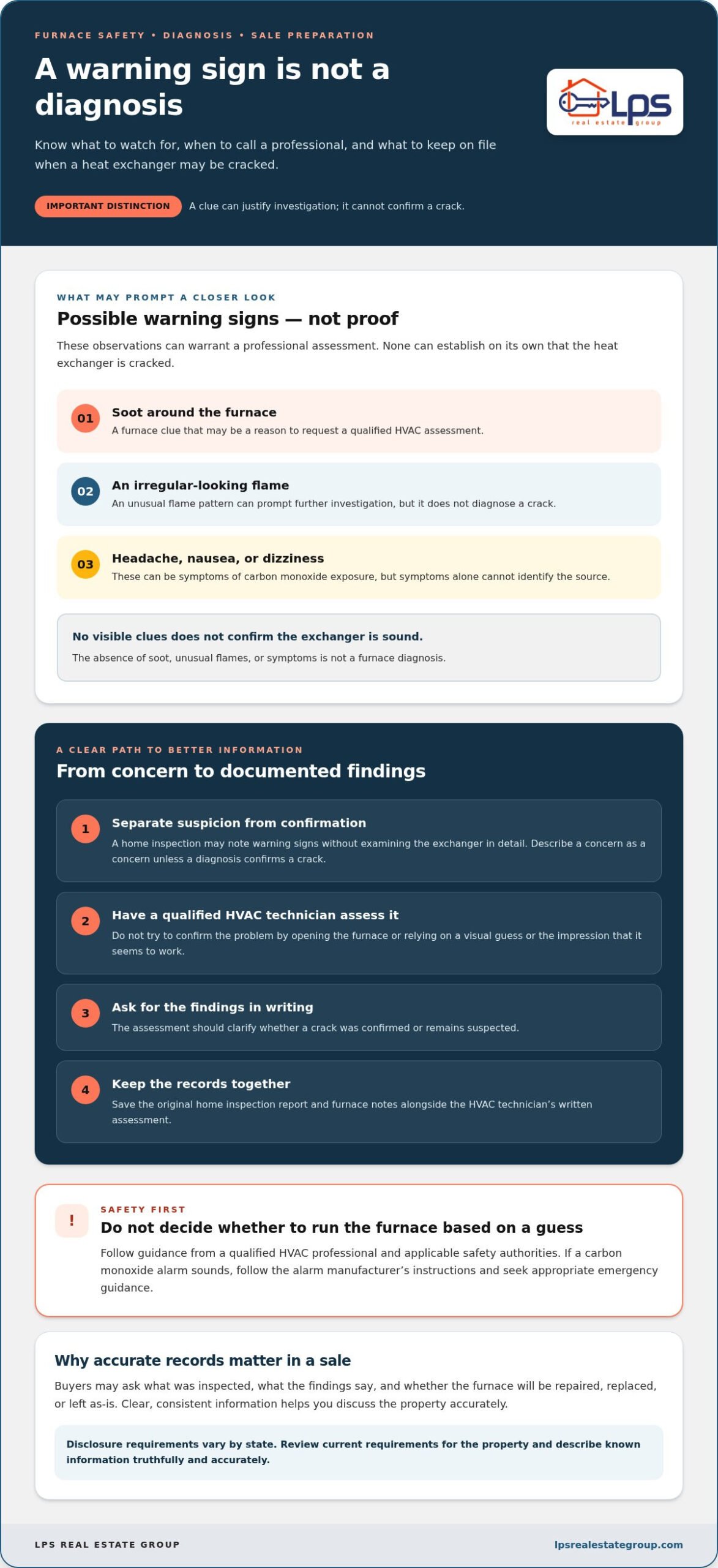
A suspected crack deserves careful attention because the concern isn’t limited to whether the furnace produces heat. A damaged heat exchanger may let combustion gases, including carbon monoxide, mix with air moving through the home. Don’t try to confirm the problem by opening the furnace or interpreting what you see inside. A qualified HVAC technician can assess the system and explain the findings.
Until you have guidance, don’t decide whether to operate the furnace based on a guess or a single visible clue. Follow instructions from a qualified HVAC professional and applicable safety authorities. If a carbon monoxide alarm sounds, follow the alarm manufacturer’s instructions and seek appropriate emergency guidance.
Which signs justify further investigation?
Some clues may prompt a closer look, but none should be treated as proof of a cracked exchanger. Possible warning signs include soot around the furnace or an irregular-looking flame. Carbon monoxide exposure may cause flu-like symptoms such as headache, nausea, or dizziness, but symptoms alone can’t identify the source.
- Furnace clues: Soot or an unusual flame pattern can be a reason to request a professional assessment.
- Possible exposure symptoms: Headache, nausea, and dizziness warrant attention, but they don’t diagnose a furnace defect.
- No obvious clues: The absence of visible soot, unusual flames, or symptoms doesn’t establish that the exchanger is sound.
Visual signs need professional interpretation. A carbon monoxide alarm alerts occupants to carbon monoxide in the air; it doesn’t inspect the heat exchanger, confirm a crack, or pinpoint the source of the gas. An alarm that hasn’t sounded isn’t a furnace diagnosis either.
How is a cracked heat exchanger confirmed?
Confirmation calls for an inspection by a qualified HVAC technician, not a homeowner’s visual guess or the impression that the furnace seems to be working. A standard home inspection may note warning signs without examining the exchanger in detail. If a report raises concern, arrange a separate HVAC assessment and ask for the findings in writing.
For your records and future sale discussions, keep the documents together:
- The original home inspection report and any notes about the furnace.
- The HVAC technician’s written assessment, including whether a crack was confirmed or remains suspected.
- Basic furnace details, such as the make, model, and age, if available.
These records help you distinguish a concern from a confirmed diagnosis and describe the condition consistently to prospective buyers. They can make conversations more factual, though they can’t guarantee a particular response. If you’re selling a house with a cracked heat exchanger, an as-is sale is one option if you’d prefer not to complete repairs first. LPS Real Estate Group buys homes as-is, with no repairs or cleaning required and $0 fees, commissions, or hidden costs.
Repair, Replace, or Sell As-Is: Compare Your Home-Sale Options
A furnace finding doesn’t automatically mean you have to repair or replace the system before selling. Your choice depends on what a qualified assessment found, your plans for the home, and how much time and effort you want to put into preparing it for sale. Compare the tradeoffs against your priorities rather than treating one path as the default.
| Option | Effort involved | Decision factors |
|---|---|---|
| Repair | Coordinate the recommended work and keep the related records. | Consider the confirmed condition, furnace age, warranty status, and whether you want a repaired system for your next home or for the sale. |
| Replace | Plan for a larger project involving removal of the existing furnace and installation of a new one. | Consider the system’s age and history, your plans, and whether replacing the unit fits your broader goals for the property. |
| Sell as-is | Proceed without completing the furnace work before the sale, while sharing accurate information about the known condition. | Consider whether avoiding repair coordination matters more to you than completing work before selling. |
This comparison is a starting point, not a repair recommendation. A suspected defect and a confirmed diagnosis aren’t the same, and the table can’t replace a qualified assessment. Use it to frame the decision around your situation.
When might repair or replacement fit your plans?
If you plan to stay in the home, weigh the furnace’s condition against how long you expect to use it. If you intend to sell soon, consider whether completing work makes sense for your sale plans. The furnace’s age, warranty status, and history of repeated failures are useful factors, but none alone dictates repair or replacement. Base your decision on the findings and your priorities.
When might an as-is sale be worth considering?
An as-is sale may suit you if you’d rather not coordinate furnace work before moving or selling. “As-is” describes the condition in which the property is offered; it doesn’t erase applicable disclosure duties. Requirements vary by state, so understand the rules that apply to the property and describe known information accurately. For more on this approach, see the complete guide to selling a house as-is.
There isn’t one right answer for every homeowner. Someone planning to remain in the home may weigh future use differently from a seller who wants to avoid managing a repair project. Selling a house with a cracked heat exchanger still leaves you with a choice: complete work first or consider selling with the issue documented. Consider the confirmed condition, your timeline, and the effort you’re willing to take on, then choose the path that fits your circumstances.
Prepare to Sell a House with a Cracked Heat Exchanger
Organization can make a stressful sale issue easier to discuss. You don’t need to create your own technical report. Gather what already exists, identify the system, and note what remains uncertain. This gives you a clearer starting point for buyer conversations and for deciding how to proceed.
What information should homeowners organize?
Gather documents you already have, such as inspection reports, HVAC service records, repair invoices, and furnace paperwork. Keep the history together rather than creating new findings or interpreting technical details yourself.
- Collect existing reports. Keep the home inspection and any written HVAC assessment or service notes. If one report raises a concern and another confirms a diagnosis, retain both so the sequence is clear.
- Note furnace details. Record the make, model, and age if that information is available in the paperwork or on the unit’s existing documentation.
- Separate facts from observations. A technician’s written conclusion is different from a personal observation, such as noticing an unusual flame, or an unconfirmed concern mentioned during an inspection.
- List unanswered questions. Note what you still want clarified, such as whether the crack was confirmed or what the written report says about the furnace’s condition.
Keeping these items together helps you give consistent answers instead of relying on memory. Clear records support accurate conversations, but they can’t guarantee how a buyer will respond or how a transaction will proceed.
How should the furnace issue be discussed?
Use plain, factual language that matches the documents. If an inspection report flags a possible problem but there’s no confirmation, describe it as a concern rather than a confirmed crack. If a written assessment confirms a crack, state that finding accurately and avoid adding conclusions the report doesn’t make. This helps prevent both understatement and unnecessary alarm.
Disclosure obligations aren’t identical everywhere. They depend on applicable state law and may also relate to the details of the transaction. Before deciding what must be disclosed, verify the current requirements that apply to the property. Don’t assume that describing a sale as “as-is” removes any applicable disclosure duties.
Once your records are organized, decide whether you want to manage furnace work or consider selling without completing it. LPS Real Estate Group buys homes as-is, including properties needing repairs. No repairs or cleaning are required, and there are $0 fees, commissions, or hidden costs. You can share your property details with LPS to receive a no-obligation cash or creative offer. For a broader overview of the process, see the complete 2026 guide to selling a house for cash.
Sell the House As-Is with LPS Real Estate Group
If you’d rather not coordinate furnace work before selling, an as-is sale is another option. LPS Real Estate Group buys residential properties directly from homeowners, including homes that need repairs. A cracked heat exchanger doesn’t automatically require you to repair or replace the furnace before exploring a sale. You can consider an offer while keeping the property’s condition and your priorities in view.
As-is describes the condition of the home being sold. With LPS, Share what you know about the furnace and the rest of the property, then review an offer without an obligation to accept it. You can explore a sale without first taking on a repair project.
How does the LPS home-buying process work?
The process follows three steps. You provide basic information about the property and your situation, receive a no-obligation cash or creative offer, and choose a closing date if you decide to move forward.
- Share property details. Provide basic information about the home and its condition, including the known furnace issue. Existing inspection or service records can help you describe the situation clearly.
- Review an offer. LPS presents a cash or creative offer with no obligation to accept. The offer is specific to the property, so its amount depends on the property details.
- Choose a closing date. If you decide the offer works for you, you select a closing date. Closing can be as little as 7 days or on your schedule.
This process lets you understand the option before making a commitment. You can consider the offer alongside other paths, such as completing furnace work or pursuing a different sale approach. The choice remains yours.
What does an as-is sale mean with LPS?
An as-is purchase means LPS buys the home in its current condition, including a property with a furnace that needs attention. You don’t have to arrange repairs or cleaning for an LPS sale. There are $0 fees, commissions, or hidden costs. The full cash offer amount goes to the homeowner, with typical closing costs covered by LPS. Share accurate information about the heat exchanger and any other known concerns as you discuss the property.
If you’re selling a house with a cracked heat exchanger, an as-is sale may suit you if you’d prefer to avoid managing repairs before selling. It’s an option, not a requirement. Review the no-obligation offer and decide what fits your circumstances. To explore this path, share your property details with LPS.
Choose the Next Step That Fits Your Plans
Selling a house with a cracked heat exchanger doesn’t mean you have to decide everything at once. Start with the information you have, then consider which route best matches your priorities: completing furnace work before the sale or exploring an as-is option. A clear next step can make the situation feel more manageable while you weigh the larger decision.
If you’re considering an as-is sale, share the property details with LPS Real Estate Group and review an offer as one possible path. There’s no obligation to sell. The offer can help you understand the alternative and decide whether it suits your circumstances.
Share your property details and explore an offer when you’re ready. Choose the next step that works for you.
Frequently Asked Questions
Can I sell a house with a cracked heat exchanger without replacing the furnace?
Yes. You can consider selling without replacing the furnace first. Your options depend on your circumstances and any requirements that apply to the sale. LPS buys homes as-is, so furnace repairs aren’t required for its process. Keep any reports you have and describe the known condition accurately. An as-is sale doesn’t remove disclosure obligations that may apply, so verify the rules for the property.
Is a cracked heat exchanger the same as a carbon monoxide leak?
No. A crack may create a path for combustion gases to enter circulating air, but a crack alone doesn’t establish that carbon monoxide is present or show the risk in a particular home. A carbon monoxide alarm detects the gas in the air; it doesn’t diagnose the furnace. For immediate safety concerns, follow current emergency guidance.
Can a home inspection identify a cracked furnace heat exchanger?
It depends on the inspection’s scope and methods. A general home inspection may report a furnace concern or recommend further evaluation, while a furnace-specific assessment may examine different details. Read the report’s exact wording: “possible concern” and “confirmed crack” mean different things. Don’t assume a standard inspection alone proves or rules out a defect. Keep any follow-up findings with the original report.
Do I have to disclose a cracked heat exchanger when selling my house?
There isn’t one nationwide answer. Disclosure requirements vary by state and may depend on the known facts, available records, and transaction details. Keep relevant reports and describe what they say accurately, without presenting an unconfirmed concern as a diagnosis. Before deciding what must be disclosed, verify the rules that apply to the property. Selling as-is shouldn’t be treated as a substitute for meeting applicable obligations.
Should I turn off my furnace if the heat exchanger may be cracked?
There’s no universal online instruction that can determine whether a specific furnace should keep operating. Follow the guidance of a qualified professional who has assessed the situation, and don’t rely on symptoms or an online description to diagnose the equipment. If you suspect an immediate carbon monoxide emergency, follow local emergency instructions. Keep any safety guidance you receive with your furnace records as you prepare for a sale.
Will a cracked heat exchanger stop a buyer from purchasing my house?
Not necessarily. A furnace concern may lead a buyer to ask for details about the finding and the system’s condition, but it doesn’t prove that a sale is impossible. Buyers may weigh the issue differently. If you’d prefer not to complete repairs before selling, LPS buys residential properties as-is. Share the property details and consider a no-obligation offer before deciding how to proceed.
How quickly can I sell a house with a cracked heat exchanger to LPS?
LPS can close as little as 7 days or on a date that works for you. The process starts with sharing basic property details. LPS then presents a no-obligation cash or creative offer, and you choose a closing date if you move forward. The offer amount varies based on the market, property condition, and desired closing speed. You can review the offer before deciding whether it fits.