

A fence can cross a property line by just 6 inches to 2 feet and still complicate a home sale. Selling a house with a property line encroachment means dealing with a structure or object that crosses onto another person’s land without permission, and the issue may affect financing, title insurance, or negotiations. In most states, sellers are legally required to disclose known encroachments or boundary issues to prospective buyers.
It’s understandable to worry that a boundary problem could derail a sale, especially if it comes to light late in the process. The first steps are to establish what crosses the line, find out whether an easement or other agreement applies, and tell buyers what you know. This guide covers common encroachments, how a survey can clarify the boundary, disclosure and liability considerations, and how title insurance may apply.
Key Takeaways
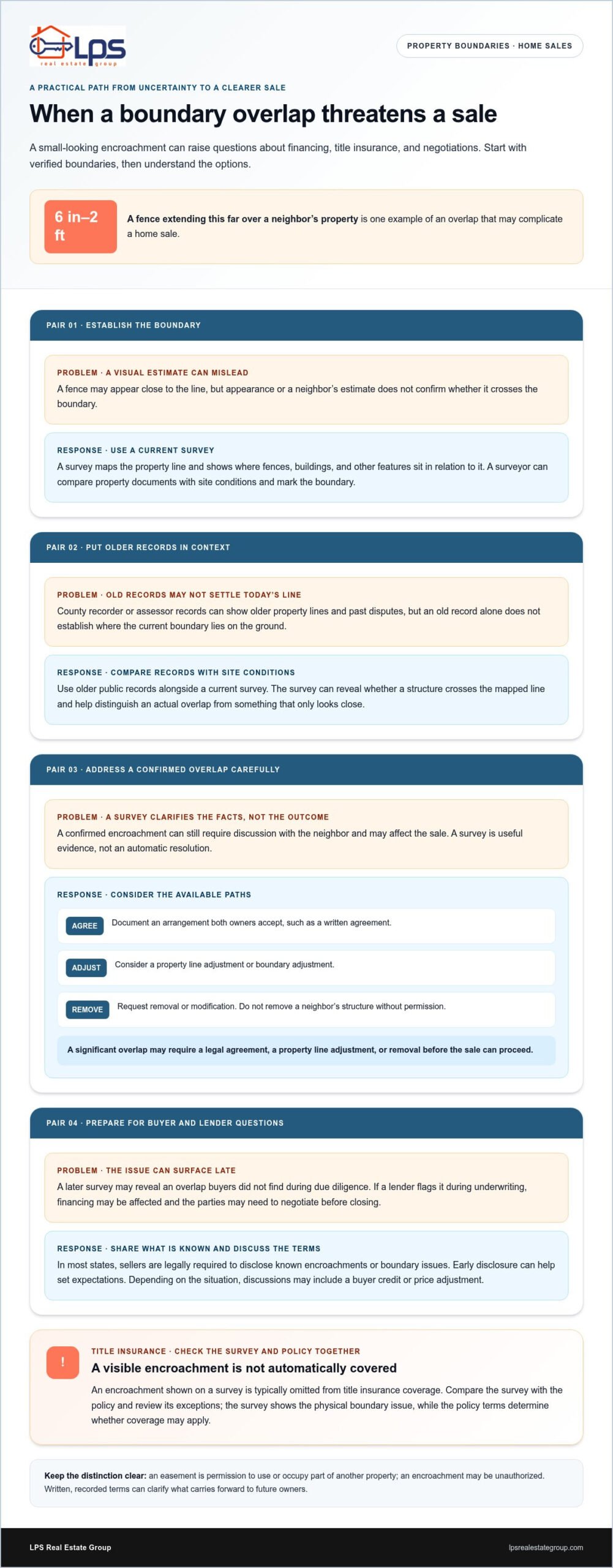
- Use a current survey to establish whether a fence, driveway, or other structure crosses the boundary; visual estimates and old records may not settle the question.
- Tell prospective buyers about known boundary problems. Early disclosure can help set expectations and reduce the risk of later disputes.
- Don’t assume title insurance will cover a visible encroachment. Issues shown on a survey are typically excluded from coverage.
- An easement is permission to use or occupy part of another property, while an encroachment may be unauthorized; written, recorded terms can clarify what carries forward to future owners.
- If the boundary issue makes a traditional sale harder, compare ways to sell the property as-is, including a cash purchase, while weighing how the unresolved issue may affect the transaction.
What is property encroachment?
A property encroachment occurs when a physical structure or object crosses onto someone else’s land without permission. A fence, driveway, or building may cross the boundary. A structure built within a required setback can also create a property issue, even if it does not cross the property line.
The overlap may look minor from the yard, but its location can affect a sale. A fence extending 6 inches to 2 feet over a neighbor’s property is a common example. A newly identified encroachment can complicate a home sale and may lead to financing questions, negotiations, or delays.
Using Surveys and Records to Locate Boundaries
A survey maps a property’s boundaries and shows where buildings, fences, and other features sit in relation to them. A current survey is the practical way to verify a suspected overlap, rather than relying on how a fence looks or a neighbor’s estimate.
County recorder or assessor offices commonly hold public records showing older property lines and past disputes. Comparing those records with a current survey can help homeowners understand the parcel’s history and identify details that may matter to a buyer.
Identifying Encroachments in Survey Records
A survey can reveal an encroachment by showing a structure crossing the mapped property line. For example, it may show a fence extending beyond the seller’s boundary onto the neighbor’s land. This helps distinguish an actual overlap from a fence that merely appears close to the line.
Records may reveal a past boundary dispute, but an old record alone does not establish where the current line lies on the ground. A surveyor can compare property documents with site conditions and mark the boundary so both homeowners can see its location.
Boundary Survey and Resolution Costs
The cost of resolving an encroachment depends on what crosses the line and how the owners choose to address it. Options may include a written agreement, a boundary adjustment, or removing the structure.
When selling a home with an unresolved overlap, treat the survey as useful evidence, not an automatic solution. It can clarify the facts for discussions with a neighbor and help identify choices that may affect the sale. The parties may also consider a buyer credit or price adjustment during negotiations.
A survey obtained after the due diligence period can still reveal a problem before closing. For example, buyers may skip a survey during due diligence and discover a fence encroachment on a later survey. The finding could complicate underwriting if a lender flags the overlap, or lead the parties to negotiate before proceeding.
Once a survey confirms that a neighbor’s structure crosses the boundary, do not remove it without permission. Requesting its removal or modification, or documenting an arrangement both owners accept, may help address the issue. A significant overlap may require a legal agreement, a property line adjustment, or removal before the sale can proceed.
Will title insurance help in an encroachment dispute?
Title insurance may help with some ownership problems, but it does not automatically resolve a boundary dispute. Coverage depends on whether the encroachment was disclosed or appeared in the survey when the policy was issued.
Title Insurance Coverage for Encroachments
Title insurance may help if an insurer issued coverage without accounting for an existing encroachment. For example, a fence extending onto a neighboring parcel might lead to a claim about ownership or use of that land. Possible coverage is not a promise that the insurer will move the fence or settle the dispute with the neighbor.
For a useful review, compare the survey with the title policy and identify what the policy covers. The survey shows the physical boundary issue; the policy terms determine whether it falls within coverage. This distinction helps buyers understand what protection may apply before closing.
Limits on Title Insurance Coverage
An encroachment shown on the survey is typically omitted from title insurance coverage. If the survey shows a driveway or fence extending beyond the boundary, buyers should not assume a policy will cover later costs or disputes related to that visible condition.
A neighbor may also claim adverse possession of land affected by an encroachment. Such a claim may become permanent and reduce the property’s value. Title insurance may not resolve the ownership question, particularly if the issue appears in the records or survey. Review the policy’s exceptions alongside the survey before relying on coverage.
Mortgage and Title Insurance Concerns
A lender’s review can make an encroachment relevant even when the buyer and seller are willing to proceed. Some buyers using financing may be unable to continue if their lender flags the issue during underwriting. This can affect the transaction regardless of whether title insurance might cover a claim.
Buyers can use the survey and title documents to identify the exact overlap and discuss its effect on the property. A lender may treat a structure crossing the boundary differently from a minor concern that does not affect access or use. The finding may lead to further review or negotiations before closing.
Marketable and Insurable Title
Marketable title can be transferred without a defect that seriously affects ownership or creates an unresolved claim. Insurable title is title a title company is willing to insure. An encroachment that affects ownership may cause a title company to hesitate before providing coverage.
North Carolina illustrates how a boundary issue can affect both sides of a transaction. There, an encroachment onto a neighbor’s property is treated as trespass and may be an actionable encumbrance that makes title unmarketable. A seller’s fence crossing onto a neighbor’s land may make title to both properties unmarketable.
Before closing, compare the survey’s boundary findings with the title commitment and policy exceptions. If the documents identify a fence overlap, buyers and sellers can discuss whether to resolve it, document an agreement, or address it in negotiations. A clear record helps everyone distinguish insurance concerns from issues that need a separate resolution.
Disclosure requirements and seller liability
Disclosure and resolution rules depend on the state where the property is located, and local zoning rules can affect how an encroachment is handled. In most states, sellers are legally required to disclose known encroachments or boundary issues to prospective buyers.
Seller Disclosure Obligations
Seller disclosure means telling prospective buyers about a known boundary problem, such as a neighbor’s garage crossing onto the property. Disclosing it upfront helps buyers understand what they’re considering and can protect the seller by setting expectations clearly.
A seller who knows about an encroachment should not hide it, even if the overlap seems small or has existed for years. An unresolved boundary issue can affect negotiations, financing, and the buyer’s ability to use the property.
Disclosing an Encroachment
Describe the issue plainly: identify the structure, where it crosses the boundary, and what steps have already been taken. For example, disclose that a survey identified a fence overlap and that the neighbor has been contacted.
Share relevant survey findings and any written agreement with the buyer. Clear disclosure gives both sides a factual basis for discussing removal, modification, or another resolution before closing.
Disclosure Documents and Records
Keep the survey, correspondence with the neighbor, and any written agreement with the seller disclosure documents. These records help show what the seller knew and when the issue was discussed with prospective buyers.
If a neighbor agreed to a boundary arrangement, preserve the written terms and any record showing whether they were formally recorded. A verbal conversation alone may not establish a permanent arrangement for a future owner.
State and Local Disclosure Rules
State law determines seller disclosure duties and available legal remedies, while local rules can affect zoning and required setbacks. A real estate attorney can explain how state law applies to the specific property and dispute.
North Carolina provides one example of how a contract may address title defects: paragraph 8(g) states that a buyer’s failure to survey or examine title before the due diligence period expires doesn’t relieve the seller of the obligation to deliver good title.
Disclosure matters even after a sale. A seller who conceals a known boundary issue may face a later claim for fraud or misrepresentation, and the limitations period may not begin until the buyer discovers the problem. Preserve records of disclosures and responses so the timeline is clear.
If a direct conversation with the neighbor does not resolve the issue, a formal letter can document the concern and request action. A real estate attorney can explain whether a written agreement, removal, or legal action fits state rules. Leaving an encroachment unresolved can also create a lasting dispute, including a possible adverse-possession claim.
Differences between encroachments and easements
An encroachment is a physical structure or object crossing onto another person’s land without permission. An easement is permission to use part of someone else’s property for a defined purpose, such as a driveway. Neither the buyer nor seller automatically pays to remove or remedy an encroachment. The sale contract and the parties’ agreement determine responsibility; a seller may offer the buyer a closing credit.
The key difference is permission. A neighbor’s fence crossing the boundary without consent is an encroachment, while a recorded easement may authorize a driveway to cross that same boundary. The paperwork matters because an easement defines permitted use and its limits. Before a sale, compare property records and any written agreement with the physical arrangement on the ground.
An owner may formally permit an encroachment through an easement agreement or a revocable license while retaining ownership of the affected land. A license can be withdrawn, while an easement is a property right with defined terms. For example, a neighbor might receive permission to keep a gate or shed in place. The agreement should clearly identify the area and permitted use.
If a structure is difficult to remove, neighboring owners can discuss compensation or an easement. They may document the arrangement in an agreement and record it in official records. A recorded easement remains connected to the property when ownership changes, so a future buyer must honor its terms. Clearly defining the written scope matters for both properties, not just the current owners.
An unresolved encroachment can create uncertainty if the landowner leaves it unaddressed. In some circumstances, an encroachment may become an easement over time, so a seller should not assume silence settles the boundary. Written notice or an agreement can document the owners’ intentions. A real estate attorney can explain how state law applies to the specific facts and what options may protect the property.
For example, a driveway crossing a boundary may be addressed by moving it, granting a recorded easement, or agreeing on a boundary adjustment. Each option affects the buyer differently. Removal eliminates the physical overlap, while an easement allows continued use under stated terms. If the neighbor refuses to agree, the dispute may require legal action rather than an informal conversation.
During a sale, disclose whether the structure is unauthorized or covered by a written easement or license. Give the buyer relevant records and explain any notice or negotiation already underway. This lets the parties address the arrangement in the purchase contract, including possible removal, written permission, or a closing credit, instead of leaving the next owner to discover an unclear boundary issue later.
How do you confirm a property line encroachment with a survey?
Ask a surveyor to determine whether a fence, driveway, or building crosses the recorded boundary. A licensed surveyor can compare property documents with conditions on the land and place physical markers showing where one property ends and the neighbor’s begins. Those measurements provide a clearer basis for decisions than visual estimates.
Start by identifying the specific feature causing concern. For example, note whether a fence corner, garage wall, or driveway appears to cross the line. Share the property address and any existing survey or plat with the surveyor. These documents can focus the boundary review and show whether older measurements need comparison with current site conditions.
The surveyor’s work can establish where the boundary falls and show the feature’s position in relation to it. Physical markers make the line easier to understand on the ground. The survey drawing can then help the owner and neighbor discuss the same location, rather than rely on different assumptions about where a fence should sit.
Public records provide useful context, but serve a different purpose from a current survey. County recorder or assessor offices commonly hold records showing older boundary lines and past disputes. Compare relevant records with the survey to understand whether a prior boundary arrangement or disagreement may affect the property. An old document can inform the review but cannot replace measurements at the site.
Once the survey identifies a possible overlap, review the drawing to see where the structure sits in relation to the property line. A fence shown beyond the line presents a different issue from one that merely appears close to it. If the survey is unclear about a feature, ask the surveyor to explain the markings and measurements so you understand the finding accurately.
Share the survey with the neighbor and invite a discussion based on its marked boundary. If both owners agree about the location, they can consider moving the structure or documenting permission for its continued use. Keep the survey and any written agreement with the property records, especially if a sale is approaching.
A survey can also help organize information for a buyer. Provide the relevant drawing and explain whether the finding is disputed, resolved, or still under discussion. If a buyer’s survey identifies an overlap before closing, the parties can use its documented location to discuss next steps instead of debating an informal estimate.
If a confirmed encroachment makes a conventional sale difficult, explore an as-is property sale as another way to consider the property’s condition and boundary issue. The survey remains useful in that conversation because it clarifies what crosses the line and what the buyer would be evaluating.
LPS Real Estate Group: Cash Home Buying
LPS Real Estate Group buys homes for cash and acquires properties as-is, including when a boundary issue is part of the sale. If a neighbor dispute, unresolved survey finding, or needed repair makes a conventional sale harder to manage, an as-is sale may be worth considering. LPS also offers creative finance solutions as another path when a cash sale is not the right fit.
Share the survey findings and any written agreement or disclosure records when discussing the property. Clear information helps frame the condition and the encroachment as part of the sale conversation. For a direct discussion of your property, contact LPS Real Estate Group.
Choose a Clear Path for Your Sale
Once you understand the boundary issue and have a record of it, decide what outcome best fits your plans. Selling a house with a property line encroachment may involve further discussions with the neighbor, a negotiated agreement, or a sale that accounts for the unresolved condition. Consider how much time and effort you want to spend resolving it before transferring ownership.
If you would rather avoid preparing the home for a conventional listing, LPS Real Estate Group buys homes for cash and acquires properties as-is. No repairs, commissions, or hidden costs are involved. Homeowners facing financial pressure may also consider its foreclosure prevention purchase option. These choices may suit a situation where the property issue is part of a wider decision about timing, repairs, or changing circumstances. A practical next step is to weigh the sale approach against your priorities, including whether you want to resolve the boundary matter first.
A conversation about the property, its condition, and the boundary concern can help clarify your options. Contact LPS Real Estate Group to discuss your situation and take the next step with clarity.
Frequently Asked Questions
Can You Sell a House with Encroachment?
Yes, selling a house with a property line encroachment is possible, though the issue can affect the buyer pool and transaction terms. A buyer planning to build near the boundary may view a neighbor’s shed differently from a fence overlap. Explain the known condition early and discuss how it will be handled in the purchase agreement. A buyer’s financing and title review can also affect whether closing proceeds.
How do you disclose it?
Disclose the known issue in writing through the seller disclosure process, and clearly describe the affected structure and its location. For example, identify a fence section that crosses the boundary and note whether the neighbor has disputed it. Attach relevant survey findings and keep copies of correspondence or agreements. If the issue is unresolved, say so plainly rather than presenting it as settled.
Is It Legal to Sell?
There is no general nationwide ban on selling a property simply because an encroachment exists. The sale must still meet applicable state law and the purchase contract’s title requirements. Do not conceal or misrepresent a known boundary issue. For example, a seller can disclose a garage crossing a boundary, while the buyer and seller address the condition in their agreement. State-specific advice matters if ownership or title is disputed.
What Happens If a Survey Shows an Encroachment?
A survey showing an overlap gives the parties a specific finding to address before closing. Compare the marked structure with the boundary information and share the result with the buyer. If a driveway crosses the line, the parties can discuss whether the transaction depends on an agreement or another resolution. The finding can also prompt further title or lender review, so raise it promptly rather than waiting until signing.
What Is Encroachment in Real Estate?
In real estate, an encroachment is a physical object or structure that extends onto another person’s land without permission. It can involve a fence, garage, driveway, or building addition. For example, a fence may sit partly beyond the surveyed line and occupy the neighbor’s parcel. A structure built too close to a boundary may also violate a required setback, even if it does not cross onto neighboring property.
What counts as a property line encroachment when selling a house?
A fence, driveway, retaining wall, or part of a building counts as an encroachment when it physically crosses the property boundary without permission. Roof eaves or a garage wall, for instance, may extend over a neighbor’s parcel. A visible feature near the line alone does not prove an encroachment; its position must be compared with the actual boundary. A recorded easement or written license can change whether the use is authorized.
Do sellers have to disclose property line encroachments in the United States?
In most states, sellers are legally required to disclose known encroachments or boundary issues to prospective buyers. The disclosure form and process depend on state requirements and the sale documents. Include what you know, such as a survey finding, a neighbor’s objection, or an agreement permitting continued use. Keep a copy of the completed disclosure and supporting records so there is a clear account of what was shared.
Can you sell a house with an unresolved property line encroachment?
Yes, selling a house with a property line encroachment can proceed while the issue remains unresolved if the buyer agrees and the transaction’s title and contract requirements are met. The issue can still affect financing, title insurance, or negotiations. A buyer may ask the seller to resolve the overlap or account for it in the terms. Disclose its status and provide relevant records so the buyer can make an informed decision.