

What if selling a house with extreme clutter doesn’t have to start with clearing it out? When belongings fill rooms and sorting, hauling, and cleaning feel impossible, it’s understandable to worry that no buyer will consider the property as it is. But a home’s condition can shape which sale route makes sense; it doesn’t automatically mean you must clear everything first.
This guide compares your options and offers practical steps to help you protect your time and energy. You’ll learn what to consider before sorting belongings, how a conventional listing may differ from an as-is sale, and what details can help you weigh your choices.
If preparing the property feels unmanageable, an as-is sale may be worth considering. LPS Real Estate Group buys homes without requiring cleaning or repairs, and there are $0 fees, commissions, or hidden costs. You can review a no-obligation offer and choose a closing date that fits your schedule. You don’t need to solve everything today. Start by understanding the routes available, then decide what fits your circumstances and preferred timeline.
Key Takeaways
- Selling a house with extreme clutter can still be possible; access to rooms and visibility of the home’s features can help shape your options.
- Before sorting, identify belongings you want to keep and note which rooms are accessible or difficult to enter.
- Compare a conventional listing and an as-is sale by considering preparation, belongings, process, and closing-date flexibility.
- Choose one manageable next step based on your priorities and timeline instead of treating a full cleanout as the starting point.
- LPS’s three steps are straightforward: share property details, receive a no-obligation cash or creative offer, and choose a closing date if you proceed.
Selling a House with Extreme Clutter: What Are Your Realistic Options?
A cluttered home can still have sale options. If belongings cover surfaces, fill rooms, or make parts of the property difficult to reach, it may be hard to know where to begin. The situation calls for a practical plan, not shame or assumptions about the people who live there.
For this guide, “extreme clutter” means belongings significantly limit access to rooms or obscure features of the home. It describes the property’s current condition, not a person’s character or health. Selling a house with extreme clutter may involve preparing for a conventional listing, exploring a direct as-is sale, or comparing both before deciding. This guide explains those choices; it doesn’t assess or diagnose anyone or their household.
When does clutter start affecting a home sale?
Clutter can make it harder for someone viewing the property to enter a room, move through it, or see its walls, floors, and other features. A covered countertop or a narrow path between belongings can also make it more difficult to assess the space. These are practical access and visibility concerns. On their own, they don’t determine the home’s value, the level of buyer interest, or the final sale outcome.
Focus on what you can observe. Note which rooms are accessible and whether stored items conceal areas that may need a closer look. The term “hoarding” is sometimes used casually to describe a very cluttered home, but it can also refer to a mental health condition. Hoarding disorder is distinct from general clutter; this article doesn’t assess or diagnose a person.
Does every seller need to clear the property first?
No. Preparation depends on the sale route you choose and what matters most to you. A conventional listing may involve clearing belongings or improving how rooms are presented, but that is one possible plan, not a universal requirement. The preparation involved depends on the property and your priorities. Compare that effort with an as-is option before taking on a whole-house cleanout.
LPS buys homes as-is, so cleaning or repairs aren’t required before a sale, and the home doesn’t need to be cleared first. There are $0 fees, commissions, or hidden costs. This can be a practical route if sorting feels unmanageable or you prefer not to prepare the property for a conventional listing. You can review the option without assuming it’s the right choice for every situation.
A useful first decision is to identify what you want to keep and which sale route you’d like to understand better. You don’t have to settle every question about the belongings before exploring your options. A clearer picture of access issues, your priorities, and your preferred timeline can help you choose a manageable next step.
What to Consider Before Sorting or Removing Belongings
Before moving anything, pause and decide what you most want to protect. You don’t need a whole-house plan to take a useful first step. If selling a house with extreme clutter feels like too much to handle at once, focus on gathering basic information and identifying belongings that matter to you. Sorting is a personal choice, not a requirement for exploring an as-is sale.
How can you begin without tackling the whole house?
Choose one manageable category, such as family photographs, personal papers, or a small group of keepsakes. You don’t have to sort everything in that category right away. Start by noting what you definitely want to keep, so those items are easier to distinguish from belongings you haven’t decided about.
Keep important personal documents and irreplaceable items accessible, if you can do so safely. Don’t move belongings that appear unstable or hazardous. Leave uncertain items in place for now rather than making a rushed decision. You don’t have to finish sorting before discussing an as-is sale.
If it helps, make a short “keep” note on your phone or on paper. Record a category or location, such as “photo albums in the back bedroom,” without creating a detailed inventory. This simple reference can help you track priorities without putting pressure on yourself to decide what should happen to every item.
What property details help explain the situation?
A simple room-by-room record can make it easier to describe the property as it is, without staging it or hiding its condition. Note which rooms are accessible, where belongings limit movement, and which areas or features are difficult to see. Keep your observations factual and specific. For example, “the hallway is partly blocked” gives a clearer picture than “the house is a mess.”
You can write these details down or take photos if that feels comfortable and safe. Don’t enter an area or shift items just to get a better view. The purpose is to explain what you already know, not to create a presentation or prove that the property is ready for a viewing.
Sharing property details is the first step in LPS’s process. LPS then provides a no-obligation cash or creative offer, and you choose a closing date if you decide to proceed. The home is purchased as-is, with no cleaning or repairs required. There are $0 fees, commissions, or hidden costs, so a full cleanout isn’t a prerequisite for discussing this option.
If you’re weighing whether to sort first or explore an offer for the home as it stands, you can share your property details with LPS without committing to sell. Start with what you know: the home’s general condition, which spaces are accessible, and any belongings you’ve already identified as important to keep.
Conventional Listing or As-Is Sale: Compare the Trade-Offs
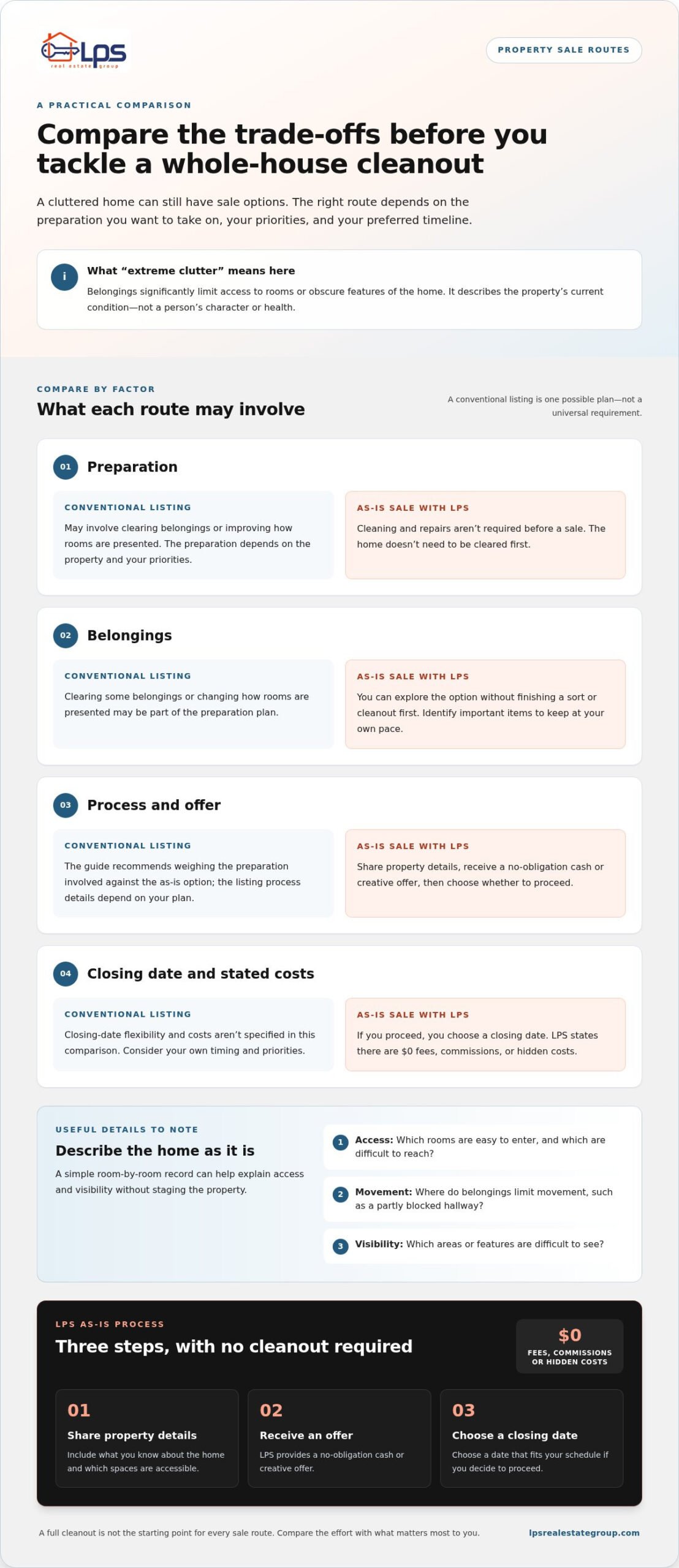
There isn’t one right route for every seller. A preparation-focused listing may suit someone with the time and support to sort belongings and present the home. A direct as-is sale may feel more manageable if clearing rooms or arranging repairs isn’t realistic. Compare what each path asks of you instead of assuming the house must be fully cleared before you can explore a sale.
| Consideration | Conventional listing | Direct as-is sale with LPS |
|---|---|---|
| Preparation | Some sellers choose to declutter, clean, or address repairs to prepare the home for showings. | No cleaning or repairs are required. |
| Belongings | You may decide to sort or move items to make rooms easier to view. | The home can be sold as-is, without clearing it first. |
| Process | The sale involves preparing the property and presenting it to potential buyers. | Share property details, receive a no-obligation cash or creative offer, then decide whether it fits. |
| Closing date | Timing can depend on the sale process and the parties involved. | You choose a closing date that works for your schedule. |
What may a preparation-focused listing involve?
A seller preparing for a conventional listing might work room by room: sort belongings, clear areas that are hard to access, and make surfaces and features easier to see. Depending on the home and the seller’s goals, cleaning or repairs may also be part of the preparation plan. This can take time and effort, and it doesn’t guarantee a particular sale price or outcome. It’s one possible route, not a universal requirement. For more context on the alternative, see this guide to selling a house as-is.
How does an as-is direct sale differ?
With LPS, an as-is purchase doesn’t require cleaning or repairs, and LPS presents a no-obligation cash or creative offer for you to review. If you decide to proceed, you select the closing date. This route may be worth considering when preparing the property feels like too much to take on.
With a conventional listing, you may choose to prepare the home for buyers; with an LPS as-is sale, cleaning and repairs aren’t required. That distinction helps clarify the trade-off: one path may involve more work to present the property, while the other lets you consider an offer without making that preparation a condition of the sale. If you’re selling a house with extreme clutter, compare the effort each route would ask of you with your priorities and preferred timing.
How to Decide on a Manageable Next Step
You don’t have to settle every question about the house or its contents at once. Begin with a few priorities: what matters most to keep, how much preparation feels manageable, which sale route you want to explore, and when you’d like to move forward. When selling a house with extreme clutter, treat each step as an option, not a demand to complete a full cleanout.
Which priorities should guide your decision?
Consider your need for privacy, preferred timing, and the belongings you most want to protect. Then weigh the effort of preparing the home against your goal for the sale. A conventional listing may involve more preparation, while a direct as-is sale offers another route to consider. Neither choice is automatically best for every household; let your circumstances and preferences guide the decision.
- Set a priority. Decide whether timing, privacy, keeping specific belongings, or reducing preparation feels most important right now.
- Mark what matters. Identify personal or irreplaceable items you want to retain. You can leave other belongings undecided for now.
- Choose a route to explore. Compare the preparation involved in a conventional listing with an as-is sale. Exploring an option doesn’t commit you to it.
- Think about timing. Consider when you hope to close and whether you need flexibility. Use that preference to guide which route you look into first.
What information can you gather before choosing?
You can prepare a concise, honest description without organizing every item or making the home look ready for a showing. Note basic property details and the home’s current condition, then add practical observations about which rooms are accessible and where belongings limit access. If you have a preferred closing date or need schedule flexibility, write that down too. These details can make an initial discussion more focused.
- Basic information about the property
- A brief description of its current condition
- Rooms that are accessible and areas where belongings restrict access
- Your preferred closing date or timing needs
Keep the description factual. There’s no need to hide the clutter or move items to create a different impression. If you’re considering a direct buyer, this cash home buyer guide can help you understand that route.
If the property is inherited, decisions about ownership or estate matters may need separate guidance. This article doesn’t provide probate or legal advice. Readers handling an inherited home can use this inherited property selling guide for information tailored to that situation.
Your next step can be as small as writing down your priorities or sharing the property details. If you’d like to explore an as-is option, share your property details with LPS and consider a no-obligation offer without committing to sell.
How an As-Is Sale with LPS Works When a House Is Cluttered
When sorting or cleaning feels like a major obstacle, an as-is sale offers a way to consider selling without making a full cleanout the first step. LPS buys homes as-is, so cleaning and repairs aren’t required, even when belongings fill rooms or make parts of the property harder to access. The process has three clear steps, and you decide whether to move forward after reviewing the offer.
- Share the property details. Describe the home’s general condition, any access limitations, and your preferred timing. You don’t need to clear rooms or make repairs before sharing these details.
- Receive an offer. LPS presents a no-obligation cash or creative offer. You can consider it without committing to a sale.
- Choose a closing date. If you decide the offer works for you, you select the closing date. Closing can happen in as little as 7 days or on your schedule.
What happens after you share the property details?
After you provide information about the property, LPS presents a no-obligation cash or creative offer for you to review. The offer amount varies by market, property condition, and desired closing speed. Consider whether it fits your needs, including your preferred timing, without treating the offer as a requirement to sell. You don’t need to complete a cleanout to begin the conversation.
Clear details help describe the property as it is now. You can mention which rooms are accessible and where belongings limit access, without rearranging items to make the home appear different. This keeps the first step focused on the home’s actual condition and your circumstances.
How can you move forward without pressure?
You decide whether to accept the offer. If you choose to proceed, you also choose the closing date, so the timing can reflect your plans. An offer is a choice to consider, not an obligation to sell. That distinction can matter if you’re weighing a direct sale while still deciding what to do with personal belongings.
LPS purchases homes as-is, with no cleaning or repairs required. You don’t have to finish sorting the home before exploring this route, and you can consider whether the offer and timing suit you.
Selling a house with extreme clutter can feel like a long list of tasks, but exploring an offer is a separate, manageable step. If you’re ready to learn what an as-is option could look like for your property, share your property details with LPS.
Choose a Next Step That Feels Possible
Selling a house with extreme clutter doesn’t have to begin with solving every decision about the belongings. Start by identifying what matters most, then consider which sale path fits your energy, privacy, and timing. If an as-is option seems worth exploring, learning what an offer looks like can help you decide with more clarity, without committing to sell.
LPS buys homes as-is, with no cleaning or repairs required. If you choose to proceed, you select the closing date. Closing can happen in as little as 7 days or on your schedule.
You don’t need to have everything figured out before taking one small step. Share your property details with LPS to explore a no-obligation offer, then decide what feels right for you.
Frequently Asked Questions
Can I sell a house with extreme clutter without cleaning it first?
Yes. LPS buys homes as-is, so you don’t need to clean, repair, or complete a cleanout before sharing the property details. Selling a house with extreme clutter can start with a straightforward description of the home, including areas that are hard to access. LPS then presents a no-obligation cash or creative offer. The property’s condition may affect the offer, but you can review it before deciding what to do next.
Does extreme clutter mean I have to throw away my belongings?
No. Selling the property and deciding what to keep are separate choices. You might first set aside family photos, personal papers, or another item you know you want to retain, while leaving uncertain belongings undecided. If you’re considering an as-is sale with LPS, cleaning isn’t required. Avoid rushed disposal decisions just to prepare for a possible sale; you can consider belongings at a pace that works for you.
How does clutter affect a cash offer for a house?
There’s no single rule that determines how clutter changes an offer. LPS’s offer amount varies by market, property condition, and desired closing speed. Give a clear description of what’s visible and which rooms are difficult to access, rather than guessing how those details will affect the amount. When you receive an offer, consider it alongside your priorities, the belongings you want to keep, and your preferred closing date.
Is a cluttered house the same as a hoarding disorder?
No. The appearance of a home alone can’t establish a health diagnosis. Clutter can have many circumstances behind it, and this article isn’t intended to assess the homeowner or household. Keep conversations respectful and focus on practical matters, such as access to rooms and which sale option feels manageable. If the situation is causing distress, the homeowner may choose to seek appropriate personal support while considering what to do about the property.
Can I sell an inherited house that has extreme clutter?
Yes, an inherited home can be considered for an as-is sale, even if belongings remain inside. Heirs may find it helpful to identify items family members want to keep before making decisions about the rest. LPS buys residential properties as-is, with no cleaning or repairs required. Inherited-property decisions can involve separate considerations, so readers handling an estate may find this inherited property selling guide useful.
What does as-is mean when selling a house to LPS?
For a sale to LPS, as-is means you don’t need to clean or repair the property before selling. You provide the property details, review a no-obligation cash or creative offer, and choose whether to proceed. If you accept, you select the closing date. This lets you consider a sale without first deciding how to clear every room.
How quickly can LPS close on a cluttered house?
LPS can close in as little as 7 days or on a date that works for you. The process begins when you share property details. LPS then presents a no-obligation offer, and you decide whether to move forward. If you do, you choose the closing date. This lets you consider timing alongside practical plans, such as arranging your next move or deciding which personal items to keep.