

What if the first step in selling a hoarder’s house isn’t clearing it out? If the volume of belongings feels impossible to tackle, you don’t have to renovate or complete a full cleanout before exploring a sale. The steps to selling a hoarder’s house as is start with understanding your options, not moving every item.
It’s reasonable to have questions about safety, paperwork, disclosures, and whether an as-is offer would be fair. Selling as-is can reduce the work you take on, but it doesn’t automatically remove your responsibility to disclose known property issues. Requirements vary by state, so understand what applies to your situation.
This guide walks you through a practical process, from assessing immediate concerns and gathering key documents to reviewing offers and choosing a sale path that fits your needs. You’ll also learn how a direct as-is purchase compares with other options, so you can make an informed decision without committing to a cleanout first.
Key Takeaways
- The steps to selling a hoarder’s house as is can begin without a full cleanout or renovation.
- Address immediate safety concerns and identify safe access first. Record visible property conditions where appropriate.
- Compare selling as-is with cleaning or repairing first, including the work and uncertainty involved in each option.
- Gather ownership, mortgage, and property records, and clarify which belongings will stay with the house.
- As-is describes the property’s condition, but disclosure duties may still apply and vary by state.
Selling a Hoarder’s House As-Is: What the Process Really Requires
A cluttered home can be difficult to manage practically and emotionally. Sorting belongings may involve family memories, important records, and decisions that shouldn’t be rushed. You can explore a sale before clearing every room. The steps to selling a hoarder’s house as is begin with understanding what “as-is” means and what still needs attention.
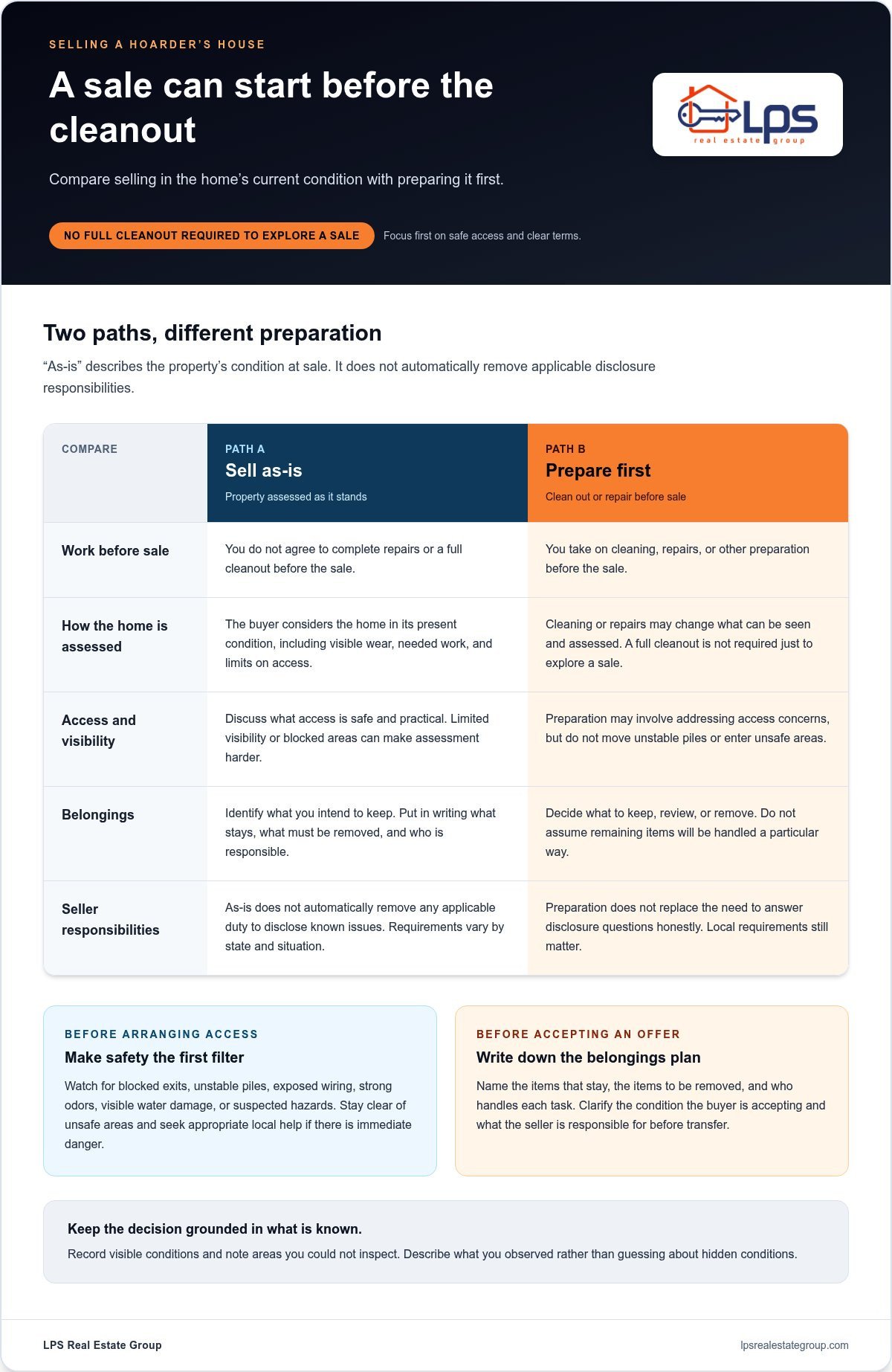
An as-is sale means the seller isn’t agreeing to prepare the property through repairs or a full cleanout before the sale. The buyer considers the home in its present condition, including visible wear, needed work, and limits on access. The property’s condition and the seller’s responsibilities are separate matters: an as-is agreement doesn’t automatically remove any applicable duty to disclose known issues. Requirements vary by state and situation.
Belongings alone don’t tell the whole story or establish a diagnosis. For background on the condition and its possible effects, see Understanding Hoarding Disorder. For a sale, focus on the property’s condition and whether people can approach or enter it safely.
What does selling a hoarder house as-is mean?
The buyer assesses the property as it stands, rather than expecting the seller to make agreed repairs or empty the home first. The sale terms should make clear what condition the buyer is accepting and what the seller is responsible for before the transfer. “As-is” isn’t a substitute for answering disclosure questions honestly. Applicable requirements depend on local rules and the property’s circumstances.
Ordinary clutter may make rooms harder to view, but it isn’t necessarily an immediate hazard. Pay attention to conditions that could put someone at risk, such as blocked exits, unstable piles, exposed wiring, or suspected biohazards. Don’t move items or enter an area if doing so seems unsafe. If there’s an urgent danger, prioritize safety and seek appropriate local help before arranging access.
Does the house need to be empty before sale?
No. A complete cleanout isn’t automatically required to explore a sale. However, limited visibility or blocked access can make it harder for a buyer to assess the home. Discuss what access is safe and practical, and whether any areas or items need attention before an evaluation. A direct as-is purchase is one possible path to consider alongside other sale options.
Be specific about belongings that matter. Identify personal documents, keepsakes, medications, valuables, or other items you intend to keep. Don’t assume that items left behind will automatically be handled in a particular way. Before accepting an offer, put the plan for remaining belongings in writing, including what stays, what must be removed, and who is responsible for each task. Clear terms help prevent confusion later.
First Steps: Prioritize Safety, Access, and Important Belongings
You don’t need to sort every room before making a useful start. Focus first on immediate safety, then on what you can see and reach without moving unstable piles. This keeps the initial assessment manageable and helps you share a clearer picture of the property, even if some areas remain inaccessible.
A limited assessment can also help separate urgent concerns from optional tidying. The goal isn’t to make the home look ready for photographs. It’s to protect people and important belongings, note observable conditions, and avoid creating new risks by rushing.
How can you assess the house without starting a full cleanout?
Begin only in rooms and pathways that are already accessible. Don’t climb over piles, move heavy objects, or enter areas that seem unstable or unsafe. The American Psychiatric Association’s Medical Perspective on Hoarding provides context for why decisions around belongings can be difficult. Keep your property assessment practical and focused on visible conditions.
Use this checklist to make a first pass:
- Pause for hazards. Notice blocked exits, strong odors, visible water damage, exposed wiring, or anything that makes an area unsafe to approach. If there appears to be immediate danger, stay clear and seek appropriate local help.
- Identify safe access. Note which entrance and rooms you can reach without shifting belongings. Don’t create a path by pulling at unstable stacks.
- Record what you can see. Write brief notes about apparent damage, blocked doorways, and areas you couldn’t inspect. Take photographs only from a safe position, and don’t handle items just to get a clearer view.
- Separate access from improvement. A safe route to an accessible area is different from cosmetic tidying or renovation. Note access concerns without assuming you need to address every appearance issue.
These notes help distinguish what you observed from what remains unknown. For example, “ceiling not visible because items block the room” is more precise than guessing about the ceiling’s condition. Keep the record factual and update it if you later gain safe access.
Which belongings should you protect before a sale?
Start with items that may be essential or belong to someone else: identification, financial and family records, medication, keys, valuables, and clearly personal belongings. If you can reach them safely, place them in a labeled container or a separate, secure location. Don’t assume every item can be identified, valued, or recovered before a sale.
For other accessible items, use three simple categories: Keep for items you know you want; Review for collections, family papers, photographs, or objects whose importance isn’t clear; and Remove only for items you’ve decided can go. Pause before discarding anything that may have financial or sentimental value. If an item belongs to a relative or someone else, set it aside for discussion rather than deciding alone.
If you’re considering a direct as-is sale, LPS Real Estate Group’s as-is property purchases are one option to consider alongside other practical next steps.
Compare Selling As-Is With Cleaning, Repairs, or a Direct Buyer
There isn’t one right route for every cluttered property. Don’t compare options only by which sounds easiest or might attract the highest offer. Consider the work you’d need to coordinate, the uncertainties you’d accept, and how much preparation you’re willing and able to take on.
The main steps to selling a hoarder’s house as is can include exploring a sale before committing to a full cleanout. A direct as-is purchase is one option, alongside preparing the home for a broader sale or arranging cleanup and repairs first. Each path involves different trade-offs in effort, flexibility, and what a buyer will assess.
- Sell as-is: You avoid agreeing to a full cleanout or repairs before the sale. A buyer considers the property in its current condition, and an offer may reflect visible issues, limited access, and work the buyer expects to take on. Review the offer terms and responsibilities carefully.
- Clean out, then sell: Removing belongings may make more of the home visible and give you additional ways to present it. It also requires decisions about what to keep, time to organize the work, and a plan for items that remain. A cleanout alone doesn’t promise a particular offer or net amount.
- Repair or rehabilitate first: Addressing property issues may expand your choices, but it can involve coordinating work and making decisions before you know the eventual sale result. The scope may also change as parts of the home become accessible.
When might an as-is sale fit your situation?
An as-is route may be worth exploring if you live far away, have limited time, or feel unable to coordinate a major cleanout. You can consider a direct buyer’s offer before deciding whether to take on extensive preparation. That doesn’t make it the only suitable choice. It gives you another option to compare with the work and uncertainty of preparing the property.
For example, an owner handling an inherited home from a distance might compare the responsibilities of a direct purchase with the effort of arranging removal, repairs, and a sale afterward. Another owner may prefer to preserve more options by doing some preparation. The best fit depends on your capacity and priorities, not on a rule that every home must be emptied or renovated.
What trade-offs should you weigh before choosing?
Compare the likely proceeds after your responsibilities and preparation costs, not just the offer amount. Note which route leaves you coordinating removal, repairs, access, or remaining belongings, and which terms are clear or still uncertain. More preparation may change how buyers assess the home, but it doesn’t guarantee a higher net result or a particular timeline.
To make the comparison practical, write down your main priority: reducing work, preserving options, or pursuing a more prepared sale. Then assess each path against that priority, including the tasks you’d need to manage and the terms you’d want clarified before agreeing.
If a direct as-is purchase is one of the paths you’re weighing, review a tailored property purchase option alongside your other choices.
Prepare the Paperwork and Agree on What Stays With the House
Once you’ve considered your sale options, gather information that can clarify ownership, property condition, and the terms of a possible transfer. You may not have every record on hand. Start with what’s available, and note questions that need answers before you sign an agreement.
Which documents and details should you organize?
Useful records may include ownership documents, mortgage information, available property records, keys, and paperwork related to known liens or title concerns. Keep notes about known issues and gather maintenance or utility information you already have. Don’t guess about conditions you can’t see. Disclosure requirements differ by state and circumstance, so verify what applies to the property. If an estate or inherited home is involved, clarify who has authority to sell before moving forward.
How should the sale agreement address remaining belongings?
Put the belongings plan in writing. Identify what will remain, what will be removed, and who is responsible for each task. Also clarify when access is allowed, when possession transfers, and what the handover involves, such as providing keys. Don’t assume items left behind will be treated the same way everywhere; rules can vary. Clear, specific terms help both sides understand their responsibilities.
What happens after you decide to explore a direct sale?
The steps to selling a hoarder’s house as is usually move from sharing basic property and ownership details to reviewing an offer and agreeing on terms. The buyer’s review and closing process depend on the home and the agreement. Before signing, read the written offer carefully, including its price, conditions, contingencies, responsibilities, and timing. Make sure the document clearly describes the property’s condition and the plan for belongings.
- Share available ownership and property information.
- Review the offer and any conditions or contingencies.
- Agree in writing on responsibilities, belongings, access, and possession.
- Complete required paperwork and address remaining transaction details.
- Proceed to closing under the agreed terms.
For more context on the process, see this guide to selling your house as-is.
How can LPS Real Estate Group help with an as-is sale?
LPS Real Estate Group buys properties directly, including as-is homes, and offers cash purchases and creative finance solutions. The company works with homeowners on tailored exit strategies for complex property situations. If you’re weighing a direct purchase, review the offer and responsibilities alongside your other options. You can discuss an as-is sale with LPS Real Estate Group as one possible next step.
Choose One Manageable Next Step
You don’t have to solve every question about the house today. Choose one decision that would make the next conversation easier, such as identifying who can authorize a sale, noting what you need to keep, or writing down the terms you’d want clarified before signing. A short list can help you stay focused without turning the process into a full cleanout project.
The steps to selling a hoarder’s house as is are easier to approach when you compare options at your own pace and keep the important decisions in view. If a direct purchase is one path you’re considering, you can discuss the property and your circumstances with LPS Real Estate Group.
When you’re ready, discuss an as-is sale with LPS Real Estate Group to explore a direct purchase.
Frequently Asked Questions
Can I sell a hoarder house as-is without cleaning it out?
Yes, you can explore an as-is sale without first completing a full cleanout. Whether belongings can remain through closing depends on the buyer’s agreement and the written sale terms. For example, you might agree that furniture stays but personal documents and medication will be removed. Before signing, make sure the agreement clearly states what happens to remaining items and who is responsible for them.
Do I have to disclose clutter or damage when selling a house as-is?
Disclosure rules vary by state, and an as-is sale doesn’t automatically remove applicable duties to disclose known property issues. Clutter itself may not be the same as a defect, but known damage or a condition that could affect value or safety may need to be disclosed under local rules. Be factual about what you know, and get local legal guidance if you’re unsure what forms or disclosures apply.
Can a cash buyer purchase a house with belongings still inside?
Yes, a cash buyer may agree to purchase a home with belongings inside, but the arrangement should be spelled out in the sale agreement. Specify whether items such as appliances, furniture, or boxes will remain, and identify anything you’ll remove before handover. Keep personal records, medications, and belongings that matter to you separate. Don’t rely on a verbal understanding about what happens to items left in the home.
What if I cannot safely inspect every room before selling?
You don’t need to put yourself at risk to inspect the entire home. Record which rooms or areas you couldn’t safely access, describe what you can see from a safe position, and share those limits during sale discussions. A buyer may need to account for inaccessible areas when assessing the property, or the written terms may address further inspection. Don’t guess about hidden conditions or move unstable items just to look inside.
Can I sell a hoarder house if I inherited it with other family members?
Possibly, but first establish who has authority to sell and whether other owners or an estate representative need to participate. For instance, a relative who inherited a share may not have authority to agree to a sale on behalf of everyone else. The process depends on how the property is titled and any applicable estate requirements. Gather available inheritance and ownership records, then verify the steps required for your situation before signing.
What happens if the property has a lien or title issue?
A lien or unresolved title question can affect the sale, so identify it early rather than assuming it will disappear at closing. Gather any notices or account statements you have and share them with the person handling the transaction. The parties may need to clarify the amount owed, who must address it, and whether it affects the transfer of ownership. Next steps depend on the type of claim and the property’s title records.
How long does it take to sell a hoarder house as-is?
There’s no single timeline that applies to every sale. The steps to selling a hoarder’s house as is may take longer if ownership records are unclear, a title concern needs attention, estate authority must be established, or the buyer needs more information about inaccessible areas. Ask for the proposed timeline and any conditions in writing, and distinguish the date an offer is made from the expected closing date.