

A trustee may sell a trust-owned home when the trust document grants that authority and the property is properly titled in the trust. Beneficiaries’ agreement and the trustee’s legal authority are separate questions. A trustee’s guide to selling real estate begins with reviewing the trust terms and confirming who is authorized to act.
Preparing the home for sale can bring practical and family questions, especially when the property is vacant, needs attention, or beneficiaries have different expectations. You’ll learn how to confirm authority, communicate with beneficiaries, choose a sale strategy, and prepare and list the property. The steps ahead will help you approach pricing and sale decisions methodically, while keeping the trust’s instructions and clear records in view.
Key Takeaways
- Review the trust document and property title to establish who has authority to sell and whether the trust sets conditions.
- Separate legal authority from family agreement, and keep beneficiaries informed with clear updates and sale records.
- Compare sale approaches against the home’s condition, the trust’s goals, and the trustee’s responsibilities before setting a strategy.
- Prepare for sale by assessing the property, organizing key documents, and addressing practical needs such as insurance and disclosures.
Does the trustee need the beneficiaries’ permission?
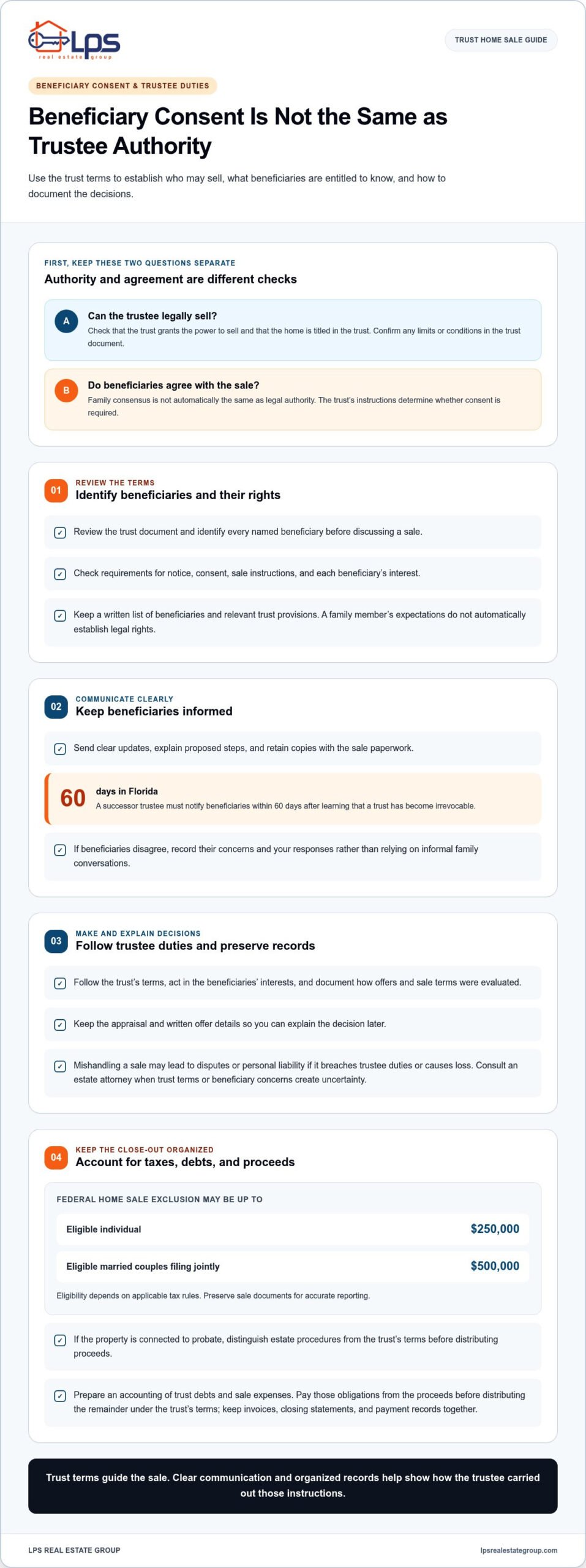
Beneficiary consent and a trustee’s authority are separate matters, and the trust terms guide the sale. Identify each beneficiary, communicate clearly, and keep sale paperwork organized.
A trustee may face disputes or personal liability if mishandling a sale breaches their duties or causes loss. Keep transaction records, explain decisions, and consult an estate attorney when trust terms or beneficiary concerns create uncertainty.
-
Identify Beneficiaries and Their Rights
Review the trust document and identify every named beneficiary before discussing a sale. Check its requirements for notice, consent, sale instructions, and each beneficiary’s interest. A family member’s expectations do not automatically establish their legal rights. Keep a written list of beneficiaries and relevant trust provisions, and avoid promising proceeds or decision-making power before confirming what the document allows.
-
Notify Beneficiaries About the Sale
Send clear updates to beneficiaries and retain copies with the sale paperwork. In Florida, a successor trustee must notify beneficiaries within 60 days after learning that a trust has become irrevocable. Explain the proposed steps, share material updates, and provide sale documentation as decisions progress. If beneficiaries disagree, record their concerns and your responses rather than relying on informal family conversations.
-
Address Consent and Trustee Duties
Check the trust’s instructions before deciding whether beneficiary approval is required. A trustee’s authority to sell and family consensus about the sale are not necessarily the same. Follow the trust’s terms, act in the beneficiaries’ interests, and document how you evaluated offers and sale terms. Preserve the appraisal and written offer details to explain the decision later.
- Keep tax considerations and records within the sale process. The federal home sale exclusion may be up to $250,000 for an eligible individual or $500,000 for eligible married couples filing jointly, according to the Internal Revenue Service. Eligibility depends on the applicable tax rules, so preserve sale documents for accurate reporting. If the property is connected to probate, distinguish estate procedures from the trust’s terms before distributing proceeds.
Who can sell a house held in a trust?
The trustee named in the trust document may sell the home if the trust grants that power and title is held in the trust. Confirm the documents and applicable state rules before signing as the seller.
-
Review the Trust Document
Read the trust document and locate provisions about selling real estate, signing contracts, and limits on trustee powers. Check for instructions requiring consent or setting conditions for a sale. A successor trustee should confirm their appointment and review any amendments. Keep relevant pages accessible for title and closing paperwork, but share only documents needed to establish authority.
-
Verify Authority to Sell the Property
Confirm the property’s title names the trust, then establish who can act for it. Florida Statutes section 736.0816 authorizes a trustee to sell trust property unless the trust limits that power. A declaration of trust can identify the trustee and describe their powers. If an executor is handling an estate-owned home, authority depends on the estate, state law, court authority, and the will’s terms.
What disclosures and inspections are required when a trustee sells real estate? Requirements vary by state and property. An as-is sale still requires accurate disclosures, so review the home’s condition and gather relevant records before describing it to a buyer.
-
Determine Whether Further Authority Is Needed
Ask whether the trust document and title records establish the seller’s authority. State rules differ, and the type of trust matters: a properly funded living trust may allow a transfer or sale outside probate, while an estate-owned home may involve probate court. Florida and Texas also have certification-of-trust provisions, under sections 736.1017 and 114.086 of their respective statutes.
To establish authority, a successor trustee should confirm their appointment and collect documents that prove their role, such as a trustee certification or affidavit where needed. A death certificate may also help establish a successor’s right to act. Consult an estate attorney if trust language, title, or court requirements leave the seller’s authority unclear.
For a practical next step, review trust property sale considerations alongside the trust’s instructions.
Choosing a sale strategy, including as-is sales
A trustee’s guide to selling real estate should begin with the property’s condition, the trust’s goals, and the trustee’s responsibilities. Compare sale approaches by considering preparation needs, likely proceeds, and the work involved through closing.
- Assess whether an as-is sale or a prepared listing better fits the situation. An as-is sale can reduce the need to complete repairs, but it still requires accurate disclosures and considered pricing. Use the home’s condition and market information to assess an offer. Record why you chose that approach so beneficiaries can understand how the decision supports the trust’s goals.
- Consider a real estate agent experienced in trust sales if guidance with the market, listing process, and sale paperwork would help. That experience can support a more organized transaction, especially when beneficiaries need clear information about offers. If weighing offers independently, compare the terms, conditions, and buyer financing rather than focusing only on the proposed price. The trustee’s guide to selling real estate should treat the offer as a complete set of terms, not simply a number.
- Before closing, prepare an accounting of trust debts and sale expenses. Pay those obligations from the proceeds before distributing the remainder under the trust’s terms. Keep invoices, closing statements, and payment records together. Note each deduction and its purpose so beneficiaries can follow how the amount available for distribution was calculated.
- Complete closing documents, then handle tax reporting, accounting, and distributions. According to the Internal Revenue Service, a trustee may need to file Form 1099-S to report the sale price, depending on the sale price and entity type. Preserve transaction records and communications. Document each distribution according to the trust, and keep the final accounting with the sale file.
Steps for preparing and listing a trust home
Establish a documented value before choosing a listing price. A professional appraisal can help determine fair market value and give beneficiaries a clear basis for understanding pricing decisions.
- Arrange an appraisal and keep the report with the trust’s sale records. Compare its valuation with current market information and the property’s condition when setting a listing price. If the home needs repairs, record how those issues affect the pricing decision. Share the valuation basis with beneficiaries so they can follow your reasoning.
- Walk through the property and make a written preparation plan. List cleaning, decluttering, needed repairs, and any staging under consideration. Separate safety or maintenance concerns from optional improvements, then weigh each item against the trust’s goals. Keep receipts and decisions together so the sale file shows what work was done and why.
- Contact the insurer before leaving a home vacant. Ask whether the existing policy covers the property in its current condition and whether changes are needed. Record the insurer’s instructions with the property documents. Add this call to the preparation checklist, since a vacant home can require different attention than an occupied one.
- Organize disclosure and title paperwork before listing. Gather known property information, records of completed work, and documents supporting the trustee’s authority. A title company needs identification to verify the seller’s identity. Keep the trustee’s contact details and trust documents ready for the transaction, while sharing only documents needed for the sale.
- Keep beneficiaries informed as preparation and listing decisions take shape. Provide the appraisal, planned work, pricing rationale, and material updates. If family members raise concerns, record the issue and the trustee’s response. Clear records can help explain decisions later and keep sale communications consistent.
Use this preparation plan to organize a trust home sale, or discuss your property’s sale options.
LPS Real Estate Group: Cash Home Buying
LPS Real Estate Group buys homes directly from trustees for cash or through creative offers, providing an alternative to preparing a property for a traditional listing. Its as-is purchases can suit a trust property that needs work or is difficult to prepare. For inherited homes or probate-related circumstances, the company also offers probate and inherited property buyouts. Its foreclosure prevention purchase service may be relevant when a property faces foreclosure.
These options can be worth exploring when the trustee is balancing the property’s condition, trust responsibilities, and the family’s practical needs. The right path still depends on the trust’s authority and the trustee’s duties. Contact LPS Real Estate Group to discuss the property, or visit lpsrealestategroup.com.
Make the Next Decision With Care
A trustee’s guide to selling real estate is most useful when it turns a difficult responsibility into a clear next step. Before moving forward, write down the unresolved decision, the records that support it, and who needs an update. This working note can keep the process focused as new questions arise.
The sale affects people beyond the transaction. A thoughtful plan can make decisions easier to explain, preserve trust, and keep the home’s disposition aligned with the trust’s purpose. If you’re considering a direct sale, LPS Real Estate Group buys trust properties as-is, with no repairs, commissions, or hidden costs. Share the property details to receive a no-obligation offer and choose a closing date that works for you.
Contact LPS Real Estate Group to talk through a possible next step. You can move forward at a pace that gives the trustee and beneficiaries room to consider the decision carefully.
Frequently Asked Questions
Can an executor sell a house before probate is complete?
Sometimes, but the answer depends on the estate, state law, court authority, and the will’s terms. First identify whether the home belongs to the estate or was transferred into a trust. Then review the executor’s appointment and any court orders for limits on a sale. A home still owned by the estate may require probate court involvement before the executor can complete a transfer.
Should an estate house be sold as-is?
An as-is sale may suit a home with deferred maintenance, especially if repairs would complicate the estate’s plans. It doesn’t remove the need for accurate disclosures or considered pricing. Make a condition list, gather records of known issues, and compare the expected sale outcome with the cost and effort of preparing the property. The estate’s priorities and governing documents should guide the choice.
What Happens Next?
After accepting an offer, the trustee moves from evaluating terms to completing the transaction. The next steps generally include signing the purchase agreement, providing required disclosures, coordinating the title transfer, and keeping copies of completed documents. After closing, reconcile sale proceeds against documented debts and expenses, then account for any distribution under the trust. Record each step so beneficiaries can understand how the sale concluded.
What documents does a title company need to sell a trust home?
Expect to provide identification and documents that establish the trustee’s role and authority. A title company may need relevant trust records or a certification of trust, along with the purchase agreement and documents required to transfer title. If the trustee is a successor, appointment records or a death certificate may help establish their authority. Keep names consistent across the trust, property title, and sale paperwork.
What happens to the money, and who pays the tax?
Sale proceeds belong to the trust or estate, not automatically to individual beneficiaries. The trustee accounts for debts and sale expenses before distributing the remaining funds according to the governing document. Tax responsibility depends on the property’s ownership and the trust or estate’s tax treatment. Keep closing statements and transaction records; the trustee may need to address sale reporting, including Form 1099-S where applicable.
What are a trustee’s duties when selling real estate in the United States?
A trustee must follow the trust’s terms, act within their authority, and handle the sale in the beneficiaries’ interests. In practice, that means documenting key decisions, communicating material updates, preserving sale records, and accounting for proceeds. State requirements can differ, so the governing trust document and applicable state rules shape the process. Keep the appraisal, offers, disclosures, closing papers, and distribution records together for clear administration.