
The most famous name in real estate investing might not be the one that offers the most help when your situation gets complicated. When you’re staring at a property tied up in probate or facing a fast-approaching foreclosure, the last thing you need is a rigid corporate process. You’ve likely seen the yellow signs and wondered about the real difference between we buy ugly houses vs local investors in today’s 2026 market. It’s completely natural to worry about being lowballed by a national giant or feeling lost in a sea of paperwork.
We understand that you’re looking for more than just a transaction; you need a partner who listens. This guide will clarify the critical differences between national franchises and independent investors so you can secure the fairest possible offer for your home. We’ll break down how franchise fees can silently lower your payout and explain why a local expert might have the flexibility to solve your specific financial or legal hurdles. By the end, you’ll have a clear roadmap to a fast, certain closing that respects both your time and your home’s potential.
Key Takeaways
- Learn the fundamental differences between we buy ugly houses vs local investors to understand how franchise overhead can impact the final cash offer you receive.
- Discover why the rigid formulas used by national brands may limit your payout compared to the more flexible pricing models found with independent groups.
- Identify how independent investors offer personalized creative finance solutions to help you navigate complex legal hurdles like probate or foreclosure.
- Understand the value of working directly with decision-makers to ensure a faster, more certain closing without the delays of corporate middle management.
- Master the essential vetting questions to ask any buyer to guarantee a transparent process that prioritizes your unique financial and situational needs.
Understanding Your Options: The Big Brand vs. Independent Investor Debate
Selling a home that needs work often feels like an uphill battle. You want a solution that doesn’t involve months of repairs or the uncertainty of a traditional sale. When comparing we buy ugly houses vs local investors, both options offer the core promise of speed, certainty, and an as-is cash purchase. However, the 2026 real estate market is shifting. With a forecasted 4.3% increase in existing home sales and a move toward a buyer’s market, homeowners are increasingly looking for alternatives to massive corporate buyers. They want a partner who can navigate the nuances of today’s stabilizing prices and affordability concerns with a more human touch.
What is a National Real Estate Franchise?
Most people recognize the “We Buy Ugly Houses” brand through its massive billboard campaigns. This brand is the public face of HomeVestors of America, a network of hundreds of independently owned franchises. When you call the national number, you aren’t talking to a single corporate office. Instead, you’re being routed to a local franchisee who has paid a significant initial investment, often between $108,000 and $477,000, for the right to use that famous name. While the branding is consistent, your experience depends entirely on the specific franchisee. They follow a centralized playbook designed for high volume. This often results in a rigid process where the focus is on hitting quotas rather than finding a personalized path forward for the seller.
What Defines an Independent Local Investor?
Independent investors operate as boutique firms rather than massive networks. These groups prioritize depth over breadth. Because they don’t answer to a corporate headquarters or pay franchise royalties, they often have the freedom to offer more creative solutions. They focus on partnership and active listening to understand your specific situation. This is especially helpful if you’re dealing with complex legal hurdles like probate or the stress of a pending foreclosure. Independent groups typically offer a more direct path to a resolution.
- Direct Communication: You speak with the decision-maker, not a representative following a corporate script.
- Creative Flexibility: They can structure deals that solve specific financial problems, such as creative finance solutions that franchises might skip.
- Reduced Red Tape: Without corporate layers, these firms can often move faster to secure a closing within three weeks.
In the debate of we buy ugly houses vs local investors, the choice often boils down to whether you prefer a standardized corporate transaction or a relationship-driven partnership that respects your home’s unique potential. Choosing an independent partner can provide a sense of relief, knowing that your individual circumstances are being handled with integrity and care.
Inside the ‘We Buy Ugly Houses’ Franchise Model
Most homeowners recognize the “We Buy Ugly Houses” brand from the bright yellow billboards and the iconic caveman mascot. While the branding suggests a single, unified company, it is actually a network of hundreds of individual franchise owners. These owners pay a significant price to use that name. When you call the national number, you’re connected to a franchisee who must balance their own business costs with the royalties they owe to the parent corporation. This structure creates a layer of overhead that directly influences the offer you receive on your home.
The “Ugly House” criteria isn’t just about peeling paint or outdated kitchens. These buyers look for properties with deferred maintenance or aging systems that make them difficult to sell on the traditional market. However, because franchisees operate under a standardized corporate playbook, their ability to be flexible is often limited. When weighing we buy ugly houses vs local investors, it’s helpful to look behind the curtain of this national franchise model to see how it might impact your specific sale.
The Franchise Fee Factor
Every franchisee pays a percentage of their revenue, typically around 5-6%, back to the corporate office in royalties. They also contribute to massive national marketing funds that pay for those billboards. These costs are not direct fees you pay at closing, but they are factored into the buyer’s math. To hit their required profit margins, a franchisee often has to offer less than a buyer who doesn’t carry these corporate burdens. A big brand name provides a sense of security, but it rarely translates into the highest possible check for the seller. If you’re facing a complex situation that requires more than a standard formula, consider a team that prioritizes personalized solutions over corporate quotas.
The Limitations of Corporate Processes
Standardization can lead to rigidity. Franchisees often operate within a narrow “buy-box,” which means they have strict rules about the types of properties they can purchase and the repairs they can take on. If your home has unique legal hurdles, such as a complicated probate issue or a messy title, a local franchise representative may lack the authority to deviate from the corporate pricing formula. This can result in a frustrating experience where a buyer initially shows interest but later asks for a price drop, a practice known as “re-trading,” after their corporate office reviews the inspection. Independent investors, by contrast, often have the autonomy to stand by their original offer and solve problems that a corporate script simply doesn’t cover.
The Advantages of Working with Independent Investors
While national franchises rely on brand recognition, independent investors build their reputation on results and relationships. When you compare we buy ugly houses vs local investors, the biggest difference is often the level of personalized care you receive. Independent firms aren’t bound by corporate quotas. This freedom allows them to listen to your story first and build a solution second. Instead of a high-pressure sales pitch, you get a calm, methodical consultation designed to provide relief from whatever burden your property has become.
One of the most significant benefits is direct access to decision-makers. You won’t find yourself waiting days for a regional manager to approve a contract. When you work with an independent group, you’re usually speaking with the person who has the authority to sign the check. This speed is vital. It matters most when you’re managing “ugly situations” like probate delays, tax liens, or the emotional weight of an inherited home. These experts understand that every day counts. They have the expertise to navigate title hurdles that might cause a larger, more rigid company to walk away.
Creative Finance: The Secret to Higher Net Proceeds
Standard cash offers from franchises typically follow the “70% rule,” which can sometimes feel like a lowball offer if your home has significant potential. Independent investors often utilize Creative Real Estate Exit Strategies to bridge this gap. If a traditional cash offer doesn’t meet your needs, they might suggest alternatives like “Subject-To” or seller financing. These methods allow you to potentially walk away with more money by leveraging the existing mortgage or receiving payments over time. It’s a transparent way to ensure you get a fair value that reflects the home’s true worth in the 2026 market.
The Boutique Service Experience
The service doesn’t stop at the financial offer. Independent groups often take on the heavy lifting that comes with distressed properties. This might include managing the clean-out of a hoarder house or coordinating with attorneys to resolve complex probate issues. Most independent firms also cover all closing costs and fees. This ensures the offer you see is exactly what you receive. This human-centric approach turns a stressful legal or financial hurdle into a manageable path forward. You aren’t just another transaction on a spreadsheet. You’re a partner who deserves honesty and straightforwardness throughout the entire process.
Key Differences in Offers, Speed, and Creative Solutions
This commitment to localized expertise is a global hallmark of quality; for instance, you can discover Immobilienmakler & Hausverwaltung Mülheim an der Ruhr to see how professional property management and valuation are delivered with a similar focus on transparency and results.
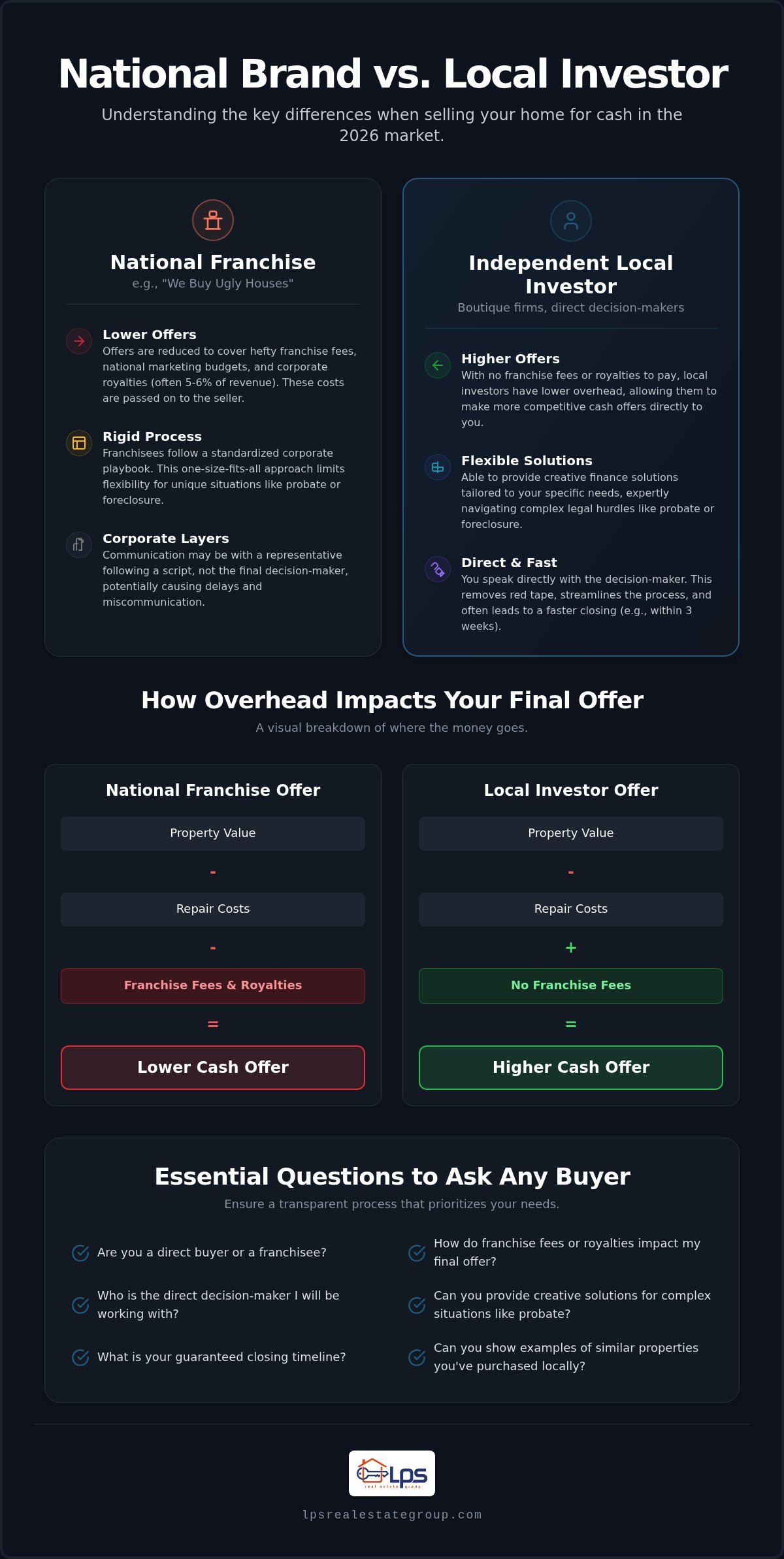
Understanding the math behind an offer provides a sense of clarity during a stressful time. When you look at we buy ugly houses vs local investors, the primary difference lies in how they calculate what they can pay you. National franchises typically follow a strict Maximum Allowable Offer (MAO) formula. This often looks like taking the After Repair Value (ARV), multiplying it by 70%, and then subtracting the cost of repairs and their own franchise fees. This “70% rule” is a rigid industry standard that ensures the franchise hits its required profit margins, but it can often feel like a lowball offer to a homeowner who knows their property’s true potential.
Comparing the Offer Formulas
Independent investors operate with a different set of rules. Because they don’t pay 5-6% in royalties to a corporate headquarters, they can afford to be more aggressive with their pricing. Their formulas are customized based on their specific exit strategy. For example, an investor who plans to hold your property as a long-term rental might accept a smaller immediate profit than a franchisee who needs to flip the house quickly to cover high marketing overhead. This flexibility allows for a fair cash offer that reflects the unique value of your home rather than a one-size-fits-all corporate calculation.
- Franchise Model: Strictly follows the 70% rule to account for corporate fees and national advertising.
- Independent Model: Adjusts margins based on long-term holds or creative financing, often resulting in a higher net payout.
- Transparency: Independent buyers are more likely to walk you through the math, ensuring you feel respected and informed.
Speed and Certainty of Closing
Speed is often a top priority when you’re facing financial hurdles. While both options can move faster than a traditional sale, independent buyers frequently bypass the corporate approval chains that can slow down a franchise. A franchisee might need a regional manager to sign off on a contract, which adds days of waiting. In contrast, independent groups give you direct access to the decision-maker. This often allows for a closing in as little as 7 days, whereas a franchise typically aims for a three-week window. If you’re ready to move forward, you can learn how to sell your house as-is to see how these timelines work in practice.
Local market knowledge also plays a critical role in certainty. An independent investor understands the specific nuances of your area, which speeds up the appraisal and inspection process. They are also more equipped to handle complex legal roadblocks, such as probate or foreclosure, because they have established relationships with local title companies and attorneys. If you need a partner who can navigate these hurdles with you, get a fair offer today and experience a process built on empathy and transparency.
How to Choose the Right Partner for Your Property Sale
Selecting the right buyer for your home is a decision that carries significant weight. It is not just about the final number on the contract; it is about the peace of mind that comes from a transparent, reliable process. When you evaluate the choice of we buy ugly houses vs local investors, you are essentially deciding between a standardized corporate transaction and a more personalized partnership. The best path forward depends on your specific goals. If you value a recognizable brand name above all else, a franchise might feel safer. However, if you need a fair offer that reflects your home’s potential and a partner who can solve complex legal hurdles, an independent group often provides a better fit.
Due Diligence Checklist for Sellers
Before you sign any purchase agreement, you must vet your buyer thoroughly. This applies to both national franchises and independent groups. A reputable investor will welcome your questions and provide clear, honest answers. Use the following list to ensure you are working with a professional who operates with integrity.
- Verify Proof of Funds: Ask for a recent bank statement or a letter from their financial institution. A legitimate cash buyer should be able to prove they have the liquidity to close the deal without traditional financing.
- Check Verified Testimonials: Look for reviews from sellers who faced similar challenges, such as probate or foreclosure. Real stories from real people are more valuable than a polished corporate brochure.
- Ask About the Exit Strategy: Understanding whether the buyer intends to flip the house, hold it as a rental, or wholesale the contract helps you understand their motivation and how they calculated your offer.
- Document All Promises: Ensure that every verbal commitment, such as covering all closing costs or allowing you to leave unwanted items behind, is written into the purchase agreement.
Watch for red flags during your initial consultation. If a buyer uses high-pressure tactics, refuses to explain their math, or presents a contract with vague terms, it is time to look elsewhere. Transparency is the cornerstone of a fair deal. You deserve to see exactly how the buyer arrived at their offer price.
Why LPS Real Estate Group Offers the Balanced Choice
LPS Real Estate Group provides a balanced alternative to the rigid franchise model. We combine the professional authority and national reach of a large firm with the empathy and flexibility of an independent investor. Our team specializes in “as-is” acquisitions and probate buyouts, focusing on creative solutions that national brands often overlook. We don’t answer to a corporate headquarters or follow a one-size-fits-all script. Instead, we listen to your needs and build a customized exit strategy that prioritizes your financial well-being.
Our “Transparency First” promise means you will never be left in the dark. We walk you through the logic behind our offer and handle the heavy lifting, from title issues to foreclosure prevention. We aim to provide a sense of relief and a clear, manageable path forward. If you are ready to experience a process built on honesty and straightforwardness, Get your fair cash offer from LPS Real Estate Group today and see the difference a compassionate expert can make.
Securing Your Best Path Forward in 2026
Deciding how to sell a distressed property is a significant step toward reclaiming your peace of mind. While national franchises offer a recognizable name, they often come with rigid formulas and high overhead that can impact your final check. Independent investors provide the flexibility and creative solutions needed to navigate complex hurdles like probate or foreclosure. Choosing between we buy ugly houses vs local investors ultimately comes down to who you trust to handle your unique situation with integrity and care.
At LPS Real Estate Group, we serve as professional probate and foreclosure specialists who prioritize your needs over corporate quotas. We offer a transparent process with no repairs, no fees, and no closing costs. By utilizing creative finance solutions, we strive to maximize your home’s potential while providing a fast, certain closing that respects your timeline. You don’t have to face these financial or legal challenges alone.
Request a fair, transparent offer for your property today and take the first step toward a simpler, stress-free future. We are ready to listen and help you find the best outcome for your specific circumstances.
Frequently Asked Questions
Is ‘We Buy Ugly Houses’ a scam or a legitimate business?
“We Buy Ugly Houses” is a legitimate franchise network operated by HomeVestors of America. It has been in business for decades and consists of hundreds of independently owned franchises across the country. While the business model is real, your experience depends on the specific franchisee you contact. These owners pay significant royalties and marketing fees to the corporate office, which can sometimes result in more rigid processes and lower offers for the homeowner.
Do local investors pay more than national franchises for distressed homes?
Local investors often provide higher offers because they don’t carry the heavy overhead of national franchise fees or massive billboard campaigns. When comparing we buy ugly houses vs local investors, independent groups have the flexibility to adjust their profit margins based on their specific exit strategy. This means they can often offer a more competitive price that reflects the home’s true potential rather than sticking to a one-size-fits-all corporate formula.
What are the hidden costs of selling to a national house-buying company?
The costs aren’t usually visible as line items on a closing statement; instead, they’re baked into the initial offer. National franchises must account for a 5-6% royalty fee paid to their corporate headquarters and contributions to national advertising funds. These operating expenses naturally reduce the amount a franchisee can pay for your property. By contrast, independent firms typically have lower operating costs, allowing them to pass those savings on to you in the form of a higher net payout.
Can I sell my house for cash if it is currently in probate or foreclosure?
Yes, you can sell your house for cash even during complex legal situations like probate or foreclosure. Professional investment firms specialize in these “ugly situations” and have established relationships with title companies and attorneys to resolve legal hurdles quickly. Whether you’re facing a fast-approaching auction or managing an inherited estate, a cash buyer can provide the immediate liquidity needed to settle debts and move forward without the delays of a traditional market sale.
How do I know if an independent real estate investor is trustworthy?
Trustworthy investors prioritize transparency and will walk you through their offer calculation without high-pressure tactics. You should always ask for a recent proof of funds letter to verify they have the cash to close the deal. Checking for verified testimonials from sellers who faced similar challenges is also essential. A professional group will be open about their exit strategy and ensure every verbal promise is documented in a legally binding purchase agreement that protects your interests.
What is the difference between a cash offer and creative financing?
A cash offer provides a single lump-sum payment at closing, which is ideal for a fast exit. Creative financing involves more tailored structures, such as “Subject-To” deals or seller financing. These options can often result in a higher total payout for the seller by leveraging existing mortgage terms or providing monthly income. While a cash offer is simple, creative solutions offer the flexibility needed to solve specific financial hurdles that a standard transaction simply cannot address.
Will I have to pay any closing costs when selling to LPS Real Estate Group?
You won’t pay any closing costs, commissions, or hidden fees when you sell to LPS Real Estate Group. We handle all the traditional expenses associated with the transaction, including title insurance and escrow fees. This “Transparency First” approach ensures that the offer you accept is the exact amount you receive at the closing table. Our goal is to provide a stress-free experience that eliminates the financial surprises often found in traditional real estate sales.
How fast can an independent investor close compared to a franchise?
Independent investors can often close in as little as 7 days because they don’t have to navigate corporate approval chains. When comparing we buy ugly houses vs local investors, franchises typically target a three-week closing window to allow for regional sign-offs. Because independent firms give you direct access to the decision-maker, they can move much faster. This speed is a significant advantage if you’re facing a strict legal deadline or an urgent financial need.