

What if the most difficult part of being a landlord wasn’t the maintenance or the taxes, but the feeling of being trapped by a tenant who refuses to respect your property? It’s a heavy burden to carry, especially when you need to sell house with bad tenants but feel paralyzed by the threat of legal battles or property damage. You’ve likely spent months worrying about lost rental income and wondering how you’ll ever show the home to a buyer when the current occupants are uncooperative. It’s exhausting to feel like a passenger in your own investment.
We understand that you just want a fair way out. This guide will show you how to navigate the legal and financial hurdles of 2026 without the stress of forced evictions or messy showings. You’ll discover how to handle the latest California regulations, such as the increased 10-day response window for tenants to file court responses, while exploring how to transfer your “tenant headache” to a professional buyer. We’ll walk through a clear path to liquidate your property as-is, allowing you to move forward without a long court battle or another day of stress.
Key Takeaways
- Understand why professional tenants often deter traditional buyers and how to recognize when a direct sale is your best path forward.
- Learn how your existing lease agreement’s “Sale of Property” clause dictates your next steps and protects your interests.
- Compare the speed of a 21-day direct acquisition to the 90-plus days of the traditional market when you need to sell house with bad tenants.
- Follow a compassionate five-step framework that prioritizes your safety and legal compliance while liquidating your property.
- Discover how an “as-is” property acquisition allows you to transfer the stress of tenant damage and uncooperative occupants to a professional buyer.
The Reality of Selling a House with Difficult Tenants in 2026
Owning rental property is often marketed as passive income, but the reality for many is far more demanding. When you have a “professional tenant” who knows how to exploit the system, the emotional and financial drain is immediate. You’re not just losing monthly rent; you’re losing the peace of mind that your investment is being cared for. In 2026, the complexity of Landlord-tenant law has made it even harder for owners to regain control. Waiting for a lease to expire or hoping a tenant will suddenly start paying often leads to further property depreciation and lost equity.
Defining the “Bad Tenant” in a Sales Context
A “bad tenant” isn’t always someone who is intentionally malicious. Sometimes they are simply in a situation they can’t manage. However, in a sales context, specific behaviors make a property nearly impossible to move on the open market. These include:
- Non-payment and holdovers: Occupants who stop paying rent but refuse to vacate, even after their lease has ended.
- Property neglect: Intentional damage or a refusal to allow essential maintenance, which lowers the home’s value.
- Hostility: Uncooperative behavior during scheduled showings or inspections that scares away potential buyers.
Why the Traditional Market Often Fails Landlords
Most families looking for a home want a “turnkey” experience. They want to imagine their own furniture in a clean, quiet space. When you try to sell house with bad tenants, that vision is usually shattered. If a tenant refuses to clean or actively discourages buyers during a walkthrough, your property’s value takes a hit. It’s difficult to build “curb appeal” when you don’t have control over the interior condition of the home.
Traditional buyers are also terrified of “possession at closing” issues. They don’t want to sign a mortgage only to find out they can’t move in because the previous occupant is still there. In California, where tenants now have 10 days to respond to an eviction complaint, the timeline for clearing a property is longer than ever. This uncertainty causes most retail buyers to walk away. You’re left with a house that sits on the market while the bills continue to pile up.
Legal Rights and Options for Landlords Selling Occupied Property
Before you list your property, you need to look closely at your existing paperwork. Your lease agreement is a binding contract that usually stays in effect even after a sale. In California, for example, the new owner simply becomes the new landlord and must honor the current terms. If your goal is to sell house with bad tenants, you must determine if you have a fixed-term lease or a month-to-month arrangement. A month-to-month tenant who has lived in the home for over a year requires a 60-day written notice to vacate, while those under a year only need 30 days.
A “Termination upon Sale” clause is a legal provision that permits a landlord to end a lease agreement early if the property is sold, provided specific notice requirements are met.
You also have the right to show the home, but you must follow strict “Right of Entry” rules. In 2026, California law requires at least 24 hours of written notice before entering for a showing. These visits must happen during normal business hours. If a tenant is uncooperative, forcing entry often escalates the situation. This is why many owners look for an as-is property acquisition to avoid these confrontations entirely.
The Notice to Vacate vs. Eviction
A voluntary move-out is almost always better than a court battle. In the current 2026 legal climate, the eviction process is slower and more protective of tenants. For instance, tenants now have 10 days to respond to an unlawful detainer, which is double the time allowed in previous years. If you are dealing with lease violations like property damage or non-payment, document everything. Photos, late payment notices, and communication logs are essential if you eventually need to prove a “just cause” for eviction under the Tenant Protection Act. It’s much easier to sell house with bad tenants when you have a clear paper trail of their behavior.
Cash for Keys: A Practical Solution
Sometimes the fastest way to a clean slate is a “Cash for Keys” agreement. This involves offering the tenant a specific sum of money in exchange for them moving out by a set date and leaving the property in good condition. While it feels painful to pay someone who hasn’t respected your rules, the return on investment is often higher than losing a sale or paying months of legal fees. Direct buyers frequently handle these difficult negotiations for you, taking the burden off your shoulders and ensuring the transition is handled professionally.
Listing on the MLS vs. Selling to a Direct Cash Buyer
Choosing how to sell a property with an uncooperative occupant is a major decision. On one side, you have the traditional market, which relies on curb appeal and open access. On the other, you have a direct sale. The difference in timeline is stark. A traditional sale often stretches beyond 90 days, especially when you factor in the “possession at closing” hurdles mentioned earlier. In contrast, a direct acquisition can often be completed in under 21 days. This speed is a lifeline when you need to stop the financial bleeding caused by unpaid rent.
One of the biggest hurdles when you try to sell house with bad tenants is the showing process. Every time an agent brings a potential buyer through the door, you risk a confrontation. Hostile tenants can intentionally sabotage the sale by being present, being loud, or leaving the home in a state of disarray. Selling directly eliminates this friction. You don’t need to coordinate with the tenant for dozens of public showings. Professional buyers assess the property once and move forward, regardless of the tenant’s attitude or the condition of the interior.
When determining a fair cash offer for house, direct buyers look at the numbers through an investment lens. They account for the “tenant risk,” which includes the potential cost of a legal eviction or necessary repairs after the tenant leaves. This transparency ensures you understand exactly how the value is calculated. It provides a clear path to liquidation without the guesswork or emotional volatility of a traditional listing.
The Hidden Costs of the Traditional Path
Listing on the MLS comes with financial leaks that many landlords overlook. Beyond the obvious agent commissions and closing costs, you must consider the ongoing drain on your resources. These include:
- Holding costs: Every month the house sits on the market, you’re paying for taxes, insurance, and utilities.
- Unpaid rent: If the tenant has stopped paying, the 90-plus days of a traditional sale represents a significant loss of income.
- Vandalism risk: Angry tenants sometimes take their frustration out on the walls or appliances when they see a “For Sale” sign in the yard.
- Legal hurdles: If a buyer’s lender requires the property to be vacant, you may face expensive legal fees to clear the title or remove holdovers.
The Direct Buyer Advantage
The most significant benefit of a direct sale is the transfer of responsibility. Professional firms like LPS Real Estate Group specialize in as-is property acquisition. This means we inherit the lease, the tenant, and the legal burden that comes with them. You don’t need to worry about cleanouts or making repairs to pass a picky buyer’s inspection. We close on your timeline, even if the tenant is still physically in the unit. It’s a methodical way to sell house with bad tenants while receiving a fair price for your asset. If you’re unsure how to evaluate your options, our guide to companies that buy houses for cash can help you identify legitimate buyers and understand what a fair offer looks like.
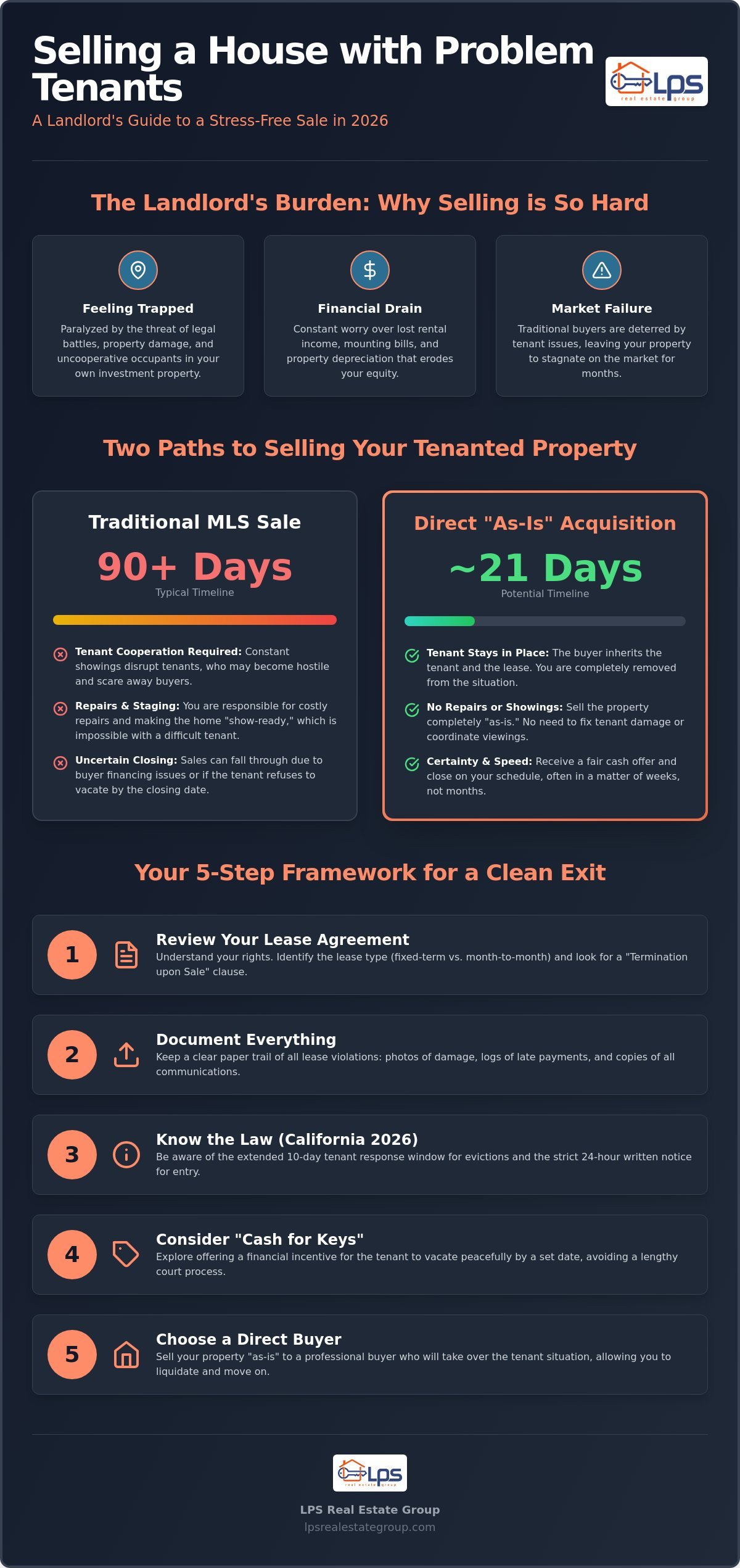
How to Sell Your House with Bad Tenants: A 5-Step Guide
Transitioning from a stressed landlord to a successful seller requires a shift in perspective. When you decide to sell house with bad tenants, you are essentially choosing to value your time and mental health over the ongoing struggle of property management. This process isn’t about winning a fight; it’s about finding the most efficient exit strategy. By following a logical framework, you can prioritize your safety and legal compliance while ensuring you receive a fair price for your investment.
Step 1: Audit Your Documentation
Your first move is to gather every piece of paper related to the tenancy. This includes the original lease, a detailed payment history, and any written correspondence regarding repairs or complaints. You’ll also want to verify if the tenant has been served formal notices of default for non-payment or lease violations. In 2026, local “just cause” eviction ordinances are more specific than ever. Having your records organized allows a buyer to understand the risk they are assuming, which speeds up the evaluation process.
Step 2: Communicate (Carefully) with the Tenant
Approach the tenant as a “compassionate expert.” Inform them of your intent to sell without escalating existing tensions. You don’t need to apologize for selling your property, but acknowledging their situation can go a long way. If the relationship is particularly strained, this is the point where you might stop talking and let a professional buyer step in. They are often better equipped to handle these conversations objectively, removing you from the line of fire.
Step 3: Get a Direct Cash Offer
The beauty of a direct offer is that it bypasses the need for staging, repairs, or public open houses. You can request a walkthrough that respects the tenant’s privacy while still verifying the property’s condition. This is an ideal time to review the offer alongside your options for selling during divorce or other significant life changes. A direct buyer looks past the mess and focuses on the long-term potential of the asset. Before committing, it’s worth researching companies that buy houses for cash so you can confidently distinguish reputable investors from high-pressure operators in today’s market.
Step 4: Finalize the “As-Is” Agreement
Once you’ve accepted an offer, ensure the contract explicitly states that the buyer is taking over the property with the tenant in place. You should confirm there are no hidden fees or “repair credits” requested after the initial walkthrough. The goal is a clean break. If you’re ready to stop the financial drain, you can request a cash home buying quote today to see how simple the transition can be.
Step 5: Transfer the Burden and Move On
The final step is the closing, where the legal responsibility for the tenant officially shifts to the new owner. You’ll hand over the security deposits and the keys, and the “tenant headache” becomes someone else’s business problem. This allows you to walk away with your equity and your peace of mind intact. You’ve successfully moved from being a burdened landlord to a person with the freedom to invest elsewhere.
Why LPS Real Estate Group is the Best Solution for Burdened Landlords
At LPS Real Estate Group, we lead with a “Transparency First” promise. We believe you deserve to know exactly how the tenant transition works before you sign a single document. When you need to sell house with bad tenants, you aren’t just looking for a transaction; you’re looking for a partner who can absorb the risk you’ve been carrying. We specialize in as-is property acquisitions. This means we take the property exactly as it sits today, regardless of its physical condition or the status of the occupants.
Our team uses creative finance and direct cash solutions to solve even the most difficult rental scenarios. Whether you’re facing a total loss of rental income or a tenant who refuses to communicate, we have the tools to provide a fair outcome. The moment you leave the closing table, your landlord duties end. You walk away with cash in hand and the peace of mind that the legal and logistical hurdles are now our responsibility. It’s a clean, professional break from a stressful situation.
We Inherit the Headache, You Get the Equity
Our experience allows us to handle the complexities that scare away traditional buyers. We are well-versed in managing lease buyouts and the legal requirements of evictions after the sale is complete. You won’t have to clean the carpets, repair broken fixtures, or have one more uncomfortable conversation with your tenant. We’ve built a streamlined process for homeowners who need to sell their house fast for cash. By taking over the property as-is, we ensure you can sell house with bad tenants without the typical delays of the retail market.
Ready for a Fresh Start?
Liquidating a distressed rental property is about more than just money. It’s about regaining your time and your mental health. You can stop worrying about property damage or late-night phone calls and start focusing on your future. Your situation isn’t unique, and it certainly isn’t hopeless. We have assisted many owners in similar positions by providing a reliable, ethical exit strategy. Contact LPS Real Estate Group today for your no-obligation offer. Let us help you turn your tenant headache into the equity you’ve worked so hard to build.
Take Control of Your Property’s Future Today
Deciding to move on from a difficult rental situation is a significant step toward reclaiming your peace of mind. As we’ve explored, the path to a successful sale doesn’t have to involve high-conflict evictions or months of lost income. By understanding your legal rights and choosing a direct acquisition, you can bypass the traditional hurdles that often make it feel impossible to sell house with bad tenants. You deserve a transition that is handled with integrity and professional care.
LPS Real Estate Group brings over 8 years of experience in complex property acquisitions to your side. We maintain an A+ rating for our commitment to transparency and empathy, ensuring you feel supported at every stage. Our team handles all the complicated paperwork and tenant transitions, so you don’t have to. If you’re ready for a fresh start, you can Get a Fair Cash Offer and Leave the Tenant Stress Behind. You’ve carried this burden long enough; let us help you find the simple, fair solution you need to move forward with confidence.
Frequently Asked Questions
Can I sell my house if the tenant is in the middle of an eviction?
Yes, you can sell your property at any point during the eviction process. You’re required to disclose the ongoing legal action to any potential buyer so they understand the situation they’re stepping into. While traditional families usually avoid these complications, professional investment firms often see the value in the property and are willing to take over the legal burden for you.
Do I have to tell my tenant that I am selling the house?
You’re legally required to notify your tenant of your intent to sell, especially when it involves entering the home for inspections or showings. In California, you must provide at least 24 hours’ written notice before any entry. Being transparent and respectful can often prevent a tenant from becoming uncooperative or hostile during the transition period.
What happens to the security deposit when I sell the property?
The security deposit typically stays with the property. During the closing process, the funds are transferred from your accounts to the new owner through escrow. The new landlord then becomes responsible for the eventual return of the deposit to the tenant, minus any legal deductions for damage or unpaid rent after the tenant eventually vacates the unit.
Can a buyer back out if the tenant refuses to leave on closing day?
If your sales contract specifies “vacant possession,” a buyer has the right to walk away or delay the closing if the tenant is still there. This is a common risk with retail buyers who plan to move in themselves. Choosing a buyer who specializes in as-is property acquisition eliminates this fear, as they agree to take the property with the tenant in place.
How much does it cost to sell a house with a bad tenant?
The total cost includes more than just agent commissions. You have to account for lost rental income, legal fees for notices or court appearances, and potential repairs for tenant-caused damage. When you sell house with bad tenants directly, you often save on these out-of-pocket expenses because the buyer assumes the responsibility for the legal and physical cleanup.
Is it better to evict a tenant before selling or sell with them in place?
It depends on your financial needs and your patience. Eviction can take several months and cost thousands in legal fees, especially with the 2026 requirement giving tenants 10 days to file a court response. If you need to sell house with bad tenants quickly, selling with them in place is often the more efficient and less stressful route.
Will a cash buyer really buy a house with a squatter?
Yes, professional cash buyers frequently purchase properties occupied by squatters or “holdover” tenants. They have the legal expertise and financial resources to handle the removal process after the sale is finalized. This allows you to receive your cash and walk away from the situation without having to step foot in a courtroom or handle an uncomfortable confrontation yourself.
2 Responses