

Can a house be sold while a life estate tenant is still living there? Selling a house with a life estate tenant may be possible, but finding a buyer is not the first step. The deed and applicable state law determine who holds which rights, whose agreement may be needed, and how sale proceeds could be handled.
If a life tenant and remainder beneficiaries disagree, it is understandable to worry that a sale could overlook someone’s rights. Start by clarifying each person’s interest rather than assuming one party can make the decision alone.
This guide covers what to review before a sale, who may need to participate, and how proceeds and other concerns can be addressed. It also compares practical options, including a direct buyer, without suggesting that one route is right for every deed or family. Because life estate rules vary, use this information to prepare for a conversation with a qualified real estate attorney who can assess the deed and circumstances.
Key Takeaways
- Start with the deed: its wording and applicable state law help clarify who holds present and future interests and what authority may be needed to sell.
- When selling a house with a life estate tenant, identify all affected parties and review the deed before discussing offers or deciding how to handle proceeds.
- Compare a coordinated sale with keeping the arrangement or exploring a buyout. An occupied property may raise buyer, financing, title, and valuation questions.
- Use a step-by-step checklist to organize document review, property condition, payoff information, valuation, offer review, and closing logistics.
- A direct buyer may be one option to compare after rights and authority are clear. Confirm whether the buyer will consider the specific life estate situation.
Selling a House with a Life Estate Tenant: Who Owns What?
A life estate does not automatically make a home impossible to sell. Before anyone makes promises or signs sale documents, clarify who holds each interest and what the deed allows. In plain English, a life estate gives one person the right to use or possess a property for a defined period, often for the rest of that person’s life, while another person holds a future ownership interest.
Life tenant: the person with the present right to use or possess the property, subject to the deed and applicable law. Remainder interest: the future ownership interest that may take effect when the life estate ends. These roles are a starting point, not a complete answer for every property. The deed’s exact wording and state law shape the rights involved. For a general overview of the life estate concept, see the linked reference.
Present use and future ownership are different interests. A life tenant’s occupancy does not necessarily mean they can independently sell the entire property, and a remainder beneficiary’s future interest does not automatically settle every question about current use. If you are considering selling a house with a life estate tenant, review the deed and identify everyone named in it before discussing a sale.
What rights does a life estate tenant usually hold?
A life tenant usually has the right to possess or use the home during the period set out in the deed. The deed and state law may also shape responsibilities such as paying property taxes, maintaining the home, and keeping insurance in place. They can affect whether the life tenant may transfer or otherwise deal with their interest. Do not assume these terms are identical everywhere. Have a qualified real estate attorney review the documents.
Who are the remainder beneficiaries?
Remainder beneficiaries are the people named to receive the future interest when the life estate ends. There may be more than one, and the deed may describe their interests in specific terms. Identify every named beneficiary early to avoid overlooking someone whose interest could affect sale discussions. If inheritance or estate administration is also part of the situation, see this guide to selling an inherited property.
Once the parties and their interests are clear, the next question is who has authority to approve a sale. That depends on the deed and applicable law. Treat this overview as a starting point for professional review, not a substitute for advice about the specific property.
Who Must Agree to Sell a House with a Life Estate Tenant
There is no single signature rule for every life estate property. The deed’s wording and the law where the property is located shape who can approve a sale and which documents may be required. The legal definition of a life estate helps explain the interests involved, but the deed and a professional review are essential to the specific transaction.
Before anyone signs a sale contract, work through these steps:
- Obtain the recorded deed. Use the current recorded document as the starting point for understanding how the ownership interests are described.
- Identify the parties. Confirm the life tenant, each named remainder beneficiary, and any other person or entity whose interest appears in the records.
- Review restrictions and related documents. Check for deed conditions, later amendments, court orders, or estate documents that could affect the property or proposed sale.
- Ask a qualified real estate attorney about sale authority. Have counsel assess whose signatures or approvals may be needed under the deed and applicable state law.
A buyer can receive clear title only when the interests that affect the property are properly identified and resolved for the transaction. The people involved should get legal and title guidance before committing to terms, rather than relying on assumptions about who can sell.
Which documents should the parties gather first?
Along with the recorded deed, collect any amendments, relevant court orders, and estate documents. Gather available property tax, mortgage, lien, insurance, and ownership records as well. These materials can help counsel and the title professional spot questions that need follow-up. A will may be relevant background, but do not assume it changes a recorded deed or resolves every ownership issue by itself.
When should the parties get legal and title guidance?
Seek advice early if the deed is unclear, the life tenant and beneficiaries disagree, or a named beneficiary cannot be located. A title professional can identify record-based title concerns and explain what may need further attention. That review does not replace independent legal advice about rights, authority, or how state law applies. Rules can differ by state, so do not treat another property’s process as a guarantee for yours.
Once the parties have clarified authority with counsel, they can compare realistic sale paths. A direct purchase is one option to consider, including the property purchase options offered by LPS Real Estate Group. Whether the company will consider a particular life estate transaction must be confirmed. A buyer cannot bypass deed requirements or needed approvals.
Compare Sale Options When a Life Estate Tenant Still Occupies the Home
Once the parties understand their interests, they can compare selling together, keeping the current arrangement, or discussing a buyout. The right path depends on the deed, state law, the people involved, and the life tenant’s housing needs. A sale while the life estate continues may prompt buyer questions about occupancy, title, financing, and how the interests are valued. The overview of Understanding Life Estates offers additional context, but it cannot determine what a specific deed permits.
How does a coordinated sale differ from a buyout?
A coordinated sale means the relevant interest holders work toward agreed terms and closing documents, with authority confirmed for the transaction. A buyout is a possible negotiated arrangement in which one interest holder may pay another for some or all of that person’s interest. It is not mandatory or available in every situation. In either case, get professional guidance on valuation. The value assigned to separate interests can depend on the facts, documents, and applicable law.
- Coordinated sale: Relevant parties align on authority, terms, and closing paperwork. They also need to address whether the life tenant will move or remain under agreed terms. Legal and title review can help identify issues before closing.
- Retain the arrangement: No sale is pursued for now, and existing rights and responsibilities continue under the governing documents and law. This avoids immediate sale logistics, but the parties may still need advice to address disagreements or ongoing property obligations.
- Explore a buyout: The parties discuss whether one interest holder may acquire another’s interest. Agreement, valuation, documentation, and available funds all need consideration, with legal and financial professionals helping assess the details.
What if the life tenant wants to remain in the home?
Continued occupancy after a sale may be something to discuss, but do not assume a buyer will accept it. If the parties explore this path, have an attorney review written terms that address how long occupancy may last, who pays expenses, how maintenance and insurance will be handled, and what happens if someone does not meet the agreement. A buyer’s willingness and any title or financing requirements must be confirmed for that specific transaction.
If the parties cannot agree, ask qualified counsel whether court involvement is an option under the circumstances. It is not a guaranteed solution, and the available process and outcome can depend on state law and the documents. When selling a house with a life estate tenant, compare paths only after getting advice on authority, occupancy, and how each option affects every interest holder.
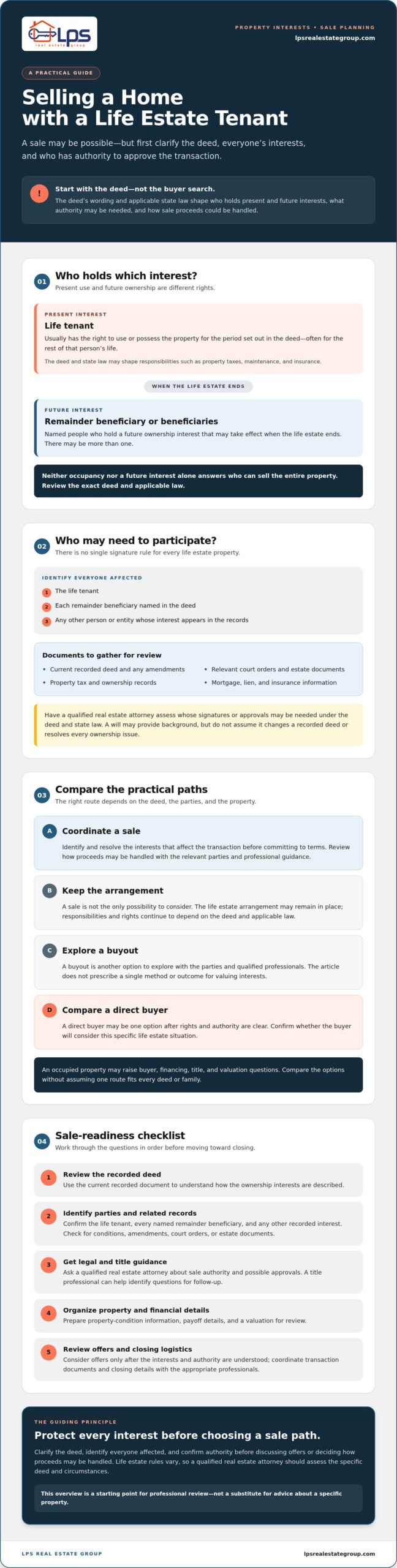
Prepare for a Sale: A Step-by-Step Life Estate Property Checklist
A clear checklist helps keep legal questions, property details, and sale decisions from getting tangled together. Before accepting an offer, organize the work into these steps and keep relevant interest holders informed as decisions are made.
- 1. Confirm authority and parties. Gather the recorded deed and related documents, then work with a qualified real estate attorney to clarify who may sign, which interests would transfer, and whether the life tenant would continue occupying the home after closing.
- 2. Assemble property and payoff information. Collect available records about the home’s condition, taxes, insurance, mortgage, and liens. Ask the appropriate professionals to identify any payoffs, approvals, releases, or other documents that may be needed for the proposed transaction.
- 3. Consider condition and valuation. Note needed repairs and other property issues before comparing offers. If condition affects the sale path, this guide to selling a house as-is may help you consider that option. Ask qualified professionals how to approach valuation, including any separate interests.
- 4. Review the offer and proposed proceeds. Before anyone commits, ask counsel and title professionals to review the contract, closing conditions, responsibilities, and how the parties propose to handle proceeds. Do not assume a particular allocation applies to every deed or situation.
- 5. Coordinate closing details. Confirm who is responsible for providing documents, responding to requests, and making decisions. Keep a record of agreed terms and direct unresolved legal or title questions to the appropriate professional.
What should parties resolve before accepting an offer?
Make sure the proposed transaction addresses who can sign, what interests transfer, and whether occupancy continues after closing. Ask counsel and the title professional to identify required documents and any relevant approvals, payoffs, or releases. Discuss the proposed handling of proceeds in writing, then have the arrangement reviewed. The right approach depends on the deed, the parties’ interests, and applicable law.
How can the parties reduce delays and misunderstandings?
Choose a point person for document requests and decisions, and share a current contact list with everyone involved. Ask for written explanations of contingencies, closing conditions, and each party’s responsibilities before agreeing to terms. If family members remember a conversation differently, return to the written record and ask a qualified professional to address the disputed point.
After authority and records are organized, a direct purchase may be one option to compare. Information about LPS Real Estate Group’s property purchase options can be considered alongside other sale paths, including whether the company will consider the specific life estate circumstances. Any sale still needs to meet the deed’s requirements and resolve the relevant interests.
Choose a Sale Path That Respects Every Life Estate Interest
A practical decision sequence keeps the next steps clear: clarify each person’s interest, get professional review of the deed and proposed transaction, align the people whose rights may be affected, then compare sale paths. A buyer cannot replace that groundwork. The goal is to choose an option that fits the property and the parties’ circumstances without overlooking anyone’s documented rights.
A direct buyer may be worth comparing if repairs, timing, or the logistics of a conventional sale are important considerations. LPS Real Estate Group offers direct property acquisitions, including as-is purchases, and creative finance options may be available depending on the property and circumstances. Whether the company will consider a particular life estate transaction must be confirmed. No buyer can bypass deed requirements or resolve a disagreement simply by making an offer.
When might a direct buyer be worth comparing?
Compare proposed net proceeds, conditions, closing requirements, and the level of certainty offered alongside any other sale path the parties are considering. Make sure each option accounts for the life tenant’s documented rights and the interests of the remainder beneficiaries. For a broader framework on assessing buyers, read this guide to companies that buy houses for cash. Treat it as a comparison tool, not a substitute for reviewing the specific offer with qualified professionals.
What should you ask before choosing a buyer?
Ask how the buyer approaches title review, required signatures, continued occupancy, and any unresolved interests. Request clear written terms, including conditions that could affect whether the transaction proceeds, and allow time for the relevant attorney and title professional to review them. If the life tenant plans to stay in the home, make sure the proposed terms explain how that arrangement would work and are reviewed before anyone commits.
Keep the decision centered on a clear, workable path for everyone involved. Information about whether a direct sale could fit your circumstances is available through LPS Real Estate Group. Suitability for a life estate transaction and any potential purchase would need to be confirmed individually.
Take the Next Step With a Clear Plan
Selling a house with a life estate tenant starts with understanding the deed, the life tenant’s rights, and the remainder beneficiaries’ interests. Because the deed and state law shape who may approve a sale, get qualified legal and title guidance before signing. Then compare a coordinated sale, keeping the arrangement, or discussing a buyout based on the parties’ needs and the property’s circumstances.
A direct sale may also be worth considering, especially if the property needs repairs or the parties want to compare different sale paths. LPS Real Estate Group offers direct property acquisitions and as-is purchases, and works with complex situations, including probate and inherited-property buyouts. Whether a specific life estate transaction is a fit must be confirmed, and no buyer can replace required approvals or resolve legal questions for you.
If you have clarified the interests involved and want to explore whether a direct sale could fit, contact LPS Real Estate Group to discuss your property and possible next steps. With the right information and professional guidance, you can move toward a decision that respects everyone’s interests.
Frequently Asked Questions
Can you sell a house with a life estate tenant still living in it?
Yes, a sale may be possible while the life tenant lives in the home, but the deed, applicable state law, and the rights of everyone with an interest matter. Do not assume one person can transfer the entire property alone. Before accepting an offer, ask a real estate attorney and title professional to review the documents, identify the parties and signatures required, and clarify any closing conditions, including whether occupancy will continue.
Does a life tenant have to agree to sell the house?
Whether the life tenant’s agreement is needed depends on the deed, the interests being transferred, and applicable law. A remainder beneficiary may also have rights that affect the sale. Before listing the property or accepting an offer, ask a qualified real estate attorney to confirm who has authority and which parties must participate in this specific transaction. Avoid relying on a general rule or another property’s sale process.
Can a remainder beneficiary sell a house without the life tenant?
A remainder beneficiary should not assume they can sell the entire property free of the life tenant’s interest. What a beneficiary can transfer depends on the recorded deed and applicable state law, and a buyer may require unresolved interests to be addressed. Before negotiating or signing documents that could affect another person’s rights, ask an attorney and title professional to review the proposed transaction and explain what interest, if any, can be conveyed.
What happens to sale proceeds when a house with a life estate is sold?
There is no universal allocation formula that can safely be applied without reviewing the documents and governing law. The parties may need to agree on how proceeds are handled, and valuing separate interests can require professional guidance. Before promising or distributing funds, ask an attorney to review the arrangement and consult appropriate financial or tax professionals about the specific facts. Put any agreed terms in writing and have them reviewed before closing.
Can you sell a house subject to a life estate?
A transfer that leaves the life estate in place may be possible in some circumstances, but it can affect the life tenant’s occupancy and raise questions about buyer interest, financing, title review, and value. The deed and applicable state law determine what may be transferred. Before relying on this approach, ask a real estate attorney and title professional whether the proposed terms are workable and how they address occupancy and the interests tied to the property.
How do you end a life estate before selling a house?
The appropriate way to end or change a life estate depends on the deed, the people who hold interests, and applicable law. The parties may discuss a written agreement or ask counsel whether another legal process could apply, but no single route fits every property. Do not rely on informal consent or a generic form. Have a qualified attorney review any proposed change and explain what documents and approvals may be needed.
Should I use a real estate attorney to sell a house with a life estate tenant?
Yes, getting legal guidance is prudent because the deed, state law, and multiple property interests can affect sale authority and closing requirements. A title professional can help identify recorded title issues, but does not replace independent legal advice. Ask an attorney to review who may sign, the proposed sale structure, any continued-occupancy terms, and how proceeds will be handled. This review can help the parties understand questions to resolve before committing to a transaction.