

Contrary to popular belief, your lender does not own your property just because you tapped into your equity. You retain full ownership on the deed; settling the debt is simply a matter of payoff timing. If you are considering selling a house with a reverse mortgage attached, you remain in control of the transaction from start to finish.
It’s completely normal to feel uneasy watching loan balances climb with compounding interest and monthly servicing fees. When rigid lender deadlines loom after a loved one moves or passes away, that pressure can quickly spark fears of foreclosure or unexpected personal debt.
Here’s the reassuring truth: federal non-recourse rules strictly protect family members and estate assets from loan shortfalls. In this guide, you will learn the exact steps to sell a house with a reverse mortgage attached while protecting remaining equity and avoiding costly lender pitfalls. We will break down critical HUD timelines, payoff statements, and practical strategies so you can settle the balance cleanly on your own schedule.
Key Takeaways
- You retain legal title on the property deed, meaning selling a house with a reverse mortgage attached follows standard real estate rules where you direct the sale.
- Requesting a formal 30-day payoff statement from the servicer clarifies your true loan balance and reveals exactly how much equity remains.
- Federal non-recourse rules shield your personal assets and estate, ensuring no one ever owes out-of-pocket shortfalls if the property sells for less than the debt.
- Heirs have clear HUD timelines to navigate, including an initial 30-day notification period and potential extensions to manage probate and settle the account.
- Weighing a retail sale against a direct as-is acquisition lets you bypass costly repairs and inspection delays when working against lender maturity deadlines.
Understanding How a Reverse Mortgage Affects Your Home Sale
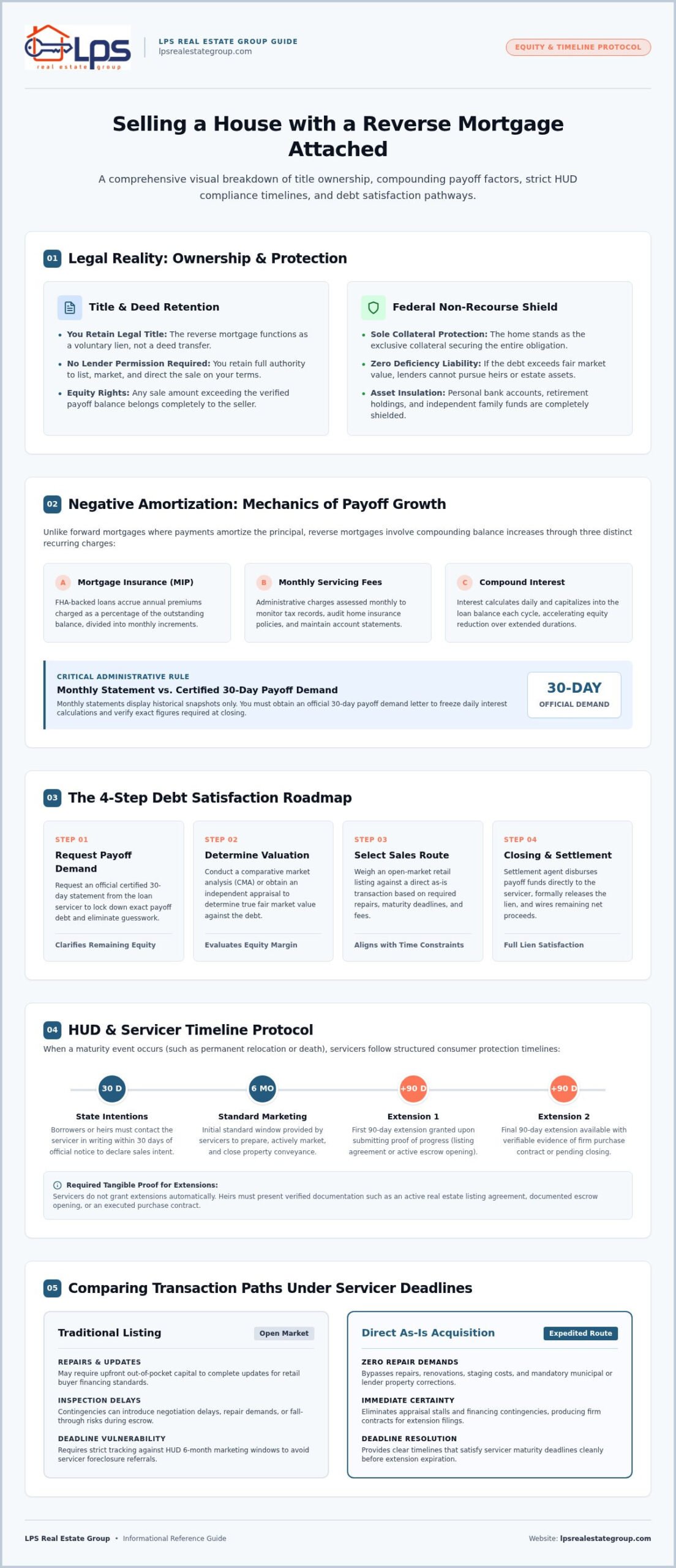
A reverse mortgage functions as a voluntary lien against your real estate, not a transfer of ownership. Many homeowners assume that receiving loan proceeds hands control of the property over to the bank. That is incorrect. When selling a house with a reverse mortgage attached, the settlement follows standard real estate conveyance laws: you convey the title, satisfy the recorded lien at closing, and keep every dollar of equity above that balance.
Federal rules also include an essential safety net known as a non-recourse clause. If market declines or compounding charges push the debt higher than the property’s fair market value, the lender cannot pursue you or your estate for the shortfall. The home stands as the sole collateral. That protection keeps personal bank accounts, retirement funds, and other family assets completely safe.
The Legal Reality: Who Actually Holds the Property Title?
Your name stays on the deed throughout the life of the loan. The lender holds an encumbrance, which works just like a traditional forward mortgage. Because you retain legal ownership, you have the full legal right to list, market, or sell the property whenever you decide. You do not need lender permission to put the home on the market, nor can the servicer block a legitimate sale that clears the debt.
How the Payoff Balance Accumulates Over Time
Unlike forward mortgages where monthly installments reduce your principal, reverse mortgages involve negative amortization. Each month, unpaid interest capitalizes directly into the loan balance. Daily interest calculations mean your payoff grows continually until the lien is released.
Beyond standard interest, three recurring charges increase that balance:
- Ongoing Mortgage Insurance Premiums (MIP): FHA-backed loans accrue an annual premium charged as a percentage of the outstanding loan balance, divided into monthly increments.
- Monthly Servicing Fees: Loan servicers assess administrative fees to maintain statements, track tax records, and monitor home insurance policies.
- Compound Interest: Interest compounds against the new, larger total balance each billing cycle, which accelerates equity depletion over time.
Before making any selling decisions, request an official lender payoff verification letter. Monthly statements only show past balances, while a payoff letter gives you the exact figure, including accrued daily interest, needed to satisfy the lien cleanly at closing.
Step-by-Step Guide to Selling a Home Encumbered by a Reverse Mortgage
Executing a clear plan keeps you in charge of the sale. Settle the debt cleanly by working through these four distinct phases:
- Step 1: Request an official payoff demand. Ask the loan servicer for a certified 30-day statement to freeze guesswork around current figures.
- Step 2: Determine current market value. Run a comparative market analysis or secure an independent appraisal to measure true equity.
- Step 3: Choose an appropriate transaction route. Balance an open-market listing against a direct sale depending on necessary property updates and time limits.
- Step 4: Complete title and escrow closing. The settlement agent routes funds directly to the servicer, releases the recorded lien, and wires your net proceeds.
When selling a house with a reverse mortgage attached, managing administrative steps in this sequence prevents costly missteps with the lender.
Communicating with the Servicer and Managing Deadlines
Reach out to the servicer in writing as soon as a maturity event occurs, such as a permanent relocation or a passing. Guidelines detailed by the Consumer Financial Protection Bureau show that borrowers or heirs have an initial 30 days from the official notice to state their intentions. That response buys valuable breathing room.
Servicers generally allow an initial 6-month window to market and close on the property. If you need additional time to complete the transaction, servicers can grant up to two 90-day extensions. They will, however, require tangible proof of ongoing progress, such as an active listing agreement, escrow opening paperwork, or a firm purchase contract.
Coordinating Title and Escrow for Debt Satisfaction
Once you accept an offer, your closing team takes over the technical mechanics. The title company requests an updated payoff demand directly from the servicer. This document details per-diem interest charges and calculates the final total required for complete satisfaction.
At closing, the title officer automatically disburses settlement funds to clear the debt before releasing any leftover balance. You don’t have to carry checks back and forth between parties. The remaining cash equity is wired straight to you or the estate account.
If lender deadlines leave you with little room for traditional marketing delays or repair requests, exploring a predictable cash home buying route provides a guaranteed closing schedule that satisfies lender timelines without added friction.
Positive Equity vs. Being Underwater: Evaluating Your Financial Position
Your property’s equity position dictates your entire approach. Before choosing a sale path, compare your official payoff demand against an accurate, realistic assessment of current market value. A home with positive equity functions like any typical transaction, while an underwater balance requires specific federal protocols to settle cleanly.
Evaluating this balance early provides clarity. Consulting verified consumer resources, including FTC consumer advice on reverse mortgages, confirms that Home Equity Conversion Mortgages (HECMs) are strictly non-recourse. When selling a house with a reverse mortgage attached, you or your heirs will never face a personal deficiency judgment, regardless of how far values dip below the loan balance.
Selling with Positive Equity: Maximizing Your Net Cash Proceeds
Positive equity means the final sale price exceeds the total debt plus closing costs. To calculate your actual net return, subtract the payoff figure, local transfer taxes, and closing fees from your agreed contract price. Because daily interest accrues continuously, choosing an efficient transaction strategy prevents extra months of interest from eroding those remaining proceeds.
Homeowners often repurpose these funds to support lifestyle transitions:
- Funding assisted living, skilled nursing, or dedicated memory care facilities
- Purchasing a smaller, low-maintenance home closer to family members
- Establishing dedicated liquid reserves for unexpected medical or living costs
Navigating an Underwater Reverse Mortgage and Short Sales
Years of compounding interest combined with deferred home maintenance can push total loan balances past property value. If you find yourself in this situation, you do not have to bring cash to the closing table to make up the difference. The FHA mutual mortgage insurance fund absorbs the servicer’s loss directly.
To settle an underwater loan on the open market, servicers follow HUD short sale rules. The servicer orders an independent HUD appraisal to determine the fair market value. Once established, you can sell the home to an arm’s-length buyer at or above that appraised number, even if it falls far short of the debt. For heirs who prefer to retain ownership rather than sell, HUD allows them to satisfy the loan by paying 95% of that appraised market value.
If marketing an underwater property proves unfeasible due to severe physical distress or tight deadlines, heirs can execute a deed-in-lieu of foreclosure. This transfers the property directly to the lender without ongoing collection actions or damage to estate assets.
Inherited Properties with Reverse Mortgages: Crucial Guidance for Heirs
Receiving a formal “Notice of Intent to Foreclose” or “Due and Payable” demand shortly after a parent passes away feels jarring. These notices generate immediate panic, but they are standard legal requirements that servicers issue automatically once a borrower dies. Take a deep breath. Heirs never face personal liability for reverse mortgage balances, and receiving this letter doesn’t mean the lender takes the keys tomorrow.
Your primary goal is opening clear communication while securing legal control over the real estate. When selling a house with a reverse mortgage attached as an heir, balancing court requirements against strict lender deadlines determines whether you preserve family equity or lose it to administrative penalties.
Establishing Legal Authority to Sell Through Probate
You cannot sign a valid purchase agreement simply because a will names you as the beneficiary. The title company requires formal letters testamentary or letters of administration issued by the local probate court before allowing you to convey ownership. Until a judge grants this documentation, you lack legal authority to transfer title.
Probate delays can trigger friction with reverse mortgage servicers who expect progress updates within that initial 30-day window. Showing the servicer stamped court petitions demonstrating that probate has been opened helps secure the standard six-month marketing extension. You can review the real cost to sell a house in probate to map out court fees, executor bonds, and administrative expenses alongside your selling timeline.
Rights and Restrictions for Surviving Spouses and Co-Heirs
Spousal rights hinge on original loan documentation. Co-borrowers who signed the initial note remain unaffected; they continue living in the residence without interruption. For non-borrowing surviving spouses, HUD rules provide a deferral period that prevents foreclosure, provided the spouse proves valid legal title or a leasehold interest and continues paying property taxes and hazard insurance.
When multiple heirs inherit a property, disagreements often stall progress:
- One heir wants to clear the debt and preserve cash equity, while another wants to keep the house.
- Out-of-state family members struggle to maintain yard work, utilities, and routine upkeep.
- Estate funds run out, leaving nobody willing to advance money for repairs required by retail mortgage buyers.
Learning how to sell an inherited property helps co-heirs reach an agreement before servicing deadlines expire. If resolving family probate matters and beating lender deadlines feels overwhelming, request an offer from LPS Real Estate Group for an inherited property buyout to satisfy the loan cleanly on your own schedule.
Comparing Your Selling Options: Traditional Listing vs. Direct As-Is Sale
Property condition dictates the path you take. Many homes carrying reverse mortgages suffer from decades of deferred upkeep, from aging roofs and outdated electrical panels to plumbing failures. Retail buyers relying on FHA or conventional mortgages face rigid inspection guidelines; lenders simply refuse to fund loans on properties with significant health or safety defects.
When selling a house with a reverse mortgage attached, you must weigh whether investing upfront capital into contractor repairs makes financial sense. If the estate lacks liquid funds, traditional listing channels can introduce friction that threatens your standing with the loan servicer.
The Hidden Risks of Traditional MLS Listings on Expiring Timelines
Listing on the open market introduces variables you cannot control. Retail transactions hinge on formal home inspections, mortgage underwriting approvals, and appraisal minimums. If an appraisal falls short or a buyer’s financing collapses two weeks before closing, you lose precious months of progress.
A failed retail contract near the end of a servicer extension can quickly trigger legal action. Reviewing the clear financial advantages of selling your house as-is clarifies why eliminating repair contingencies protects equity when marketing clocks run thin.
How Direct Cash Acquisitions Provide Speed, Certainty, and Peace of Mind
Direct property acquisitions bypass the retail mortgage process entirely. Because no banks, staging companies, or appraiser repair checklists are involved, the transaction proceeds on a set schedule. That predictable timing proves essential when answering strict servicer demand letters.
Working with a direct buyer offers distinct operational advantages:
- No Contractor Renovation Costs: You bypass out-of-pocket expenses for cosmetic updates, roof replacements, or structural repairs.
- Aligned Closing Deadlines: The settlement date is chosen specifically to satisfy servicer maturity notices before default proceedings initiate.
- Direct Communication with Servicers: Experienced buyers supply the exact purchase documentation, escrow verifications, and progress proof that loan servicers demand for extension approvals.
- Net Equity Preservation: Bypassing retail agent commissions and repetitive marketing fees keeps more cash in the seller or heir account.
Taking time to vet reputable companies that buy houses for cash ensures you partner with an ethical team capable of resolving liens cleanly while respecting your family’s circumstances.
Take Charge of Your Exit Strategy Today
Selling a house with a reverse mortgage attached does not have to feel overwhelming. Remember that you remain the titled owner, non-recourse rules fully shield personal finances from shortfalls, and prompt written communication with your loan servicer secures critical timeline extensions. Settle the balance methodically so you can protect your equity.
When deferred maintenance or pressing maturity deadlines leave no room for open-market retail delays, you still have dependable options. LPS Real Estate Group provides direct, as-is property acquisitions nationwide. With specialized experience handling complex lender payoff demands and probate clearances, our team helps you align closing dates directly with servicer requirements without commissions, staging, or contractor repairs.
If you are facing an expiring timeline or navigating a family estate transition, request a fair, no-obligation cash offer to close on your terms and move forward with peace of mind.
Frequently Asked Questions
Can I sell a house with a reverse mortgage attached at any time?
Yes, you can sell the property whenever you choose. Because you remain the legal owner on title, you retain full rights to list, convey, or sell the residence. There are no prepayment penalties on FHA-insured reverse mortgages, so you can exit the loan without facing early termination fees from your servicer.
What happens if the loan balance is higher than the home value?
You or your heirs will never have to write a check to cover the difference. Reverse mortgages are strictly non-recourse loans. The Federal Housing Administration’s insurance fund covers any loss between the final fair market sales price and the accumulated debt, completely shielding personal accounts and estate assets from deficiency claims.
How long do heirs have to sell an inherited reverse mortgage house?
Heirs have 30 days from receiving a due-and-payable notice to inform the loan servicer of their plans. From the date of the borrower’s death, HUD guidelines generally grant six months to complete a sale. If heirs demonstrate continuous marketing progress or open probate proceedings, servicers can grant up to two 90-day extensions.
Will I have to pay out-of-pocket closing costs if I sell?
Usually, closing costs are deducted directly from gross sales proceeds at the title table. If you sell with positive equity, settlement fees and loan payoffs clear first, and you receive the net funds. In an approved underwater short sale, HUD allows closing costs to come out of total transaction proceeds rather than your personal pocket.
Can a reverse mortgage lender foreclose while I am trying to sell?
A lender will not initiate foreclosure as long as you maintain open communication and document ongoing selling efforts. Servicers only proceed with legal foreclosure actions when owners or heirs ignore maturity demand letters, fail to maintain property taxes or insurance, or miss filing deadlines for formal marketing extensions.
Do I need permission from the lender to put the home on the market?
No, you do not need lender permission when selling a house with a reverse mortgage attached. You hold legal ownership of the title just like any conventional homeowner. You only need to request an official payoff demand so the closing agent can disburse funds correctly to satisfy the lien before releasing remaining equity.
What happens to the remaining equity once the reverse mortgage is paid off?
Every dollar of equity beyond the official loan payoff and routine transaction fees belongs entirely to you or the estate. At closing, the escrow or title company pays the servicer’s lien in full, releases the encumbrance from public records, and distributes the remaining cash balance directly to the seller or legal heirs.