
Can you legally move forward with selling a house with delinquent property taxes if you don’t have the cash to clear the debt? If mounting penalties, compounding statutory interest, and the looming threat of a county tax auction are keeping you awake at night, you aren’t alone. Watching that balance climb feels overwhelming, especially when you lack the liquid savings needed to pay off the tax collector before putting your home on the market.
The reassuring reality is that unpaid property taxes do not freeze your options or prevent a sale. You can walk away clean without spending a single dollar out of pocket, using your property’s built-up equity to satisfy municipal encumbrances directly at the closing table. In this complete guide, you’ll discover how settlement agents handle delinquent tax payoffs, how recent Supreme Court rulings protect your surplus equity from municipal forfeiture, and how to execute a fast, stress-free closing before statutory deadlines expire.
Key Takeaways
- You don’t need liquid cash upfront, as selling a house with delinquent property taxes allows title agents to settle municipal balances directly from closing proceeds.
- Unpaid ad valorem taxes create superior statutory liens that take priority over mortgages, making prompt action critical before county auction proceedings begin.
- Evaluating an as-is direct sale against traditional market timelines helps you protect your equity before statutory redemption periods expire.
- Addressing complex title issues early, including probate estates and secondary liens, ensures a smooth transfer and prevents unneeded settlement delays.
Understanding Delinquent Property Taxes and Your Legal Rights
Delinquent property taxes are simply unpaid ad valorem municipal levies assessed against real estate. When life circumstances create unexpected financial strain, these annual or semi-annual obligations can fall behind. Falling behind doesn’t mean you have lost control of your home. You still retain legal ownership and full title rights, meaning that selling a house with delinquent property taxes remains entirely within your legal rights until a municipality formally completes a foreclosure action.
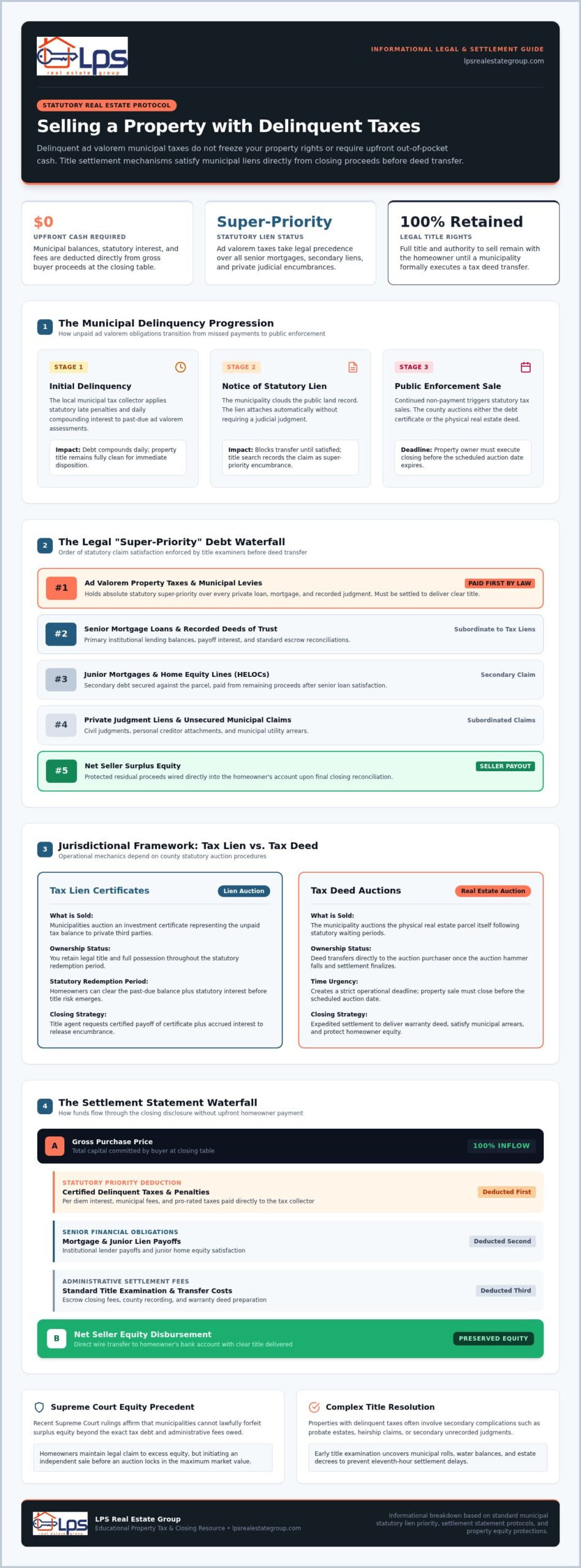
The progression from missed payment to municipal enforcement moves through distinct stages:
- Initial delinquency: The local tax collector applies late penalties and compounding statutory interest to the unpaid balance.
- Notice of lien: The municipality formally clouds the title to secure its debt against the parcel.
- Public enforcement: Continued non-payment triggers statutory enforcement proceedings, which can eventually culminate in a public sale of the tax debt or the real estate itself.
The Mechanics of Automatic Statutory Liens
Unlike personal loans or credit card debt, ad valorem taxes attach automatically to the physical property. Municipal taxing authorities don’t need a court judgment to secure their claim. By statute, these encumbrances hold “super-priority” status. This classification places the tax debt ahead of senior mortgages, second mortgages, home equity lines, and private judgment liens.
When you enter a transaction, title examiners run a municipal records search. They check county ledgers, municipal utility balances, and tax rolls to identify any past-due amounts. Because super-priority status demands complete satisfaction before clear title transfers, the title company must ensure these balances are settled before delivering a warranty deed to the new buyer.
Tax Lien Certificates vs. Tax Deed Auctions
Understanding the difference between a lien sale and a deed sale is essential when navigating statutory tax sales and auctions across different jurisdictions. In tax lien jurisdictions, the municipality auctions an investment certificate representing the unpaid balance. The investor earns statutory interest, but you retain ownership throughout a designated statutory redemption period. This window allows you to clear the arrears plus accrued fees before any title risk emerges.
In tax deed jurisdictions, the taxing entity sells the actual real estate at auction after statutory waiting periods expire. A scheduled tax deed auction creates a strict operational deadline. If you plan on selling a house with delinquent property taxes before an auction occurs, you must execute a closing before the hammer falls to protect your accumulated equity.
How Delinquent Property Taxes Are Handled at Closing
One of the most persistent myths in real estate is that homeowners must produce thousands of dollars in cash before listing a property with unpaid municipal taxes. In reality, you rarely need liquid funds to clear arrears. The escrow and settlement system is designed to resolve encumbrances simultaneously at transfer. When selling a house with delinquent property taxes, your past-due balances are satisfied directly out of the gross transaction proceeds before your final payout is issued.
Once you sign a purchase agreement, the closing title company or closing attorney contacts your local tax collector to request a certified payoff statement. Due to the legal priority of property tax liens, this figure must be paid first. The closing officer calculates exact per diem interest charges, statutory penalties, and municipal administrative fees through the specific day of settlement to ensure the county receives complete payment.
The Role of the Settlement Statement
Every deduction appears clearly on the settlement statement, often referred to as the closing disclosure. Think of the closing funds as a simple waterfall:
- Gross Purchase Price: The total funds delivered by the buyer.
- Statutory Deductions: Certified delinquent property taxes, current pro-rated taxes, and accrued administrative fees paid directly to the municipality.
- Mortgage & Junior Lien Payoffs: Existing home loans or recorded judgment claims cleared in full.
- Closing Costs: Standard title examination and transfer fees.
- Net Seller Proceeds: The remaining equity wired directly into your bank account.
Resolving Sales When Debt Exceeds Equity
What happens if falling home values or years of compounded statutory penalties cause your total obligations to exceed the property’s market value? In an underwater scenario, gross sale proceeds cannot cover the combined sum of the mortgage, delinquent taxes, and settlement costs. Because taxes hold super-priority status, mortgage lenders must agree to take a discount on their payout through a formal short sale approval, allowing the tax bill to be satisfied in full so clear title can transfer.
If negotiating with institutional mortgage servicers feels daunting or time is running out, working with a direct buyer can offer relief. For homeowners facing complex encumbrances, choosing an as-is property acquisition allows you to walk away from mounting tax liabilities without out-of-pocket expenses, closing rapidly through vetted title professionals.
Weighing Your Options: Four Ways to Handle Delinquent Taxes
When past-due notices arrive, you have four distinct avenues: paying off the arrears in cash, negotiating an administrative installment plan, listing through traditional real estate channels, or selling directly to an off-market buyer. Choosing the right path depends on your liquid savings, property condition, and proximity to municipal enforcement deadlines. As outlined in this Consumer Financial Protection Bureau escrow overview, unexpected tax adjustments frequently cause escrow shortages that trigger delinquency in the first place, leaving families searching for practical solutions.
Establishing Municipal Installment Agreements
Many local tax collectors offer hardship payment plans to prevent immediate property liquidation. While these arrangements provide short-term relief, they carry hidden friction points for fixed-income households:
- Strict default triggers: Missing a single scheduled payment typically cancels the agreement instantly, returning the parcel to active enforcement without extended grace periods.
- Compounding statutory interest: An installment plan rarely halts interest accumulation. Penalties continue accruing on the principal balance, meaning your payments might barely keep pace with monthly additions.
Selling on the Open Market vs. Direct Cash Buyout
Listing on the retail market can generate fair market value, but it requires substantial time and capital. Traditional retail buyers depend on mortgage financing, and conventional lenders reject loan applications on properties carrying clouded titles until payoffs are coordinated. Between staging, mandatory inspections, and protracted loan underwriting, traditional transactions often stretch beyond 30 to 45 days. That timeline can prove dangerous if your municipal redemption period is running out.
This reality makes selling a house with delinquent property taxes to a direct homebuyer a reliable debt-relief strategy. Direct buyers acquire properties as-is, bypassing retail lender approvals and eliminating pre-listing repair expenses. Distressed property owners researching companies that buy houses for cash often choose this route because closing speed provides guaranteed execution, stopping scheduled tax auctions and preserving accrued equity before statutory deadlines pass.
Step-by-Step Guide to Selling a House with Back Taxes
Completing a transaction with encumbrances requires a clear, methodical plan. When you break the journey down into distinct milestones, the process becomes manageable and transparent. Successfully selling a house with delinquent property taxes involves five core steps:
- Step 1: Obtain a certified payoff statement. Contact the municipal tax collector to request a written quote outlining all principal taxes, statutory penalties, and daily interest.
- Step 2: Audit all secondary encumbrances. Identify every recorded claim against the title, including conventional mortgages, mechanics liens, and municipal utility assessments.
- Step 3: Calculate your net proceeds. Subtract total encumbrances and expected settlement fees from the estimated market purchase price to confirm your true remaining equity.
- Step 4: Select an appropriate transaction channel. Pick between an open market listing if you have months of runway, or a rapid off-market acquisition if a municipal auction cutoff is approaching.
- Step 5: Close through a qualified title professional. Execute transfer documents with a licensed title company or settlement attorney who will issue direct payments to the municipality.
Auditing Your Total Municipal Payoff Amount
A simple property tax statement rarely shows the full payoff picture. Once accounts enter formal delinquency, municipal collectors frequently add outside collection attorney billings, title search fees, and public advertising charges. Always verify the exact expiration date on your payoff document. Because statutory interest compounds on a strict schedule, a quote generated today might become deficient if your settlement date shifts by two weeks.
Look beyond ad valorem taxes during this audit. Municipalities often attach administrative code violation fines, weed abatement charges, or unpaid municipal utility balances to the tax roll. These secondary assessments inherit the same super-priority standing as your primary tax bill.
Navigating Title and Escrow Clearance
Once you open escrow, the settlement agent issues a title commitment. Schedule B of this document specifies the precise requirements that must be resolved prior to issuing title insurance. The escrow officer communicates directly with municipal billing departments, verifies certified amounts, and writes official disbursements to clear all tax accounts at closing.
If physical deferred maintenance compounds your property tax challenges, traditional retail buyers can struggle to secure conventional loan approvals. Consider exploring selling your house as-is to sidestep lender-mandated repair lists entirely. If you want an immediate cash offer to clear past-due taxes without commissions or repairs, contact LPS Real Estate Group to review your options.
Overcoming Common Challenges and Choosing the Right Exit
Facing a looming tax auction creates intense pressure. When a municipality schedules a tax deed sale, every passing week chips away at your ability to walk away with your equity intact. Title complications often heighten this stress, especially when properties carry secondary liens or lack conventional equity. In situations where traditional refinancing or listing isn’t feasible, creative finance solutions and direct acquisitions provide a path to halt the auction clock before statutory deadlines expire.
Handling Tax Delinquency on Inherited Properties
Heirs often find themselves managing real estate encumbered by years of unpaid taxes. While family members navigate formal probate proceedings, statutory penalties continue to compound against the estate. Fortunately, an appointed personal representative or estate executor can sell real property to settle municipal claims before the debt triggers a foreclosure sale. When multiple family members share ownership, reaching an agreement quickly is essential to protect the inheritance. To learn how to settle estate debts and transfer title smoothly, consult our guide on how to sell an inherited property cleanly.
The LPS Real Estate Group Advantage
Successfully selling a house with delinquent property taxes shouldn’t feel combative or chaotic. LPS Real Estate Group provides a clear, compassionate alternative to the demands of retail listings. We focus on listening to your goals and tailoring our purchase to your exact timeline, helping you navigate complex title challenges with confidence.
- No out-of-pocket costs: We buy houses completely as-is, requiring zero upfront repair funds, cleaning, or agent commissions.
- Auction deadline protection: Our team can close rapidly to beat pending municipal auctions, halting forfeiture proceedings.
- Professional title settlement: We partner with qualified title companies and closing attorneys to ensure all municipal tax liens and recording fees are satisfied directly from sale funds.
You don’t have to face county collection notices alone or watch your accumulated equity slip away. Take back control of your financial future today and request a fair, no-obligation cash offer to resolve back taxes for good.
Protect Your Equity and Move Forward with Confidence
Unpaid municipal bills don’t have to define your financial future. Clearing tax arrears doesn’t require upfront liquid savings when settlement agents satisfy liens directly from your closing proceeds. Whether you are managing compounding statutory penalties, navigating inherited property challenges, or facing a tight auction timeline, selling a house with delinquent property taxes gives you a reliable way to exit on your own schedule.
LPS Real Estate Group offers direct, as-is property purchases to help you walk away without repair demands or agent commissions. Our team works hand in hand with reputable closing attorneys to ensure tax liens are paid cleanly, securing a rapid closing that protects your accumulated equity before statutory deadlines pass. When you are ready to lift the burden of back taxes, request your fair, no-obligation cash offer and regain your financial peace of mind.
Frequently Asked Questions
Can I sell my house if I have delinquent property taxes?
Yes, you can legally sell your property even if you have unpaid taxes. You maintain legal title and ownership until a tax foreclosure auction is completed. In fact, selling a house with delinquent property taxes is one of the most effective ways to stop municipal collection actions, satisfy past-due amounts, and pocket whatever equity remains in the home.
Do I have to pay my back property taxes before closing?
No, you do not need to pay delinquent taxes out of pocket before closing. The title company or closing attorney handles payoff automatically at the settlement table. They request an official payoff statement directly from the municipal tax collector and deduct the full balance due, including statutory interest and administrative fees, from the purchase funds before wiring your net proceeds.
What happens if a tax lien has already been sold on my home?
You retain ownership of your property during the statutory redemption period even after an investor buys a tax certificate. The certificate represents the debt rather than immediate title to the real estate. To clear the title, your settlement agent pays off the lien certificate holder, including statutory interest penalties, directly from your sale proceeds so the property transfers cleanly.
Will delinquent property taxes hurt my personal credit score?
Property tax liens do not appear directly on consumer credit reports, but they can still damage your financial standing indirectly. The major credit bureaus no longer report tax liens. However, if your mortgage lender pays the delinquent balance to protect their security interest, your monthly payment will jump significantly due to escrow shortages, increasing the risk of missed payments that do hurt credit.
Can the county foreclose on my house for unpaid taxes?
Yes, local taxing authorities have the legal authority to foreclose on real estate to recover unpaid taxes. Because property taxes create an automatic super-priority lien, municipalities can eventually initiate foreclosure proceedings through a public auction. The process involves statutory notices and a designated redemption period, giving you time to settle the debt or complete a sale before ownership transfers.
What happens if the property taxes exceed the value of my home?
If total encumbrances exceed your home’s fair market value, you face a negative equity situation that requires alternative closing strategies. Because property tax liens outrank mortgages, lenders must agree to accept reduced payoffs via a negotiated short sale so the tax debt can be paid in full. Distressed owners also explore creative finance solutions or direct as-is purchases to resolve these debt gaps.
Can I sell an inherited home with accumulated unpaid property taxes?
Yes, an estate personal representative or designated heir can sell an inherited property that has delinquent taxes. Unpaid municipal taxes remain attached to the real estate rather than passing as personal liabilities to the heirs. When selling a house with delinquent property taxes through probate, the settlement agent pays the municipal tax bills directly from estate sale proceeds, protecting the remaining inheritance.